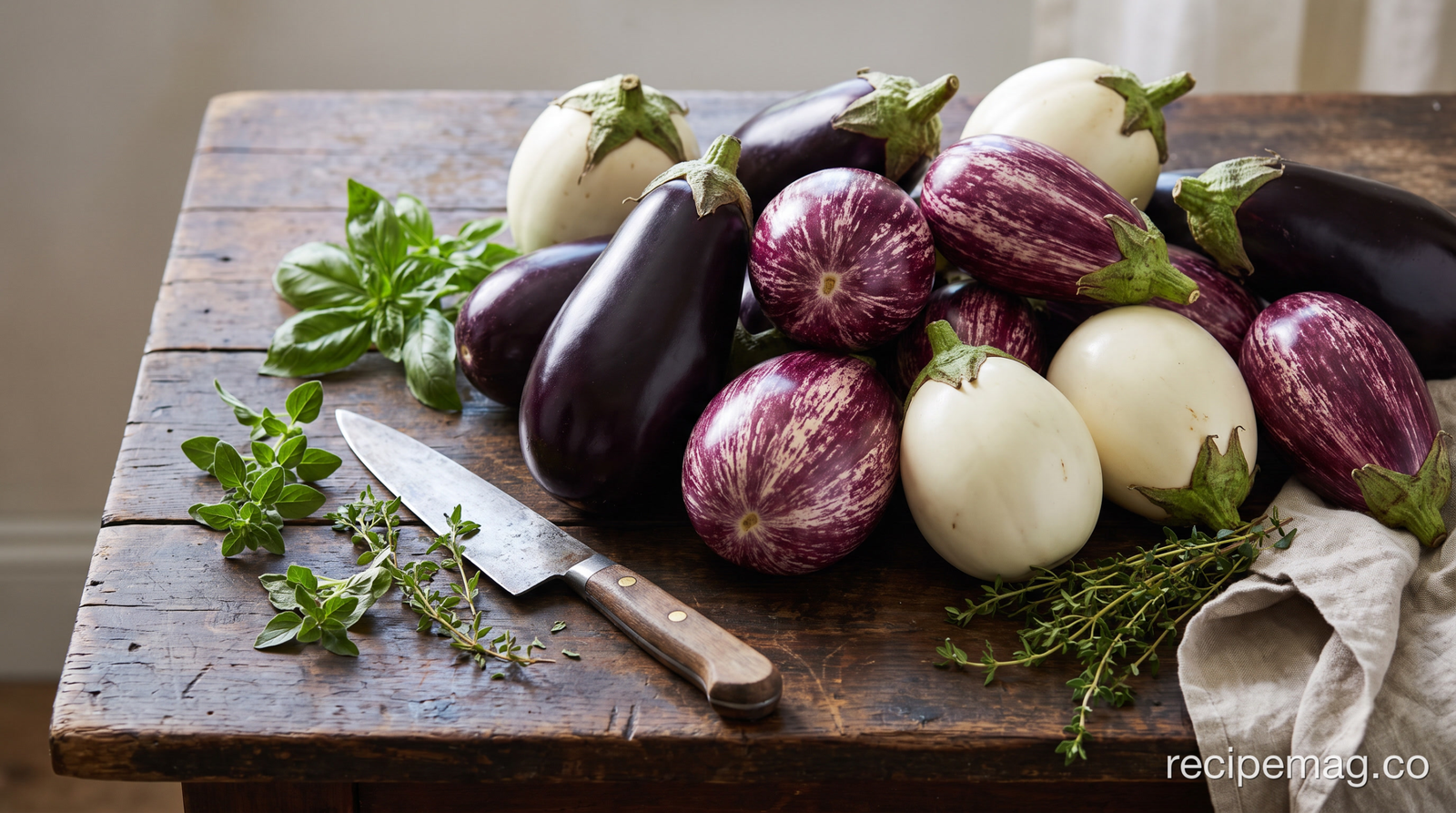
Late August is the best moment of the year to buy eggplant, and also the moment most home cooks stop knowing what to do with it. Modern cultivated varieties have been bred away from the bitterness that made salting mandatory a generation ago, which means the step most recipes still insist on is usually unnecessary. What eggplant does need is fat, heat, and enough time to collapse. Undercooked eggplant is the real problem, not bitter eggplant.
Key Takeaways
- Most modern eggplant varieties no longer need salting for bitterness.
- Salting is still useful for texture, because it collapses the spongy cell structure and reduces oil absorption.
- Eggplant is mostly water and air; it must cook past the squeaky stage to be good.
- Look for firm, glossy skin and a fruit that feels heavy for its size.
- Store at room temperature, not in the fridge, where it suffers chilling injury.
How to Buy and Store It
Buy for weight and gloss. A good eggplant feels heavy for its size, has taut shiny skin with no soft patches, and springs back slightly when pressed. Dull skin means it has been sitting; a fruit that stays dented is already past.
Size matters more than people expect. Very large eggplants have had longer to develop seeds, and the seeds are where any residual bitterness concentrates. Medium fruit, or the smaller Italian and Japanese varieties, are consistently better eating.
Store it on the counter, not in the fridge. Eggplant is a tropical-origin fruit and suffers chilling injury below about 50°F, which shows up as pitted skin, browning flesh, and rapid softening. Use it within four or five days of buying.
If your counter is already crowded with produce, our late-August kitchen reset covers the order in which to work through the season’s backlog.
Do You Actually Need to Salt Eggplant?
Usually not for bitterness. Commercial varieties have been selectively bred to reduce the bitter compounds that made salting standard practice decades ago, and a fresh medium-sized eggplant bought in season is very unlikely to taste bitter.
Salting is still worth doing for texture, and that is a different argument. Eggplant flesh is a sponge of air pockets, and those pockets soak up oil the moment they hit a hot pan. Salting draws out water and partially collapses that structure, so the eggplant absorbs less oil and browns rather than steams.
The practical rule: salt when you are frying or grilling slices, because the texture payoff is real. Skip it when you are roasting whole, stewing, or making a dip, because the eggplant will collapse anyway. When you do salt, thirty minutes is enough, and you must pat the surfaces genuinely dry afterwards.
10 Ways to Cook Late-Summer Eggplant
1. Baba Ganoush
Char the eggplant whole until the skin blackens and the inside collapses, then blend the flesh with tahini, lemon, and garlic. The smoke is the recipe. Full method in our baba ganoush with charred eggplant.
2. Sichuan Eggplant with Garlic Sauce
Batons of eggplant cooked until silky, then coated in a sweet-sour-savoury sauce built on doubanjiang, black vinegar, and garlic. See our Sichuan eggplant with garlic sauce.
3. Grilled Eggplant Parmesan Stacks
Grilled rounds layered with tomato sauce and mozzarella, which skips the frying entirely. Our grilled eggplant parmesan stacks cover it.
4. Ratatouille
The classic use for a late-summer glut, because it absorbs eggplant, courgette, peppers, and tomatoes at once. Our grilled ratatouille skewers are the fast version.
5. Melanzane alla Parmigiana
The baked Italian original: fried slices layered with sauce and cheese and baked until bubbling. Richer and softer than the grilled stack version, and worth doing once a season.
6. Miso-Glazed Roasted Eggplant
Halve, score the flesh in a diamond pattern, roast until collapsed, then brush with a miso, mirin, and sugar glaze and broil until blistered. Twenty-five minutes and almost no work.
7. Caponata
Sicilian sweet-and-sour eggplant with celery, olives, capers, and vinegar. It is better on day two and excellent on toast, which makes it a genuine make-ahead.
8. Eggplant Curry
Baingan bharta, or a South Indian coconut curry. Eggplant’s willingness to collapse into a sauce is exactly what these dishes want.
9. Charred Eggplant Salad
Cubes roasted hard until the edges blacken, then tossed warm with yoghurt, herbs, and chilli. Serve with flatbread as a whole light dinner.
10. Eggplant Fries
Batons breaded in panko and parmesan, baked or air-fried until crisp. Serve with a garlicky dip; they disappear faster than potato fries.
The Mistakes That Ruin Eggplant
Undercooking it. This is the big one. Eggplant that is still slightly firm is squeaky and unpleasant, and the flavour has not developed. It needs to go past tender to genuinely collapsing. When you think it looks done, give it another five minutes.
Being frightened of oil. Eggplant needs fat to taste like anything, and it drinks the first pour immediately. The instinct is then to add more, which is how it becomes greasy. The fix is to add a generous amount at the start, get the pan properly hot, and then resist adding more once it has been absorbed; the oil is released back as the flesh collapses.
Crowding the pan. Eggplant releases water. Packed together it steams to a grey mush. Give it space, or roast on two trays rather than one.
Refrigerating it. Cold storage causes chilling injury and speeds up the decline. Keep it on the counter and use it promptly.
Cutting too small. Small dice lose all structure and turn to paste. Half-inch or larger holds shape through cooking.
A Short Guide to the Varieties
Most recipes just say eggplant, which is unhelpful when the market has five kinds. The differences are real and worth knowing.
Globe. The large dark purple standard. Meaty, with more seeds, and the right choice for slicing, breading, and baking into parmigiana. It benefits most from salting.
Italian. A smaller globe, sweeter and with a thinner skin. Better than globe for almost everything except when you specifically need large rounds.
Japanese and Chinese. Long and slender with thin skin and very few seeds. They cook fast and turn silky, which makes them the correct choice for stir-fries and braises. No salting needed.
Graffiti. Purple and white striped, mild and creamy, and excellent roasted whole or halved.
Fairy tale. Miniature, sweet, and almost seedless. Roast or grill them whole; they need nothing else.
White. Denser and firmer with a thicker skin that is usually worth peeling. Holds its shape well in stews.
As a general rule, the smaller and thinner the eggplant, the less it needs from you. If you are new to cooking eggplant and have been disappointed before, start with Japanese or fairy tale varieties, which are the hardest to get wrong.
Frequently Asked Questions
Do I need to peel eggplant?
Not usually. The skin softens completely with proper cooking and holds the flesh together. Peel only very large specimens, where the skin can be tough, or when you want a completely smooth purée.
Why does my eggplant taste bitter?
Most likely it was large and seedy, or old. Modern varieties are bred against bitterness, so buying medium-sized, fresh fruit solves it more reliably than salting does.
How do I stop eggplant absorbing so much oil?
Salt it for thirty minutes and dry it well, which collapses the air pockets that soak up oil. Roasting or grilling instead of pan-frying also uses far less.
What is the difference between the varieties?
Globe eggplant is the large purple standard, good for slicing and baking. Italian is smaller and sweeter. Japanese and Chinese are long, thin, and thin-skinned, ideal for stir-fries. Fairy tale eggplants are tiny and excellent roasted whole.
Can I freeze eggplant?
Not raw; it turns to mush. Cook it first, as a sauce, caponata, or roasted purée, then freeze. Our guide to preserving summer produce covers the general method.
How long does eggplant keep?
Four to five days at room temperature. It does not improve with storage, so buy what you will cook that week.
