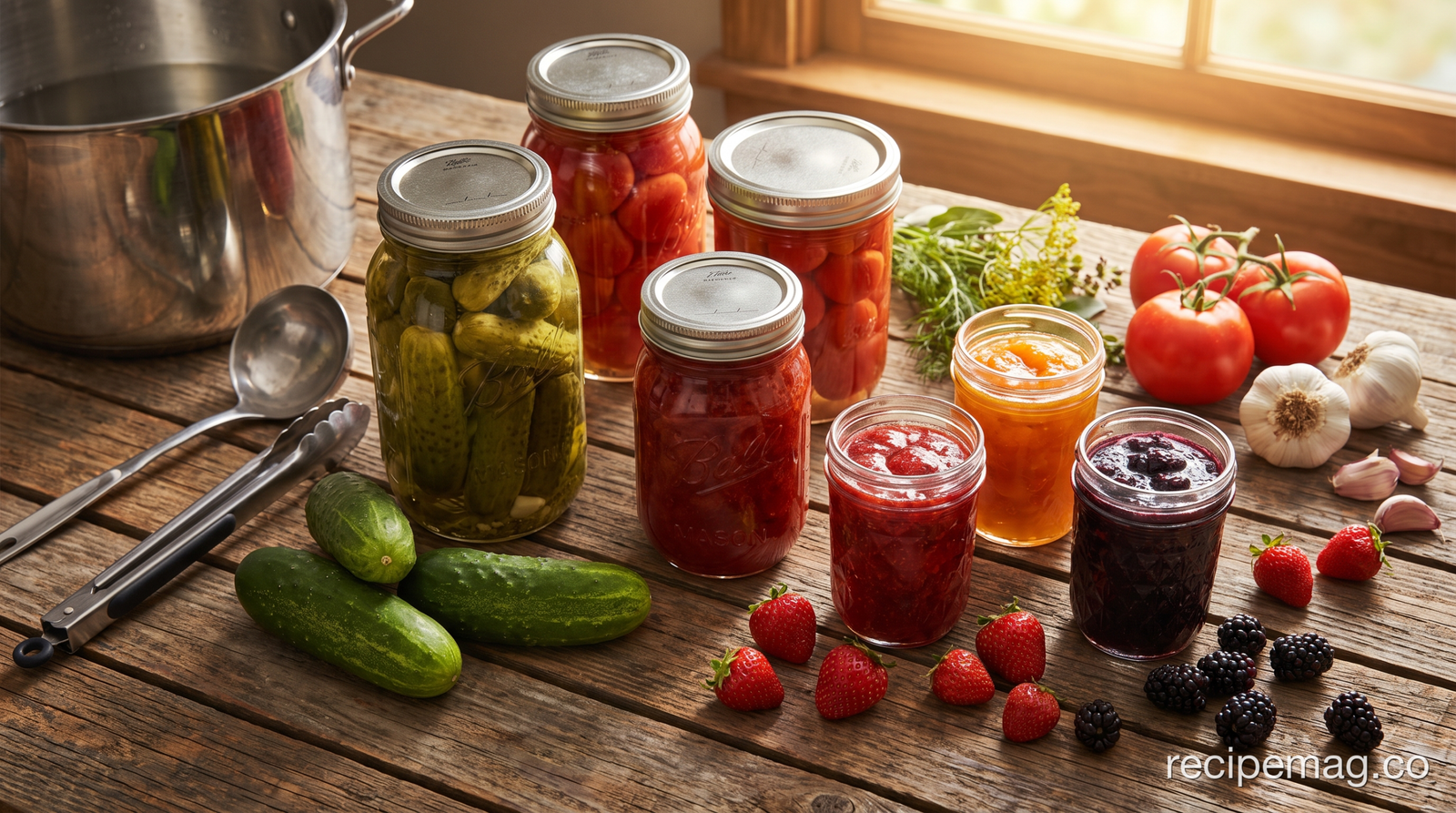
Late August is the moment the garden and the farmers market both hand you more food than you can eat, and the fastest way to keep it is almost always the freezer. Freezing requires no special equipment, carries none of the safety risk of low-acid canning, and holds food safe indefinitely at 0°F, though quality slowly declines (USDA FSIS, 2023). Canning is the more permanent answer, but it comes with rules you cannot improvise around. Here is how to decide which method a given pile of produce actually needs.
Key Takeaways
- Freezing is the lowest-risk method and the right default for corn, green beans, peaches, and cooked sauces.
- Boiling-water canning is only safe for high-acid foods with a pH of 4.6 or below; everything else needs a pressure canner (National Center for Home Food Preservation, 2024).
- Tomatoes sit right at that acidity line, which is why USDA-tested recipes require added bottled lemon juice or citric acid.
- Refrigerator pickles skip processing entirely but are never shelf-stable, so they live in the fridge.
- Blanching vegetables before freezing halts the enzymes that otherwise dull color, texture, and flavor in storage.
If you are still working out what is at its peak right now, our August seasonal produce preview is a useful companion to this guide.
Which Preservation Method Should You Use?
Pick the method by the food, not by convenience. Acidity is the deciding factor. High-acid foods, meaning a pH of 4.6 or below, can be safely processed in a simple boiling-water canner. Low-acid foods cannot, because boiling water never gets hot enough to destroy Clostridium botulinum spores, so they need a pressure canner (National Center for Home Food Preservation, 2024).
This is not a rule with wiggle room. The CDC has repeatedly identified improperly home-canned vegetables as the leading source of foodborne botulism outbreaks in the United States (CDC, 2023). If you do not own a pressure canner, do not can green beans, corn, plain zucchini, or any other low-acid vegetable. Freeze them instead. Nothing is lost but shelf space.
Here is the practical breakdown for what is in season right now:
- Freeze: corn kernels, green beans, peaches, berries, peppers, cooked tomato sauce, pesto, zucchini shreds.
- Boiling-water can: jams, fruit preserves, pickles, salsa, and tomatoes with added acid, all using a tested recipe.
- Pressure can: plain vegetables, beans, stocks, and anything with meat.
- Refrigerate only: quick pickles, fermented vegetables in progress, and anything you plan to eat within two months.
How to Freeze Summer Vegetables Properly
The mistake most people make is throwing raw vegetables straight into a bag. Enzymes stay active in the freezer, and over a few months they turn green beans drab and corn starchy. Blanching, a short boil followed by an ice bath, shuts those enzymes down (National Center for Home Food Preservation, 2024).
The routine is the same for almost everything. Bring a big pot of water to a hard boil, set an ice bath next to it, and work in small batches so the water never stops boiling. Corn on the cob takes about seven minutes, cut kernels four, green beans three, and sliced zucchini three. Move each batch straight into the ice water for as long as it boiled, then drain it thoroughly.
Dry matters more than people expect. Spread the blanched vegetables on a towel and blot them, then freeze them in a single layer on a sheet pan before bagging. That extra step keeps everything loose instead of welded into a block, so you can pour out a cup of corn in January without chiseling. Press the air out of the bags, label them with the contents and date, and keep the freezer at 0°F.
Fruit works differently. Peaches, nectarines, and berries need no blanching. Slice peaches, toss them with a little lemon juice to slow browning, and freeze them on a tray. If you would rather cook them now, our guide to picking and storing summer stone fruit covers ripening in more detail.
Canning Tomatoes: The One Rule You Cannot Skip
Tomatoes are the classic home-canning project and the classic home-canning mistake. They sit right at the pH 4.6 line, and modern varieties vary enough that you cannot assume any given tomato is acidic enough on its own. Every USDA-tested tomato recipe therefore calls for added acid in each jar: bottled lemon juice or citric acid, never fresh-squeezed, because bottled juice has a standardized acidity (National Center for Home Food Preservation, 2024).
The standard addition is two tablespoons of bottled lemon juice per quart, or one tablespoon per pint. You will not taste it in a finished sauce. Skipping it is how a shelf of beautiful jars becomes a genuine hazard.
If canning feels like more equipment than you want to buy this week, the freezer version is honestly just as good. Roast the tomatoes down into a concentrated sauce and freeze it flat in bags, which is exactly what our roasted tomato sauce for the freezer does. And if you simply have more tomatoes than plans, eight ways to use a glut of summer tomatoes will clear the counter fast.
Quick Pickling: The Easiest Way In
If you have never preserved anything, start here. Quick pickles, also called refrigerator pickles, skip the canner entirely. You pour hot brine over vegetables in a clean jar, cool it, and refrigerate. There is no processing, no headspace math, and no seal to check.
The tradeoff is shelf life. Refrigerator pickles are not shelf-stable and must stay cold, with a practical window of about two months (National Center for Home Food Preservation, 2024). For most households that is plenty, because they rarely last that long anyway.
Cucumbers are the obvious candidate, but the same brine handles green beans, carrot sticks, red onion, sliced peppers, and even watermelon rind. Our quick refrigerator pickles recipe uses one master brine and scales to whatever is crowding your crisper drawer.
What to Preserve First, Right Now
Late August produce does not all decline at the same rate, so work in order of urgency. Stone fruit goes first; a ripe peach has days, not weeks. Slice and freeze what you cannot eat, or bake it into something like a peach cobbler tonight.
Tomatoes come next, especially anything cracked or overripe, which should be roasted or cooked down immediately rather than stored. Corn is at its sweetest right now and loses sugar every day off the stalk, so blanch and freeze it within a day or two of buying. Zucchini and peppers are the most forgiving and can wait a week in the fridge, though shredded zucchini freezes beautifully for winter zucchini bread.
Set aside two hours on a weekend afternoon and you can process a full market haul. The freezer version of August is what makes January cooking feel like something other than a compromise, and it is exactly what the late-August kitchen reset is built around.
Frequently Asked Questions
Do I need a pressure canner to preserve vegetables?
Only if you want them shelf-stable. Low-acid vegetables such as green beans, corn, and plain zucchini require a pressure canner because boiling water cannot reach the temperature needed to destroy botulism spores. Freezing those same vegetables is completely safe and requires no special equipment.
Why do canning recipes call for bottled lemon juice instead of fresh?
Bottled lemon juice has a standardized, reliable acidity. Fresh lemons vary from fruit to fruit, so they cannot be trusted to bring a jar of tomatoes below the pH 4.6 safety threshold. Use bottled juice or citric acid in any tested canning recipe.
How long does frozen summer produce actually last?
Food frozen at 0°F stays safe indefinitely, but quality declines with time. In practice, aim to use blanched vegetables within eight to twelve months and frozen fruit within about a year for the best flavor and texture.
Can I skip blanching if I am going to cook the vegetables later anyway?
You can, but expect a noticeable drop in color and texture after a couple of months in the freezer. For vegetables headed straight into soups or stews, unblanched is workable. For anything you want to taste fresh, blanch first.
Are refrigerator pickles safe to store in the pantry?
No. Quick pickles have not been processed to create a shelf-stable seal, so they must stay refrigerated the entire time and should be used within roughly two months.
What is the fastest way to preserve a large amount of produce in one afternoon?
Blanch and freeze. Set up one big pot of boiling water and one ice bath, work through vegetables in batches from mildest to strongest flavor, tray-freeze everything, then bag it. A single afternoon can clear an entire market haul.
