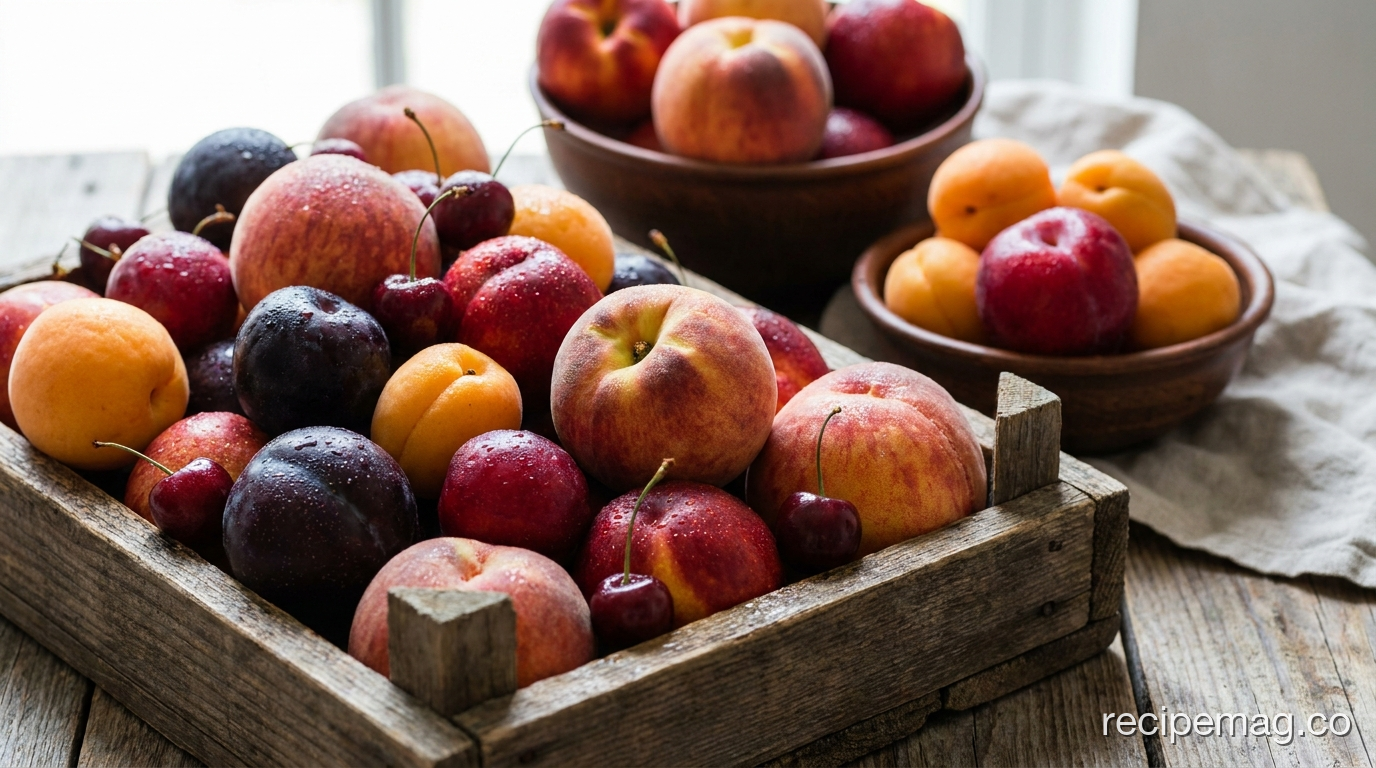
To store summer stone fruit well, ripen it on the counter first, then refrigerate once it yields to gentle pressure. Chilling an unripe peach is the fastest way to ruin it. Fruit held between about 36°F and 46°F for too long develops a dry, mealy texture called chilling injury (UC Davis Postharvest Technology Center, 2022). Get the timing right and a supermarket peach can taste like a farm-stand one.
Key Takeaways
- Ripen stone fruit at room temperature, then refrigerate only after it softens.
- Chilling injury turns unripe peaches mealy when they sit too long at fridge temperatures, roughly 36°F to 46°F. (UC Davis Postharvest, 2022)
- Cherries are the exception: they do not ripen after picking, so buy them ripe.
- A closed paper bag traps ethylene gas and speeds ripening by a day or two.
- Ripe stone fruit keeps 3 to 5 days refrigerated; freezing extends it for months.
What Counts as Stone Fruit, and Why Is Storage Tricky?
Stone fruit means any fruit built around a single hard pit, or “stone,” and the summer lineup is a short, glorious list. It includes peaches, nectarines, plums, apricots, cherries, and hybrids like pluots. Nearly 40% of the U.S. food supply goes uneaten, and soft, bruise-prone summer fruit is a big part of that loss (USDA, 2023). Storage is where most of that waste starts.
The tricky part is that these fruits keep changing after you buy them. Most stone fruit is climacteric, meaning it continues to ripen off the tree by producing ethylene gas. That is good news and bad news. It lets a firm peach soften on your counter, but it also means one forgotten plum can spoil in a hurry.
The One Exception: Cherries
Cherries are non-climacteric. They do not get any sweeter or softer once they leave the tree, so a hard, sour cherry stays hard and sour forever. Buy cherries dark, plump, and shiny, then refrigerate them right away. Everything below about ripening on the counter applies to peaches, plums, nectarines, and apricots, not to cherries.
How Do You Pick Ripe Stone Fruit at the Market?
Picking good stone fruit comes down to smell and gentle pressure, not color alone. A ripe peach or plum smells sweet and floral from a few inches away and gives slightly when you cradle it. Growers pick most commercial stone fruit before it is ripe, and fruit picked too early never develops full sugar (UC Davis Postharvest Technology Center, 2022). Your nose is the most reliable tool you have.
Peaches and Nectarines
Look at the ground color, the base shade under the red blush. It should read creamy yellow or gold, never green. Green means the fruit was picked too soon and will only soften, not sweeten. Press gently near the stem: a ripe one yields a little. Skip any fruit that is rock hard or already bruised and leaking.
Plums and Apricots
A ripe plum gives to light pressure and often wears a dusty silver coating called bloom. That bloom is natural and a sign of freshness, so resist rubbing it off. Apricots should be uniformly deep orange, fragrant, and soft enough to press. Pale, firm apricots were picked green and tend to stay mealy and bland.
A Quick Field Checklist
- Smell first. No sweet aroma usually means no flavor.
- Check the ground color for green, which signals an early pick.
- Press gently near the stem for a slight give.
- Inspect for bruises, splits, and shriveled skin, then set those aside.
- Buy in small batches so nothing overripens before you can eat it.
Should You Refrigerate Stone Fruit?
Not while it is unripe. Refrigerating a firm, underripe peach triggers chilling injury, a mealy, dry breakdown of the flesh that no counter time can undo. UC Davis identifies the worst range as roughly 36°F to 46°F and notes that fully ripe fruit tolerates cold much better than unripe fruit (UC Davis Postharvest Technology Center, 2022). So the rule is simple: ripen first, chill later.
Once a peach or plum is fragrant and gives easily, the fridge becomes your friend. Cold slows the fruit down and buys you a few extra days. The mistake is treating the fridge as a place to store hard fruit you bought too early. It only pauses the outside while the inside turns cottony.
The FDA also draws a hard line for cut fruit. Any fruit you slice should not sit above 40°F for more than two hours, since that window invites bacterial growth (FDA, 2023). Cut stone fruit goes straight into the fridge in a covered container.
How Do You Ripen Stone Fruit at Home?
The fastest, most reliable method is a paper bag on the counter. Stone fruit gives off ethylene gas as it ripens, and a closed paper bag traps that gas around the fruit to speed the process. Extension services confirm that concentrating ethylene this way can shorten ripening by a day or more (University of Maine Cooperative Extension, 2022). Add a banana or apple to the bag and it goes even faster.
Step-by-Step Counter Ripening
- Set fruit stem-side down on the counter in a single layer, out of direct sun. This keeps soft shoulders from bruising.
- Give it air. Leave a little space between pieces so ethylene does not pool and spoil the batch.
- To speed things up, use a paper bag. Loosely fold the top closed and check daily. A ripe apple or banana inside adds more ethylene.
- Check by smell and touch, not by clock. Ripe fruit smells sweet and yields to gentle pressure near the stem.
- Move ripe fruit to the fridge and eat it within a few days.
Keep Ethylene Producers Apart
Ethylene is a double-edged tool. It ripens your stone fruit, but it also overripens sensitive neighbors. Store high-ethylene fruit like peaches and plums away from berries and leafy greens, which spoil fast when exposed (University of Maine Cooperative Extension, 2022). A separate bowl for stone fruit is worth the counter space.
How Long Does Stone Fruit Last in Storage?
Once ripe and refrigerated, most stone fruit holds its quality for 3 to 5 days. The USDA recommends storing ripe produce at 40°F or below in a covered container to keep it safe and fresh (USDA Food Safety and Inspection Service, 2023). Cherries last a touch longer, up to a week, because you buy them ripe and cold to begin with.
Storage Timeline at a Glance
- Unripe on the counter: 1 to 3 days until soft and fragrant.
- Ripe in the fridge: peaches, plums, nectarines, and apricots keep 3 to 5 days.
- Cherries in the fridge: 5 to 7 days, stored dry and unwashed.
- Cut fruit: refrigerate covered and use within 2 to 3 days.
- Wash only right before eating to avoid trapping surface moisture that speeds mold.
Can You Freeze Summer Stone Fruit?
Yes, and freezing is the best way to save a glut before it turns. Pit and slice ripe fruit, freeze the slices in a single layer, then pack them into bags for up to several months. The National Center for Home Food Preservation recommends tossing slices with lemon juice or ascorbic acid to limit browning (NCHFP, University of Georgia, 2022). Frozen stone fruit is ideal for smoothies, crisps, and sauces.
How to Freeze It Right
- Wash, halve, and pit the fruit. Slice into wedges. Peaches peel easily after a 30-second dip in boiling water, then an ice bath.
- Toss the slices in a little lemon juice to keep the color bright.
- Spread them in a single layer on a lined sheet pan and freeze until solid, about 2 hours.
- Transfer to labeled freezer bags, press out the air, and store flat.
- Use within 6 to 12 months for the best flavor. Cook from frozen; do not thaw first for baking.
Frequently Asked Questions About Storing Stone Fruit
Why did my peaches get mealy and dry?
That grainy, cottony texture is chilling injury. It happens when unripe stone fruit spends too long at fridge temperatures, roughly 36°F to 46°F, before it has ripened. UC Davis notes that unripe fruit is far more sensitive to cold than ripe fruit (UC Davis Postharvest Technology Center, 2022). Ripen on the counter first, and refrigerate only once the fruit is soft and fragrant.
How do I ripen peaches quickly?
Place them in a loosely closed paper bag on the counter, stem-side down. The bag traps the ethylene gas the fruit gives off, speeding ripening by a day or two. Add a ripe banana or apple to move things along faster. Check daily by smell and gentle pressure, and refrigerate as soon as they soften so they do not overripen.
Should stone fruit be washed before storing?
No. Wash it right before you eat or cook it, not before storage. Surface moisture trapped in a container or bag encourages mold and soft spots, which shortens shelf life. This is especially true for cherries and apricots. Keep fruit dry and unwashed in the fridge, then rinse under cool water just before serving to knock off any dust or residue.
Can I store different stone fruits together?
You can group peaches, plums, nectarines, and apricots, since they ripen on a similar schedule. Just keep them away from ethylene-sensitive foods like berries and leafy greens, which spoil quickly nearby (University of Maine Cooperative Extension, 2022). Cherries are best kept separate and cold, since they are already ripe and do not need counter time.
Is it safe to eat stone fruit with a small bruise or blemish?
Usually, yes. A minor bruise is just crushed cells and is fine to cut away and eat. Discard fruit only when you see fuzzy mold, an off smell, or leaking, mushy flesh. Bruised spots do spread faster, so eat lightly bruised fruit first or trim it and use it in cooking, like a quick compote or a galette.
Put Your Summer Fruit to Work
Good storage is really about timing. Buy stone fruit a day or two before you need it, ripen it on the counter until it smells like summer, then move it to the fridge and eat it soon. That single habit saves more fruit than any gadget or fancy container ever will.
When a batch ripens all at once, lean into it. Slice peaches over yogurt, simmer plums into a quick sauce, or freeze a tray of wedges for winter. Ripe fruit that is about to turn is exactly what you want for baking, where a little softness only helps.
The season is short and the fruit is fragile. Use your nose, respect the counter-then-fridge rule, and very little will go to waste. That is the whole trick.
