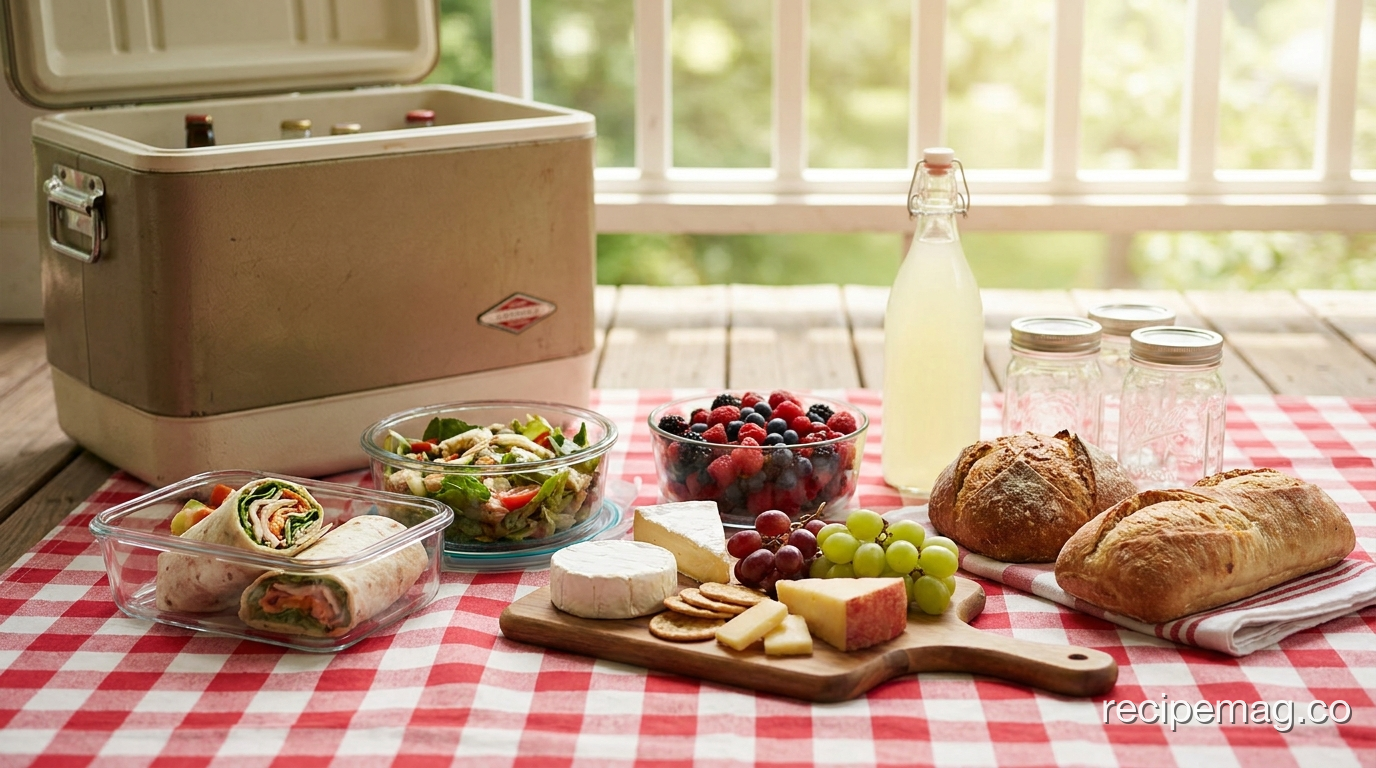
Keeping food safe at a summer picnic comes down to one rule: perishable food should not sit in the danger zone between 40°F and 140°F for more than two hours, and only one hour once the air hits 90°F. Bacteria double roughly every 20 minutes in that range, according to the USDA Food Safety and Inspection Service (USDA FSIS, 2023). Pack a cold cooler, watch the clock, and most foodborne illness at the picnic table is preventable.
Key Takeaways
- Perishable food is safe outdoors for 2 hours, dropping to just 1 hour once temperatures reach 90°F. (USDA FSIS, 2023)
- The CDC estimates 48 million Americans get sick from foodborne illness each year, and summer is peak season.
- Keep cold food at or below 40°F and hot food at or above 140°F. The zone between is where bacteria thrive.
- Pack raw meat separately, keep coolers below 40°F with plenty of ice, and never reuse a plate that held raw food.
- When in doubt, throw it out. A single warm potato salad is not worth a ruined weekend.
Why Is Food Safety a Bigger Risk in Summer?
Summer creates a nearly ideal environment for foodborne bacteria. The Centers for Disease Control and Prevention estimates that 48 million Americans get sick, 128,000 are hospitalized, and 3,000 die from foodborne illness each year, and reported cases climb in the warm months (CDC, 2023). Heat is the reason. Bacteria like Salmonella and E. coli multiply fastest in warm, moist conditions, and a sunny picnic table delivers exactly that.
Outdoor eating also strips away the safeguards a kitchen provides. There’s no running water for handwashing, no refrigerator an arm’s length away, and no thermometer on the counter. Food sits out longer because people graze. That slow, all-afternoon grazing is where trouble starts.
Then there’s the transport problem. Food travels from your kitchen to the park in a hot car, waits while you find parking, and finally lands on a blanket in direct sun. Every one of those steps adds time in the danger zone. The clock starts the moment food leaves the fridge, not when you sit down to eat.
What Is the 2-Hour Rule and Why Does It Matter?
The 2-hour rule is the single most important guideline for picnic safety. The USDA states that perishable food left between 40°F and 140°F for more than two hours is no longer safe, and above 90°F that window shrinks to one hour (USDA FSIS, 2023). Bacteria double about every 20 minutes in this range, so a small colony becomes a dangerous one fast.
How to Track the Time
Timing is easy to lose at a relaxed gathering. Set a phone timer the moment the cooler opens. Better yet, put out only what people will eat in one sitting and keep the rest chilled. Once the timer sounds, cold dishes go back on ice or into the trash.
The 90°F Exception
On a genuinely hot day, cut every estimate in half. A July afternoon in direct sun easily pushes past 90°F, which halves your safe window to 60 minutes. Shade helps, but shade is not refrigeration. When the forecast is hot, plan to serve fast and pack food away sooner than feels necessary.
How Do You Pack a Cooler to Keep Food Safe?
A well-packed cooler is your refrigerator away from home. The FDA advises keeping cold food at or below 40°F, and a cooler stuffed with ice or frozen gel packs holds that temperature for hours when kept shut and shaded (FDA, 2023). The goal is simple: more cold mass, less open-lid time, and no sun.
Pack Cold, Not Cool
Chill food thoroughly in the fridge before it ever touches the cooler. A cooler maintains cold; it does not create it. Warm potato salad packed over ice takes hours to come down to a safe temperature, and by then the damage is done.
Use Two Coolers
Keep drinks in one cooler and food in another. The drink cooler gets opened constantly, and every open lid dumps cold air. A dedicated food cooler that stays closed until serving time holds a far steadier temperature.
Fill Every Gap
Air is the enemy of a cold cooler. Pack ice packs around and on top of the food, and fill empty space with extra ice or crumpled newspaper. A full cooler stays cold much longer than a half-empty one. Store the cooler in the car’s air-conditioned cabin, not the hot trunk.
[PERSONAL EXPERIENCE] We’ve found that freezing water bottles and using them in place of loose ice does double duty. They keep the food cold on the way there, and by mid-afternoon they’ve thawed into ice-cold drinking water. No soggy sandwiches, no melted puddle at the bottom of the cooler.
Which Picnic Foods Are Most Likely to Cause Illness?
Some picnic classics carry more risk than others. The USDA flags dishes made with eggs, dairy, poultry, and cut melon as high-risk once they warm up (USDA FSIS, 2022). Interestingly, commercial mayonnaise is not the villain people assume. It’s acidic and often safer than the chicken or eggs it binds together.
Highest-Risk Foods
- Deli salads: Potato salad, egg salad, and pasta salad combine perishable ingredients and get handled a lot. Keep them buried in ice.
- Poultry and meat: Cooked chicken, burgers, and hot dogs need to stay hot or go straight into the cooler. Never partially cook meat to finish later.
- Cut melon: Watermelon and cantaloupe surfaces can harbor bacteria that transfer to the flesh when sliced. The FDA treats cut melon as a potentially hazardous food.
- Soft cheeses and dairy dips: Anything creamy belongs on ice, not on a sunny table.
Safer Choices for Hot Days
Some foods travel beautifully in the heat. Whole fruit, hard cheeses, cured meats, hummus, crackers, nut mixes, and vegetable sticks all tolerate a warm afternoon far better than a mayonnaise-based salad. When the forecast is brutal, lean on these and keep the risky dishes small and well-iced.
How Do You Prevent Cross-Contamination Outdoors?
Cross-contamination is the quiet cause of many picnic stomach bugs. The CDC identifies it as a leading route for foodborne illness, spread when raw-meat juices reach ready-to-eat food through hands, tongs, or a shared plate (CDC, 2022). At a picnic, with limited washing water, prevention takes a little planning.
Separate Everything
Pack raw meat in sealed, leak-proof containers at the very bottom of the cooler so nothing drips onto other food. Bring one plate and one set of tongs for raw meat and a completely different set for the cooked, ready-to-eat version. That single habit prevents the most common grilling mistake.
Bring Your Own Handwashing Setup
No sink? Pack a jug of water, soap, and paper towels, or at minimum a bottle of hand sanitizer with at least 60% alcohol. Everyone handling food should clean their hands before serving and after touching raw meat. It’s a small step that stops a lot of illness.
[UNIQUE INSIGHT] Most picnic advice obsesses over the cooler and ignores the serving spoon. In our experience, the utensil that touched raw chicken and then went back into the fruit salad causes more trouble than a slightly warm dish ever does. Color-code your serving tools with a rubber band or a marker. It sounds fussy, but it’s the cheapest food-safety insurance at the table.
Frequently Asked Questions About Summer Food Safety
How long can food sit out at a picnic before it goes bad?
Two hours is the maximum for perishable food between 40°F and 140°F, and only one hour once the temperature climbs above 90°F, according to the USDA. After that window, bacteria may have multiplied to unsafe levels even if the food looks and smells fine. Set a timer, and return leftovers to the cooler or discard them once time is up.
Is mayonnaise really the dangerous ingredient in picnic salads?
No, that’s a persistent myth. Commercial mayonnaise is made with pasteurized eggs and acids like vinegar and lemon juice, which actually slow bacterial growth. The real risk in potato salad or chicken salad comes from the perishable eggs, potatoes, poultry, and dairy it’s mixed with. Keep those salads cold and the mayonnaise is not your problem.
Can I put hot food straight into the cooler?
No. Adding hot food warms the whole cooler and pushes everything toward the danger zone. Cool food in the refrigerator first, ideally overnight, then transfer it cold. If you’re bringing hot food to eat right away, use an insulated container to hold it above 140°F and serve it within two hours.
What should I do with leftovers after the picnic?
Discard any perishable food that sat out longer than two hours, or one hour on a 90°F day. Food that stayed below 40°F in the cooler the whole time can go back in the fridge. When you’re unsure how long something was out, throw it out. Foodborne illness is not worth the gamble on a few dollars of leftovers.
Do I need a thermometer for a picnic?
A small food thermometer is worth packing, especially if you’re grilling. Cook ground beef to 160°F, poultry to 165°F, and steaks to at least 145°F with a rest, per USDA guidance. Color is an unreliable guide to doneness. A cheap instant-read thermometer removes the guesswork and is the surest way to serve meat that’s safe to eat.
Pack Smart and Enjoy the Afternoon
Summer picnics don’t have to end with a stomachache. The rules are few and easy to remember: keep cold food cold, hot food hot, and nothing perishable in the danger zone for more than two hours. On a hot day, halve that limit and pack food away sooner than you think you need to.
A properly loaded cooler does most of the work. Chill everything before you leave, fill every gap with ice, keep the lid shut, and store the cooler out of the sun. Bring separate tools for raw and cooked food, pack a way to clean your hands, and set a timer so the afternoon doesn’t outrun your food’s safe window.
Do those things and food safety fades into the background, which is exactly where it belongs. Spread the blanket, pour the lemonade, and enjoy the meal you packed with confidence.
