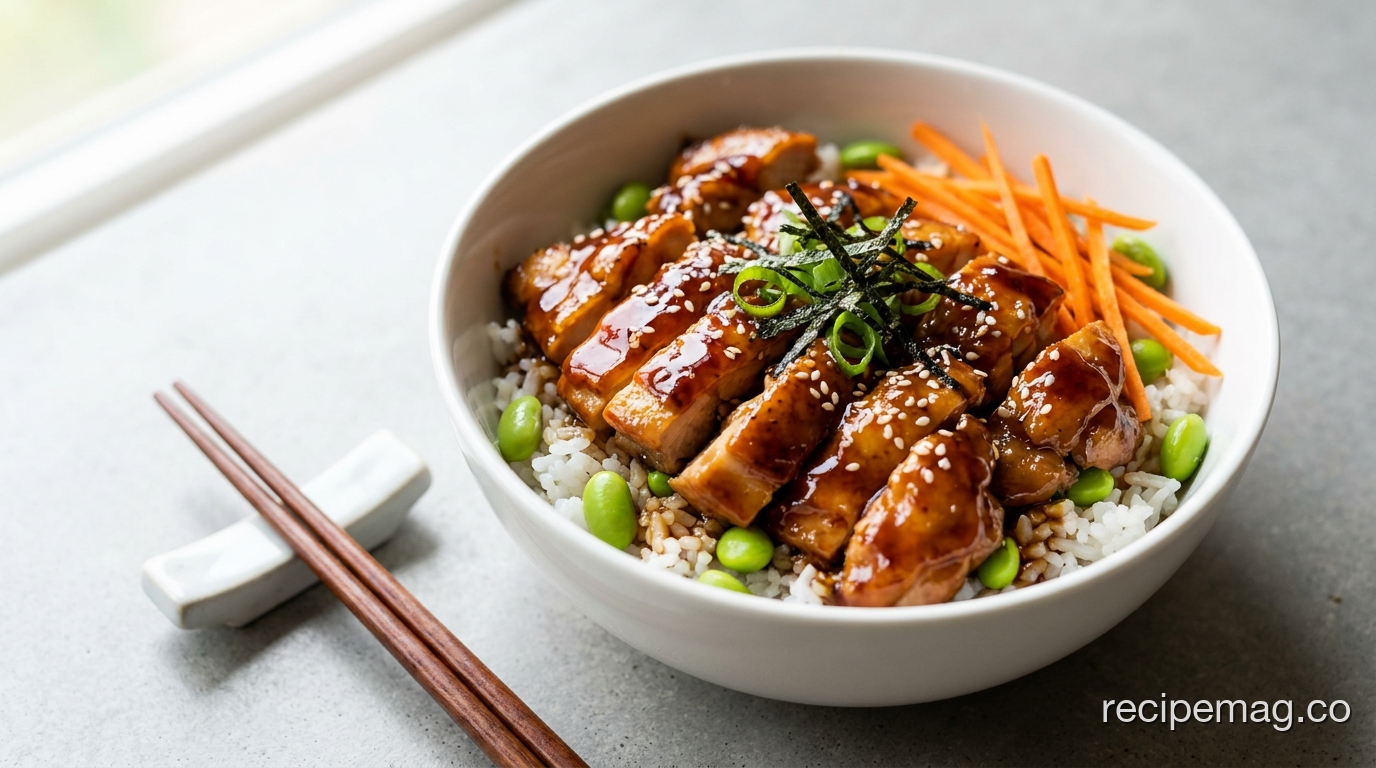
Grilled teriyaki chicken bowls turn one hot grill and a handful of pantry staples into dinner for four in about 35 minutes. You marinate boneless thighs in a homemade sauce, sear them over direct heat until the edges caramelize, then slice them over warm rice with quick-pickled cucumber and shredded carrot. Chicken remains the most-consumed protein in the United States, with Americans eating roughly 100 pounds per person a year (National Chicken Council, 2023). This bowl is the reason why: fast, cheap, and endlessly repeatable.
Key Takeaways
- Ready in about 35 minutes, start to finish, and serves four.
- The 4-ingredient teriyaki sauce (soy, mirin, sugar, ginger) beats any bottled version and costs a fraction of it.
- Grill chicken thighs to an internal 165°F for safe, juicy meat every time (USDA FSIS, 2023).
- Thighs stay far juicier than breasts on high grill heat because of their higher fat content.
- Every component preps and stores separately, so leftovers rebuild into fresh bowls all week.
What Makes a Teriyaki Chicken Bowl Work?
A great bowl is about balance: salty, sweet, and a little sharp, layered over a neutral base. Traditional teriyaki leans on soy sauce and mirin, the sweet rice wine that gives the glaze its shine as it reduces (Serious Eats, 2020). Grill the marinated chicken hot and fast, and those sugars caramelize into charred, lacquered edges. The rice soaks up the drippings. The pickled vegetables cut through the richness.
The format is forgiving. Swap the rice for cauliflower rice, add edamame or avocado, spoon on extra sauce or hold back. Nothing here is fragile. That’s what makes it a genuine weeknight recipe rather than a weekend project.
[PERSONAL EXPERIENCE] We’ve cooked this bowl on both a gas grill and a cast-iron grill pan, and the thighs win every time over breasts. On high heat, breasts tighten and dry out in the two minutes it takes for the glaze to char. Thighs shrug it off and stay tender, even when you walk away for a moment too long.
What Ingredients Do You Need?
The ingredient list is short and mostly shelf-stable. Boneless, skinless chicken thighs are the backbone: they contain more fat and connective tissue than breasts, which keeps them moist under high heat and forgiving of a minute or two of overcooking (America’s Test Kitchen, 2021). Everything else is pantry basics plus a couple of fresh vegetables.
For the Chicken and Sauce
- 1.5 pounds boneless, skinless chicken thighs (about 6 thighs)
- 1/2 cup soy sauce (low-sodium preferred)
- 1/4 cup mirin
- 3 tablespoons brown sugar
- 1 tablespoon fresh ginger, grated
- 2 garlic cloves, minced
- 1 teaspoon cornstarch (to thicken)
- 1 tablespoon neutral oil, for the grill
For the Bowls
- 2 cups short-grain white rice (yields about 6 cups cooked)
- 1 cup shelled edamame, steamed
- 1 large carrot, shredded or julienned
- 1 cucumber, thinly sliced
- 2 tablespoons rice vinegar
- 2 green onions, sliced
- 1 tablespoon toasted sesame seeds
A quick word on soy sauce: reach for low-sodium if you can. Regular soy plus the reduction step can push the glaze into aggressively salty territory. Low-sodium gives you control, and you can always add a pinch of salt at the end. You cannot take it back out.
How Do You Make the Teriyaki Sauce and Marinade?
The sauce does double duty as marinade and glaze. A high-salt, high-sugar marinade seasons the surface and drives browning, though it penetrates only a few millimeters deep, so its real job is flavor and char, not tenderizing the interior (Cook’s Illustrated, 2020). Mix it once, split it in two, and you get both a soak and a finishing glaze.
Step-by-Step
- Whisk the base. Combine soy sauce, mirin, brown sugar, grated ginger, and minced garlic in a bowl until the sugar dissolves.
- Split it. Pour half over the chicken thighs in a zip-top bag or shallow dish. Reserve the other half for the glaze.
- Marinate. Refrigerate the chicken for at least 20 minutes, or up to 8 hours. Longer means deeper surface flavor.
- Reduce the glaze. Simmer the reserved half in a small saucepan over medium heat. Stir the cornstarch into a tablespoon of cold water, add it in, and cook 2 to 3 minutes until glossy and thick enough to coat a spoon.
Never reuse the marinade that touched raw chicken as a sauce without boiling it hard first. The reserved, untouched half is your safe glaze. Keeping them separate from the start removes any guesswork about cross-contamination.
How Do You Grill the Chicken Perfectly?
Two rules govern grilling teriyaki chicken: control the flare-ups and hit the number. Poultry is safe at an internal 165°F, measured with an instant-read thermometer in the thickest part, and color alone will lie to you (USDA FSIS, 2023). The sugar in the marinade burns fast, so you want medium-high heat, not a raging fire, and a close eye.
Grilling Instructions
- Preheat the grill to medium-high, around 400 to 450°F. Oil the grates well to stop sticking.
- Shake off excess marinade from the thighs so they sear instead of steam. Lay them down over direct heat.
- Grill 4 to 5 minutes per side. Resist the urge to move them early; let a crust form before flipping.
- Brush with the reduced glaze in the last 2 minutes per side. Watch for flare-ups and move thighs to a cooler zone if the sugars start to scorch.
- Check the temperature. Pull the chicken at 165°F. Rest it 5 minutes before slicing so the juices redistribute.
[UNIQUE INSIGHT] Glaze late, not early. The single most common teriyaki mistake is brushing sauce on at the start, which guarantees a black, bitter crust long before the chicken is cooked through. Sear the thighs naked first to build a base, then apply the sugary glaze only in the final few minutes. You get lacquer, not char.
No grill? A cast-iron grill pan or heavy skillet over medium-high heat delivers nearly the same result indoors. You lose a touch of smoke, but the caramelized glaze and juicy interior come through the same way. Ventilate the kitchen; the sugars will smoke a little.
How Do You Assemble the Bowls?
Assembly is where a pile of components becomes a bowl worth photographing. Order matters: warm rice on the bottom, then sliced chicken, then the cool vegetables arranged in sections rather than tossed. Attractive plating measurably raises how good food tastes, with one study finding neat arrangement lifted taste ratings by up to 29% (Appetite, Elsevier, 2020). Two minutes of care pays off.
Assembly Steps
- Base the bowl with rice. Add a generous scoop of warm short-grain rice to each of four bowls.
- Quick-pickle the cucumber. Toss the sliced cucumber with the rice vinegar and a pinch of salt while the chicken rests. Five minutes is enough.
- Slice and fan the chicken. Cut the rested thighs across the grain into strips and arrange them over one side of the rice.
- Add the vegetables. Group the edamame, shredded carrot, and pickled cucumber in their own sections. Let the colors show.
- Finish. Drizzle any remaining glaze over the chicken, then scatter green onions and toasted sesame seeds across the top.
For meal prep, keep the rice, chicken, raw vegetables, and glaze in separate containers. Assemble each bowl fresh. This keeps the cucumber crisp and stops the rice from going gummy under the sauce.
Tips for the Best Teriyaki Chicken Bowls
Small adjustments separate a good bowl from a great one. Rinsing your rice before cooking removes surface starch and prevents gumminess, a step the USA Rice Federation recommends for consistently fluffy short-grain rice (USA Rice Federation, 2022). From there, it’s about heat control and timing.
- Rinse the rice until the water runs mostly clear. It makes a real textural difference in the finished bowl.
- Pat the chicken dry after marinating. A drier surface sears and browns instead of steaming on the grates.
- Double the glaze if you love sauce. It keeps in the fridge for a week and works on salmon, tofu, and vegetables too.
- Rest before slicing. Five minutes of rest keeps the juices in the meat rather than on the cutting board.
- Toast your own sesame seeds in a dry pan for 2 minutes. The aroma is worth the tiny extra step.
Grilled Teriyaki Chicken Bowls
Prep Time: 15 minutes | Cook Time: 20 minutes | Serves: 4
Ingredients
Chicken and Sauce
- 1.5 pounds boneless, skinless chicken thighs
- 1/2 cup low-sodium soy sauce
- 1/4 cup mirin
- 3 tablespoons brown sugar
- 1 tablespoon fresh ginger, grated
- 2 garlic cloves, minced
- 1 teaspoon cornstarch
- 1 tablespoon neutral oil, for the grill
Bowls
- 2 cups short-grain white rice
- 1 cup shelled edamame, steamed
- 1 large carrot, shredded
- 1 cucumber, thinly sliced
- 2 tablespoons rice vinegar
- 2 green onions, sliced
- 1 tablespoon toasted sesame seeds
Instructions
- Rinse rice until water runs clear, then cook according to package directions.
- Whisk soy sauce, mirin, brown sugar, ginger, and garlic. Pour half over the chicken and marinate 20 minutes to 8 hours. Reserve the rest.
- Reduce the reserved sauce in a saucepan over medium heat. Add cornstarch mixed with 1 tablespoon cold water; simmer 2 to 3 minutes until glossy.
- Preheat grill to medium-high (400 to 450°F) and oil the grates. Grill chicken 4 to 5 minutes per side.
- Brush with glaze in the last 2 minutes per side. Cook to an internal 165°F, then rest 5 minutes and slice across the grain.
- Toss cucumber with rice vinegar and a pinch of salt. Divide rice among 4 bowls, top with chicken, edamame, carrot, and cucumber.
- Drizzle with remaining glaze. Garnish with green onions and sesame seeds. Serve.
Notes
- Meal prep: store rice, chicken, vegetables, and glaze separately. Assemble fresh for up to 4 days.
- No grill? Use a cast-iron grill pan or heavy skillet over medium-high heat.
- Swap short-grain rice for brown rice, jasmine rice, or cauliflower rice.
- Double the glaze; it keeps refrigerated for a week and works on salmon and tofu.
Frequently Asked Questions About Teriyaki Chicken Bowls
Can I use chicken breasts instead of thighs?
Yes, but adjust your technique. Breasts are leaner and dry out faster on high heat, so pull them the moment they hit 165°F and avoid overcooking. Pounding them to an even thickness helps them cook uniformly. Thighs stay juicier and more forgiving on the grill, which is why this recipe calls for them, but breasts work well with a careful eye on the thermometer.
What is the difference between teriyaki sauce and marinade here?
They start as the same mixture, split in two. Half becomes the marinade that soaks the raw chicken and gets discarded after use. The other half stays untouched and gets reduced with cornstarch into a thick, glossy glaze for brushing and drizzling. Keeping them separate avoids cross-contamination, since the marinade that touched raw chicken should never be used as a finishing sauce unmodified.
How long can I marinate the chicken?
Between 20 minutes and 8 hours works best. The salt and sugar in teriyaki season the surface quickly, so even 20 minutes adds flavor. Beyond 8 hours, the soy sauce can start to make the texture slightly mushy and overly salty. For deep flavor without any downside, aim for 2 to 4 hours in the refrigerator, never at room temperature.
Can I make these bowls ahead for meal prep?
Absolutely. Grill the chicken and cook the rice in advance, then store the rice, chicken, raw vegetables, and glaze in separate containers for up to 4 days. Reheat the rice and chicken together for about 90 seconds in the microwave, then add the cold vegetables and glaze fresh. This keeps the cucumber and carrot crisp and stops the rice from turning gummy.
Is homemade teriyaki sauce healthier than store-bought?
Usually, yes. Bottled teriyaki often carries added corn syrup, preservatives, and significantly more sodium than a homemade version. Making it yourself lets you use low-sodium soy sauce and control the sugar. According to the FDA, most Americans consume well above the recommended 2,300 mg of sodium per day, so trimming it where you can helps (FDA, 2022).
Grilled teriyaki chicken bowls prove that a genuinely satisfying dinner doesn’t need a long list or a long clock. Thirty-five minutes, one grill, and a four-ingredient sauce give you four bowls that taste like takeout but cost a fraction of it.
Start with the recipe as written, then make it your own. Trade the rice, pile on more vegetables, crank the glaze up or down. The technique stays the same: marinate, grill hot, glaze late, and hit 165°F. Once you’ve done it once, you won’t reach for the bottled stuff again.
Fire up the grill tonight. The sauce takes five minutes, and dinner is close behind.
