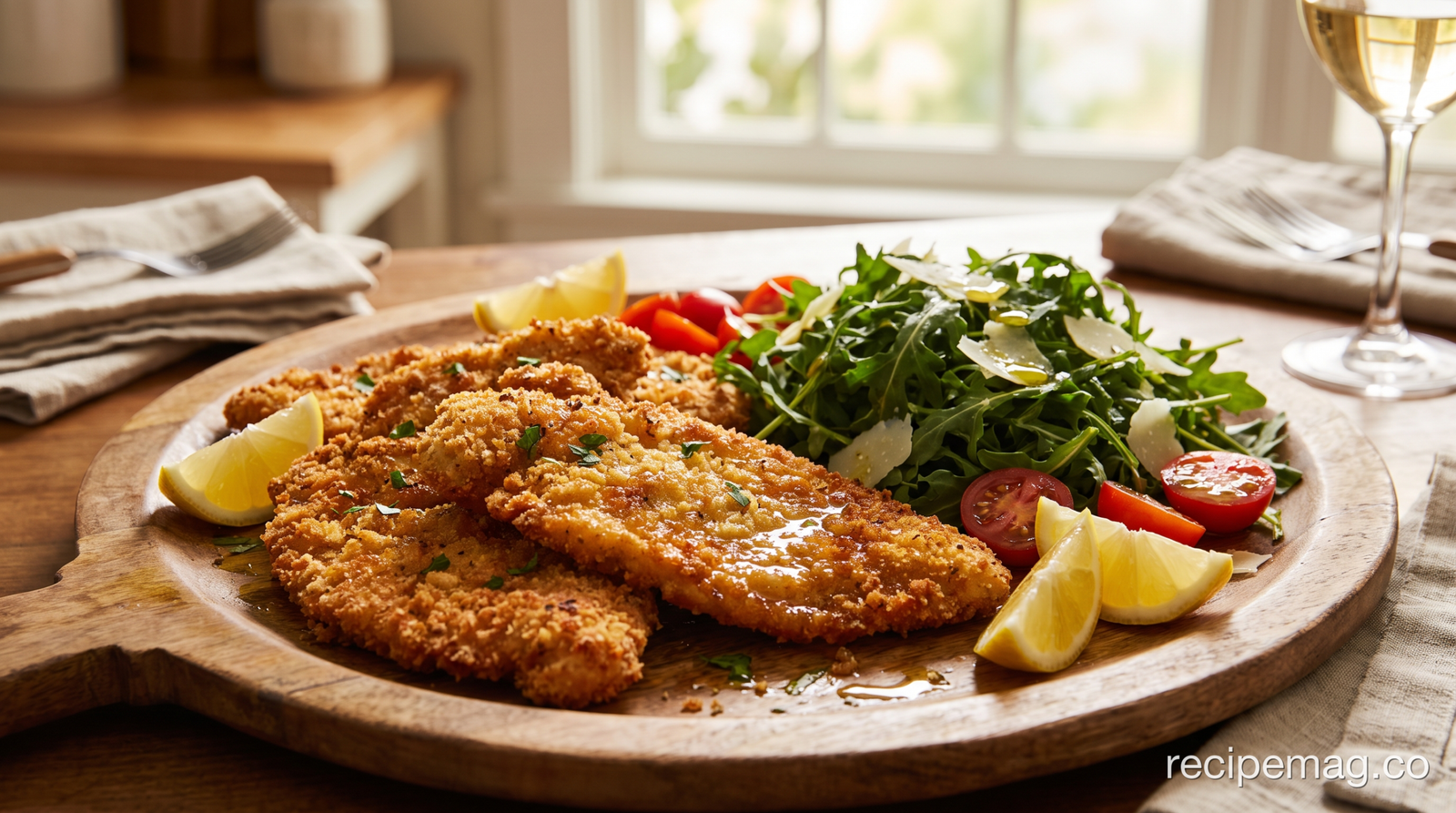
A chicken cutlet is a chicken breast solved. Pounded to an even quarter inch, it cooks through in about six minutes total, which is short enough that the crust browns and the meat stays juicy at the same time. Thickness is the whole variable: an uneven cutlet gives you a burnt thin end and a raw thick one, and no amount of technique fixes that after the fact.
Key Takeaways
- Pound the cutlets to an even 1/4 inch; evenness matters more than thinness.
- Panko gives a crisper, longer-lasting crust than fine breadcrumbs.
- Shallow-fry in about 1/4 inch of oil, not a full fry and not a dry pan.
- Chicken is safe at 165°F, which a 1/4-inch cutlet reaches in roughly 3 minutes per side (USDA FSIS, 2023).
- The arugula on top is a dressing and a side dish at once.
Ingredients
Serves 4. Active time 25 minutes. Total time 25 minutes.
- 4 boneless skinless chicken breasts, about 1.5 lbs
- 1 cup all-purpose flour
- 2 large eggs
- 1 tbsp water
- 2 cups panko breadcrumbs
- 1/2 cup finely grated parmesan
- 1 tsp garlic powder
- 2 tsp kosher salt, divided
- 1 tsp black pepper
- Neutral oil for shallow frying, about 1/2 cup
For the arugula:
- 5 oz arugula
- 2 tbsp olive oil
- 1 tbsp lemon juice, plus wedges to serve
- Shaved parmesan and flaky salt
How to Make Them
1. Butterfly and pound. Slice each breast horizontally into two thinner pieces. Place them between two sheets of parchment and pound with a mallet or the flat of a heavy pan until an even 1/4 inch. Work from the centre outward. Season both sides with half the salt.
2. Set up three stations. Flour in one dish. Eggs beaten with the water in a second. Panko mixed with parmesan, garlic powder, remaining salt, and pepper in a third. Keep one hand for wet and one for dry, or you will breadcrumb your own fingers.
3. Bread them. Flour, shaking off the excess. Egg, letting it drip. Then press firmly into the panko on both sides. Pressing is what makes the coating stay on. Set the finished cutlets on a rack.
4. Heat the oil properly. Pour about 1/4 inch of oil into a large skillet and heat over medium-high until a panko crumb sizzles immediately on contact. Too little oil gives dry patches; too much makes it a deep fry.
5. Fry. Cook two cutlets at a time for about 3 minutes per side, until deeply golden. Do not crowd the pan and do not move them once they are down. Drain on a rack, not paper towels.
6. Dress and serve. Toss the arugula with olive oil, lemon juice, and a pinch of salt just before serving. Pile it directly on the hot cutlets, add shaved parmesan and flaky salt, and serve with lemon wedges.
Why Panko and Why a Rack
Panko is made from crustless bread with a light, flaky crumb structure. Those larger irregular flakes trap less oil and hold their crunch far longer than fine dried breadcrumbs, which pack densely and go soft within minutes of hitting a plate.
The rack matters just as much. A cutlet resting on paper towel steams its own underside, and the crust you spent five minutes building softens in ninety seconds. A wire rack lets air circulate underneath and keeps both sides crisp.
The parmesan in the breading does two jobs: it seasons, and its fat and protein brown alongside the panko for a deeper colour. Use finely grated hard parmesan rather than the pre-shredded kind, which contains anti-caking starch and browns unevenly.
Variations Worth Knowing
Chicken Milanese. This recipe already is, essentially. Leave the cutlets whole and large enough to overhang the plate for the full effect.
Chicken parmesan. Top each fried cutlet with a spoonful of tomato sauce and mozzarella, then broil two minutes. Our roasted tomato sauce straight from the freezer is ideal here.
Cutlet sandwich. On a soft roll with mayonnaise, pickles, and shredded lettuce. Genuinely one of the best sandwiches available from a home kitchen.
Pork or veal. Both work identically. Pork loin cutlets are cheaper than chicken breast in most markets and behave the same way in the pan.
Oven version. Spray generously with oil and bake on a rack at 425°F for 15 to 18 minutes. Less crisp, but hands-off and far less oil.
Make-Ahead and Freezing
Breaded uncooked cutlets freeze exceptionally well and are one of the highest-value things to bank for a weeknight. Bread them, freeze in a single layer on a sheet pan, then stack with parchment between and bag. They fry from frozen with about two extra minutes per side.
That makes them a natural fit for cutlet night in our school-night dinner system. A batch of twelve takes half an hour to bread and covers three dinners.
Cooked cutlets keep three days refrigerated. Reheat them on a rack in a 375°F oven for eight minutes; a microwave turns the crust to paste. For more freezer-first thinking, see our make-ahead meals guide.
Pounding Without a Mallet
A meat mallet is useful and entirely optional. The flat bottom of a heavy skillet works just as well, as does a rolling pin or even a sturdy wine bottle. What matters is the technique, not the tool.
Work from the centre outward with a glancing, pushing motion rather than straight down. Hammering vertically drives the fibres apart and tears holes; pushing outward spreads the meat evenly and keeps it intact. Two sheets of parchment or a split freezer bag stop the chicken sticking and contain the mess.
Aim for even thickness rather than maximum thinness. A quarter inch is the target, and a cutlet that is a consistent quarter inch will always beat one that ranges from an eighth to a half. Hold the meat up to the light if you are unsure; thin patches glow.
Butterflying first makes the job much easier. A whole breast pounded from full thickness takes real effort and usually tears. Slicing it horizontally into two thinner pieces first means each one needs only a few passes.
Chill the breasts for twenty minutes before pounding if they feel soft. Cold meat holds its structure and spreads more predictably than meat at room temperature.
Frequently Asked Questions
How thin should chicken cutlets be?
About 1/4 inch, and evenly so. Even thickness matters more than the exact measurement, because unevenness is what causes dry ends and undercooked centres.
Why does my breading fall off?
Usually too much egg left on the cutlet, or the panko was not pressed on firmly. Let the egg drip properly and press the crumbs in with real pressure.
Can I bread these ahead of time?
Yes. Refrigerate breaded cutlets on a rack for up to four hours, or freeze them for up to three months. Both actually help the coating adhere.
What oil should I use?
Any neutral oil with a reasonably high smoke point: canola, vegetable, or grapeseed. Olive oil smokes too low for this and turns bitter.
How do I know when they are done?
A 1/4-inch cutlet is cooked through at roughly 3 minutes per side over medium-high heat. If in doubt, an instant-read thermometer should show 165°F.
What else can I put on top?
Anything sharp and cold. Cherry tomatoes with basil, a shaved fennel salad, or quick-pickled onions all work as well as the arugula.
