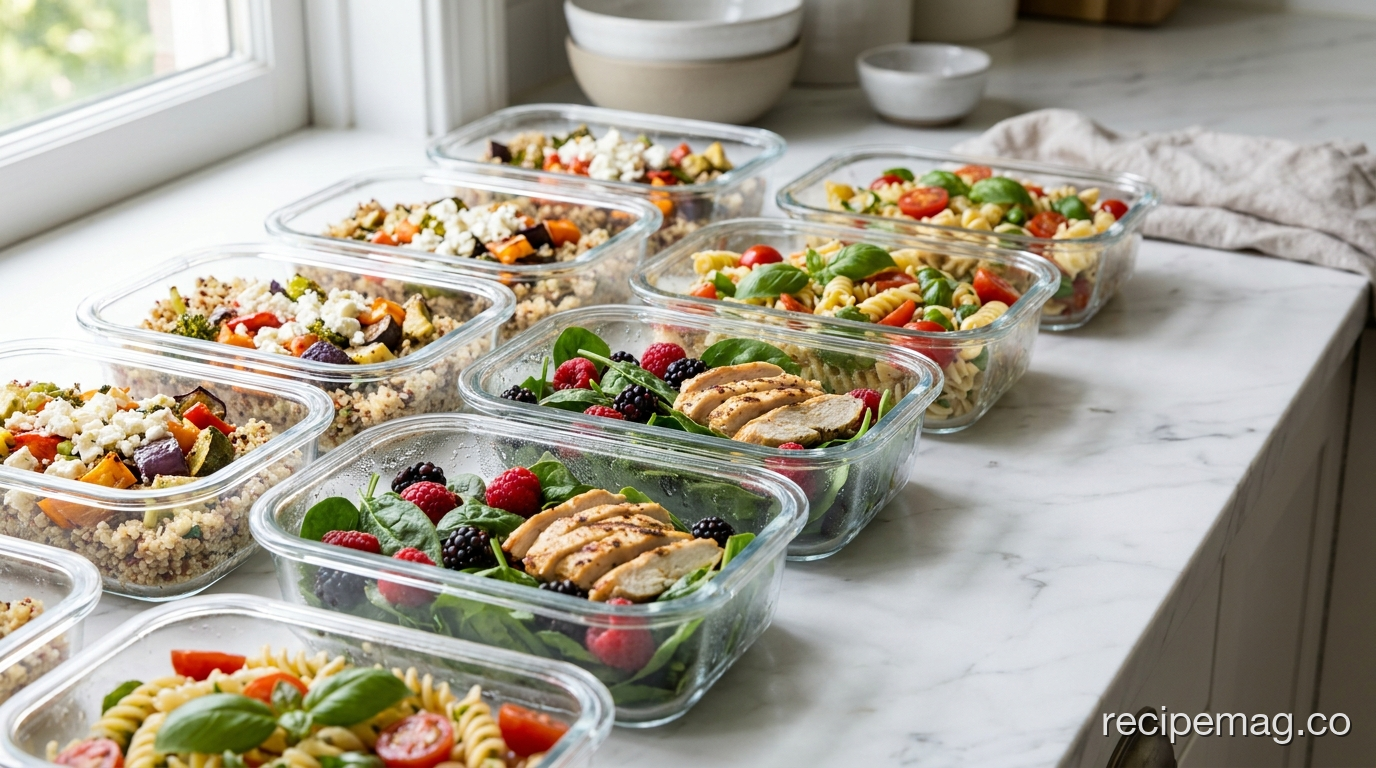
Make-ahead summer meals are dishes you assemble once and eat all week, ideally the kind that taste better cold and never ask you to turn on the oven at 6 p.m. in July. They matter because the habit is mainstream: 58% of Americans batch-cook at least one meal a week to save weeknight time (International Food Information Council, 2023). The ten below hold up in the fridge, travel well, and lean on ripe summer produce so the flavor does the heavy lifting.
Key Takeaways
- 58% of Americans already batch-cook one meal a week, so make-ahead is a habit worth building on. (IFIC, 2023)
- Cooked grains, proteins, and vegetables stay safe and good for 3 to 4 days at 40°F or below. (USDA FSIS, 2023)
- Cold-friendly dishes (noodles, grain bowls, jar salads) dodge the summer heat entirely.
- Store components separately so nothing turns soggy before Thursday.
- All ten meals scale up cleanly for four to six servings from one prep session.
Why Do Make-Ahead Meals Work So Well in Summer?
Summer is the season make-ahead cooking was built for, because the best hot-weather food is meant to be eaten cold. The USDA Food Safety and Inspection Service confirms that cooked grains, proteins, and vegetables keep safely for three to four days at 40°F or below (USDA FSIS, 2023). Cook once on a cooler morning, and you skip the stove during the hottest hours all week.
There’s a real time payoff, too. The average American spends about 37 minutes a day on food prep and cleanup, according to the Bureau of Labor Statistics American Time Use Survey (U.S. Bureau of Labor Statistics, 2022). Front-load that into one Sunday session and your weeknights open up. Isn’t that the whole point of summer?
[UNIQUE INSIGHT] The trick most people miss is designing for texture, not just flavor. Dishes fail in the fridge when crunchy things go limp and dressed greens weep. In our experience, the meals that actually survive to day four are the ones built to be assembled at the last minute: dressing in a jar, crisp elements stored dry, and a sturdy base grain or noodle that only improves as it soaks up seasoning.
10 Make-Ahead Summer Meals for Busy Weeks
These ten cover breakfast through dinner, and most need zero reheating. Each one banks well for several days and scales to feed a household from a single round of chopping. Pick two or three to start, then rotate.
1. Mason Jar Salads
Layered jar salads are the original make-ahead lunch, and the layering is the whole secret. Dressing goes on the bottom, hardy vegetables next, greens on top, so nothing wilts. Built this way, a sealed jar salad holds for up to five days. Use farro or chickpeas near the base for staying power, and shake the jar into a bowl right before eating.
2. Cold Grain Bowls
A grain bowl is the most forgiving make-ahead format there is. Quinoa delivers all nine essential amino acids, making it a complete plant protein (Harvard T.H. Chan School of Public Health, 2023), and it holds its texture for days. Batch a pot of quinoa or farro, roast a sheet pan of summer vegetables, and store the pieces apart. Assemble bowls cold with a lemony dressing each morning.
3. Chilled Peanut Noodles
Cold noodles are arguably the perfect summer meal-prep dinner: they’re meant to be eaten straight from the fridge. A sesame-peanut sauce clings to chilled noodles and only deepens overnight as the flavors marry. Make a double batch of sauce, toss with cooked-and-cooled noodles, and top with cucumber and scallion. This one genuinely tastes better on day two.
4. Sheet-Pan Chicken and Vegetables
One tray, one cleanup, four dinners. Roast or grill a batch of marinated chicken alongside summer vegetables, then portion it out for the week. Poultry cooked to a safe internal temperature of 165°F stays good refrigerated for three to four days (USDA FSIS, 2023). Serve it cold over greens, tucked into wraps, or sliced onto a grain bowl.
5. Overnight Oats
Breakfast counts as a make-ahead meal, and overnight oats are the lowest-effort version going. Soaking rolled oats in milk or yogurt softens them without any cooking and thickens them by morning. Whole oats bring about 4 grams of fiber per half-cup dry serving (USDA FoodData Central, 2023). Layer four jars on Sunday night with berries and a spoon of nut butter.
6. Chilled Soups Like Gazpacho
When it’s too hot to cook, blend dinner instead. Gazpacho is a raw, chilled tomato soup that actually improves after a day in the fridge as the flavors settle. Ripe tomatoes are about 95% water by weight (USDA FoodData Central, 2023), so they blend into a light, hydrating meal with little more than cucumber, garlic, good olive oil, and salt. Make a big batch; it keeps for three days.
7. Marinated Bean Salad
A marinated bean salad is the make-ahead dish that peaks on day three. Beans and chickpeas soak up vinaigrette without going soft, and a single can of chickpeas provides roughly 15 grams of protein and 13 grams of fiber (USDA FoodData Central, 2023). Toss beans with diced summer vegetables, herbs, lemon, and olive oil. It needs no refrigeration to reheat and travels anywhere.
8. Frittata or Egg Muffins
Baked eggs are the protein workhorse of summer meal prep, hot or cold. A frittata bakes in one pan, slices into wedges, and reheats in seconds, while egg muffins portion themselves. One large egg carries about 6 grams of high-quality protein (USDA FoodData Central, 2023). Fold in whatever vegetables are wilting in the crisper. Both keep for four days refrigerated.
9. Big-Batch Grilled Protein
Grill once, eat all week. A batch of grilled chicken, flank steak, or tofu becomes the anchor for salads, wraps, bowls, and quick plates without any midweek cooking. Grilling on a cooler evening keeps kitchen heat out of the house entirely. Slice the protein only as you use it, since whole pieces stay juicier in the fridge than pre-cut ones that dry at the edges.
10. Freezer Smoothie Packs
Smoothie packs stretch make-ahead thinking into the freezer. Portion fruit, greens, and add-ins into bags so each morning is just blend-and-go. Frozen produce holds up well: a 2017 study found frozen fruit matched or beat fresh store-bought fruit in 8 of 17 measured nutrients, because freezing happens close to harvest (Journal of Food Composition and Analysis, 2017). Prep a week of packs in ten minutes.
How Do You Keep Make-Ahead Meals From Getting Soggy?
Sogginess is the number one reason make-ahead meals disappoint by midweek, and the fix is storage strategy, not a better recipe. The rule that solves most of it: store wet and dry components separately and combine at the last minute. The FDA notes that cut produce held above 40°F for more than two hours enters the bacterial danger zone (FDA, 2023), so tight, cold, separated containers protect both texture and safety.
[PERSONAL EXPERIENCE] We’ve found three habits do most of the work. First, keep dressings and sauces in small jars and add them only at serving time. Second, line salad and berry containers with a dry paper towel to wick away the moisture that breeds mold. Third, store anything meant to be crunchy, croutons, nuts, crispy chickpeas, completely apart from the wet base. That last one alone rescues more lunches than any recipe tweak.
Label and Rotate
Date every container with a piece of masking tape. Cooked grains, vegetables, and proteins are best inside the three-to-four-day window, so a visible date stops the guessing. Eat the most perishable dishes first: chilled soups and dressed salads early in the week, sturdier grain and bean dishes later.
Frequently Asked Questions About Make-Ahead Summer Meals
How long do make-ahead summer meals last in the fridge?
Most cooked components keep for three to four days at 40°F or below, per USDA FSIS guidance. Dressed salads and chilled soups are best within two to three days, while marinated bean salads and cooked grains hold closer to the full four. Store everything in airtight containers, label with the date, and eat the most perishable dishes first. When in doubt, trust your nose over the calendar.
Which make-ahead meals can I freeze?
Soups, cooked grains, and grilled proteins freeze well for up to three months. Smoothie packs are built for the freezer. Dishes with fresh greens, cucumber, or creamy dressings do not freeze well, because ice crystals break down their texture. A good rule: if a dish is meant to be eaten cold and crisp, keep it in the fridge; if it’s meant to be reheated or blended, the freezer is fair game.
Do I have to reheat these summer meals?
Most of them, no. Jar salads, grain bowls, chilled noodles, bean salads, gazpacho, and smoothie packs are all designed to be eaten cold. That’s the summer advantage: you skip the stove and the extra kitchen heat. Frittatas and grilled proteins taste good either cold or gently warmed, so a quick microwave is optional rather than required.
How do I keep prepped vegetables crunchy all week?
Store cut vegetables dry and cold, and cut them just before prep day rather than a week ahead. Line the container with a paper towel to absorb moisture, keep the lid tight, and don’t dress them until serving. Sturdy vegetables like cucumber, bell pepper, carrot, and radish hold their crunch longest. Softer items like tomato are best added fresh the day you eat the meal.
Can I make a full week of lunches from one prep session?
Yes, and it’s the most efficient way to cook in summer. Batch two grains, one or two proteins, and a big tray of roasted or grilled vegetables, then mix and match into different bowls, salads, and wraps across the week. Storing components separately, rather than as finished meals, keeps everything fresher and lets you build variety so you’re not eating the identical plate five days running.
Start With Two Meals This Week
Make-ahead cooking works best when you don’t try to do all ten at once. Pick one cold dinner, chilled peanut noodles or a grain bowl, and one breakfast, overnight oats or smoothie packs. Prep them on a cool morning and you’ve already covered half your week without touching the stove after noon.
The habit builds on itself. Once the containers are washed and the dressings are jarred, adding a third and fourth dish next week takes almost no extra effort. Store the pieces apart, label the dates, and let ripe summer produce carry the flavor.
Choose your two, block out an hour this weekend, and let the fridge do the rest. That’s a whole week of easy meals banked before Monday even starts.
