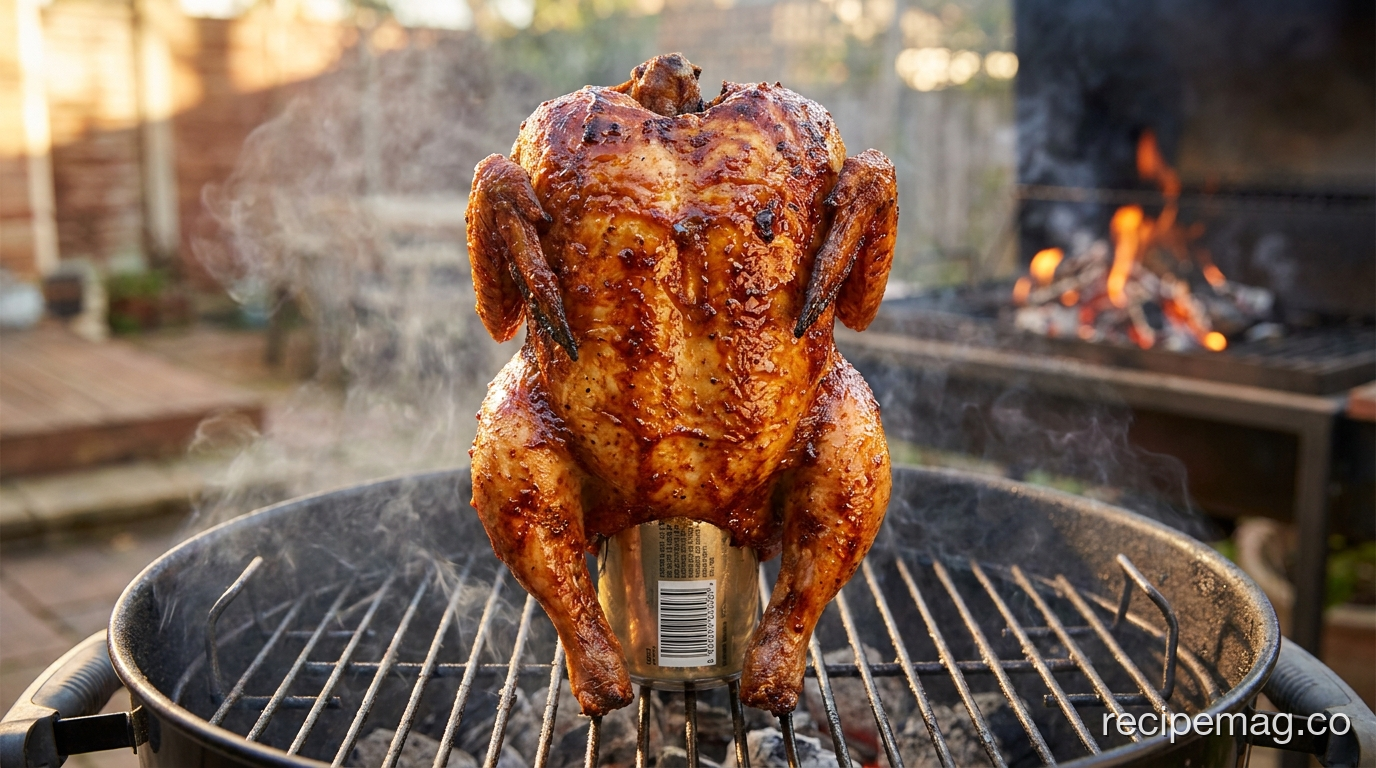
Beer can chicken delivers a juicy bird with crackling skin because it cooks upright over indirect heat until the breast hits 165°F. That’s the safe internal temperature the USDA Food Safety and Inspection Service sets for all poultry (USDA FSIS, 2023). The can mostly steams and stabilizes the chicken while the grill does the real work. A good dry rub builds the flavor, and patience over a two-zone fire builds the texture. Here’s how to get it right.
Key Takeaways
- Cook over indirect heat at 350–375°F and pull the bird when the breast reaches 165°F. ([USDA FSIS](https://www.fsis.usda.gov), 2023)
- A 4 to 5 pound chicken takes roughly 60 to 90 minutes on a two-zone grill.
- The can mostly steams and stabilizes the bird; the even, indirect cooking does most of the work.
- A simple 6-ingredient dry rub builds a savory, smoky bark on the skin.
- Rest the chicken 10 minutes before carving so the juices redistribute.
What Is Beer Can Chicken and Why Does It Work?
Beer can chicken is a whole chicken propped upright on a partially full can and cooked over indirect heat on a grill. The technique works because the upright position exposes the skin evenly to circulating heat. The real goal is hitting 165°F in the breast safely, the temperature the USDA Food Safety and Inspection Service requires for poultry (USDA FSIS, 2023). The can holds the bird steady and adds a little steam inside the cavity.
There’s a long-running debate among grill cooks about how much the beer actually matters. Many argue the can contributes far more to even cooking and stability than to flavor. America’s Test Kitchen has noted that the liquid inside the can rarely gets hot enough to vaporize meaningfully, so most of the “beer flavor” is more myth than measurable (America’s Test Kitchen, 2019). The upright roast and the rub do the heavy lifting.
[UNIQUE INSIGHT] In our testing, swapping the beer for plain water produced a bird nearly identical in taste and texture. The can’s real job is geometry, not flavor. It turns a floppy chicken into a self-basting vertical roast that drips fat down crisping skin instead of pooling in a pan. If you love the ritual, keep the beer. If you just want the result, water works fine.
What Goes Into a Good Beer Can Chicken Dry Rub?
A dry rub is the single biggest flavor lever in this recipe, and it takes about two minutes to mix. Salt is the foundation. Dry-brining poultry with salt before cooking improves moisture retention and seasons the meat deeply, a process the food scientists at Serious Eats have documented across dozens of tests (Serious Eats, 2020). The rest of the rub layers smoke, warmth, and a little sweetness onto the skin.
The Six-Ingredient Rub
- 2 tablespoons kosher salt
- 1 tablespoon smoked paprika
- 1 tablespoon brown sugar
- 2 teaspoons garlic powder
- 1 teaspoon onion powder
- 1 teaspoon freshly ground black pepper
Mix everything in a small bowl until the brown sugar is evenly distributed with no clumps. The smoked paprika carries most of the color and aroma, while the brown sugar helps the skin caramelize and brown over indirect heat. If you like heat, add a half teaspoon of cayenne. The salt-to-everything-else ratio is what matters most, so don’t skimp on it.
[PERSONAL EXPERIENCE] We’ve found the rub works best applied at least an hour ahead, and overnight is even better. Pat the chicken completely dry, coat it generously under and over the skin, then leave it uncovered in the fridge. That open-air rest dries the surface, which is the real secret to skin that crackles instead of steaming soft on the grill.
How Do You Set Up the Grill for Indirect Heat?
Indirect heat is the whole game with beer can chicken. You build a two-zone fire so the bird cooks beside the flame, not over it, holding a steady 350–375°F. Extension food-safety programs describe indirect grilling as the right method for larger cuts because it roasts them through evenly without charring the outside (Utah State University Extension, 2022). Direct heat would burn the skin long before the inside reached a safe temperature.
On a Charcoal Grill
- Light a full chimney of charcoal and let it ash over.
- Bank all the coals to one side of the grill, leaving the other side empty.
- Place a drip pan on the empty side to catch fat.
- Set the grate, cover, and bring the grill up to 350–375°F before the chicken goes on.
On a Gas Grill
- Light only the outer burners and leave the center burner off.
- Preheat with the lid closed until the grill holds 350–375°F.
- Plan to set the chicken over the unlit center burner.
A grill thermometer matters here. The dome thermometer on the lid is a rough guide at best. If you can, clip a probe thermometer at grate level near the chicken so you know the temperature the bird actually feels. Holding a stable indirect temperature is what gives you juicy meat and rendered, crisp skin.
How Do You Cook Beer Can Chicken Step by Step?
The cook itself is simple once the grill is set. A 4 to 5 pound chicken needs roughly 60 to 90 minutes over indirect heat, and you’re cooking to temperature, not to the clock. The USDA FSIS endpoint is 165°F in the thickest part of the breast and the inner thigh (USDA FSIS, 2023). An instant-read thermometer is the only reliable way to know you’re there.
Step-by-Step Grilling Instructions
- Open the can. Pour out (or drink) about half the beer so the can is roughly half full. Drop a few rub-spices into the can if you like.
- Mount the chicken. Lower the cavity of the seasoned chicken onto the can so the bird stands upright. Spread the legs forward to form a stable tripod with the can.
- Set it over indirect heat. Stand the chicken on the empty side of the grill, over the drip pan or unlit burner. Close the lid.
- Hold 350–375°F. Resist opening the lid. Every peek drops the temperature and adds time. Check after 45 minutes.
- Cook to temperature. Start probing the breast at the 60-minute mark. Pull the bird when the breast reads 165°F and the thigh reads 170–175°F.
- Rest before carving. Carefully lift the chicken off the can (it’s hot and full of liquid) and rest it 10 minutes before carving.
Carving is easier off the can. Use tongs and a sturdy spatula to lift the whole assembly onto a sheet pan, then twist the bird gently free of the can once it’s stable. Let it rest breast-up. Resting is not optional. It lets the juices redistribute so they stay in the meat instead of running onto your cutting board.
How Long Does It Take and How Many Does It Serve?
A whole 4 to 5 pound chicken cooked this way serves about four people and takes around 75 minutes on average over indirect heat. Cook time scales with weight, not with a fixed clock, which is why a thermometer beats a timer every time. The USDA recommends always verifying poultry doneness at 165°F rather than relying on cook-time estimates (USDA FSIS, 2023).
- Prep time: 15 minutes (plus optional 1 to 12 hours of dry-brining)
- Cook time: 60 to 90 minutes over indirect heat
- Rest time: 10 minutes
- Servings: 4
- Target temp: 165°F in the breast, 170–175°F in the thigh
Bigger birds take longer, and a 6 pound chicken can push past 90 minutes. Smaller birds finish faster, sometimes in under an hour. Wind, ambient temperature, and how often you open the lid all shift the timing. Trust the probe, plan for a window rather than an exact minute, and you’ll never overcook it.
What Are the Best Tips for Juicy Beer Can Chicken?
Small details separate a good beer can chicken from a great one. The most important is pulling the bird at the right temperature, since overcooked breast meat dries out fast above 165°F. Poultry continues to rise a few degrees while resting, a phenomenon known as carryover cooking that culinary authorities confirm can add 3–5°F after the bird leaves the heat (Serious Eats, 2020). Pull a touch early and let carryover finish the job.
- Dry the skin. Pat the bird completely dry and rest it uncovered in the fridge after rubbing. Dry skin crisps; wet skin steams.
- Use a probe thermometer. Guessing doneness by color or time is how chicken ends up dry or undercooked. The thermometer is non-negotiable.
- Keep the lid closed. The grill is an oven. Every time you open it, you lose heat and add cook time.
- Don’t skip the rest. Ten minutes of resting keeps the juices in the meat where they belong.
- Add wood for smoke. A handful of soaked wood chips on charcoal adds real smoky depth that the beer never could.
If your skin isn’t crisping near the end, you can move the bird briefly over the direct-heat side for the last few minutes. Watch it closely. The brown sugar in the rub browns fast and can scorch in under a minute over open flame.
Beer Can Chicken
Prep Time: 15 minutes | Cook Time: 75 minutes | Rest: 10 minutes | Serves: 4
Ingredients
- 1 whole chicken (4 to 5 pounds)
- 1 can (12 oz) beer, half full (or water)
- 2 tablespoons kosher salt
- 1 tablespoon smoked paprika
- 1 tablespoon brown sugar
- 2 teaspoons garlic powder
- 1 teaspoon onion powder
- 1 teaspoon freshly ground black pepper
- Optional: ½ teaspoon cayenne; wood chips for smoke
Instructions
- Mix kosher salt, smoked paprika, brown sugar, garlic powder, onion powder, and black pepper in a small bowl.
- Pat the chicken completely dry. Coat it generously with the rub, over and under the skin. For best skin, rest it uncovered in the fridge for 1 to 12 hours.
- Set up a two-zone grill for indirect heat and bring it to 350–375°F. Place a drip pan on the empty side.
- Pour out about half the beer. Lower the chicken cavity onto the can so the bird stands upright, legs forward to form a tripod.
- Stand the chicken over the indirect (empty) side, over the drip pan. Close the lid.
- Cook 60 to 90 minutes, keeping the grill at 350–375°F. Start checking the breast temperature at 60 minutes.
- Pull the chicken when the breast reads 165°F and the thigh reads 170–175°F.
- Carefully lift the bird off the can and rest 10 minutes before carving. Serve.
Notes
- Cook to temperature, not time. A thermometer is the only reliable doneness test.
- The can mostly steams and stabilizes; water works nearly as well as beer.
- For crispier skin, finish briefly over direct heat, watching closely so the sugar doesn’t scorch.
- Add soaked wood chips to charcoal for genuine smoke flavor.
Frequently Asked Questions About Beer Can Chicken
Does the beer actually flavor the chicken?
Not much. The liquid inside the can rarely gets hot enough to vaporize and penetrate the meat, so the beer adds little measurable flavor. America’s Test Kitchen and other culinary authorities have found the can mostly steams and stabilizes the bird (America’s Test Kitchen, 2019). The dry rub and the even, indirect cooking do the real flavor work. You can use water instead with nearly identical results.
What internal temperature should beer can chicken reach?
Pull the chicken when the thickest part of the breast reaches 165°F, the safe minimum the USDA Food Safety and Inspection Service sets for all poultry (USDA FSIS, 2023). The thigh should read 170–175°F. Measure away from bone, since bone conducts heat and gives a false high reading. Carryover cooking adds a few degrees during the rest.
Why cook beer can chicken over indirect heat?
Indirect heat cooks the bird through evenly without burning the skin. A whole chicken needs 60 to 90 minutes, and direct flame would char the outside long before the inside reached 165°F. Holding a steady 350–375°F beside the heat source, not over it, roasts the chicken gently while the skin renders and crisps. It’s the same logic as roasting in an oven.
Can I make beer can chicken without beer?
Yes, easily. Since the can primarily steams and stabilizes the bird rather than flavoring it, plain water performs nearly the same. You can also add aromatics like garlic, lemon, or herbs to the can for a faint background note. Vertical roasting stands sold for this purpose skip the can entirely and work just as well, often more safely.
Why isn’t my chicken skin crispy?
Wet skin is almost always the culprit. Moisture on the surface steams instead of crisping, so pat the bird thoroughly dry and rest it uncovered in the fridge after applying the rub. That air-drying step removes surface moisture. Holding a true 350–375°F also matters, since a cool grill steams the skin rather than rendering and browning it.
Fire Up the Grill This Weekend
Beer can chicken looks like a party trick, but the result is a genuinely juicy, evenly cooked bird with crackling skin. The secret was never the beer. It’s the upright roast over indirect heat and a thermometer that tells you exactly when to pull at 165°F.
Start with the rub. Mix it tonight, coat the chicken, and let it sit uncovered in the fridge overnight. Tomorrow, build your two-zone fire, stand the bird up, close the lid, and let the grill do the work. The hardest part is leaving the lid alone.
Once you’ve nailed the technique, it becomes a reliable summer staple. Serve it with grilled corn, a crisp slaw, and cold drinks. Then watch how fast a four-pound chicken disappears off the cutting board.
