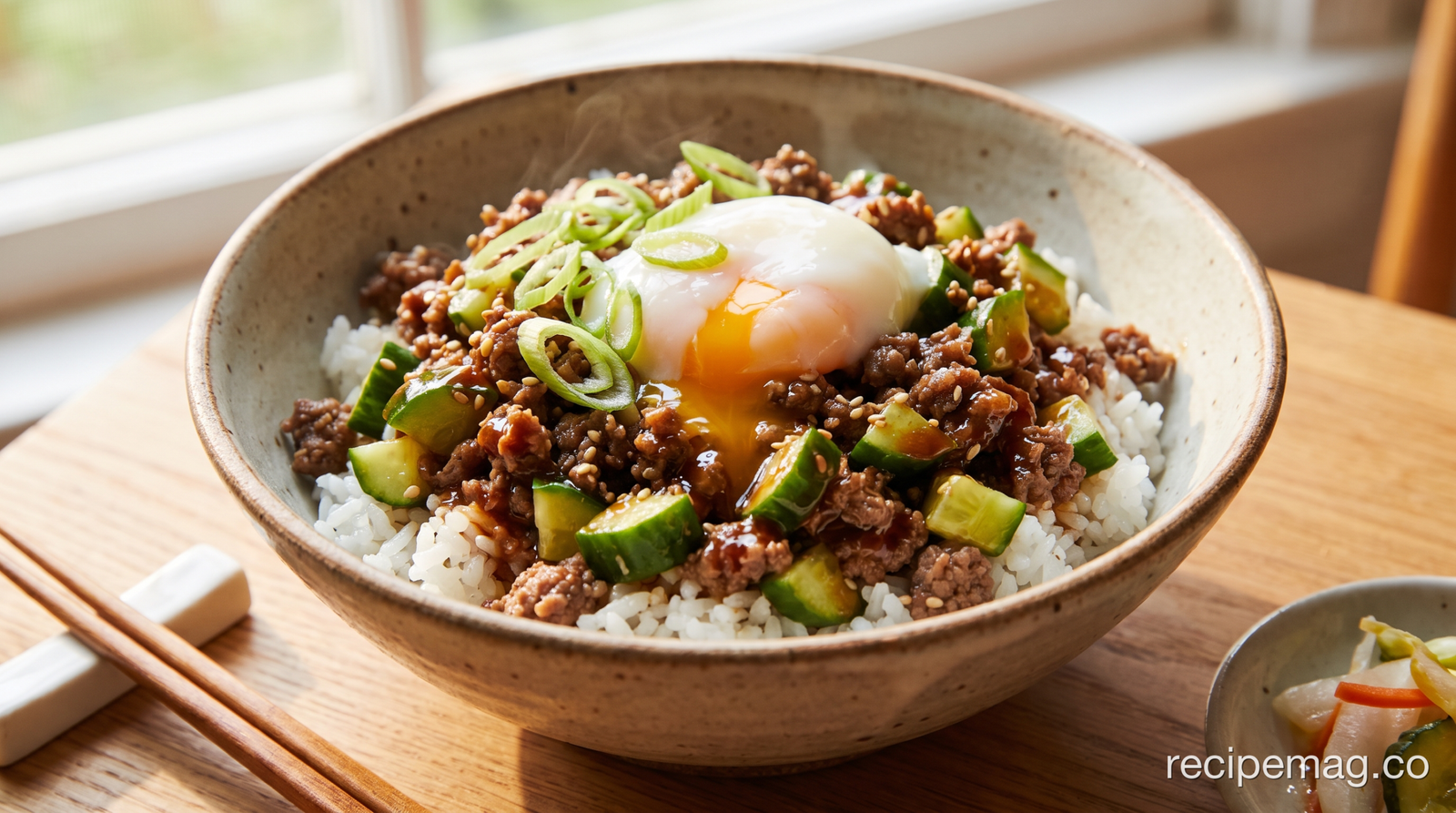
Ground beef is the fastest route to a savoury weeknight dinner because it has enormous surface area, and surface area is where browning happens. Left undisturbed in a hot pan for two minutes, it develops the crusted, caramelised bits that make this bowl taste like it cooked far longer than twenty minutes. The mistake almost everyone makes is stirring too early.
Key Takeaways
- Leave the beef alone for two full minutes before stirring; that is where the flavour comes from.
- The sauce is five pantry ingredients and takes thirty seconds to mix.
- Quick cucumber does the job of a side dish in two minutes.
- Ground beef must reach 160°F for safety (USDA FSIS, 2023).
- Works with ground turkey, chicken, or pork with no other changes.
Ingredients
Serves 4. Active time 20 minutes. Total time 20 minutes.
For the beef:
- 1 lb ground beef, 80/20
- 1 tbsp neutral oil
- 4 garlic cloves, minced
- 1 tbsp fresh ginger, grated
- 3 scallions, whites and greens separated
For the sauce:
- 3 tbsp soy sauce
- 1 tbsp toasted sesame oil
- 1 tbsp brown sugar
- 1 tbsp rice vinegar
- 1 tsp gochujang or sriracha, optional
To serve:
- 4 cups cooked rice, hot
- 1 English cucumber, thinly sliced
- 1 tbsp rice vinegar and a pinch of salt, for the cucumber
- Toasted sesame seeds
- 4 eggs, fried, optional but recommended
Use 80/20 beef. Leaner grinds brown poorly and taste dry here, and the rendered fat carries the aromatics through the whole pan.
How to Make It
1. Mix the sauce. Whisk the soy, sesame oil, brown sugar, rice vinegar, and gochujang in a small bowl. Do this first so it is ready when the pan needs it.
2. Salt the cucumber. Toss the sliced cucumber with the rice vinegar and salt and leave it. By the time dinner is ready it will be crisp, tart, and lightly pickled.
3. Brown the beef properly. Heat the oil in a large skillet over medium-high until it shimmers. Add the beef in one layer, press it flat, and then leave it completely alone for two minutes. It should be deeply browned before you break it up. This is the entire difference between a good bowl and a grey one.
4. Break and finish browning. Break the beef into large pieces with a wooden spoon and cook another 3 to 4 minutes, stirring occasionally, until no pink remains and the edges are crusted. Ground beef needs to reach 160°F (USDA FSIS, 2023).
5. Add aromatics. Push the beef to one side, add the garlic, ginger, and scallion whites to the bare pan, and cook one minute until fragrant. Adding them to the hot fat rather than the meat keeps them from burning while the beef browns.
6. Sauce and glaze. Pour in the sauce and stir to coat. Let it bubble for 1 to 2 minutes until it thickens and clings. It will look loose, then suddenly glossy; that is the moment to stop.
7. Serve. Spoon over hot rice with the cucumber alongside. Top with sesame seeds, scallion greens, and a fried egg with a runny yolk if you want the bowl to feel like a proper dinner.
Why the Two-Minute Rule Matters
Browning requires a dry surface above roughly 285°F. Ground beef releases a lot of water, and while that water is evaporating the surface cannot exceed 212°F. Stir constantly and the meat sits in its own liquid, steams, and turns uniformly grey.
Leaving it undisturbed lets the bottom layer’s moisture escape upward while the contact surface dries and browns. Two minutes is usually enough in a properly preheated pan. You can hear it: the sound shifts from a wet hiss to a dry crackle.
Two related points. Do not crowd the pan; a pound of beef needs at least a 12-inch skillet, and doubling the recipe means cooking in two batches. And do not add the sauce until the browning is finished, because sugar in the sauce will burn long before the meat is done.
Variations
Different protein. Ground turkey, chicken, or pork all work with no adjustment beyond cooking to 165°F for poultry. Leaner grinds need an extra spoonful of oil.
Vegetarian. Crumbled firm tofu, pressed and browned hard, takes the sauce well. So do finely chopped mushrooms, which brown even better than beef given the same undisturbed treatment.
More vegetables. Add shredded carrot or finely chopped cabbage with the aromatics; both cook in the residual heat. A handful of spinach stirred in at the end wilts instantly.
Lettuce cups. Skip the rice and spoon the beef into butter lettuce leaves with the cucumber. It becomes a different dinner entirely.
Heat. Gochujang brings a fermented, rounded heat; sriracha is sharper; chilli crisp adds crunch as well as heat. All three work.
Make-Ahead and Leftovers
The beef reheats well and keeps three to four days refrigerated (USDA FSIS, 2023). Store it separately from the rice so neither goes soggy, and add a splash of water when reheating to loosen the glaze.
It also freezes for three months. Cool completely, portion flat in bags, and thaw in the fridge overnight. That makes it a strong candidate for the freezer bank described in our school-night dinner system, where it slots straight into bowl night.
Cooked rice is the component worth batching. Make a double quantity at the weekend and it covers this bowl, fried rice, and a soup base. For the wider approach, see our make-ahead meals guide.
Building the Rest of the Bowl
The beef is the fast part. What makes this feel like a composed dinner rather than mince on rice is what goes around it, and none of it takes more than a few minutes.
The base. Short-grain rice is best here because its stickiness catches the sauce. Brown rice works and adds chew. For something lighter, shredded cabbage or a bed of greens turns the same beef into a salad bowl.
Something pickled. The quick cucumber in the recipe is the minimum. Kimchi, pickled radish, or our refrigerator pickles all do the same job of cutting the richness. Without an acidic element the bowl reads heavy by the third bite.
Something fresh. Scallion greens, cilantro, shredded carrot, or thin cucumber batons. This is texture rather than flavour, and it is what stops the bowl being uniformly soft.
Something rich. A fried egg with a runny yolk is the standard, and it effectively becomes a second sauce as it breaks. Avocado works if eggs are not an option.
Set the components out separately and let people build their own. It takes no extra work, it handles fussy eaters without negotiation, and leftovers stay properly separated for the next day.
Frequently Asked Questions
Why is my ground beef grey instead of browned?
The pan was not hot enough, it was overcrowded, or you stirred too early. All three keep the surface wet, and a wet surface cannot brown.
What temperature does ground beef need to reach?
160°F throughout. Unlike a whole steak, grinding distributes surface bacteria through the meat, so the whole mass must reach a safe temperature.
Can I use pre-cooked rice?
Yes, and it is the point of batching it. Reheat it with a splash of water under a lid so it steams back to soft rather than drying out.
Is gochujang necessary?
No. The bowl works without any heat at all. Gochujang adds depth as much as spice, so a teaspoon is worth trying even if you are heat-averse.
Can I double this recipe?
Yes, but brown the beef in two batches. Two pounds in one pan will steam no matter how hot the pan starts.
How do I keep the cucumber crisp?
Slice it thin, dress it with vinegar and salt no more than thirty minutes ahead, and keep it cold. Longer than that and it starts to go limp as the salt draws out water.
