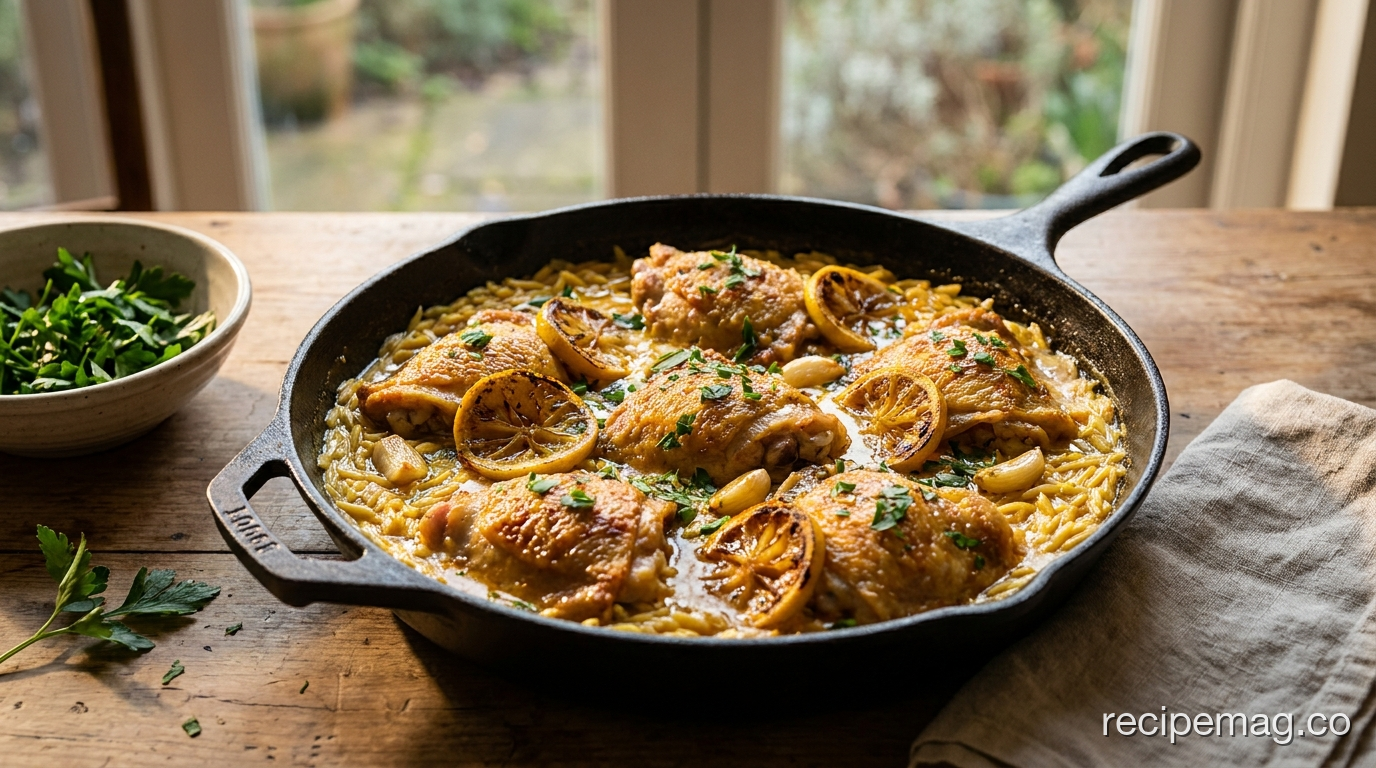
One-pan lemon garlic chicken and orzo cooks in a single skillet in about 40 minutes: you sear the chicken, toast the orzo in the same pan, then simmer everything together until the pasta drinks up a bright, garlicky broth. One-pot dinners keep climbing on menus, and a National Restaurant Association survey ranked comfort-driven, low-cleanup meals among the top trends of 2023 (National Restaurant Association, 2023). The payoff at home is deep flavor and exactly one pan to wash.
Key Takeaways
- Everything cooks in one skillet in about 40 minutes, start to finish.
- Orzo simmers directly in the chicken’s flavorful fond, so it absorbs every drop of the pan sauce.
- Chicken is safe to eat at an internal temperature of 165°F. ([USDA FSIS](https://www.fsis.usda.gov), 2023)
- Toasting the orzo before simmering adds a nutty depth through the Maillard reaction.
- Fresh garlic and lemon added at the end keep the finish bright instead of muddy.
Why Does One-Pan Chicken and Orzo Work So Well?
This dish works because nothing gets thrown away. When you sear the chicken, it leaves browned bits, the fond, stuck to the pan. Those bits are dense with savory Maillard compounds, and cooking the orzo right in that same skillet pulls all of it into the pasta (Serious Eats, 2022). Instead of draining pasta water down the sink, you keep the flavor and let the orzo drink it up.
Orzo helps, too. It’s a small, rice-shaped pasta that releases starch as it simmers, thickening the broth into a glossy, risotto-like sauce without any cream. You get a complete meal, protein, starch, and sauce, from one pan and one burner. That’s the whole appeal of a good weeknight skillet.
[UNIQUE INSIGHT] Most one-pan pasta recipes tell you to dump raw orzo into liquid and hope. In our experience, taking two extra minutes to toast the dry orzo in the chicken fat first is the difference between a flat dish and a deep one. The toasted grains also hold their shape better, so you avoid the gummy, overcooked texture that gives one-pot pasta a bad name.
Ingredients
Boneless, skinless chicken thighs are the smart choice for this recipe because they stay juicy through the simmer. Thighs carry more fat and connective tissue than breasts, which keeps them tender even if you overcook them slightly (USDA FoodData Central, 2023). Breasts work if you prefer them, but watch the time closely so they don’t dry out.
For the Chicken
- 1½ pounds boneless, skinless chicken thighs (about 6)
- 2 tablespoons olive oil
- 1 teaspoon salt
- ½ teaspoon black pepper
- 1 teaspoon dried oregano
For the Orzo
- 1½ cups dry orzo
- 4 cloves garlic, minced
- 1 small onion, finely diced
- 3 cups low-sodium chicken broth
- Zest and juice of 1 large lemon
- ½ cup baby spinach or chopped kale (optional)
- ¼ cup grated Parmesan
- 2 tablespoons chopped fresh parsley
- Extra lemon slices, for serving
Use low-sodium broth so you control the salt as the orzo reduces. As the liquid cooks down, any salt in it concentrates, and a full-sodium broth can push the finished dish too far. You can always add salt at the end. You can’t take it out.
How Do You Sear the Chicken for Maximum Flavor?
Sear the seasoned thighs in a hot skillet for about 4 to 5 minutes per side until deeply golden, then set them aside to finish later. You’re building the fond here, not fully cooking the chicken through yet. Poultry is safe to eat only once it reaches an internal temperature of 165°F (USDA FSIS, 2023), and the thighs will hit that mark when you return them to the pan to simmer.
Searing Steps
- Season the thighs on both sides with salt, pepper, and oregano. Pat them dry first; a dry surface browns far better than a wet one.
- Heat the oil in a large, deep skillet over medium-high until it shimmers.
- Sear undisturbed for 4 to 5 minutes per side, until each face is deeply golden. Resist the urge to move them early.
- Remove and rest. Transfer the thighs to a plate. They finish cooking in the orzo, so a raw center is fine at this stage.
[PERSONAL EXPERIENCE] We’ve found the single most common mistake is crowding the pan. Six thighs in a small skillet steam instead of sear, and you lose the fond that makes this dish sing. Cook in two batches if your pan is small. The two minutes you spend now pay off in every bite later.
How to Toast and Simmer the Orzo
Toast the orzo in the chicken drippings for about 2 minutes before adding any liquid. This small step transforms the pasta. Toasting dry pasta in fat builds a nutty, roasted flavor through the Maillard reaction, and it helps the grains hold their shape as they cook (America’s Test Kitchen, 2022). The orzo should smell toasty and look a shade darker before the broth goes in.
Simmering Steps
- Soften the aromatics. In the same pan, cook the diced onion in the drippings for 3 minutes, then add the garlic and stir for 30 seconds until fragrant.
- Toast the orzo. Add the dry orzo and stir for about 2 minutes, until it turns golden and smells nutty.
- Add the broth. Pour in the chicken broth and lemon zest. Scrape the bottom of the pan to lift every browned bit into the sauce.
- Nestle and simmer. Return the chicken and any juices to the pan. Cover and simmer 12 to 14 minutes, stirring once, until the orzo is tender and the chicken reaches 165°F.
- Finish it. Stir in the spinach, Parmesan, lemon juice, and parsley off the heat. Let it sit 2 minutes to thicken.
The Lemon and Garlic Finish
Add the lemon juice and half the garlic at the very end, not the start, to keep the finish bright. Long simmering turns fresh garlic sweet and mellow and cooks the sharp lift out of lemon. Garlic’s signature compound, allicin, forms only when raw cloves are crushed or chopped, and heat degrades it quickly (NIH Office of Dietary Supplements, 2023). A late hit of both keeps the dish tasting fresh rather than flat.
Lemon does two jobs here. The zest, added early, perfumes the whole pan with oil-soluble aroma. The juice, added last, delivers the sharp acidity that cuts the richness of the chicken fat and Parmesan. Reserve a few thin lemon slices for the top. They look good and let each person squeeze more if they want it.
Tips, Swaps, and Storage
This skillet is forgiving and easy to adapt to what’s in your fridge. Cooked chicken and orzo both store well, and the USDA recommends refrigerating leftovers within two hours and using them within three to four days (USDA FSIS, 2023). The orzo will drink up sauce as it sits, so plan to loosen leftovers with a splash of broth.
- Watch the liquid. Orzo keeps absorbing after it leaves the heat. If it looks dry, stir in a few tablespoons of hot broth to bring the sauce back.
- Swap the greens. Spinach, kale, chard, or peas all fold in nicely at the end. Add sturdier greens a couple of minutes earlier.
- Use breasts if you prefer. Cut them into cutlets so they cook fast and stay juicy, and pull the pan the moment they hit 165°F.
- Reheat gently. Warm leftovers on the stove with a splash of broth, stirring, rather than blasting them in the microwave, which dries the chicken.
- Add a crunch. A handful of toasted pine nuts or a shower of extra Parmesan makes it feel finished.
One-Pan Lemon Garlic Chicken and Orzo
Prep Time: 10 minutes | Cook Time: 30 minutes | Serves: 4
Ingredients
- 1½ pounds boneless, skinless chicken thighs
- 2 tablespoons olive oil
- 1 teaspoon salt, ½ teaspoon black pepper, 1 teaspoon dried oregano
- 1 small onion, finely diced
- 4 cloves garlic, minced
- 1½ cups dry orzo
- 3 cups low-sodium chicken broth
- Zest and juice of 1 large lemon
- ½ cup baby spinach (optional)
- ¼ cup grated Parmesan
- 2 tablespoons chopped fresh parsley
Instructions
- Pat the thighs dry and season with salt, pepper, and oregano. Sear in olive oil over medium-high heat, 4 to 5 minutes per side, until deeply golden. Remove to a plate.
- In the same pan, cook the onion 3 minutes, then add the garlic and cook 30 seconds until fragrant.
- Add the dry orzo and toast, stirring, about 2 minutes, until golden and nutty.
- Pour in the broth and lemon zest, scraping up the browned bits. Return the chicken and juices to the pan.
- Cover and simmer 12 to 14 minutes, stirring once, until the orzo is tender and the chicken reaches 165°F.
- Off the heat, stir in spinach, Parmesan, lemon juice, and parsley. Rest 2 minutes, then serve with lemon slices.
Notes
- Use low-sodium broth so the sauce doesn’t over-salt as it reduces.
- Leftovers keep 3 to 4 days refrigerated. Loosen with a splash of broth when reheating.
- Add the lemon juice and half the garlic at the end for the brightest flavor.
- Chicken breasts work; cut into cutlets and cook just until they reach 165°F.
Frequently Asked Questions About Lemon Garlic Chicken and Orzo
Can I use chicken breasts instead of thighs?
Yes, though thighs stay juicier through the simmer. If you use breasts, cut them into cutlets so they cook quickly and evenly, and pull the pan as soon as they reach 165°F. Chicken is safe to eat only at that internal temperature (USDA FSIS, 2023). Breasts overcook faster than thighs, so a thermometer is your best insurance against dry meat.
Why did my orzo turn out mushy?
Mushy orzo usually means too much liquid, too long a simmer, or skipping the toasting step. Toasting the dry orzo in fat firms its starchy surface so it holds shape. Measure your broth carefully and start checking at 12 minutes; orzo goes from tender to soft fast. Remember it keeps absorbing liquid off the heat, so pull it while there’s still a little loose sauce.
Can I make this dish ahead of time?
You can, with one adjustment. Orzo drinks up sauce as it sits, so leftovers thicken and dry out in the fridge. Store cooled portions in an airtight container for three to four days (USDA FSIS, 2023). When reheating, stir in a few tablespoons of hot broth or water to bring the creamy, saucy texture back. It reheats best gently on the stovetop.
Is orzo a pasta or a grain?
Orzo is pasta, not a grain, despite looking like large grains of rice. It’s made from semolina wheat flour, the same as most dried pasta. Because it’s small and starchy, it cooks fast and releases starch that thickens a broth into a silky sauce, which is exactly what makes it ideal for one-pan dishes like this one. Look for it near the dried pasta.
What can I serve with lemon garlic chicken and orzo?
This is a complete meal on its own, with protein, starch, and greens in one pan. If you want more on the table, a simple green salad with vinaigrette or a side of roasted vegetables rounds it out without much extra work. Crusty bread is welcome for mopping up the lemony sauce. Keep sides light so the bright, garlicky orzo stays the star.
Put One Pan on the Table Tonight
One-pan lemon garlic chicken and orzo is the kind of dinner that earns a permanent spot in the rotation. It’s fast, it’s bright, and it leaves you a single skillet to clean. The technique is simple: sear hard, toast the orzo, simmer, then finish with fresh lemon and garlic.
Once you’ve made it once, you’ll start improvising. Swap the greens, change the herbs, add a pinch of chili flakes. The framework holds up to almost anything you throw at it.
Keep a box of orzo in the pantry. On the nights you can’t decide what to cook, this is the answer.
