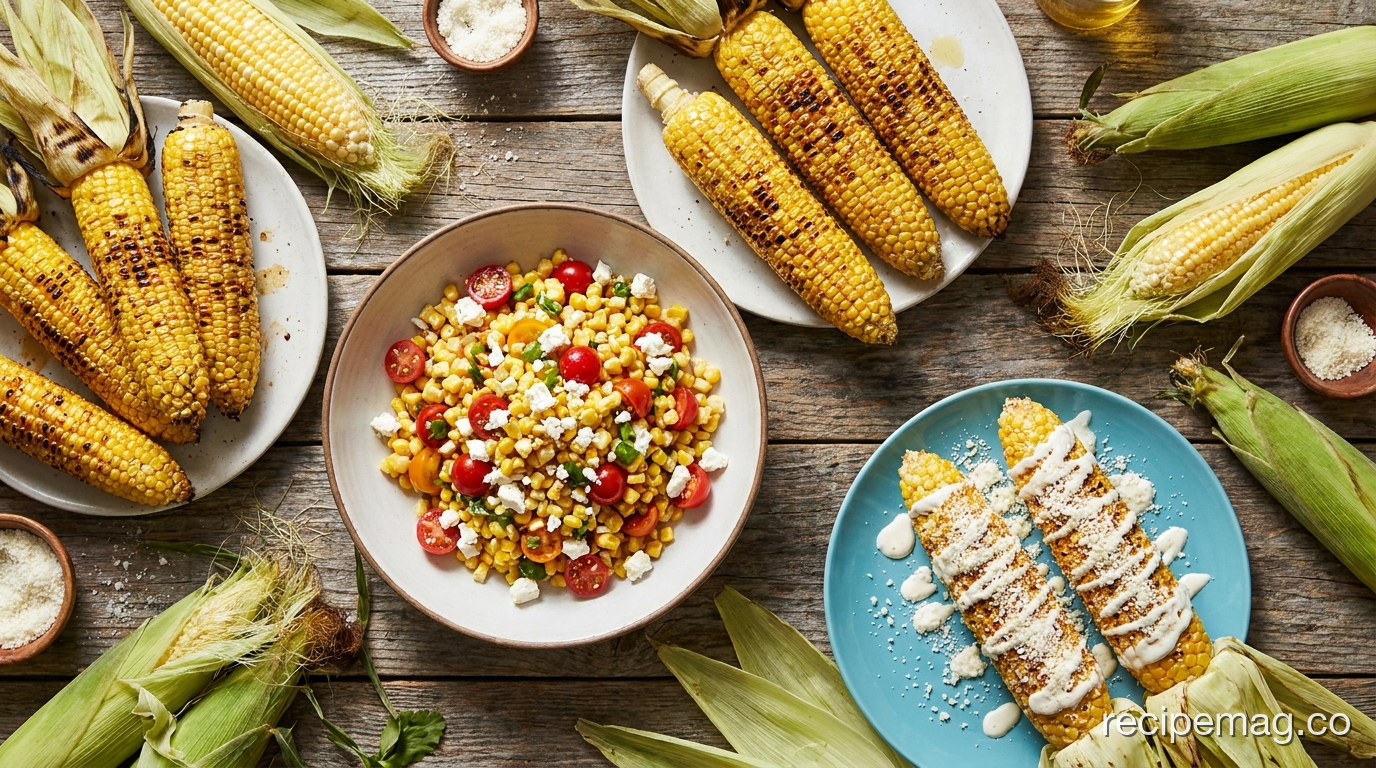
Fresh summer corn is at its sweetest within hours of picking, so the cooking method you choose matters almost as much as the ear itself. Americans eat roughly 9 pounds of fresh sweet corn per person each year (USDA Economic Research Service, 2023), and most of it hits the table between June and September. Below are 10 reliable ways to cook it, on the cob and off, plus how to pick ears worth cooking in the first place.
Key Takeaways
- Sweet corn starts converting sugar to starch the moment it is picked, so cook it fast for the best flavor.
- Older sweet corn varieties can lose up to half their sugar within 24 hours at room temperature. (University of Illinois Extension, 2022)
- Grilling in the husk, boiling, and a 4-minute microwave are the three fastest weeknight methods.
- Off the cob, corn shines in chowder, creamed corn, fritters, and a quick skillet saute.
- Store unhusked corn cold and cook it within two to three days of buying.
Why Does Fresh Corn Taste Best Right After Picking?
Corn is a race against its own chemistry. The University of Illinois Extension notes that standard sweet corn can lose up to 50% of its sugar within 24 hours at room temperature, because enzymes keep converting sugar to starch after the ear leaves the stalk (University of Illinois Extension, 2022). That is why farm-stand corn eaten the same day tastes noticeably sweeter than corn that has ridden around in a warm car.
Modern supersweet and sugar-enhanced varieties hold their sugar longer, which is why grocery corn is drinkable-sweet even days after harvest. Still, the rule holds: colder is better, and sooner is better. Refrigerate your ears the minute you get home.
Heat matters too. Cooking sets the flavor and softens the kernels, but overcooking pushes corn toward mushy and washed-out. Most fresh summer corn needs only a few minutes. Treat it gently and it rewards you.
How Do You Pick and Store Fresh Summer Corn?
Good corn starts at the bin, not the stove. Look for bright green husks that wrap the ear tightly, a slightly damp feel, and golden-brown silk at the top rather than dry black strands. The USDA advises refrigerating fresh sweet corn promptly and using it within a few days for peak quality (USDA Food Safety and Inspection Service, 2023). Give the ear a gentle squeeze; you should feel plump kernels all the way to the tip.
Quick buying checklist
- Husk: green, snug, and slightly moist, not dry or yellowing.
- Silk: golden and a little sticky at the top, not brittle.
- Weight: the ear should feel heavy for its size.
- Kernels: plump and tight in rows, filling the ear to the tip.
Skip the urge to peel back husks at the store; it dries the ear out and it is a headache for the next shopper. Store corn in its husk, in the coldest part of the fridge, and cook within two to three days.
[PERSONAL EXPERIENCE] We keep a simple habit at home: corn goes straight into the fridge in a loose plastic bag the moment the groceries are unpacked, husks on. On the rare weekend we forget and leave a few ears on the counter overnight, the difference in sweetness the next day is obvious. Cold really is the secret nobody puts on the label.
How Do You Cook Corn on the Cob?
Corn on the cob is the summer default, and there are more ways to make it than most cooks realize. Grilling remains the runaway favorite: a 2023 consumer survey found that 64% of Americans grill sweet corn during the summer months, more than any other vegetable (Hearth, Patio & Barbecue Association, 2023). Here are six methods, from the smokiest to the fastest.
1. Grill it in the husk
Soak the ears in cold water for 10 minutes, then grill over medium-high heat for 15 to 20 minutes, turning every few minutes. The husk steams the kernels while the outer leaves char. Peel back the husk to use as a handle. This is the gentlest, juiciest grilled result.
2. Char it naked on the grill
For elote-style corn, pull off the husk and lay the bare ears directly on the grate over medium-high heat. Turn every couple of minutes for 8 to 10 minutes until kernels blister and blacken in spots. You lose a little juice but gain deep, smoky flavor.
3. Boil it (the classic)
Bring a large pot of unsalted water to a rolling boil, drop in the husked ears, cover, and cut the heat. Let them sit 5 to 7 minutes. Salt toughens the kernels, so season at the table instead. Fresh, tender corn needs no more than this.
4. Microwave it in the husk
The fastest method by far. Microwave one unhusked ear on high for about 4 minutes, or two ears for 6 to 7. Let it rest a minute, then cut off the stem end and slide the ear out; the silk comes off with it. Weeknight corn in under five minutes.
5. Roast it in the oven
Heat the oven to 400°F. Place husked ears directly on the rack or on a sheet pan and roast 20 to 25 minutes, turning once. Roasting concentrates the sugars and gives you a lightly caramelized surface without a grill. Great when you are cooking corn for a crowd.
6. Air-fry it
Brush husked ears with oil, then air-fry at 375°F for 12 to 14 minutes, turning halfway. You get grill-like browning and tender kernels with no fire to babysit. Air-frying has surged in home kitchens, and corn is one of the vegetables it handles best.
What Can You Make With Corn Off the Cob?
Once you cut the kernels loose, corn becomes an ingredient rather than a side. A single medium ear delivers about 3 grams of protein and 2 grams of fiber (USDA FoodData Central, 2023), and it folds beautifully into soups and batters. These four methods turn a few ears into a full dish.
7. Saute it in a skillet
Cut the kernels off two or three ears and toss them into a hot skillet with a knob of butter. Cook 4 to 5 minutes until they brown in spots and pop. Add garlic, chili, lime, or fresh herbs at the end. This is the base for corn salads and tacos.
8. Turn it into corn chowder
Simmer kernels with potato, onion, and stock, then blend part of the pot for body and leave the rest chunky. Fresh summer corn makes a chowder that needs very little cream to taste rich. Toss the stripped cobs into the pot while it simmers for extra corn flavor, then fish them out.
9. Make creamed corn
Real creamed corn skips the can entirely. Saute kernels in butter, add a splash of cream and milk, then scrape the milky pulp from the spent cobs into the pan to thicken it naturally. Ten minutes on the stove gives you a side that tastes like the whole point of summer.
10. Fry it into fritters
Stir kernels into a simple batter of flour, egg, and a little baking powder, then pan-fry spoonfuls until golden. Corn fritters bridge sweet and savory and disappear fast off the plate. Serve them with a squeeze of lime or a dollop of sour cream.
How Do You Cut Corn Off the Cob Cleanly?
Loose kernels flying across the counter is the main reason cooks avoid off-the-cob recipes, and it is easily solved. Stand the shucked ear upright inside a large bowl, or on an inverted small bowl set inside a big one, and slice downward with a sharp knife. The bowl catches every kernel. Work in a few flat planes rather than trying to shave a curve.
[UNIQUE INSIGHT] Most guides stop at cutting off the kernels, but the real flavor is in the second pass. After you slice the kernels away, run the back of your knife firmly down each stripped cob to scrape out the sweet, milky pulp left behind. That pulp is pure corn essence, and stirring it into chowder or creamed corn does more for the dish than any amount of added cream.
Frequently Asked Questions About Cooking Fresh Corn
Should you add salt to the water when boiling corn?
No. Salt in the boiling water can toughen the kernel skins and slow them from softening, so most cooks skip it. Boil corn in plain water and season it at the table with butter and salt instead. If you want to add anything to the pot, a spoonful of sugar or a splash of milk is a gentler choice than salt.
How long does fresh corn on the cob last in the fridge?
Store fresh corn in its husk in the coldest part of the refrigerator and use it within two to three days for the best sweetness. The USDA recommends refrigerating fresh sweet corn promptly to preserve quality (USDA FSIS, 2023). After a few days the sugar keeps turning to starch and the flavor fades, though the corn is still perfectly safe to cook.
Can you freeze fresh summer corn?
Yes, and it is one of the best ways to save a summer glut. Blanch whole ears for 4 minutes, cool them in ice water, then cut off the kernels and freeze them flat in bags for up to a year. Blanching stops the enzymes that would otherwise dull the flavor and texture during long freezer storage.
Do you need to soak corn before grilling it in the husk?
A 10-minute soak in cold water helps. It adds moisture that steams the kernels and keeps the husk from burning through too fast over direct heat. If you prefer a drier, more charred husk and do not mind checking it often, you can skip the soak and simply grill over slightly lower heat.
Is corn a vegetable or a grain?
Both, depending on when you pick it. Fresh sweet corn eaten off the cob counts as a starchy vegetable, while the same plant left to dry on the stalk becomes a grain, like the corn milled into cornmeal. That double identity is why corn shows up in produce aisles and cereal boxes alike.
Cook the Corn While It Is Fresh
The whole case for summer corn comes down to timing. Buy it cold, keep it cold, and cook it within a couple of days, and almost any of these 10 methods will taste great. The ear does most of the work; you just have to not get in its way.
Start with whatever fits your night. Fire up the grill on a weekend, hit the microwave on a Tuesday, or cut the kernels loose for chowder when the market hands you a dozen ears at once. Each method is forgiving, and none takes more than half an hour.
Once you have a bowl of charred kernels, you are one step from Mexican street corn salad, corn tacos, or a fresh summer salsa. The cob is only the beginning.
