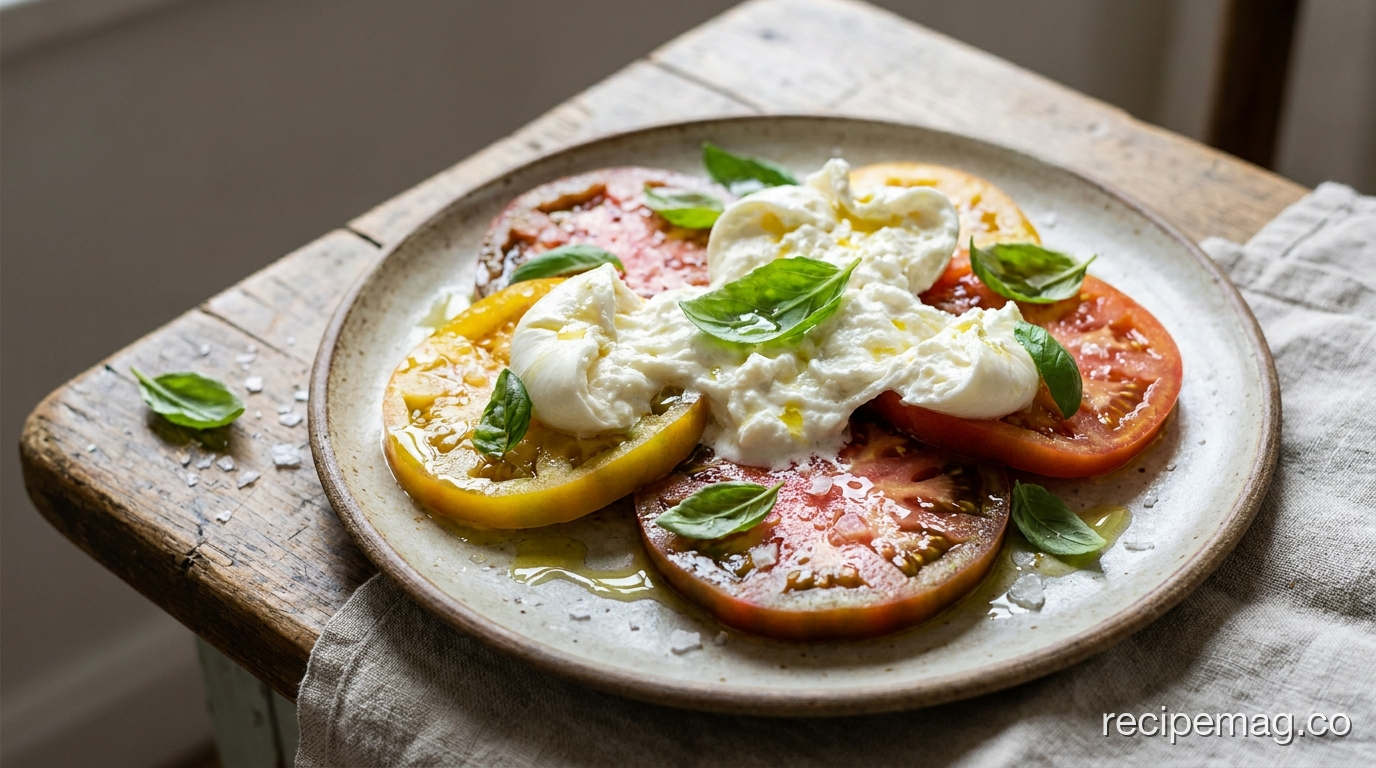
A burrata tomato salad is proof that the best summer cooking is barely cooking at all. Ripe heirloom tomatoes, torn basil, a pool of milky burrata, good olive oil, and flaky salt come together in about 15 minutes with zero heat. It leans entirely on peak-season produce, which is why August is the moment to make it. Americans eat roughly 20 pounds of fresh tomatoes per person each year, and almost none of them taste as good as a sun-warmed heirloom in late summer. ([USDA Economic Research Service](https://www.ers.usda.gov), 2023) This is the salad that makes that math obvious.
Key Takeaways
- Ready in about 15 minutes with no cooking, so peak-season tomatoes do the work.
- Burrata’s mozzarella shell delivers about 6 grams of protein per ounce, plus a molten cream center. ([USDA FoodData Central](https://fdc.nal.usda.gov), 2023)
- Never refrigerate whole tomatoes: cold below 55°F flattens their flavor. ([University of Florida](https://news.ufl.edu), 2016)
- Salt the tomatoes first and let them sit, which pulls out savory juices for a built-in dressing.
- Great with grilled bread, stone fruit, or a drizzle of aged balsamic to change it up.
Why Does This Burrata Salad Work So Well?
This salad works because it puts a perfect ingredient next to a perfect foil and gets out of the way. Sweet, acidic tomatoes cut straight through rich, milky burrata, and basil ties the two together with a peppery lift. Temperature is the quiet hero here. A 2016 study from the University of Florida found that chilling tomatoes below 55°F permanently dulls the aroma compounds that make them taste like anything. ([University of Florida](https://news.ufl.edu), 2016) Serve everything at room temperature and the flavor doubles for free.
Burrata is the reason people fall for this dish. It’s a pouch of fresh mozzarella wrapped around a soft, creamy mix of curd and cream called stracciatella. Slice into it and the center spills across the plate. That richness needs acid and salt to feel balanced, which is exactly what ripe tomatoes and a good finishing salt provide.
There’s almost no technique to learn. You slice, you tear, you drizzle, you season. The whole thing lives or dies on ingredient quality, not knife skills, so a beginner cook and a chef make roughly the same plate. That’s rare, and it’s the point.
[PERSONAL EXPERIENCE] We’ve made this salad dozens of times across a full tomato season, and the single biggest upgrade was pulling the burrata out of the fridge 30 minutes before serving. Cold burrata is firm and a little rubbery. At room temperature, the center turns loose and glossy, and it mingles with the tomato juices instead of sitting on top of them.
Ingredients for Burrata Salad
The ingredient list is short, which means every item has to earn its place. Buy the best tomatoes you can find and the freshest burrata your store carries. Heirloom tomatoes are worth seeking out for their range of color and flavor: the USDA recognizes thousands of distinct tomato varieties, and heirlooms tend to carry higher sugar and deeper flavor than shipping types bred for shelf life. ([USDA Agricultural Research Service](https://www.ars.usda.gov), 2022) Mixed colors also make the plate look like summer.
For the Salad
- 1.5 to 2 pounds heirloom tomatoes, mixed colors and sizes
- 1 cup cherry or grape tomatoes, halved (optional, for variety)
- 2 balls fresh burrata (about 8 ounces total)
- 1 cup fresh basil leaves, large ones torn
- 1 small shallot, very thinly sliced (optional)
For Finishing
- 3 tablespoons extra virgin olive oil, plus more to drizzle
- 1 tablespoon aged balsamic vinegar (optional)
- Flaky sea salt
- Freshly ground black pepper
- Crusty bread or grilled sourdough, to serve
A good extra virgin olive oil matters more here than in almost any cooked dish, because you taste it raw. Its grassy, peppery notes become part of the flavor, not just a cooking fat. If you have a special bottle you’ve been saving, this is the plate to open it for.
How Do You Pick the Best Heirloom Tomatoes?
Pick heirlooms with your hands and your nose, not just your eyes. A ripe tomato feels heavy for its size and gives slightly to gentle pressure, and it smells green and sweet at the stem end. Vine-ripening is what builds that flavor: the UC Davis Postharvest Technology Center reports that tomatoes ripened on the plant develop far higher sugar and aroma levels than those picked green for shipping. ([UC Davis Postharvest Technology Center](https://postharvest.ucdavis.edu), 2022) Farmers market tomatoes almost always win here.
What to Look For
- Weight and give. Heavy feels juicy. A little softness means ripe. Rock-hard tomatoes need a day or two on the counter.
- Smell. A ripe heirloom smells like a tomato from a few inches away. No smell usually means no flavor.
- Skin. Small cracks near the stem and irregular shapes are good signs, not defects. Heirlooms are supposed to look imperfect.
- Color mix. Buy several varieties. Green Zebra, Cherokee Purple, and yellow Brandywine each bring a different sweetness and acidity to the plate.
How to Prep Them
Store tomatoes on the counter, stem side down, out of direct sun, and never in the fridge until they’re cut. Right before serving, slice larger tomatoes into thick rounds or wedges and halve the small ones. Then salt them and let them sit for 10 minutes. That step draws out juice and concentrates flavor, giving you a light dressing before you add a drop of oil.
How Do You Assemble Burrata Salad?
Assembly is more about restraint than skill. Layer the components so the tomato juices and burrata cream can mingle, and season in stages instead of all at once. Presentation genuinely shifts how good food tastes: a study in the journal Appetite found that attractive plating raised taste ratings by up to 29% compared with the same food arranged carelessly. ([Appetite, Elsevier](https://www.journals.elsevier.com/appetite), 2020) Two minutes of thoughtful arrangement pays you back in every bite.
Step-by-Step
- Salt the tomatoes. Arrange the sliced heirlooms and halved cherry tomatoes on a large platter. Sprinkle with flaky salt and let them rest for 10 minutes to release their juices.
- Add the burrata. Place the burrata balls in the center or nestle them among the tomatoes. Tear them open so the creamy center spills out onto the plate.
- Scatter the basil. Tear larger basil leaves and drop them over the top. Add the thin shallot slices now if you’re using them.
- Finish with oil. Drizzle everything generously with extra virgin olive oil and the balsamic, if using. The tomato juices and oil become the dressing.
- Season last. Add more flaky salt and a few grinds of black pepper right before serving. Taste and adjust.
Serve it within about 30 minutes of assembling, and always at room temperature. Set the platter in the middle of the table with grilled bread on the side so people can scoop up the burrata, juice, and oil that pools at the bottom. That pool is the best part.
What Should You Serve With Burrata Salad?
Burrata salad plays two roles: a light main on a hot night or a starter that sets up a bigger meal. It pairs naturally with anything off the grill, since its cool creaminess balances char and smoke. Fresh cheeses like burrata are also perishable and should be handled with care: the USDA advises keeping soft cheeses refrigerated and not leaving them at room temperature for more than 2 hours. ([USDA Food Safety and Inspection Service](https://www.fsis.usda.gov), 2023) Make it close to serving time and refrigerate leftovers quickly.
Easy Pairings
- Grilled bread. Rub warm grilled sourdough with a cut garlic clove and use it to mop the plate.
- Off the grill. Serve alongside grilled steak, chicken, or shrimp for a full summer dinner. The salad becomes the side that steals the show.
- Stone fruit. Add sliced peaches or nectarines for a sweeter, jammier version that works beautifully in August.
- A glass of white or rosé. A crisp, chilled wine mirrors the acidity of the tomatoes.
[UNIQUE INSIGHT] Most people treat the finishing salt as an afterthought, but it’s doing more work than the balsamic. Flaky sea salt added right at the table hits in bright, crunchy bursts instead of dissolving evenly, so each bite gets a little pop of seasoning against the smooth burrata. Skip the fine table salt for finishing. The texture is half the reason this salad tastes expensive.
Tips for the Best Burrata Salad
A few small habits separate a good burrata salad from a great one. None of them add real time, and every one of them shows up in the final plate. This is a dish where the details are the recipe.
- Temperature is everything. Pull the burrata and tomatoes out of the fridge 30 minutes ahead. Cold mutes both.
- Salt in stages. Salt the tomatoes early to draw out juice, then finish with flaky salt at the table.
- Tear, don’t slice, the basil. Torn leaves release more aroma and won’t bruise and blacken the way knife cuts do.
- Use your best oil. You taste it raw, so a grassy, peppery extra virgin olive oil makes a real difference.
- Don’t drown it. Balsamic is optional and easy to overdo. A light drizzle, or none at all, keeps the tomatoes in front.
One last note on burrata itself. If your store sells it fresh at the deli counter, buy it that day and use it the same day. It’s at its best within 48 hours and loses its creamy magic fast after that.
—
Burrata Salad with Heirloom Tomatoes and Basil
Prep Time: 15 minutes | Cook Time: None | Serves: 4
Ingredients
Salad
- 1.5 to 2 pounds heirloom tomatoes, mixed colors and sizes
- 1 cup cherry or grape tomatoes, halved (optional)
- 2 balls fresh burrata (about 8 ounces total)
- 1 cup fresh basil leaves, large ones torn
- 1 small shallot, thinly sliced (optional)
Finishing
- 3 tablespoons extra virgin olive oil, plus more to drizzle
- 1 tablespoon aged balsamic vinegar (optional)
- Flaky sea salt
- Freshly ground black pepper
- Crusty bread or grilled sourdough, to serve
Instructions
- Pull the burrata and tomatoes from the fridge 30 minutes ahead so they come to room temperature.
- Slice the heirloom tomatoes into thick rounds and wedges, and halve the cherry tomatoes. Arrange on a large platter.
- Sprinkle the tomatoes with flaky salt and let them rest for 10 minutes to release their juices.
- Nestle the burrata among the tomatoes and tear it open so the creamy center spills out.
- Scatter torn basil and shallot slices over the top.
- Drizzle generously with olive oil and the balsamic, if using. Finish with more flaky salt and black pepper.
- Serve immediately at room temperature with grilled bread.
Notes
- Never refrigerate whole tomatoes. Store them stem side down on the counter until cut.
- Buy burrata the day you’ll serve it, and use it within 48 hours.
- Add sliced peaches or nectarines for a sweeter late-summer version.
- Don’t leave the salad at room temperature for more than 2 hours.
—
Frequently Asked Questions About Burrata Salad
What is burrata, and how is it different from mozzarella?
Burrata is fresh mozzarella formed into a pouch and filled with a soft mixture of curd and cream called stracciatella. From the outside it looks like a ball of mozzarella, but cutting into it reveals a molten, spreadable center. That extra richness is why burrata feels more indulgent. In a tomato salad, the creamy interior blends with the tomato juices and olive oil to create its own dressing.
Can I make burrata salad ahead of time?
Only partly. You can slice tomatoes and tear basil an hour ahead, but assemble the salad within 30 minutes of serving for the best texture. Burrata is perishable, so keep it refrigerated until just before you plate. Once assembled, don’t leave the salad out for more than 2 hours, per USDA guidance, and refrigerate any leftovers promptly in a sealed container.
Why shouldn’t I refrigerate the tomatoes?
Cold storage below 55°F permanently dulls a tomato’s flavor. A 2016 University of Florida study found that chilling switches off the volatile compounds that give tomatoes their aroma, and warming them back up doesn’t restore it. Keep whole tomatoes on the counter, out of direct sun, until you slice them. Only refrigerate cut tomatoes, and let them return to room temperature before serving for the fullest flavor.
What can I use instead of burrata?
Fresh mozzarella is the closest swap, especially soft, milky balls stored in water. Torn buffalo mozzarella works beautifully and brings a similar tang. For a firmer option, thick slices of fresh mozzarella hold their shape on the platter. You lose the molten cream center, so add an extra drizzle of good olive oil to keep the salad rich and cohesive.
What kind of tomatoes are best for this salad?
Ripe heirloom tomatoes are ideal because they carry higher sugar and deeper flavor than shipping varieties. Mix colors and sizes, like Cherokee Purple, Green Zebra, and yellow Brandywine, for visual and flavor variety. If heirlooms aren’t available, vine-ripened or good farmers market tomatoes work well. Avoid pale, hard supermarket tomatoes, which tend to be watery and bland no matter how you dress them.
Burrata salad with heirloom tomatoes and basil is the kind of dish that proves great cooking is often about great shopping. Fifteen minutes, no heat, and five honest ingredients give you a plate that tastes like the middle of August. The tomatoes carry it, the burrata makes it luxurious, and the basil and salt bring it into focus.
Start with the base recipe, then make it yours. Add stone fruit for sweetness, grilled bread for scooping, or a splash of aged balsamic for depth. Serve it as a light dinner or set it beside something off the grill and let it steal attention.
Buy the best tomatoes you can find this week. Everything else on this plate is just there to show them off.
