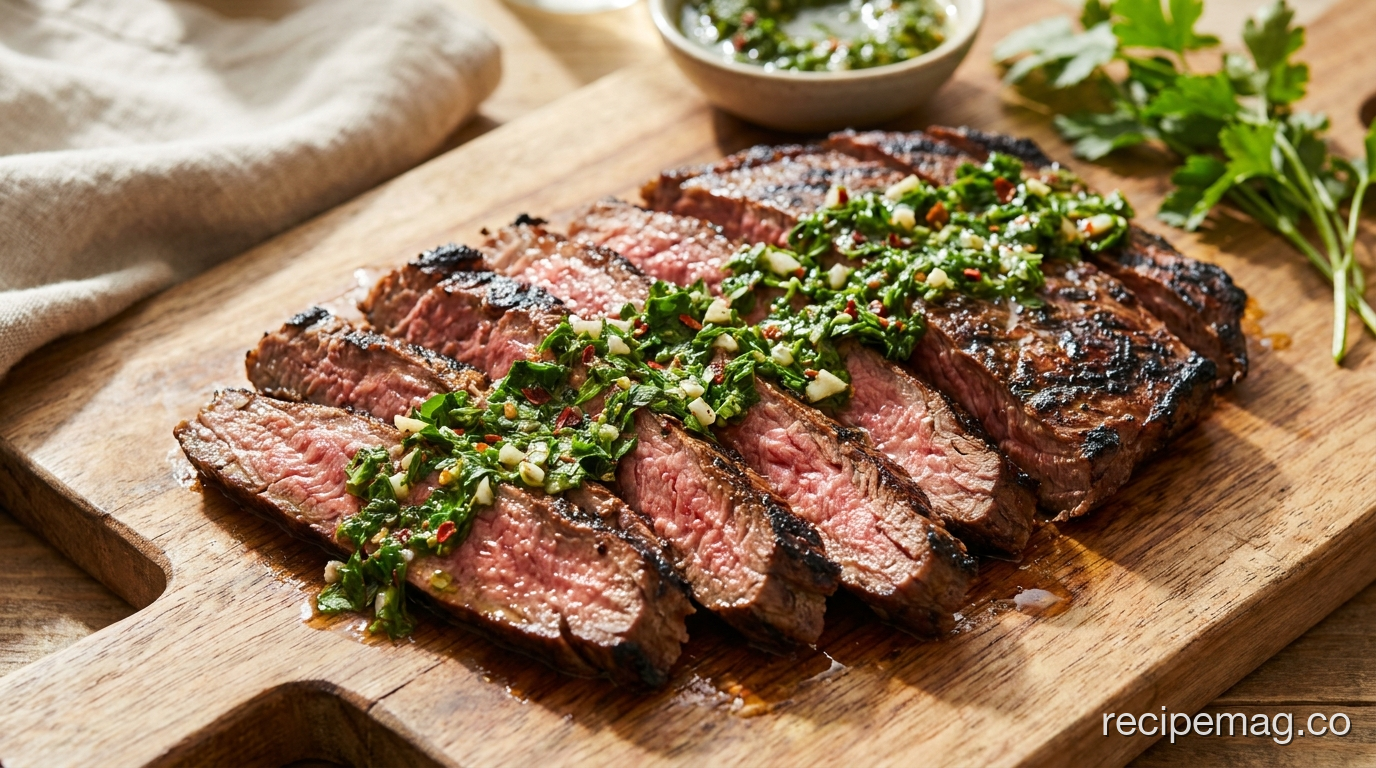
Grilled flank steak with chimichurri is one of the fastest ways to put a serious steak dinner on the table. Flank is a thin, lean, deeply beefy cut that sears in under 10 minutes over high heat, then gets sliced thin against the grain and blanketed in a bright, garlicky herb sauce. It rewards a hot grill and good timing rather than an expensive cut. Beef stays at the center of the American plate, with people eating roughly 59 pounds per person each year. ([USDA Economic Research Service](https://www.ers.usda.gov), 2023) This is how you make an everyday cut taste like a splurge.
Want it served as a full composed salad instead? See Grilled Steak Salad with Chimichurri.
Key Takeaways
- Flank steak sears in under 10 minutes total over high, direct heat.
- A 3-ounce serving of cooked flank steak delivers about 23 grams of protein. ([USDA FoodData Central](https://fdc.nal.usda.gov), 2023)
- The USDA recommends cooking whole beef cuts to 145°F, then resting 3 minutes. ([USDA FSIS](https://www.fsis.usda.gov), 2023)
- Slicing thin against the grain is the single most important step for tenderness.
- Chimichurri takes 10 minutes and needs no cooking, just parsley, garlic, oil, and vinegar.
What Makes Flank Steak Good for Grilling?
Flank steak is built for the grill because it’s thin, lean, and packed with flavor. It comes from the cow’s abdominal muscles, which means bold beefy taste and long, visible fibers. That leanness is a real selling point: a 3-ounce cooked serving carries about 23 grams of protein with modest fat. ([USDA FoodData Central](https://fdc.nal.usda.gov), 2023) Because it’s thin, it cooks fast and picks up plenty of char, which is exactly what you want from a quick weeknight grill.
The trade-off is that flank can turn chewy if you treat it like a thick ribeye. It has almost no marbling to keep it forgiving, so two rules matter above all: don’t overcook it, and slice it correctly. Get those right and flank is tender, juicy, and far cheaper than premium steaks.
It also loves bold company. Its open, beefy flavor stands up to garlic, acid, and herbs without getting lost, which is why chimichurri and flank are such a natural match. The sauce brings brightness and the steak brings depth.
[PERSONAL EXPERIENCE] We’ve cooked flank steak more times than we can count, and the lesson that stuck was to stop fussing with it on the grill. Flank is thin enough that it wants one hard sear per side and nothing more. Flipping it constantly or crowding it over uneven heat leaves you chasing doneness and losing the crust that makes it taste like steak.
How Do You Make Chimichurri Sauce?
Chimichurri is a raw, uncooked Argentine herb sauce that comes together in about 10 minutes with a knife and a bowl. It’s built on flat-leaf parsley, garlic, oregano, red wine vinegar, and olive oil, with red pepper flakes for a gentle kick. In Argentina it’s the default sauce for grilled beef, and its balance of acid, garlic, and fresh herb is designed to cut through rich, charred meat. No blender required, since a chunkier hand-chopped texture is traditional and, frankly, better.
Chimichurri Ingredients
- 1 cup fresh flat-leaf parsley, finely chopped
- 2 tablespoons fresh oregano, chopped (or 2 teaspoons dried)
- 3 to 4 garlic cloves, minced
- 1/2 cup extra virgin olive oil
- 2 tablespoons red wine vinegar
- 1/2 teaspoon red pepper flakes
- 1/2 teaspoon salt, plus more to taste
How to Make It
- Finely chop the parsley, oregano, and garlic. A sharp knife beats a food processor here, which can turn the herbs to paste.
- Combine the herbs and garlic in a bowl with the red pepper flakes and salt.
- Stir in the red wine vinegar and let it sit for a minute to take the raw edge off the garlic.
- Whisk in the olive oil until the sauce looks loose and spoonable. Taste and adjust salt and vinegar.
- Let it rest at least 10 minutes before serving so the flavors meld. It’s even better after 30.
Chimichurri keeps in the fridge for up to a week, and the flavor deepens overnight. Bring it back to room temperature before serving, since cold olive oil turns thick and cloudy. It works on far more than steak: try it on grilled chicken, roasted vegetables, or eggs.
Ingredients for Grilled Flank Steak
The steak side of this recipe is refreshingly short. Flank does not need a long ingredient list because the chimichurri is doing the heavy lifting on flavor. A light coat of oil and aggressive seasoning is all the meat itself requires. Salt is the one thing you should not skimp on: seasoning well before grilling helps the surface brown and draws seasoning into the meat.
For the Steak
- 1.5 to 2 pounds flank steak
- 2 tablespoons neutral or olive oil
- 1.5 teaspoons kosher salt
- 1 teaspoon freshly ground black pepper
- 1 teaspoon garlic powder (optional)
Optional Quick Marinade
- 1/4 cup olive oil
- 2 tablespoons red wine vinegar or lime juice
- 3 cloves garlic, smashed
- 1 teaspoon ground cumin
You don’t have to marinate flank steak, and plenty of the best versions skip it. But if you have 30 minutes to a few hours, a quick acidic marinade adds flavor and lightly tenderizes the surface. Never marinate longer than about 8 hours, or the acid starts to break the outer layer into mush.
How Do You Grill Flank Steak Perfectly?
Grilling flank steak well comes down to high heat, a short cook, and a thermometer. Because the cut is thin, it goes from raw to overcooked in about a minute, so watch it closely. For food safety, the USDA recommends cooking whole beef cuts to an internal temperature of 145°F with a 3-minute rest. ([USDA FSIS](https://www.fsis.usda.gov), 2023) Many cooks pull flank a touch earlier for medium-rare, then let the rest finish the job.
Step-by-Step Grilling
- Heat the grill hot. Get a gas or charcoal grill ripping hot over direct heat, around 450 to 500°F. A hot grate is what gives you a crust.
- Dry and season. Pat the steak dry, rub it with oil, and season generously with salt and pepper on both sides. A dry surface browns better.
- Sear hard. Lay the steak down and leave it. Grill 4 to 5 minutes per side for medium-rare, flipping only once, until a deep crust forms.
- Check the temperature. Use an instant-read thermometer in the thickest part. Pull at 130 to 135°F for medium-rare, or 145°F to follow USDA guidance.
- Rest it. Move the steak to a board and rest it for 5 to 10 minutes. This lets the juices redistribute so they stay in the meat, not on the board.
Resting is not optional. Cut into a steak the second it leaves the grill and the juices flood out, leaving the meat dry. A few minutes of patience keeps every slice juicy. Tent it loosely with foil if you want to hold the heat.
Why Should You Slice Flank Steak Against the Grain?
Slicing against the grain is the step that decides whether flank steak is tender or chewy. Flank has long, obvious muscle fibers running in one direction, and cutting across them shortens those fibers into short, tender pieces. Culinary testers at America’s Test Kitchen call this the single most important move for flank steak. ([America’s Test Kitchen](https://www.americastestkitchen.com), 2022) Get it wrong and even a perfectly cooked steak eats tough and stringy.
How to Slice It
- Find the grain. Look for the long lines of muscle fiber running the length of the steak.
- Cut across them. Slice perpendicular to those lines, not parallel. You want to sever the fibers, not follow them.
- Angle the knife. Hold the blade at about 45 degrees to create wider, thinner slices with more surface for the chimichurri.
- Keep it thin. Aim for slices about a quarter-inch thick. Thin slices from a lean cut always eat more tender.
[UNIQUE INSIGHT] Most guides tell you to slice against the grain and stop there, but flank steak’s grain often shifts direction across the cut. We rotate the board as we go, checking the fiber direction every few slices, because a single steak can have two or three grain directions. Cutting the whole thing at one angle means half your slices come out perfect and half come out chewy.
Tips and Serving Ideas
A few habits take this from a good steak to a great one. High heat and correct slicing are the fundamentals, but the details below are what make people ask for the recipe. None of them add meaningful time.
- Salt early or right before. Season at least 40 minutes ahead or immediately before grilling. The awkward middle window pulls moisture to the surface and hurts the sear.
- Use a thermometer. Flank is too thin to guess. An instant-read thermometer removes all the risk of overcooking.
- Rest, then slice. Always rest before cutting, and always slice against the grain. These two steps matter more than anything else.
- Sauce at the table. Spoon chimichurri over the sliced steak just before serving, and pass extra on the side.
- Save the juices. Pour the board juices back over the sliced steak. That’s concentrated flavor you don’t want to waste.
Flank steak with chimichurri is endlessly flexible for serving. Pile the slices into warm tortillas for tacos, fan them over a grain bowl, tuck them into a steak sandwich, or serve them alongside grilled vegetables and a summer salad. Leftovers make an outstanding cold steak salad the next day.
—
Grilled Flank Steak with Chimichurri
Prep Time: 15 minutes | Cook Time: 10 minutes | Serves: 4 to 6
Ingredients
Steak
- 1.5 to 2 pounds flank steak
- 2 tablespoons neutral or olive oil
- 1.5 teaspoons kosher salt
- 1 teaspoon freshly ground black pepper
- 1 teaspoon garlic powder (optional)
Chimichurri
- 1 cup fresh flat-leaf parsley, finely chopped
- 2 tablespoons fresh oregano (or 2 teaspoons dried)
- 3 to 4 garlic cloves, minced
- 1/2 cup extra virgin olive oil
- 2 tablespoons red wine vinegar
- 1/2 teaspoon red pepper flakes
- 1/2 teaspoon salt
Instructions
- Make the chimichurri: combine parsley, oregano, garlic, red pepper flakes, and salt in a bowl. Stir in the vinegar, then whisk in the olive oil. Rest at least 10 minutes.
- Heat the grill to high, around 450 to 500°F, over direct heat.
- Pat the steak dry, rub with oil, and season generously with salt, pepper, and garlic powder.
- Grill 4 to 5 minutes per side, flipping once, until a deep crust forms and the internal temperature reads 130 to 135°F for medium-rare (or 145°F per USDA guidance).
- Rest the steak on a board for 5 to 10 minutes.
- Slice thin against the grain at a 45-degree angle. Pour any board juices back over the top.
- Spoon chimichurri over the sliced steak and serve, passing extra sauce on the side.
Notes
- An instant-read thermometer is the best way to avoid overcooking a thin cut.
- Slice against the grain, rotating the board as the fiber direction changes.
- Chimichurri keeps refrigerated for up to a week and improves overnight.
- Optional marinade: olive oil, vinegar, garlic, and cumin for 30 minutes to 8 hours.
—
Frequently Asked Questions About Grilled Flank Steak
Do I need to marinate flank steak?
No, marinating is optional. Flank steak is flavorful enough to grill with just salt and pepper, and a hard sear plus chimichurri delivers plenty of taste. That said, a quick acidic marinade of oil, vinegar or citrus, and garlic adds flavor and lightly tenderizes the surface. If you marinate, keep it under 8 hours. Longer soaks in acid can turn the outer layer of the meat mushy.
What temperature should flank steak be cooked to?
The USDA recommends cooking whole beef cuts to an internal temperature of 145°F with a 3-minute rest for safety. Many cooks prefer flank steak at medium-rare and pull it at 130 to 135°F, letting the rest carry it up a few degrees. Because flank is thin and lean, it overcooks quickly, so an instant-read thermometer is the most reliable way to hit your target every time.
How do I keep flank steak from being tough?
Two things prevent tough flank steak: don’t overcook it, and slice it correctly. Cook it hot and fast to medium-rare, then rest it before cutting. Most importantly, slice thin and against the grain, perpendicular to the long muscle fibers. This shortens those fibers so each bite is tender. Cutting with the grain, even on a perfectly cooked steak, leaves it chewy and stringy.
Can I make chimichurri ahead of time?
Yes, and it gets better. Chimichurri keeps in a sealed container in the fridge for up to a week, and the garlic, herb, and vinegar flavors meld and deepen overnight. Make it at least 30 minutes before serving so the raw garlic mellows. Bring it back to room temperature before spooning it over the steak, since cold olive oil turns thick and cloudy straight from the fridge.
What can I serve with grilled flank steak and chimichurri?
Flank steak pairs with almost any summer side. Grilled vegetables, corn, a fresh tomato salad, roasted potatoes, or warm tortillas for tacos all work well. The bright, acidic chimichurri also complements creamy sides like a burrata salad or grilled bread. Leftover sliced steak makes an excellent cold steak salad the next day, dressed with a little extra chimichurri thinned with olive oil.
Grilled flank steak with chimichurri turns a lean, affordable cut into a dinner that tastes like a restaurant plate. Ten minutes on a hot grill, a proper rest, and a few thin slices against the grain are all it takes. The chimichurri does the rest, cutting the richness of the beef with garlic, herbs, and bright acid.
Master the fundamentals first: sear hot, use a thermometer, rest the meat, and slice across the grain. Once those are second nature, the recipe becomes a weeknight staple you can throw together in half an hour.
Make a double batch of chimichurri while you’re at it. You’ll find yourself spooning it over eggs, chicken, and vegetables all week long.
