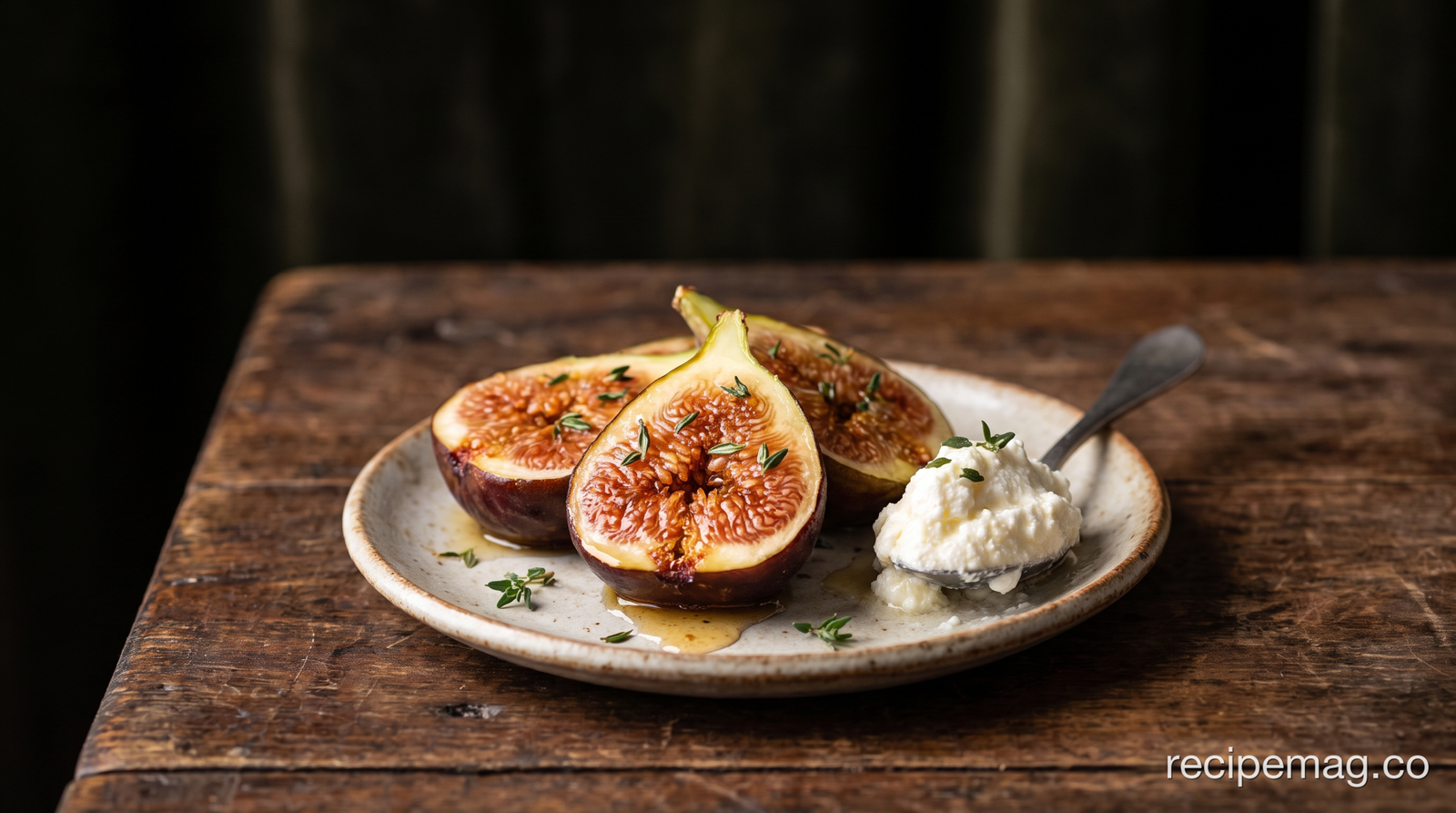
A fig is not really a fruit. It is a syconium — an inverted flower cluster that blooms inward, which is why the inside looks like nothing else and why there is no blossom on the outside. Botanical trivia aside, the practical point is that figs are fragile and short-lived, and late August through September is the only window most people get. Baking them concentrates the sugars in about fifteen minutes.
Key Takeaways
- Figs are picked ripe and do not sweeten further, so buy soft and use fast.
- Bake hot and briefly — 400°F for 12 to 15 minutes — or they collapse.
- Whipped ricotta takes two minutes and transforms the texture.
- Thyme and black pepper keep it from being merely sweet.
- Works as a dessert, a cheese course, or breakfast.
Ingredients
Serves 4. Active time 10 minutes. Total time 25 minutes.
- 12 fresh figs, halved
- 3 tbsp honey, plus more to finish
- 1 tbsp olive oil
- 6 sprigs thyme
- Pinch of flaky salt and cracked black pepper
- 1 tbsp balsamic vinegar, optional
For the whipped ricotta:
- 1 cup whole-milk ricotta
- 2 tbsp heavy cream or olive oil
- 1 tsp honey
- Pinch of salt
- Zest of 1/2 lemon
Use whole-milk ricotta. The part-skim version is grainy and watery and will not whip smooth no matter how long you beat it.
How to Make It
1. Choose the figs. They should feel soft and heavy, with skin that gives easily and may show small splits, which are a good sign rather than a flaw. Figs are non-climacteric, meaning they do not ripen further after picking, so a firm fig will never become a sweet one. Use them within two days.
2. Whip the ricotta. Blend the ricotta, cream, honey, salt, and lemon zest until completely smooth, about a minute in a food processor or two by hand with a whisk. It goes from grainy to silky quite suddenly. Refrigerate until needed.
3. Prepare the figs. Heat the oven to 400°F. Halve the figs lengthways and arrange them cut side up in a baking dish, snug but not overlapping. Drizzle with the honey and olive oil, tuck the thyme sprigs between them, and season with flaky salt and black pepper.
4. Bake. 12 to 15 minutes, until the figs have softened, the cut faces look glossy and jammy, and the honey is bubbling at the edges. Do not push past this; figs go from jammy to structural collapse quickly.
5. Serve. Spread the whipped ricotta on plates or a platter, spoon the warm figs over with all their syrup, and finish with more honey and a little balsamic if using.
Buying and Storing Figs
Because figs do not ripen after picking, everything depends on selection. Look for fruit that yields to gentle pressure, has a slight bend at the neck, and smells faintly sweet. A fig with no aroma will taste of very little. Small splits and a bead of syrup at the base are signs of ripeness, not damage.
Avoid anything hard, or anything with a sour, fermented smell, which means it has gone over. Figs deteriorate within days, and they bruise if stacked.
Store them in a single layer on a plate in the fridge and bring them to room temperature before serving; cold mutes their flavour badly. Use within two days.
The main varieties behave similarly. Black Mission are sweet and dark, Brown Turkey milder, and green Kadota is best cooked, which makes it a good choice for this recipe if you find it cheap.
Variations
With cheese. Swap ricotta for goat cheese, mascarpone, or gorgonzola. Blue cheese against warm figs and honey is one of the great pairings, and it turns this into a cheese course.
With prosciutto. Wrap each fig half in a small piece before baking. The fat renders and the salt cuts the sweetness. It becomes a starter rather than a dessert.
Boozy. A tablespoon of port, marsala, or bourbon over the figs before baking adds real depth.
Spiced. A star anise or a cinnamon stick in the dish, or a grating of nutmeg over the ricotta.
On toast. Spoon the whole thing onto grilled bread. Our no-knead Dutch oven bread is exactly right for it, and it makes an excellent addition to a charcuterie board.
For what else is worth buying while the season closes, see our last farmers market haul.
Savoury Uses for the Same Figs
Figs pair as naturally with salt and fat as they do with honey and cream, and the same baked figs redirect easily into savoury territory.
With cured meat. Prosciutto, speck, or serrano against warm figs is the classic. The salt cuts the sugar and the fat carries the perfume. Wrap them before baking or drape the meat over afterwards; both work.
With blue cheese. Gorgonzola or Roquefort crumbled over hot figs melts slightly and turns into a sauce. This is the pairing to make if you only make one.
On a salad. Warm figs over bitter leaves — radicchio, endive, or rocket — with walnuts and a sharp vinaigrette. The temperature contrast is the appeal.
With roast meat. Figs baked in the pan juices of pork or duck for the last fifteen minutes become a condiment for the meat. It is a classic combination in both Italian and French cooking and it costs no extra work.
On a board. Whole or halved alongside hard cheese, honeycomb, and nuts. They are one of the few fruits substantial enough to hold their own next to aged cheese.
The through-line is contrast. Figs are sweet and soft, so whatever joins them should be salty, sharp, bitter, or crunchy. Sweet on sweet is the one direction that does not work.
The Short Fig Season
Figs have one of the narrowest windows of any fruit sold fresh, and understanding why explains most of what is frustrating about buying them.
They are extremely perishable, bruise on contact, and do not ripen after picking, which means they must be harvested ripe and sold within days. That combination makes them expensive to ship and is why supermarket figs are so often disappointing: picked early enough to survive transport, they never develop the sugar that makes a fig worth eating.
Most regions get two crops. The breba crop arrives in early summer on the previous year’s growth and is generally smaller and less intensely flavoured. The main crop comes in late summer and early autumn, which is where we are now, and it is the better one by a clear margin.
The practical consequences: buy from the closest source you can find, buy when they are cheap rather than when you feel like figs, and use them within two days. If you find good ones at a farmers market, buy more than you planned. Our last farmers market haul covers what else is worth stocking up on while the season closes.
Dried figs are a genuinely different ingredient rather than a substitute, useful in baking and stews but no use at all in a recipe built around fresh fruit texture.
Frequently Asked Questions
Do figs ripen after picking?
No. Figs are non-climacteric, so they soften slightly but never gain sugar once harvested. Buy them ripe or accept a bland result.
How do I know if a fig is ripe?
It should feel soft and heavy, bend slightly at the neck, and smell faintly sweet. Small splits and a drop of syrup at the base are good signs.
Can I use dried figs?
Not for this. Dried figs have a completely different texture and will not become jammy. Simmer them in wine or juice instead if that is what you have.
Do I need to peel figs?
No. Fig skin is thin, edible, and holds the halves together during baking.
Can I make this ahead?
The ricotta can be whipped two days ahead. Bake the figs to order; they are best warm and lose their texture on reheating.
What can I use instead of ricotta?
Mascarpone, thick Greek yoghurt, goat cheese, or vanilla ice cream. All work, and the ice cream version makes it unambiguously a dessert.
