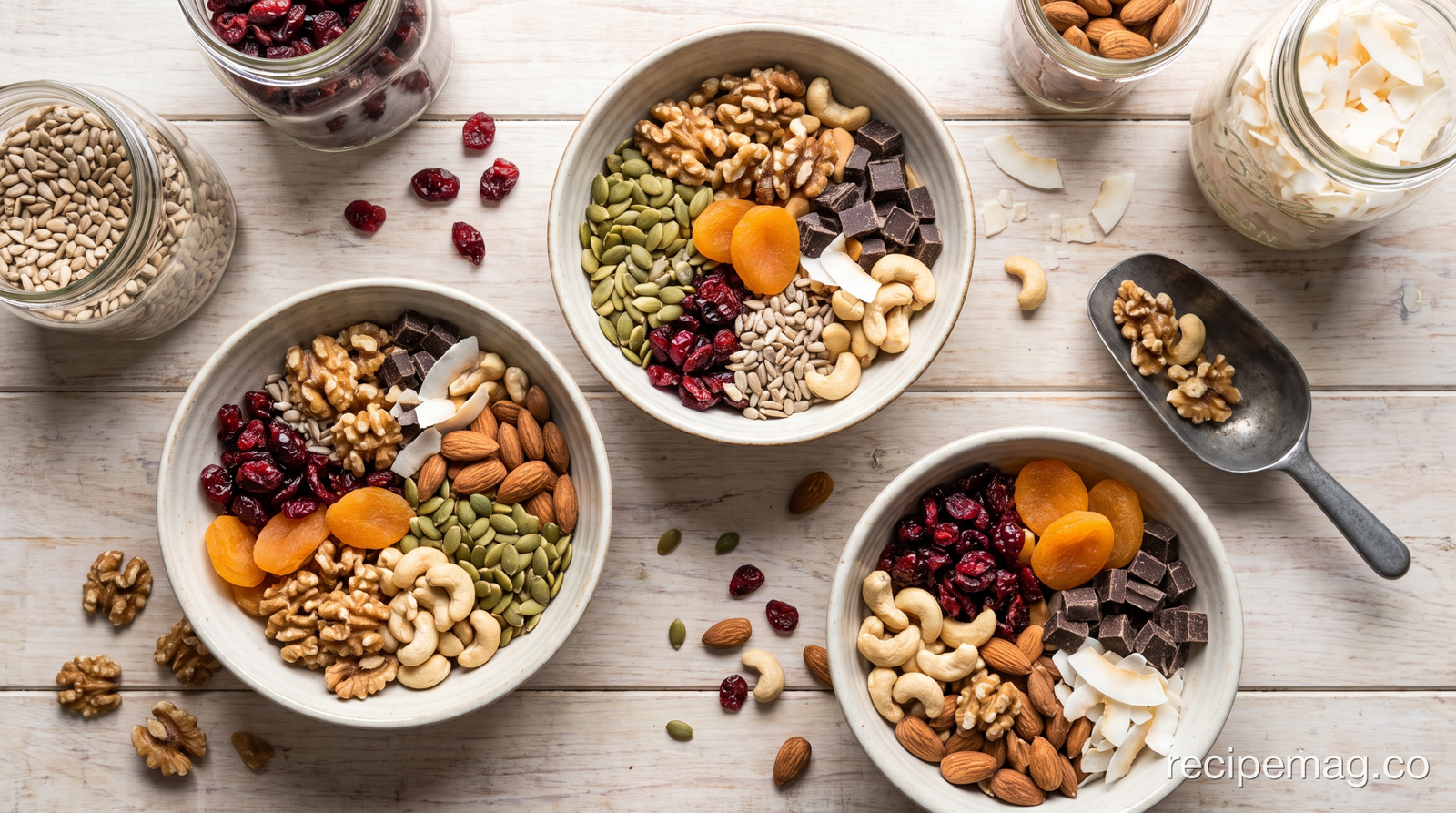
Trail mix is a ratio, not a recipe, which is why every store-bought bag disappoints in the same way: too many raisins, not enough of anything else. Build it yourself on a 2:1:1 ratio of nuts to dried fruit to extras and you get a mix that stays interesting to the bottom of the jar, costs roughly half as much, and can be tuned to whoever is eating it.
Key Takeaways
- Work to a 2:1:1 ratio — two parts nuts, one part dried fruit, one part extras.
- Toast the nuts. Four minutes and it transforms the whole batch.
- Cool everything completely before adding chocolate or it will seize and smear.
- Salt is what makes trail mix taste like a snack rather than birdseed.
- Keeps a month in an airtight jar, or three in the freezer.
The Master Ratio
Two parts nuts and seeds, one part dried fruit, one part extras, measured by volume. For a large jar that is 2 cups nuts, 1 cup fruit, 1 cup extras.
Nuts and seeds are the base and the protein: almonds, cashews, pecans, walnuts, peanuts, pumpkin seeds, sunflower seeds. Use at least two kinds for textural variety.
Dried fruit brings sweetness and chew: raisins, cranberries, apricots, cherries, mango, dates. Chop the large ones so every handful gets some. Resist going above one part, which is where commercial mixes go wrong.
Extras are what make it worth eating: chocolate, coconut flakes, pretzels, cereal, candied ginger, banana chips.
Then salt. A half teaspoon of fine salt per batch, or use salted nuts. Unsalted trail mix tastes flat no matter how good the components are.
How to Make It
1. Toast the nuts. Spread them on a sheet pan and toast at 350°F for 8 to 10 minutes, shaking once, until fragrant and lightly coloured. Seeds need only 5 to 6. Toasting is the single step that separates homemade from bagged, and skipping it means the mix tastes raw.
2. Salt while warm. Toss the hot nuts with the salt and, if you like, a teaspoon of oil to help it stick. Warm nuts take salt far better than cold ones.
3. Cool completely. Fully, on the pan, for at least twenty minutes. Adding chocolate to warm nuts melts it into a smear that coats everything.
4. Combine. Add the fruit and extras and toss gently. Store in an airtight jar.
Three Formulas
1. The School Snack
Built for lunchboxes and mild palates. 2 cups roasted salted peanuts and sunflower seeds. 1 cup raisins and dried cranberries. 1 cup mini pretzels and chocolate chips.
Check your school’s nut policy first; many are nut-free, in which case use pumpkin and sunflower seeds plus roasted chickpeas for the base. It slots neatly into our make-ahead back-to-school lunches.
2. The Hiking Mix
Denser, saltier, and built for energy. 2 cups almonds, cashews, and pumpkin seeds. 1 cup chopped dates and dried apricots. 1 cup dark chocolate chunks and coconut flakes, with a generous pinch of flaky salt.
Dates are the key here: they are denser in sugar than raisins and hold up better to being crushed in a pack.
3. The Desk Mix
For the mid-afternoon slump, with less sugar. 2 cups walnuts, pecans, and pumpkin seeds. 1 cup dried cherries. 1 cup dark chocolate chunks and candied ginger, plus a pinch of flaky salt and a grind of black pepper.
The ginger and pepper sound odd and are the reason this one keeps getting eaten.
Storage and Common Mistakes
An airtight jar at cool room temperature keeps a month. Nuts contain a lot of oil, and oil eventually goes rancid, so a warm sunny shelf is the enemy. For longer storage, the freezer holds it three months with no loss of texture.
If your kitchen is warm, keep the chocolate separate and add it per portion. Chocolate blooms and smears above about 78°F, which late August still reaches indoors.
The three recurring mistakes: too much dried fruit, which makes it cloying and is what bagged mixes always get wrong; skipping the toast, which leaves it tasting raw and flat; and no salt, which is what makes the difference between a snack and a health-food punishment.
It also travels well, which makes it useful beyond snacking. A jar of it belongs in the same batch-cooking afternoon as everything in our Sunday cooking roundup.
Cost and Nutrition, Briefly
Two practical points that make the case for building your own rather than buying a bag.
Cost. Commercial trail mix is priced as a convenience product, and much of the volume is the cheapest ingredient in it — usually raisins or peanuts. Buying components separately, particularly from bulk bins, typically halves the price, and it means you are paying for cashews rather than filler.
Balance. Trail mix is calorie-dense by design; that is the point for hiking and a liability at a desk. Nuts supply protein and fat that slow digestion, dried fruit supplies fast sugar, and the ratio decides which effect dominates. The 2:1:1 formula keeps the fruit low enough that the mix sustains rather than spikes.
Portion accordingly. A quarter cup is a genuine snack; eating from the jar with your hand is how a controlled snack becomes an accidental meal. Pre-portioning into small containers or bags takes five minutes and is the difference between a jar lasting a month and a week.
For a lower-sugar version, drop the dried fruit to half a part and increase the seeds. For a higher-energy hiking version, do the reverse and add dates.
Packing It for Where It Is Going
The container matters more than people expect, because trail mix fails in transit in predictable ways.
For lunchboxes, small rigid containers beat bags. A bag gets crushed in a backpack and the pretzels turn to dust by mid-morning. Rigid containers also portion automatically, which is the main reason a jar on the counter disappears in three days.
For hiking, a zip bag is right — light, packable, and no wasted volume. Squeeze the air out, which slows the nut oils oxidising over several days in a warm pack. Keep chocolate out entirely for anything above about 78°F and add dried banana or coconut instead.
For the desk, a jar with a lid you can close one-handed. This sounds trivial and is the single factor determining whether a desk mix gets grazed continuously or eaten as a snack.
Label anything that leaves the house with what is in it. Nut allergies are common enough that an unlabelled bag of mixed nuts in a shared space is a genuine problem, and schools increasingly require it.
One more practical note: make two batches at once, one with chocolate and one without. The chocolate-free version travels anywhere and survives any temperature, and it costs nothing extra to split the base before the extras go in.
Frequently Asked Questions
What is the best nut-to-fruit ratio?
Two parts nuts to one part dried fruit by volume. More fruit than that and the mix becomes cloying and the texture monotonous.
Do I have to toast the nuts?
Not strictly, but it is the highest-impact step. Toasting develops flavour compounds that raw nuts simply do not have, and it takes under ten minutes.
How long does homemade trail mix keep?
About a month in an airtight jar at cool room temperature, or three months frozen. Nut oils go rancid with heat and light, so store it away from the hob.
How do I stop the chocolate melting?
Cool the nuts completely before mixing, and store somewhere below about 78°F. In a hot kitchen, keep the chocolate separate and combine per serving.
Is homemade actually cheaper?
Usually about half the price of a comparable bagged mix, because you are not paying for packaging or for the filler fruit that bulks out commercial versions.
What can I use for a nut-free version?
Pumpkin seeds, sunflower seeds, roasted chickpeas, and toasted coconut flakes give a similar texture and protein without nuts.
