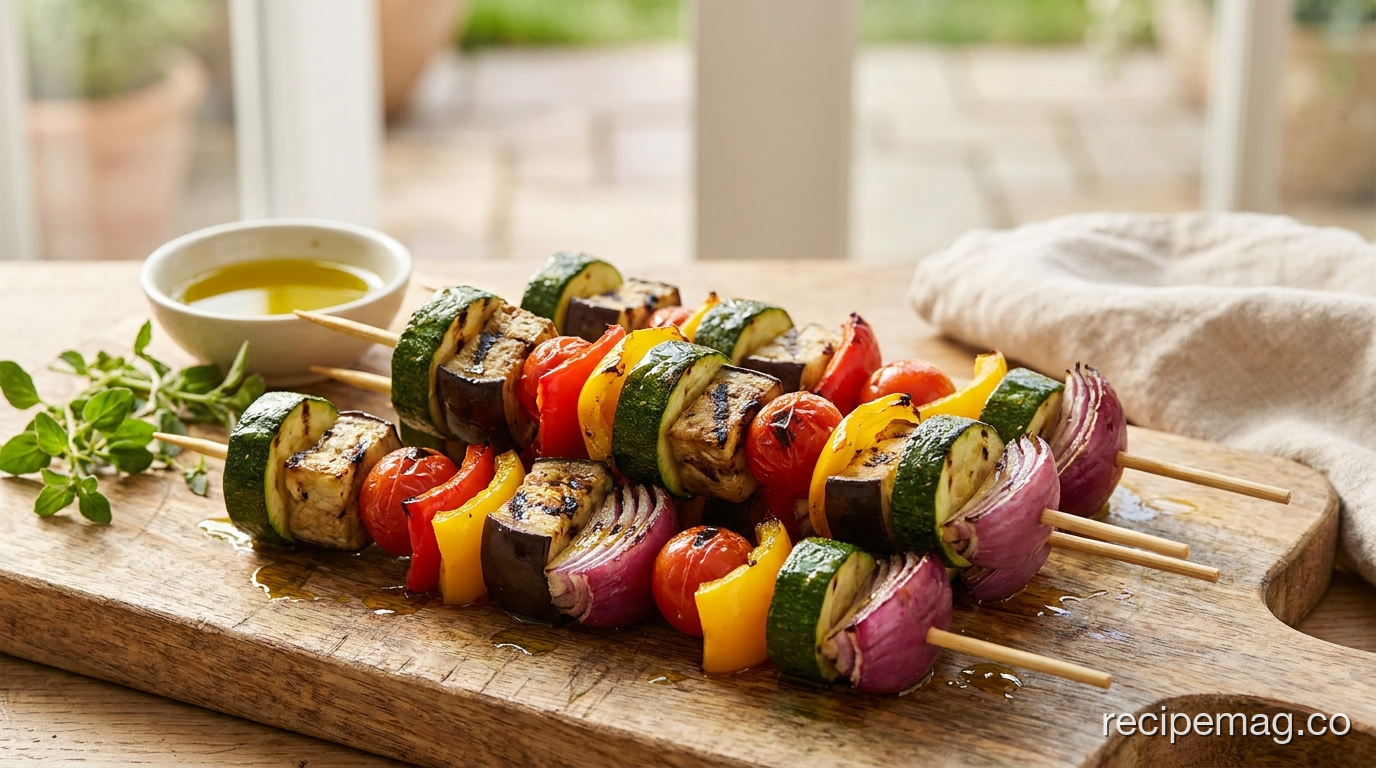
Grilled ratatouille skewers take the classic Provençal vegetable stew and give it a smoky, hands-on summer twist. Eggplant, zucchini, bell peppers, red onion, and cherry tomatoes thread onto skewers, brush with herb oil, and char over the fire until sweet and tender. High-heat grilling drives the Maillard reaction that builds deep, savory flavor no raw vegetable can match (Serious Eats, 2022). They come together in under 30 minutes and serve four to six as a side or a light main.
Key Takeaways
- All the flavors of classic ratatouille, cooked in under 30 minutes over the grill.
- High-heat grilling triggers the Maillard reaction that deepens vegetable flavor (Serious Eats, 2022).
- Cut every vegetable to a similar size so they cook evenly and finish together.
- Soak wooden skewers 30 minutes first to keep them from burning (America’s Test Kitchen).
- Naturally vegan and gluten-free, and it serves 4 to 6 as a side or light main.
What Makes Grilled Ratatouille Skewers Work?
Ratatouille is a rustic vegetable dish from Nice, in the Provence region of southern France, traditionally built on eggplant, zucchini, peppers, tomatoes, and onion stewed slowly in olive oil (Larousse Gastronomique, 2022). This version keeps the same cast of vegetables but swaps the slow simmer for the grill. Direct heat concentrates their sugars and adds smoke, turning a soft stew into something charred, bright, and a little addictive.
Skewers do more than look good. They keep small pieces from falling through the grates, they cook fast, and they let every bite carry a mix of vegetables. Threading a smoky pepper next to a creamy cube of eggplant and a burst cherry tomato is the whole point. You get the ratatouille flavor in a single mouthful.
It is also a forgiving format. Grill them alongside anything else on the fire, serve them hot or at room temperature, and pile the leftovers into wraps or grain bowls tomorrow. Few summer sides are this flexible.
What Vegetables Go on Ratatouille Skewers?
Stick close to the classic five and you cannot go wrong. Choose firm, glossy eggplant and zucchini, sweet red and yellow peppers, a sturdy red onion, and cherry tomatoes small enough to stay whole on the skewer. Cut everything to roughly the same size, about one inch, so the pieces cook at the same rate and finish together.
For the Skewers
- 1 medium eggplant, cut into 1-inch cubes
- 2 medium zucchini, cut into ¾-inch rounds
- 2 bell peppers (red and yellow), cut into 1-inch squares
- 1 large red onion, cut into 1-inch wedges
- 1 pint cherry tomatoes, left whole
For the Herb Oil
- ⅓ cup extra-virgin olive oil
- 3 garlic cloves, minced or grated
- 1 tablespoon herbes de Provence (or a mix of thyme, rosemary, and oregano)
- 1 teaspoon salt
- ½ teaspoon black pepper
- 1 tablespoon balsamic vinegar (optional, for finishing)
- Fresh basil, torn, to serve
You will also need 10 to 12 skewers. If you use wooden ones, soak them in water for at least 30 minutes first so they do not scorch over the flame. Metal skewers skip the soak and are reusable, which makes them a good one-time buy for grilling season.
Do You Need to Salt the Eggplant?
For most modern eggplant, salting is optional, not essential. Older, seedier eggplant could turn bitter, but today’s supermarket varieties are bred mild, so the main reason to salt is texture, not bitterness (America’s Test Kitchen, 2022). Salting draws out moisture, which helps the cubes brown and grill instead of steam. On a hot grill that sears fast, you can often skip it. For the best char, though, it is worth ten minutes.
The Quick Salting Method
- Cube and salt. Toss the eggplant cubes with 1 teaspoon salt in a colander.
- Rest 10 to 15 minutes. Let the salt pull beads of moisture to the surface.
- Pat dry. Press the cubes firmly with paper towels. Drier eggplant chars instead of steaming.
How Do You Grill the Skewers?
Medium-high, direct heat is the target, roughly 400 to 450°F. Thread the vegetables, keeping quicker-cooking tomatoes on their own skewers if you like, so nothing burns while the eggplant finishes. Brush generously with the herb oil, then grill 10 to 15 minutes, turning every few minutes, until everything is charred at the edges and tender in the middle. Soaked wooden skewers hold up best over this kind of heat (America’s Test Kitchen, 2022).
Grilling Steps
- Heat the grill. Preheat to medium-high, about 400 to 450°F, and oil the grates well to prevent sticking.
- Make the herb oil. Whisk olive oil, garlic, herbes de Provence, salt, and pepper in a bowl.
- Thread the skewers. Alternate eggplant, zucchini, peppers, and onion. Put cherry tomatoes on separate skewers so they do not overcook.
- Coat well. Brush the skewers all over with the herb oil. Save a little for basting.
- Grill and turn. Cook 10 to 15 minutes, turning every 3 to 4 minutes. Add the tomato skewers for only the last 4 to 5 minutes.
- Finish and serve. Slide onto a platter, drizzle with balsamic, and scatter torn basil over the top.
Tips for the Best Grilled Ratatouille
A handful of small choices separates limp, steamed vegetables from properly charred ones. Grilling over direct high heat is what builds the browned, caramelized surface that raw vegetables lack, thanks to the Maillard reaction (Serious Eats, 2022). The tips below help you get there without scorching or sticking.
- Uniform cuts matter most. Same-size pieces cook at the same rate. Mismatched cubes give you burnt onion and raw eggplant.
- Separate the tomatoes. Cherry tomatoes cook far faster than eggplant. Their own skewer keeps them from collapsing.
- Oil the grates, not just the food. A well-oiled, fully preheated grate is the best defense against sticking and tearing.
- Do not crowd the fire. Leave space between skewers so the vegetables sear rather than steam.
- Finish with acid and herbs. A splash of balsamic and a handful of fresh basil at the end wakes the whole platter up.
Grilled Ratatouille Skewers
Prep Time: 20 minutes | Cook Time: 15 minutes | Serves: 6
Ingredients
- 1 medium eggplant, cut into 1-inch cubes
- 2 medium zucchini, cut into ¾-inch rounds
- 2 bell peppers (red and yellow), cut into 1-inch squares
- 1 large red onion, cut into 1-inch wedges
- 1 pint cherry tomatoes, whole
- ⅓ cup extra-virgin olive oil
- 3 garlic cloves, minced
- 1 tablespoon herbes de Provence
- 1 teaspoon salt, plus more for the eggplant
- ½ teaspoon black pepper
- 1 tablespoon balsamic vinegar (optional)
- Fresh basil, torn, to serve
- 10 to 12 skewers (soak wooden ones 30 minutes)
Instructions
- If using wooden skewers, soak them in water for at least 30 minutes.
- Optional: salt the eggplant cubes and rest 10 to 15 minutes, then pat dry.
- Whisk olive oil, garlic, herbes de Provence, salt, and pepper into an herb oil.
- Preheat the grill to medium-high (400 to 450°F) and oil the grates.
- Thread eggplant, zucchini, peppers, and onion onto skewers, alternating. Put cherry tomatoes on separate skewers. Brush all over with herb oil.
- Grill 10 to 15 minutes, turning every 3 to 4 minutes. Add the tomato skewers for the last 4 to 5 minutes.
- Transfer to a platter, drizzle with balsamic, and scatter torn basil over the top. Serve hot or at room temperature.
Notes
- No grill? Roast the skewers on a sheet pan at 450°F for 20 to 25 minutes, turning once.
- Serve as a side, over grain bowls, or tucked into warm pita with hummus.
- Leftovers keep 3 to 4 days refrigerated and are excellent cold in salads.
- Swap in mushrooms or summer squash for any vegetable you do not have.
Frequently Asked Questions About Grilled Ratatouille
Should I soak wooden skewers before grilling?
Yes. Soak wooden skewers in water for at least 30 minutes before grilling so they do not catch fire or char through over direct heat (America’s Test Kitchen, 2022). Even soaked, the exposed ends can darken, which is normal. Metal skewers skip the soak entirely and are reusable, so they are worth buying if you grill often. Either way, oil the grates well to keep the vegetables from sticking and tearing.
Do I have to salt the eggplant first?
Not always. Modern supermarket eggplant is bred to be mild, so salting is more about texture than removing bitterness (America’s Test Kitchen, 2022). Salting draws out moisture, which helps the cubes char instead of steam on the grill. If you have ten minutes, it is worth doing for better browning. On a very hot grill, though, you can skip it and still get good results.
Can I make ratatouille skewers without a grill?
Definitely. Roast the assembled skewers on a sheet pan in a 450°F oven for 20 to 25 minutes, turning once halfway. You can also cook them under the broiler or on a stovetop grill pan. You lose a little smoke, but high heat still builds the browning and caramelization that make the dish. Spread the pieces out so they roast rather than steam, and do not crowd the pan.
What should I serve with grilled ratatouille skewers?
They pair with almost anything off the grill. Serve them alongside grilled chicken, fish, or sausages, or keep it vegetarian with couscous, quinoa, or warm pita and hummus. A dollop of herbed yogurt or a spoonful of pesto turns them into a light main. Because they are good hot or at room temperature, they also travel well to picnics and potlucks.
Can I prep the skewers ahead of time?
Yes. Cut the vegetables and mix the herb oil up to a day ahead, and store them separately in the fridge. You can even thread the skewers a few hours before grilling, cover them, and keep them chilled. Brush on the herb oil just before they hit the fire so the salt does not draw out too much moisture. Assembled this way, dinner is only 15 minutes of grilling away.
Fire Up the Grill for Ratatouille Season
Grilled ratatouille skewers are what summer produce was made for. They take the humble vegetables piling up in your kitchen and turn them into something smoky, colorful, and genuinely craveable, all in under half an hour of active work.
Keep the method loose. Swap vegetables based on what looks good, grill them next to whatever else is on the fire, and serve them however the night calls for it. The formula bends easily around your table.
Make a double batch while the coals are hot. Cold ratatouille skewers over greens or folded into a wrap might be the best lunch of the week.
