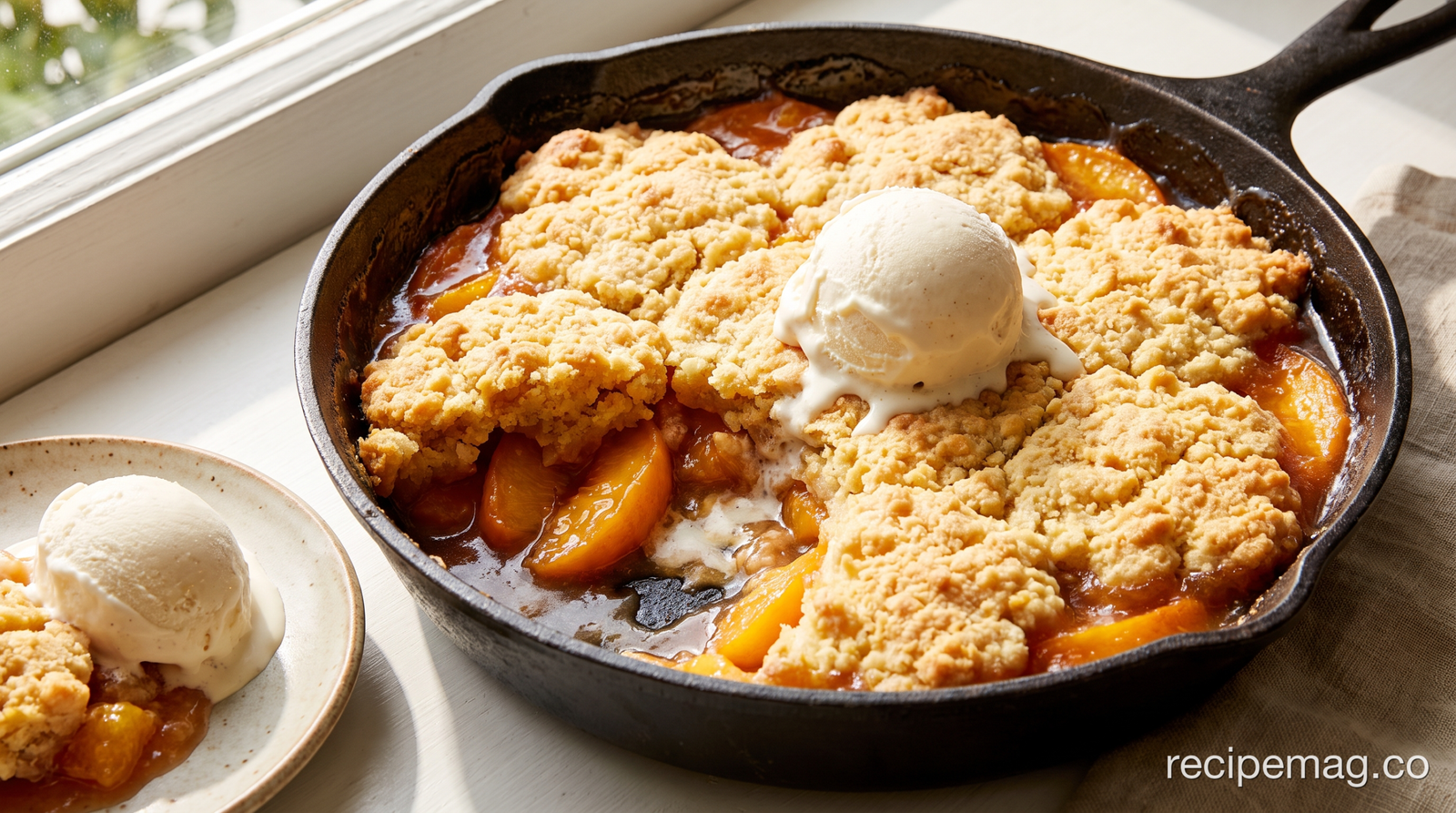
The difference between a great peach cobbler and a soupy one is almost entirely about thickener and topping. Biscuits sit on the fruit and stay crisp on top while steaming underneath; cake batter sinks into the juice and turns to paste. Add a modest amount of cornstarch to the fruit, bake until the juices actually bubble at the edges, and you get sliceable cobbler instead of peach soup with a lid.
Key Takeaways
- Buttermilk biscuits, not cake batter, keep the top crisp and the fruit from drowning.
- Cornstarch thickens the juice; peaches release far more liquid than most fruit.
- Cold butter and a light hand are what make the biscuits flaky rather than dense.
- Bake until the fruit bubbles visibly at the edges, not just until the top browns.
- Rest 20 minutes before serving so the filling sets.
Ingredients
Serves 8. Active time 25 minutes. Total time 1 hour 15 minutes.
For the peach filling:
- 3 lbs ripe freestone peaches, about 8 to 9 medium, sliced 1/2-inch thick
- 1/2 cup granulated sugar, adjusted to the fruit
- 2 tbsp cornstarch
- 1 tbsp lemon juice
- 1/2 tsp cinnamon
- 1/4 tsp freshly grated nutmeg
- 1/4 tsp kosher salt
For the buttermilk biscuit topping:
- 1 1/2 cups all-purpose flour
- 1/4 cup granulated sugar, plus 2 tbsp for sprinkling
- 2 tsp baking powder
- 1/2 tsp baking soda
- 1/2 tsp kosher salt
- 6 tbsp cold unsalted butter, cut into cubes
- 3/4 cup cold buttermilk
- 1 tbsp turbinado sugar for the top
How to Make It
1. Heat the oven to 375°F. Place a rack in the center and set a sheet pan on the rack below to catch drips, which there will be.
2. Make the filling. Toss the sliced peaches with the sugar, cornstarch, lemon juice, cinnamon, nutmeg, and salt until no dry cornstarch remains. Taste a slice. Very sweet late-season peaches may need only a third of a cup of sugar; underripe fruit may want the full half cup plus an extra squeeze of lemon.
3. Pre-bake the fruit. Pour the filling into a 9×13-inch baking dish or a 12-inch cast-iron skillet and bake for 15 minutes, until it is hot and just starting to bubble. This is the step most recipes skip, and it is what prevents the raw-fruit, wet-bottom problem, because the filling gets a head start on thickening before the biscuits go on.
4. Make the biscuits while it bakes. Whisk the flour, quarter cup of sugar, baking powder, baking soda, and salt. Cut in the cold butter with a pastry cutter or your fingertips until the largest pieces are pea-sized. Some visible butter is correct; those pockets become steam and lift. Pour in the cold buttermilk and stir just until a shaggy dough forms. Stop mixing the moment it comes together.
5. Top and bake. Drop the dough over the hot filling in rough spoonfuls, leaving gaps between them so steam can escape. Do not spread it into a solid sheet. Sprinkle with the turbinado sugar. Bake 35 to 40 minutes, until the biscuits are deep golden and the fruit bubbles thickly around the edges.
6. Rest. Let it sit 20 minutes. The filling continues to set as it cools, and cutting in immediately gives you a puddle.
Getting the Texture Right
Three failure modes account for nearly every disappointing cobbler.
Soupy filling. Either the cornstarch was under-measured or the cobbler came out before the juices reached a genuine bubble. Cornstarch only thickens once it boils, so a filling that is hot but static has not activated. Look for slow, thick bubbling at the edges, not steam.
Doughy biscuit bottoms. Caused by covering the fruit completely. Leave real gaps between the spoonfuls so steam escapes rather than condensing into the underside of the topping.
Tough biscuits. Overworked dough or warm butter. Keep the butter cold, the buttermilk cold, and mix until the dough is barely combined. A shaggy, slightly ragged dough bakes tender; a smooth one bakes into a scone.
One more note on the fruit: this recipe is built for genuinely ripe peaches. If yours are firm and bland, they will not improve in the oven. Use them for salsa instead, and check our guide to using peak peaches for how to buy and ripen them properly.
Variations and Make-Ahead
Peach and blackberry. Replace a cup of the peaches with blackberries. The color is dramatic and the tartness balances the sugar. Add an extra teaspoon of cornstarch, since berries release more liquid.
Bourbon peach. Add two tablespoons of bourbon to the filling. It cooks off and leaves vanilla and oak behind.
Ginger. Add a tablespoon of finely grated fresh ginger to the fruit and a half teaspoon of ground ginger to the biscuit dough.
Frozen peaches. Use them straight from frozen, no thawing, and add an extra tablespoon of cornstarch plus 10 minutes to the pre-bake. This is the payoff for freezing fruit in August, which our guide to preserving summer produce walks through.
Make-ahead. The filling can be mixed and refrigerated a day ahead. The biscuit dry ingredients and butter can be cut together and refrigerated for two days; add the buttermilk just before baking. Baked cobbler holds at room temperature for a day and reheats well at 325°F for 15 minutes, which makes it a genuinely good choice for a Labor Day cookout, where oven time on the day is scarce.
Adjusting for the Fruit You Actually Have
Cobbler is more sensitive to fruit variation than most desserts, because peaches range enormously in sugar and water content depending on variety and ripeness. The recipe above assumes ripe, aromatic late-season freestone peaches. Here is how to adjust when yours are not.
Very ripe, very juicy peaches. Increase the cornstarch to 3 tablespoons and extend the pre-bake to 20 minutes. Overripe fruit can release nearly twice the liquid of firm fruit, and the standard thickener will not keep up.
Firm, underripe peaches. Reduce the cornstarch to 1.5 tablespoons, since they release less juice, and increase the sugar and the lemon. They will also need a longer pre-bake, closer to 20 minutes, to soften before the topping goes on.
White peaches. Lower in acid and more floral. Add an extra tablespoon of lemon juice, and consider skipping the cinnamon, which overwhelms their delicacy.
A mix of stone fruit. Peaches, nectarines, and plums all work together, and plums add welcome tartness and color. Keep the total weight the same and treat plums as slightly juicier than peaches.
Taste the raw filling after mixing. It should taste slightly too sweet and slightly too tart at the same time, because baking mutes both. If it tastes balanced raw, it will taste flat baked.
Choosing the Peaches and the Dish
This recipe is only as good as the fruit, and late August is the one moment of the year when that is easy. Look for freestone peaches, which release cleanly from the pit, and buy by aroma rather than by squeeze. A peach with no smell will bake into a cobbler with no flavor, no matter how much sugar and cinnamon you add.
Adjust the sugar to the fruit rather than following the measurement blindly. Taste a raw slice before you mix. Genuinely ripe late-season peaches are often sweet enough that a third of a cup is plenty, and over-sugared cobbler tastes flat because there is nothing left to contrast the sweetness. The lemon juice is not optional for the same reason.
The dish shapes the result more than most people expect. A 12-inch cast-iron skillet holds heat aggressively, which helps the filling reach a full bubble and gives crisp, caramelized edges. A 9×13 glass or ceramic dish gives you more surface area, so more biscuit per serving, but heats more gently and takes a few extra minutes.
Whichever you use, put a sheet pan on the rack below. Peach cobbler bubbles over reliably, and cleaning burnt sugar off an oven floor is a worse afternoon than any dessert is worth.
Frequently Asked Questions
Do I need to peel the peaches?
No. The skins soften completely during baking and add color and body. Peel only if you strongly prefer a uniform texture. To peel easily, score an X in the base, boil 30 seconds, and shock in ice water.
What is the difference between cobbler, crisp, and crumble?
Cobbler has a biscuit or dough topping. Crisp includes oats in the streusel. Crumble is a streusel of flour, butter, and sugar without oats. All three use the same fruit base.
Can I use canned or frozen peaches?
Frozen works well; use them unthawed and increase the cornstarch slightly. Canned peaches are already soft and packed in syrup, so drain them well and cut the sugar by half.
Why is my cobbler filling runny?
It did not bubble long enough. Cornstarch needs to reach a boil to thicken, so bake until you see slow, thick bubbles at the edges, then rest the cobbler 20 minutes before serving.
Can I make cobbler in a cast-iron skillet?
Yes, and a 12-inch skillet is ideal. Cast iron holds heat well, which helps the bottom of the filling thicken and gives crisper edges than a glass dish.
How should I store leftovers?
Cover and keep at room temperature for one day, or refrigerate up to three days. Reheat uncovered at 325°F for about 15 minutes to bring the biscuit topping back to crisp.
