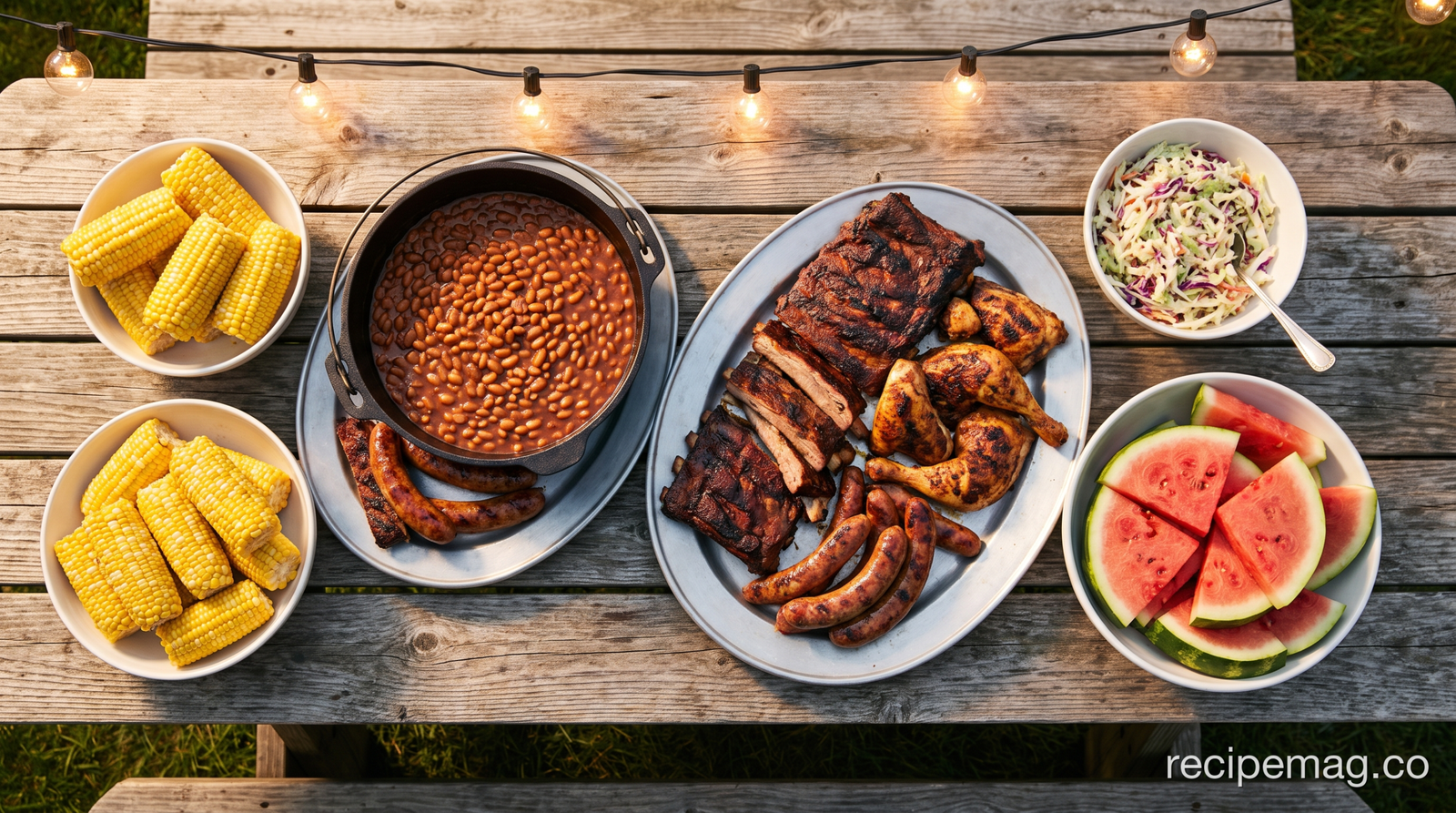
Labor Day 2026 falls on Monday, September 7, the first Monday in September, as it has since Congress made it a federal holiday in 1894 (U.S. Department of Labor). That gives you roughly two weeks from today, and the difference between a relaxed host and a frantic one is almost entirely about what gets done before Monday morning. Here is the timeline that front-loads the work.
Key Takeaways
- Labor Day 2026 is Monday, September 7.
- Roughly 70 percent of a cookout menu can be finished before the day itself.
- Sides that improve with time, like baked beans and slaw, should be made two to three days ahead.
- Grill only what genuinely needs to be hot, and stagger it rather than cooking everything at once.
- Perishable food should not sit out more than two hours, or one hour above 90°F (USDA FSIS, 2023).
Five Days Out: Plan and Shop
Start with a headcount and work backward. The standard planning figure most hosts land on is about half a pound of cooked meat per adult, plus three to four sides, plus one dessert per eight people. Overbuying protein is the most common and most expensive mistake, because sides fill people up long before the second burger does.
Write the menu as a grid: one thing off the grill that is the centerpiece, one lighter grilled item, two make-ahead cold sides, one hot side, bread, and dessert. That structure prevents the classic failure where everything on the table needs the grill at 4 p.m.
Shop for shelf-stable items now: charcoal, foil, buns, condiments, drinks, ice, and paper goods. Buy twice the ice you think you need. Order or reserve anything specialty, like a brisket or a specific cut of pork shoulder, since holiday weekends clear butcher counters early.
If you want a full menu already assembled rather than building one from scratch, our end-of-summer cookout menu is a ready-made blueprint you can lift wholesale.
Three Days Out: Make the Sides That Improve
This is the highest-leverage day on the calendar. Anything that tastes better after a night in the fridge should be made now, and USDA guidance gives you a comfortable three-to-four-day window for cooked dishes held at 40°F or below (USDA FSIS, 2023).
Baked beans are the headline example. They are genuinely better on day two, when the molasses and mustard have had time to work into the beans, which is why our make-ahead baked beans are built to be reheated rather than served fresh. Coleslaw dressing can be mixed now and held separately from the shredded cabbage, then combined an hour before serving so it stays crisp.
Also make now: potato salad, macaroni salad, pickles, barbecue sauce, and any spice rub. Our quick refrigerator pickles hit their peak at exactly the 72-hour mark, which lines up perfectly with this slot.
One Day Out: Brine, Marinate, and Stage
Sunday is for the things that need overnight contact time. Brine or dry-brine the poultry. If you are grilling a whole bird, this is when you spatchcock it and salt it, uncovered, in the fridge, which is exactly the method behind our grilled spatchcock chicken. Marinate chicken pieces, flank steak, or pork. Our guide to global chicken marinades covers eight directions if you want variety across the platter.
Prep, do not cook, the vegetables. Trim corn, cut skewers, wash and dry greens, slice onions and tomatoes for the burger tray, and store everything in labeled containers. Assemble skewers fully so Monday is only about heat.
Then stage the physical setup. Clean the grill grates, check your propane or count your charcoal, set out platters with sticky notes naming what goes on each one, and clear refrigerator shelves. Chill drinks overnight so you are not burning ice on Monday cooling warm cans.
Bake dessert tonight too. A peach cobbler reheats beautifully and frees the oven entirely on the day.
Labor Day Morning: The Two-Hour Runway
Work backward from when you want people eating. If the target is 3 p.m., the morning looks like this.
- Three hours out: pull meat from the fridge to temper. Start any long smoke or slow cook now.
- Two hours out: dress the slaw, finish cold salads, set the drink station and fill the cooler with ice.
- Ninety minutes out: light the charcoal or preheat the grill. Set out chips, dips, and anything that holds at room temperature.
- One hour out: start the centerpiece protein. Reheat the beans in a low oven or a slow cooker set to warm.
- Twenty minutes out: grill the fast items, corn, vegetables, sausages. Warm the buns on the top rack.
- Ten minutes out: rest the meat, slice, and plate.
Stagger the grill rather than loading it. A crowded grate drops the temperature, and everything steams instead of searing. Cook in waves and let the first wave rest while the second cooks.
The Food Safety Window Nobody Watches
The single most common cookout mistake is leaving food out all afternoon. Perishable dishes should not sit at room temperature for more than two hours, and that drops to one hour once the ambient temperature passes 90°F, which early September routinely does (USDA FSIS, 2023).
The fix is not vigilance, it is setup. Serve cold sides in bowls nested in a larger bowl of ice. Keep hot sides in a slow cooker on warm rather than on the table. Put out half of each dish and refill from the fridge instead of setting the full quantity out at once. Cook chicken to an internal temperature of 165°F and ground beef to 160°F, verified with a thermometer rather than by color (USDA FSIS, 2023).
When the eating winds down, get leftovers into shallow containers and into the fridge within that same window. Then plan for them: our seven ways to use cookout extras turns Tuesday into something better than reheated hot dogs.
What to Grill, and What to Never Grill for a Crowd
The grill is the bottleneck at every cookout, so the menu decision that matters most is what earns a spot on it. Reserve the grate for things that are genuinely transformed by fire and cook in a predictable window.
Grill these. Burgers, sausages, chicken thighs, flank or skirt steak, shrimp skewers, corn, and thick vegetable planks. All of them cook in under 20 minutes, tolerate a range of doneness, and taste distinctly better charred.
Do not grill these for a crowd. Thin fish fillets, which stick and fall apart under pressure. Boneless skinless chicken breast, which goes from underdone to dry in about 90 seconds. Anything requiring individual attention or a per-guest doneness question, because you will spend the entire party at the grill answering it.
Whole cuts are the exception worth making. A spatchcocked chicken or a large pork shoulder feeds many people from one piece, cooks mostly unattended over indirect heat, and gets carved once rather than plated to order. That is the structural advantage: one thing to watch instead of forty.
Finally, decide the doneness policy in advance. Cook steak to medium and let the rare crowd take end cuts, or the grill becomes a short-order station. Hosts who try to satisfy every preference individually never eat.
What to Grill, and What to Cook Indoors
The most common structural mistake in a cookout menu is putting too much on the grill. A grill is one appliance with finite surface area, and a menu where six items all need it at 3 p.m. guarantees that half of them arrive cold.
Grill the things that genuinely gain something from fire: the centerpiece protein, corn, sausages, and vegetables that benefit from char. Everything else is better made indoors, ahead of time, where you control it. Beans, potato salad, slaw, dips, and dessert have no business competing for grate space.
A useful ratio is one long grill item, one fast grill item, and everything else made in advance. The long item, a spatchcocked chicken or a pork shoulder, occupies the indirect zone and needs almost no attention. The fast item, sausages or corn, goes over direct heat in the last fifteen minutes while the long item rests.
That structure also solves the host problem. If you are standing at the grill for three hours, you did not attend your own party. Front-loading the menu is not about the food being better, though it usually is. It is about the difference between hosting and catering.
Frequently Asked Questions
When is Labor Day 2026?
Monday, September 7, 2026. Labor Day always falls on the first Monday in September.
How much food should I plan per person for a cookout?
Roughly half a pound of cooked meat per adult, three to four sides, and one dessert for every eight guests. Increase the sides rather than the protein if you are worried about running out, since sides are cheaper and people eat more of them than hosts expect.
What can I make the furthest in advance?
Baked beans, barbecue sauce, spice rubs, pickles, and slaw dressing all hold three days or more and improve with the rest. Potato and macaroni salads are best made one to two days ahead.
How do I keep food safe outdoors in September heat?
Keep cold dishes on ice, hot dishes above 140°F in a slow cooker, and serve in refilled halves rather than putting everything out at once. Anything perishable should not exceed two hours at room temperature, or one hour above 90°F.
Should I use charcoal or gas for a big group?
Gas for a crowd, because you can control temperature instantly and start a second wave without waiting on coals. Charcoal is worth it when the centerpiece is one large cut that benefits from the smoke.
What is the best way to keep grilled food warm while the rest cooks?
A disposable foil pan covered loosely with foil, held in a 200°F oven or on the grill’s upper rack. It keeps meat above the safe holding temperature without continuing to cook it hard.
