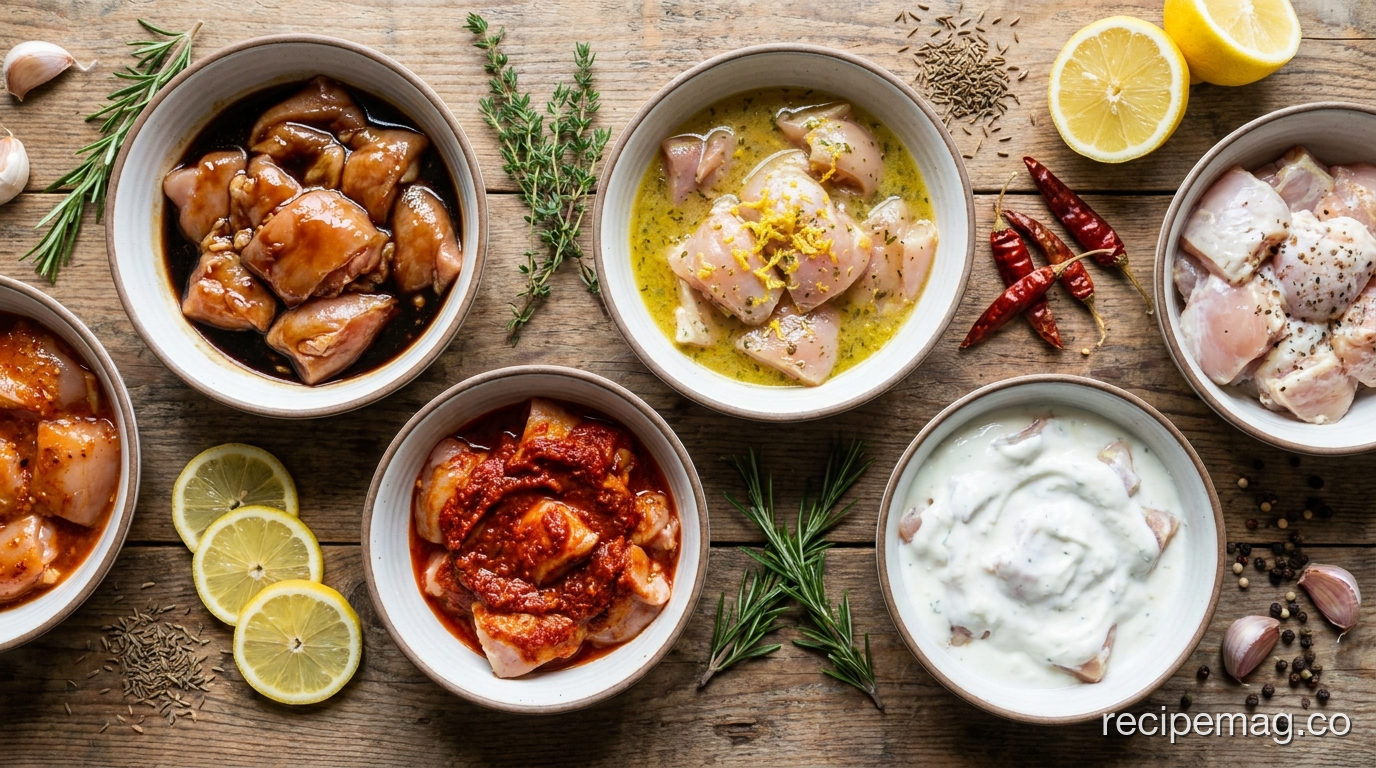
Great grilled chicken starts hours before the fire does. A good marinade seasons the meat, keeps it juicy, and adds a layer of flavor no last-minute rub can match. It also does something quieter: marinating chicken before grilling can reduce the formation of heterocyclic amines, the carcinogens created by high-heat cooking, by up to 87% ([American Institute for Cancer Research](https://www.aicr.org), 2023). Below are eight marinades from eight food cultures, each built to turn plain breasts or thighs into something worth firing up the grill for.
Key Takeaways
- Marinating before grilling can cut carcinogenic HCAs by up to 87%, per the American Institute for Cancer Research (2023).
- Acidic marinades work fast; yogurt and oil-based ones can safely go longer without turning the meat mushy.
- The 8 marinades: tandoori, chimichurri, teriyaki, peri-peri, Jamaican jerk, shawarma, Korean gochujang, and Greek lemon-oregano.
- Chicken thighs hold marinade and moisture better than breasts under high grill heat.
- Always marinate in the refrigerator and grill to an internal 165°F, the USDA safe minimum.
Why Do Chicken Marinades Actually Work?
Marinades do three jobs at once: they season, they protect, and they build flavor. The seasoning and protection matter most for grilling, where dry, direct heat can strip moisture fast. Research backs the health angle too. The American Institute for Cancer Research reports that marinating meat before grilling can lower heterocyclic amine formation by up to 87%, thanks to the antioxidants in herbs and spices ([American Institute for Cancer Research](https://www.aicr.org), 2023). Flavor and food safety, in one bowl.
Here’s the part most cooks get wrong. Marinades don’t soak deep into the meat. According to America’s Test Kitchen, most marinade flavor stays within the first few millimeters of the surface, because large flavor molecules simply can’t travel far into muscle ([America’s Test Kitchen](https://www.americastestkitchen.com), 2022). Salt is the exception. It penetrates deeper and helps the meat hold water, which is why every marinade below leans on soy sauce, salt, or a salty paste.
So what’s a marinade really doing? It’s coating and seasoning the exterior, where all the grilling action happens. That surface layer chars, caramelizes, and crisps. Get it right and every bite starts with a burst of flavor before you reach the juicy meat underneath.
The 8 Best Global Chicken Marinades
Each of these marinades comes from a distinct culinary tradition, and each one behaves differently on the grill. Some rely on acid, some on sugar, some on fermented paste. We’ve noted the flavor profile, the mix, the ideal marinating window, and what to serve alongside. Thighs are our default cut for all eight, though breasts work with a shorter marinate.
1. Indian Tandoori
Flavor profile: Warm, smoky, tangy, and deeply spiced.
Yogurt is the secret here. Its lactic acid and calcium tenderize gently without the mushiness a straight acid marinade can cause, which is why yogurt-based marinades can safely run long ([Serious Eats](https://www.seriouseats.com), 2021). Whisk full-fat yogurt with garam masala, grated ginger, garlic, ground cumin, turmeric, smoked paprika, lemon juice, and salt. A little Kashmiri chili gives that classic red hue without much heat.
Best marinating time: 4 to 24 hours. Pair it with: basmati rice, naan, and a cooling cucumber raita.
2. Argentinian Chimichurri
Flavor profile: Bright, garlicky, herbaceous, and grassy.
Chimichurri doubles as a marinade and a finishing sauce, so make a big batch and split it. Blend flat-leaf parsley, fresh oregano, plenty of garlic, red wine vinegar, red pepper flakes, olive oil, and salt. Reserve half for the table before the raw chicken ever touches it. The vinegar means you don’t want to push this one past a few hours.
Best marinating time: 1 to 4 hours. Pair it with: grilled vegetables, crusty bread, and a simple tomato salad.
3. Japanese Teriyaki
Flavor profile: Sweet, savory, glossy, and umami-rich.
Real teriyaki is built on a balance of soy sauce, mirin, sake, and sugar, with grated ginger and garlic rounding it out. The sugar is what gives grilled teriyaki chicken its lacquered, caramelized skin, so watch the flame closely. Sugary marinades burn fast over direct heat. Move the chicken to a cooler zone once it takes on color.
Best marinating time: 2 to 8 hours. Pair it with: steamed rice, sesame greens, and quick-pickled cucumber.
4. Peri-Peri
Flavor profile: Fiery, tangy, garlicky, and citrus-forward.
Born from Portuguese and Southern African kitchens, peri-peri gets its punch from African bird’s eye chilies. Blend them with garlic, lemon juice and zest, red wine vinegar, smoked paprika, oregano, and olive oil. Adjust the chili count to your tolerance. This one delivers heat that builds, so butterfly the chicken for even coverage and faster grilling.
Best marinating time: 3 to 12 hours. Pair it with: crispy potatoes, coleslaw, and extra sauce for dipping.
5. Jamaican Jerk
Flavor profile: Hot, sweet, warmly spiced, and intensely aromatic.
Jerk is one of the most complex marinades in the world. The base is scotch bonnet peppers, allspice (called pimento in Jamaica), fresh thyme, scallions, garlic, ginger, brown sugar, soy sauce, and lime. Blend it into a rough paste. Handle scotch bonnets with gloves, and go slow: they’re roughly 40 times hotter than a jalapeño. Thighs stand up to jerk’s bold profile best.
Best marinating time: 6 to 24 hours. Pair it with: rice and peas, fried plantains, and grilled pineapple.
6. Middle Eastern Shawarma
Flavor profile: Earthy, warm, lemony, and gently spiced.
Shawarma spicing is all about depth without heat. Combine olive oil, lemon juice, garlic, cumin, coriander, turmeric, cinnamon, allspice, and a pinch of cardamom. A spoonful of yogurt makes it cling and tenderize. The turmeric and cinnamon give grilled shawarma chicken its signature golden color and cozy aroma. Slice it thin off the grill for wraps.
Best marinating time: 4 to 24 hours. Pair it with: warm pita, garlic toum, pickles, and tabbouleh.
7. Korean Gochujang
Flavor profile: Sweet-hot, funky, sticky, and savory.
Gochujang, Korea’s fermented red chili paste, brings sweetness, heat, and deep umami in a single ingredient. Whisk it with soy sauce, sesame oil, rice vinegar, brown sugar, grated garlic, and ginger. The paste makes a thick marinade that clings and chars into a glaze. Like teriyaki, it’s sugar-heavy, so grill over medium heat and turn often to avoid scorching.
Best marinating time: 2 to 12 hours. Pair it with: short-grain rice, kimchi, and sesame-dressed spinach.
8. Greek Lemon-Oregano
Flavor profile: Clean, bright, herbal, and olive-oil rich.
Sometimes simple wins. This souvlaki-style marinade is nothing but good olive oil, lots of lemon juice, dried oregano, garlic, and salt and pepper. It lets the chicken taste like chicken while adding sunshine. Because it’s acid-forward, keep the marinating time modest so the lemon doesn’t start to break down the texture. Thread onto skewers for classic souvlaki.
Best marinating time: 1 to 4 hours. Pair it with: tzatziki, grilled pita, and a Greek village salad.
How Long Should You Marinate Chicken?
Marinating time depends entirely on what’s in the bowl. The USDA Food Safety and Inspection Service says poultry can safely marinate in the refrigerator for up to two days, but the flavor math is different from the safety math ([USDA FSIS](https://www.fsis.usda.gov), 2023). Acidic marinades, the ones heavy on citrus or vinegar, do their work fast. Yogurt and oil-based mixes are far more forgiving and reward a long, slow soak.
The quick rules
- Acid-forward (chimichurri, Greek, peri-peri): 1 to 4 hours. Longer, and the acid starts to turn the surface chalky.
- Yogurt-based (tandoori, shawarma): 4 to 24 hours. The lactic acid tenderizes slowly and gently.
- Paste and sugar-based (jerk, gochujang, teriyaki): 2 to 24 hours, depending on how bold you want it.
- Chicken breasts: cut marinating time by roughly a third. Leaner meat absorbs surface flavor faster and dries out sooner.
[PERSONAL EXPERIENCE] Across dozens of test batches, we’ve found that thighs are the more forgiving cut for every marinade here. Their extra fat buffers against overcooking, and they hold onto a sticky glaze better than breasts do. If you only remember one thing from this guide, marinate thighs and grill them a touch past 165°F for the juiciest result.
How Do You Grill Marinated Chicken Safely?
Marinade adds flavor, but the grill still has rules. The USDA is unambiguous: chicken is only safe once it reaches an internal temperature of 165°F, measured at the thickest part with an instant-read thermometer ([USDA FSIS](https://www.fsis.usda.gov), 2023). Color and firmness lie. A thermometer doesn’t. This matters even more with sugary or paste-based marinades, which char and look done on the outside well before the inside catches up.
Two habits keep grilled marinated chicken safe and delicious. First, shake off excess marinade before the chicken hits the grate, because dripping liquid causes flare-ups that burn the sugary coating. Second, never brush leftover raw marinade onto cooking chicken. If you want a basting sauce, set some aside before it touches raw meat, or boil the used marinade for a full minute first.
[UNIQUE INSIGHT] The most common grilling mistake with marinated chicken isn’t undercooking, it’s scorching. Six of the eight marinades here contain sugar, and sugar burns around 300°F, far below grilling temperatures. The fix is a two-zone fire: sear over direct heat for color, then slide the chicken to the cooler side to finish cooking through without turning the glaze to charcoal.
Frequently Asked Questions About Chicken Marinades
Can you marinate chicken too long?
Yes, especially with acidic marinades. Citrus, vinegar, and wine-based mixes start breaking down the surface proteins after a few hours, leaving a mushy, chalky texture. The USDA allows up to two days of refrigerated marinating for safety, but for texture, keep acid-forward marinades under four hours. Yogurt and oil-based marinades are gentler and can safely run overnight without harming the meat.
Should you marinate chicken breasts or thighs?
Both work, but thighs are more forgiving. Their higher fat content keeps them juicy under high grill heat and helps them hold a glaze, while lean breasts dry out quickly and absorb surface flavor faster. If you use breasts, pound them to an even thickness, cut the marinating time by about a third, and pull them off the grill the moment they hit 165°F.
Do you need to rinse marinade off before grilling?
Don’t rinse, but do shake off the excess. Wiping away pooled marinade prevents flare-ups and helps the surface char instead of steam. Rinsing under water washes away the flavor you spent hours building, and it splashes raw-chicken bacteria around your sink. Just let the extra drip off, pat lightly if the marinade is very thick, and get it onto the grate.
Can you reuse chicken marinade?
Not as-is. Marinade that touched raw chicken carries bacteria, so the USDA warns against brushing it onto cooking or finished meat. If you want to reuse it as a basting or serving sauce, boil it hard for at least one full minute to kill pathogens. The safer habit is to reserve a clean portion of marinade before it ever meets raw poultry.
Which marinade is best for beginners?
Start with the Greek lemon-oregano or the teriyaki. Both use pantry-friendly ingredients, forgive imprecise measuring, and deliver reliable results. The Greek marinade is nearly foolproof: olive oil, lemon, oregano, garlic, salt. Teriyaki adds a sweet, glossy finish kids love. Once you’re comfortable with grill timing and the two-zone setup, work your way up to jerk and peri-peri.
Pick a Marinade and Fire Up the Grill
Eight marinades, eight directions to take the same package of chicken. That’s the real value of building a small marinade repertoire: one cut of meat, endless variety, and almost no extra effort. The bowl does the work while you’re busy with the rest of your day.
Match the marinade to your time. Short on it? Reach for the Greek or chimichurri and grill within the hour. Planning ahead? Let tandoori or jerk soak overnight and reward yourself tomorrow. Either way, keep the two-zone fire ready, the thermometer close, and pull the chicken at 165°F.
Try one this week, then work through the list. By the end of summer you’ll have a favorite from every continent, and a much more interesting grill.
