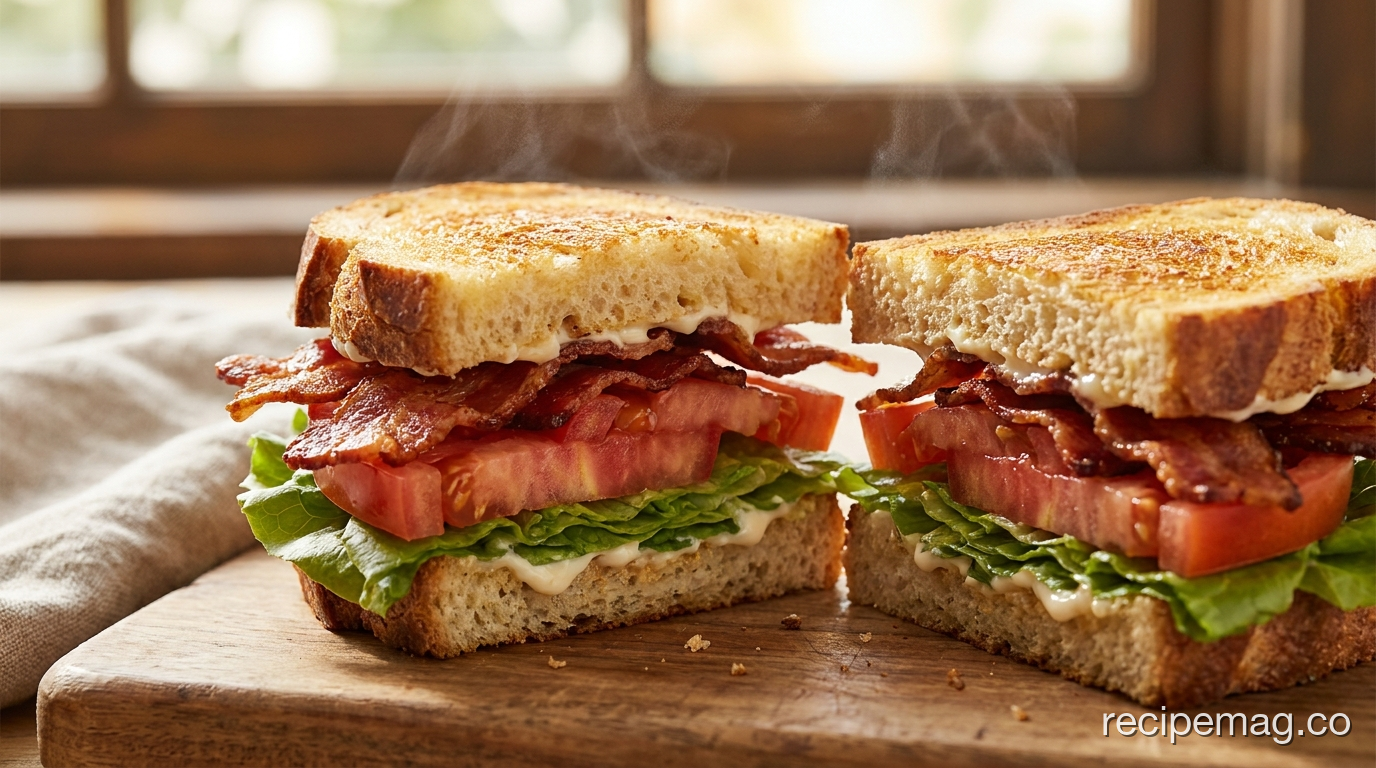
The best BLT sandwich lives or dies on the tomato, and most people ruin it before they ever slice a loaf. A 2016 study in the Proceedings of the National Academy of Sciences found that refrigerating tomatoes below 55°F permanently reduces the volatile compounds that give them their flavor. (PNAS, 2016) Get the tomato right, cook the bacon until it shatters, toast the bread, and a BLT stops being a diner afterthought. It becomes the sandwich you crave all summer.
Key Takeaways
- A great BLT is about four components in balance: smoky bacon, ripe tomato, crisp lettuce, and rich mayo on toast.
- Never refrigerate your tomatoes. Chilling below 55°F strips their flavor. ([PNAS](https://www.pnas.org), 2016)
- Salt the tomato slices and drain them so the sandwich stays crisp, not soggy.
- Cook bacon in a cold oven at 400°F for even, flat, shatteringly crisp strips.
- Toast the bread and spread mayo to the edges of both slices to seal out moisture.
What Makes the Best BLT Sandwich?
The best BLT sandwich is a study in contrast: smoky bacon, acidic tomato, cool crunchy lettuce, and rich mayo on crisp toast. Americans spend more than $6 billion a year on bacon at retail, according to Statista. (Statista, 2023) Yet the sandwich that made bacon a household staple is rarely built with any real care.
Every element has a job. The bacon brings salt, smoke, and fat. The tomato brings acid and juice. The lettuce adds cool crunch, and the mayo carries everything together while sealing the bread. Skip one, or let one go slack, and the whole thing falls apart. That’s the honest truth of it.
Here’s the part people miss. A BLT has only four main ingredients, so each one has nowhere to hide. A mealy tomato can’t be rescued by good bacon. Limp bacon ruins a perfect tomato. In our experience, home cooks obsess over the bacon and treat the tomato as an afterthought. Flip that priority and your sandwich transforms.
How Do You Pick and Salt the Tomatoes for a BLT?
Choose ripe, in-season tomatoes and keep them off the refrigerator shelf. The UC Davis Postharvest Technology Center reports that tomatoes stored below 55°F lose flavor and turn mealy, a change that doesn’t reverse when they warm back up. (UC Davis Postharvest Technology Center, 2022) A soft, heavy, fragrant tomato from an August market beats a firm grocery-store one every time.
Slice your tomatoes about a quarter-inch thick. Too thin and they vanish into the sandwich. Too thick and the whole thing slides apart on the first bite. Beefsteak and other large slicing tomatoes give you clean, wide rounds that cover the bread edge to edge.
Salt and Drain Every Slice
Salting is the step almost everyone skips, and it’s the difference between a crisp BLT and a soggy one. Lay the slices on a paper towel, sprinkle both sides with salt, and let them sit for 10 to 15 minutes. Salt pulls water out of the tomato through osmosis, as the food-science team at Serious Eats explains, which concentrates flavor and stops that watery juice from soaking your toast. (Serious Eats, 2022) Blot the drained slices before they hit the bread.
What’s the Best Way to Cook the Bacon?
Cook bacon until it’s crisp and evenly rendered, and the oven does this better than a skillet. The USDA Food Safety and Inspection Service advises cooking bacon until crisp for both safety and texture. (USDA FSIS, 2023) Oven bacon lies flat, cooks evenly, and doesn’t splatter your stovetop while you prep the rest.
The Cold-Oven Oven Method
America’s Test Kitchen recommends starting bacon in a cold oven, which gives the fat time to render slowly before the strips seize up. (America’s Test Kitchen, 2021) Here’s the routine we use:
- Line a rimmed baking sheet with foil and lay the bacon in a single layer. Don’t overlap the strips.
- Put the pan in a cold oven, then set it to 400°F (205°C).
- Bake for 15 to 20 minutes, checking after 12. Thick-cut bacon takes longer.
- Pull the bacon when it’s deep golden and the fat looks fully rendered. It crisps a little more as it cools.
- Drain on paper towels. Save the rendered fat for cooking eggs or potatoes later.
Three strips per sandwich is the sweet spot. Break them in half so every bite gets bacon, rather than one heroic strip that slides out the back.
Which Bread, Lettuce, and Mayo Should You Use?
The supporting cast matters more than people think. A BLT built on soft white sandwich bread with limp lettuce and thin mayo tastes flat no matter how good the bacon is. Small upgrades here pay off fast.
Bread: Toast It, Always
Use a sturdy bread with real structure: a good white sandwich loaf, sourdough, or a soft country white. Toast both slices until golden and firm. Toasting builds a moisture barrier so the mayo and tomato juice don’t turn your sandwich to mush. Untoasted bread collapses within minutes. Toasted bread holds its shape through the last bite.
Lettuce: Crunch Over Flavor
You want lettuce for texture, not taste. Iceberg is roughly 96% water, per USDA FoodData Central, which is exactly why it stays cold and snappy against warm bacon. (USDA FoodData Central, 2023) Crisp romaine hearts work too. Skip delicate greens like arugula or spring mix here; they wilt on contact and add nothing structural.
Mayo: Spread It Edge to Edge
Real mayonnaise, spread all the way to the crust on both slices, does double duty. It adds richness, and its layer of fat seals the bread against the tomato’s juice. A thin swipe in the center isn’t enough. Cover the whole surface. Add a little cracked black pepper to the mayo if you like a bit of bite.
How Should You Build the Best BLT Sandwich?
Assembly order keeps the sandwich crisp and structurally sound. Build it wrong and the lettuce slips, the tomato slides, and the bread goes soft. Build it right and every bite holds together. The whole thing takes about two minutes once your components are ready.
Step-by-Step Build
- Toast and cool slightly. Toast both slices of bread and let them sit for a minute so steam escapes. Hot bread traps moisture.
- Mayo both slices. Spread mayonnaise edge to edge on the inside of each slice. This is your moisture seal.
- Lettuce goes down first. Lay the crisp lettuce directly on the bottom slice. It acts as a buffer between the bread and the wet tomato.
- Bacon next. Layer the halved bacon strips over the lettuce so they cover the whole surface.
- Salted, drained tomato on top. Add the blotted tomato slices and give them one more light sprinkle of salt and pepper.
- Cap and cut. Top with the second slice, mayo side down. Press gently, then slice on the diagonal. A diagonal cut is easier to bite and shows off the layers.
Serve it immediately. A BLT is a sandwich you eat now, not one you wrap for later. The magic is in the contrast of warm bacon, cool tomato, and crisp toast, and that window is short.
Variations and Upgrades to the Classic BLT
The classic four-ingredient BLT is close to perfect, but a few additions earn their place without overcomplicating things. Each of these keeps the spirit of the sandwich intact while adding one clear layer.
Worth Trying
- The BLAT. Add ripe avocado. It brings creaminess that plays off the smoky bacon and cuts the tomato’s acidity beautifully.
- Fried egg. A runny fried egg turns a BLT into a full meal. The yolk becomes part of the sauce.
- Garlic aioli. Swap plain mayo for a quick garlic aioli, or just stir a grated garlic clove into your mayo.
- Basil or fresh herbs. A few basil leaves next to the tomato nod toward a caprese and smell incredible.
- Peppered or maple bacon. Thick-cut peppered bacon adds heat; maple bacon leans sweet-and-salty against the acidic tomato.
- A grind of black pepper on the tomato. The smallest upgrade, and the one that sharpens everything.
Frequently Asked Questions About the Best BLT Sandwich
Should I refrigerate my tomatoes before making a BLT?
No. Keep ripe tomatoes at room temperature on the counter. Research from UC Davis found that storing tomatoes below 55°F reduces flavor and creates a mealy texture that doesn’t recover. (UC Davis, 2022) Only refrigerate a fully ripe tomato if you must, and bring it back to room temperature before slicing it for the best flavor.
What kind of tomato is best for a BLT?
Use a large, ripe slicing tomato like a beefsteak or a good heirloom. They give you wide, meaty slices that cover the bread and hold their shape. The most important factor is ripeness, not variety. Choose a tomato that’s heavy for its size, gives slightly to gentle pressure, and smells fragrant at the stem end.
Why is my BLT always soggy?
Sogginess comes from tomato juice soaking untoasted bread. Fix it with three steps: toast both slices of bread, salt and drain the tomato slices for 10 to 15 minutes, then spread mayo edge to edge as a moisture barrier. Putting the lettuce between the bread and tomato adds one more layer of protection. Assemble and eat right away, not hours ahead.
How much bacon should go on a BLT?
Three strips of regular-cut bacon per sandwich is the classic ratio, or two strips of thick-cut. Break the strips in half and lay them in an even layer so every bite includes bacon. More than that and the sandwich becomes greasy and hard to bite through cleanly. The goal is balance with the tomato, not a bacon tower.
Can I make a BLT ahead of time?
Not fully. A BLT is best assembled and eaten immediately, since the contrast of warm bacon and cool tomato is the whole point. You can prep components ahead: cook the bacon, wash and dry the lettuce, and toast the bread. Salt the tomatoes just before building. Then assemble in two minutes when you’re ready to eat.
Build a Better BLT This Weekend
The best BLT sandwich isn’t complicated, but it does reward attention. Buy a ripe summer tomato and leave it on the counter. Salt and drain the slices. Cook your bacon crisp in the oven. Toast the bread and mayo it to the edges. Those small moves are the whole recipe.
Tomato season is short, and it’s peaking right now. This is the one window each year when a BLT can taste the way it’s supposed to, so don’t waste it on a mealy, refrigerated tomato in December.
Make one this weekend, cut it on the diagonal, and eat it standing over the sink if you have to. That’s how the best ones get eaten anyway.
