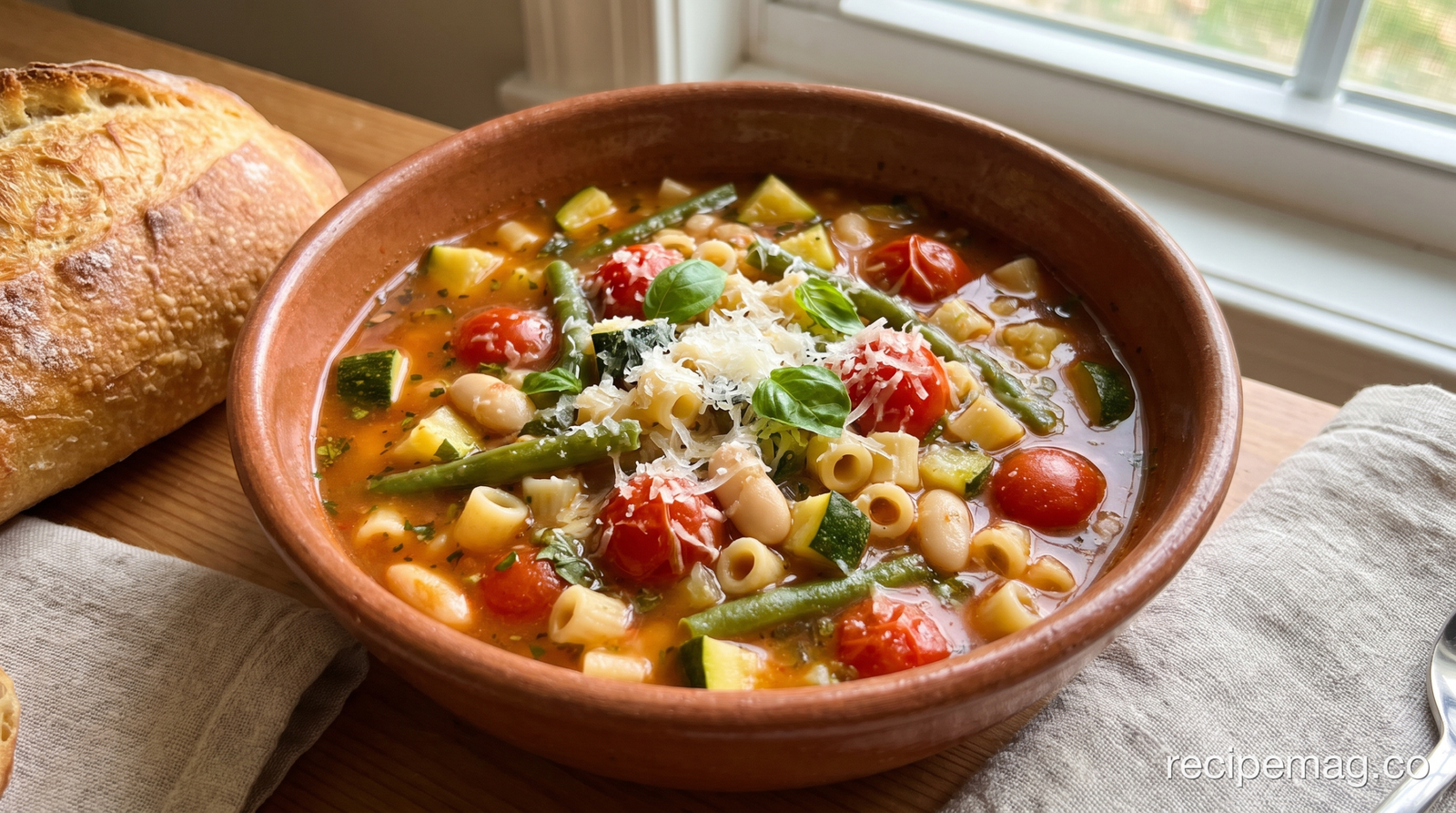
Minestrone is a template, not a fixed recipe, which is exactly why it belongs in the last week of August. The Italian tradition is a soup built from whatever the season is ending with, and right now that means zucchini, green beans, corn, and tomatoes that will all be gone in three weeks. The one element worth being strict about is the parmesan rind, which simmers into the broth and supplies a savory backbone that stock alone cannot.
Key Takeaways
- Built from late-summer vegetables, so it changes with whatever the market is clearing out.
- A parmesan rind simmered in the broth is the single biggest flavor upgrade.
- Add vegetables in stages by cooking time, not all at once.
- Cook the pasta separately if you plan to keep leftovers, or it turns to mush.
- Serves 6, and it is better on day two.
Ingredients
Serves 6. Active time 25 minutes. Total time 50 minutes.
- 3 tbsp olive oil, plus more for serving
- 1 large yellow onion, diced
- 2 carrots, diced
- 2 celery stalks, diced
- 4 garlic cloves, minced
- 2 tbsp tomato paste
- 1 lb ripe tomatoes, chopped, or one 14-oz can
- 6 cups chicken or vegetable stock
- 1 parmesan rind, about 3 inches
- 1 bay leaf
- 2 medium zucchini, diced
- 8 oz green beans, cut into 1-inch pieces
- Kernels from 2 ears of corn
- One 15-oz can cannellini beans, drained and rinsed
- 1 cup small pasta, ditalini or elbows
- 2 cups baby spinach or chopped chard
- 1 large handful fresh basil, torn
- Kosher salt and black pepper
- Grated parmesan for serving
How to Make It
1. Build the soffritto. Heat the olive oil in a large pot over medium heat. Add the onion, carrot, and celery with a pinch of salt and cook for 8 to 10 minutes, until soft and just beginning to color. Do not rush this. It is the flavor foundation, and browned edges here pay off in the finished bowl.
2. Bloom the aromatics. Add the garlic and cook one minute. Stir in the tomato paste and let it darken for two minutes, which deepens its sweetness and removes the raw metallic edge.
3. Add liquid and the rind. Stir in the chopped tomatoes, stock, parmesan rind, and bay leaf. Bring to a simmer and cook 15 minutes, partially covered. The rind will soften and release its savory character into the broth.
4. Stage the vegetables. Add the green beans first and simmer 5 minutes. Then add the zucchini and cannellini beans and simmer 5 minutes more. Finally add the corn and cook just 2 minutes. Staging matters: dumped in together, the corn turns starchy and the zucchini disintegrates while the green beans are still squeaky.
5. Cook the pasta. For same-day serving, add the pasta directly to the pot and cook until al dente. If you want leftovers, boil it separately and spoon it into each bowl instead. Pasta left sitting in soup absorbs the broth overnight and turns to porridge.
6. Finish. Remove the rind and bay leaf. Stir in the spinach and let it wilt, about a minute. Add the torn basil off the heat, taste aggressively for salt, and finish each bowl with olive oil, black pepper, and grated parmesan.
Why Staging the Vegetables Matters
Most minestrone recipes fail for one reason: everything goes in at once. Vegetables have wildly different cooking times, and a soup where all of them meet the same fate is a soup where at least half are wrong.
Carrots and celery need 10 minutes or more, which is why they belong in the soffritto rather than the broth. Green beans want 8 to 10 minutes total to lose their raw snap without going drab. Zucchini needs about 6, and past that it collapses into threads. Corn needs 2, because it is already edible raw and only needs heating.
The staging above is calibrated so all four finish at the same moment. Swap the vegetables freely, but keep the logic: hard and dense first, tender and quick last, delicate greens off the heat.
The same principle applies to whatever your market is actually clearing out. Late August often means a glut of one thing in particular, and our guides to a zucchini glut and a tomato glut cover what to do with the excess this soup does not absorb.
Variations and Make-Ahead
Vegetarian and vegan. Use vegetable stock and skip the parmesan rind and cheese. To replace the umami, add two teaspoons of white miso stirred in at the end, or a splash of soy sauce with the stock.
Heartier. Brown 8 oz of Italian sausage before the soffritto and leave the rendered fat in the pot. It turns a light soup into a full dinner.
Pesto finish. A spoonful of basil pesto swirled into each bowl at the table is the Ligurian version, minestrone al pesto, and it is a genuine upgrade.
Early-fall version. As September arrives, swap the zucchini and corn for diced butternut squash and kale, and simmer 10 minutes longer. The same pot carries you into the new season, which is the whole idea behind our late-August kitchen reset.
Make-ahead. The soup base without pasta or greens keeps four days refrigerated and three months frozen. Add pasta and spinach fresh when reheating. This makes it a strong candidate for make-ahead summer meals, and it reheats better than almost anything else in the rotation.
What to Serve With It
Bread is non-negotiable, ideally something with a crust that can handle the broth. Grilled bread rubbed with a cut garlic clove is the traditional move and takes four minutes. Our whipped feta dip with grilled bread covers the technique if you want a starter alongside.
Beyond that, keep it light. A sharp green salad or a cucumber tomato salad with feta is enough. If you want to make an evening of it, this soup works well as a first course before braised short ribs.
Building It From What You Have
Minestrone is a framework, and once you see the structure you never need a recipe again. Every version has five components, and any ingredient can fill its slot.
The aromatic base. Onion plus two of: carrot, celery, fennel, leek. Cooked slowly in fat until sweet.
The savory backbone. Tomato paste, plus one of: parmesan rind, pancetta, miso, anchovy, or good stock. This is what separates a soup with depth from vegetables in hot water.
The vegetables. Whatever is in season, added in stages by cooking time. Hard root vegetables first, then squash and beans, then quick-cooking things like corn and peas, then greens at the very end.
The starch and protein. Beans plus pasta, rice, farro, barley, or bread. Traditional Tuscan versions use stale bread instead of pasta, which thickens the soup considerably.
The finish. Something bright and fatty stirred in off the heat: olive oil, pesto, grated cheese, lemon zest, or fresh herbs. Never skip this. Soup that tastes flat almost always just needs the finish, not more salt.
Work through those five slots with whatever is in the kitchen and the result will be good. That flexibility is exactly why it is the right recipe for the end of August, when no two crisper drawers look the same.
Building a Better Broth
Minestrone lives or dies on its liquid, and the difference between a thin, watery bowl and a good one comes down to three habits rather than an expensive stock.
The first is saving parmesan rinds. Every time you finish a wedge, put the rind in a bag in the freezer. They keep indefinitely and cost nothing, and one dropped into a pot of soup contributes a savory depth that no amount of salt reproduces. If you have two, use two.
The second is cooking the tomato paste. Two minutes of stirring it in the hot pot before any liquid goes in caramelizes its sugars and drives off the tinny raw flavor. Skipping this is why so many homemade vegetable soups taste faintly of can.
The third is salting in stages rather than at the end. A pinch with the soffritto, another with the stock, and a final correction before serving builds seasoning through the layers instead of laying it on top. Vegetable soups need noticeably more salt than cooks expect, because there is no meat contributing its own.
If you have bean cooking liquid from a batch of dried beans, use it in place of a cup of the stock. It is starchy and savory and gives the soup body that plain stock will not.
Frequently Asked Questions
Can I make minestrone without a parmesan rind?
Yes, but you will miss the depth. Substitute two teaspoons of white miso or a tablespoon of soy sauce added near the end, both of which supply similar savory glutamates.
Why did my pasta turn mushy in leftovers?
Pasta left in soup keeps absorbing broth overnight. Cook it separately and add it per bowl if you intend to keep leftovers for more than a few hours.
Can I freeze minestrone?
Freeze the base without pasta or leafy greens for up to three months. Both go in fresh when you reheat, since neither survives freezing well.
What vegetables can I substitute?
Almost anything, as long as you respect cooking times. Add hard vegetables like potatoes or fennel early, tender ones like summer squash late, and leafy greens off the heat.
Is minestrone supposed to be thick or brothy?
Both exist regionally. Northern Italian versions tend to be thicker and more stew-like; southern versions are brothier. Adjust with extra stock or by simmering uncovered to reduce.
Can I use dried beans instead of canned?
Yes. Soak and simmer them separately until tender first, then add them at the same stage as the canned beans. Cooking them in the soup from dry will not work, since the tomato’s acidity keeps them firm.
