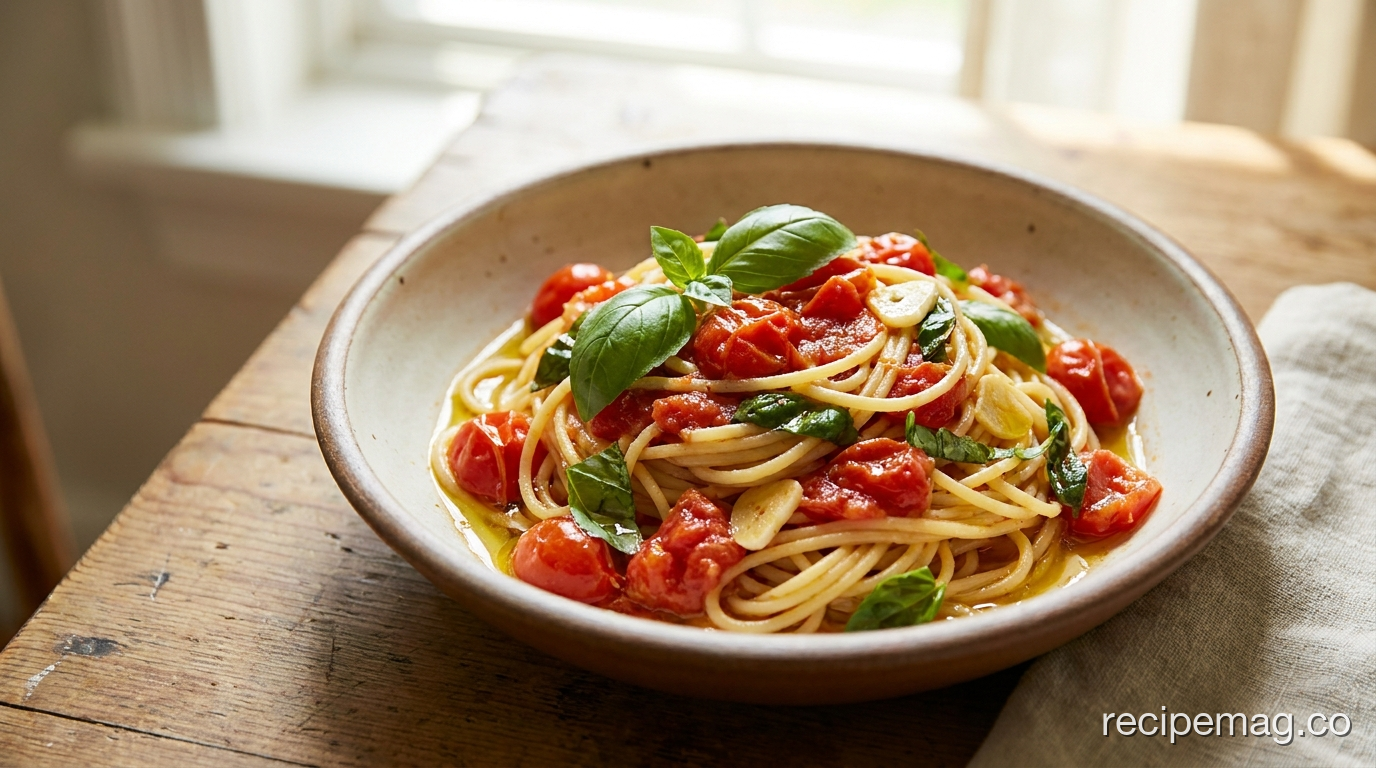
Fresh tomato basil pasta with a no-cook sauce is the smartest thing you can do with peak summer tomatoes. You chop ripe tomatoes, salt them, and let them sit while the pasta boils. The salt draws out their juices and builds a light, silky sauce with no stove time at all. A 2016 study in the Proceedings of the National Academy of Sciences found that chilling tomatoes below 55°F destroys their flavor. (PNAS, 2016) This recipe rewards a counter-ripened tomato like nothing else.
Key Takeaways
- Ready in about 20 minutes, using one pot and one bowl.
- The no-cook sauce needs no stove: salt draws juice from the tomatoes to make it.
- Use the ripest summer tomatoes you can find and never refrigerate them. ([PNAS](https://www.pnas.org), 2016)
- Eating tomatoes with olive oil boosts absorption of lycopene, a key antioxidant. ([Journal of Nutrition](https://academic.oup.com/jn), 2005)
- Toss hot pasta with the room-temperature sauce so the tomatoes warm through without cooking.
Why a No-Cook Tomato Sauce Is Worth It
A no-cook sauce keeps everything that makes a ripe August tomato worth eating. Cooking drives off a tomato’s most delicate aromas, and the PNAS research showed how fragile those volatile compounds are. (PNAS, 2016) When your tomatoes are genuinely ripe, cooking them is a step backward.
There’s a nutrition upside too. A 2005 study in the Journal of Nutrition found that eating tomatoes alongside a source of fat, like olive oil, significantly increases the body’s absorption of lycopene, the antioxidant that gives tomatoes their color. (Journal of Nutrition, 2005) It’s also the easiest sauce you’ll make all summer: no simmering, no splatter, and it belongs in your rotation when it’s too hot to cook.
Ingredients for Fresh Tomato Basil Pasta
Prep Time: 15 minutes | Cook Time: 10 minutes | Serves: 4
This dish is built on a handful of ingredients, so quality carries the whole thing. The tomatoes matter most: buy them ripe, fragrant, and heavy for their size. According to USDA FoodData Central, tomatoes are a leading dietary source of lycopene, and ripe fruit contains more of it than underripe. (USDA FoodData Central, 2023) Good olive oil and fresh basil do the rest.
- 1.5 pounds ripe summer tomatoes (about 4 medium, or a mix of heirloom and cherry)
- 1 pound spaghetti or short pasta like penne
- 1 large garlic clove, grated or very finely minced
- 1/4 cup good extra-virgin olive oil, plus more to finish
- 1 cup fresh basil leaves, torn
- 3/4 teaspoon salt for the tomatoes, plus salt for the pasta water
- 1/2 teaspoon red pepper flakes (optional)
- Freshly grated Parmesan or pecorino, to serve
- Flaky salt and black pepper to finish
A mix of textures is ideal: chopped beefsteak or heirloom for juicy sauce, plus halved cherry tomatoes for bursts of sweetness. Use whatever looks best, but make sure it’s ripe.
How to Make the No-Cook Tomato Sauce
The whole sauce comes from salting the tomatoes and letting them sit. When you salt chopped tomatoes, osmosis pulls their juices out, and that liquid mixes with olive oil into a light, glossy sauce, as the food-science team at Serious Eats explains. (Serious Eats, 2022) Ten minutes of resting time does all the work while your pasta water heats.
Steps
- Core and chop the tomatoes into bite-size pieces. Halve any cherry tomatoes. Add them all to a large bowl, big enough to toss the finished pasta in later.
- Add the grated garlic, 3/4 teaspoon salt, red pepper flakes if using, and the olive oil. Stir gently.
- Let the bowl sit at room temperature for at least 10 minutes, and up to 30. You’ll see juice pooling at the bottom. That’s your sauce forming.
- Tear in most of the basil just before the pasta is ready. Save a few leaves for the top.
Don’t skip the resting time. Freshly salted tomatoes taste raw and sharp; rested ones taste rounded and saucy. If your tomatoes are a little underripe, give them the full 30 minutes and add a pinch of sugar to help them along.
How to Cook the Pasta Right
Well-salted water is non-negotiable, even here. Salt the water until it tastes like the sea, roughly a tablespoon per four quarts, and bring it to a rolling boil before the pasta goes in. This is the only seasoning the pasta itself gets. Cook until just al dente, with a little bite at the center, and before you drain, scoop out a cup of the starchy cooking water. That liquid is the secret to a sauce that clings instead of sliding off.
How to Toss and Serve Fresh Tomato Pasta
Tossing hot pasta directly into the room-temperature tomato bowl is where the dish comes together. The heat of the noodles warms the tomatoes and garlic without cooking them, keeping that fresh flavor while taking the raw edge off. A splash of reserved pasta water loosens everything into a sauce that coats each strand.
Assembly Steps
- Add the hot, drained pasta straight into the bowl of macerated tomatoes.
- Toss well for a full minute. The starchy pasta water on the noodles plus the tomato juices will emulsify with the olive oil.
- If it looks dry, add reserved pasta water a splash at a time until the sauce is glossy and loose.
- Taste and adjust. Add salt, a little more olive oil, or more red pepper flakes as needed.
- Serve right away in warm bowls, topped with the reserved basil, grated cheese, flaky salt, and black pepper.
Eat it warm or at room temperature. This is one of the rare pastas that’s genuinely good both ways.
Variations and Add-Ins
The base recipe is a template. Once you’ve got the salting-and-tossing method down, it takes on all kinds of additions without much fuss.
- Fresh mozzarella. Tear small pieces of fresh mozzarella or add mini bocconcini for a caprese-style pasta.
- Burrata. Spoon a torn ball of burrata over the top just before serving. It melts into the warm pasta.
- Anchovy or capers. Mash an anchovy into the olive oil for depth, or add capers for a briny punch.
- Protein. Add a can of good tuna, white beans, or leftover grilled chicken to make it a full meal.
Storage Tips
This pasta is best fresh, but leftovers keep fine for a day. The USDA recommends storing cooked pasta in a sealed container at 40°F or below, where it stays safe for three to four days. (USDA Food Safety and Inspection Service, 2023) The tomatoes soften over time, so eat leftovers cold rather than reheated.
- Refrigerator: Store leftovers in a sealed container for up to 3 days.
- Serve cold: Leftover fresh tomato pasta makes an excellent cold pasta salad. Add a splash of olive oil and fresh basil to revive it.
- Make-ahead sauce: The salted tomato mixture can sit at room temperature for up to an hour before you cook the pasta.
- Skip freezing: Raw tomato sauce and cooked pasta turn watery and soft when frozen.
Frequently Asked Questions About Fresh Tomato Pasta
Do I really not cook the tomato sauce at all?
Correct, there’s no cooking. Salting the chopped tomatoes and letting them rest draws out their juices, which combine with olive oil into a light sauce. The heat of the freshly drained pasta warms the tomatoes just enough when you toss it all together. This keeps the fresh flavor that cooking would drive off.
What are the best tomatoes for this pasta?
Ripe, in-season tomatoes are the only real requirement. A mix works well: juicy heirloom or beefsteak for the sauce, plus halved cherry tomatoes for sweetness. Choose fruit that’s fragrant and heavy for its size. Keep them on the counter, never the fridge, since chilling below 55°F flattens their flavor.
Can I make this in advance?
The salted tomato mixture can rest at room temperature for up to an hour before you cook the pasta, which actually improves it. Toss with pasta only when you’re ready to eat, since the noodles soften over time. Leftovers keep for three days and are excellent served cold the next day.
Why is my sauce watery instead of silky?
A watery sauce usually means it didn’t emulsify. Two fixes: toss the pasta hard for a full minute so the starchy water, tomato juice, and olive oil combine, and add reserved pasta water gradually. The starch is what turns loose liquid into a clingy sauce. Still thin? More oil and a harder toss will pull it together.
Make This While Tomatoes Are at Their Peak
Fresh tomato basil pasta is the recipe that convinces people to buy the good tomatoes. It takes about 20 minutes, uses one pot and one bowl, and tastes like the height of summer on a plate. The technique is almost embarrassingly simple once you’ve done it once.
The catch is timing. This dish only works when tomatoes are truly ripe, and that window is closing fast as summer winds down. Salt your tomatoes, boil your pasta, and toss. Do it once and it’ll be your default hot-weather dinner for years.
