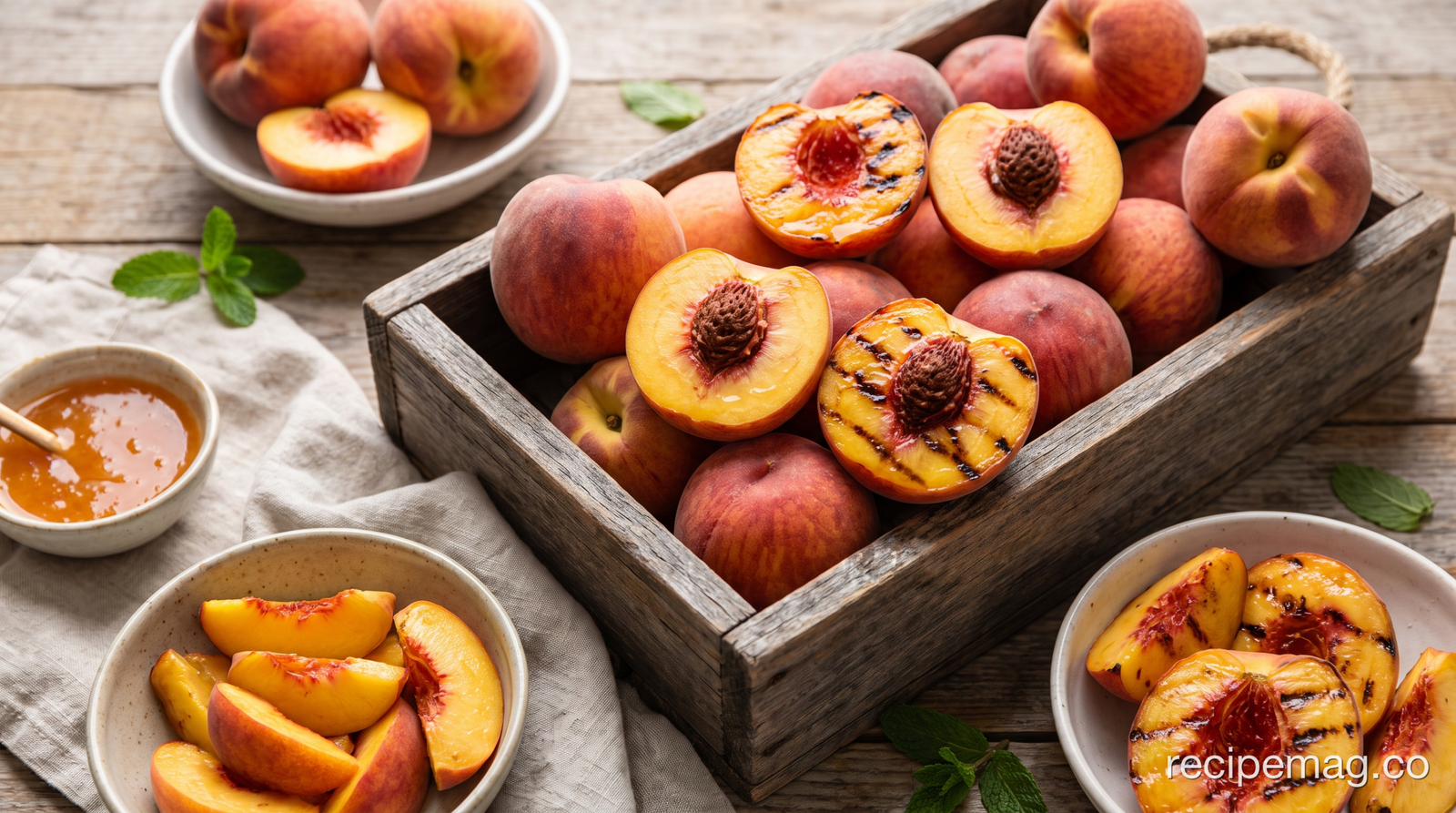
National Eat a Peach Day lands on August 22, which is close to perfect timing, because late August is when peaches from most growing regions hit their peak. One thing worth knowing before you buy a case: peaches are climacteric, meaning they keep softening and growing juicier after harvest, but they never get sweeter. The sugar is fixed the moment the fruit leaves the tree (Clemson Cooperative Extension, 2023). Buy for aroma, not for squeeze.
Key Takeaways
- National Eat a Peach Day is observed every year on August 22.
- Peaches soften after picking but do not gain sugar, so choose by smell and color, not firmness.
- Never refrigerate an underripe peach; cold storage causes the mealy, cottony texture everyone complains about.
- California grows the largest share of U.S. peaches, with South Carolina and Georgia leading the Southeast (USDA NASS, 2024).
- Freestone varieties, which dominate late summer, are the ones worth buying for cooking.
How to Buy and Ripen Peaches
Start with the smell. A peach that will taste like something smells like a peach from a foot away. If it has no aroma at the store, it will have no flavor at home, no matter how long you leave it on the counter.
Look at the background color, the part of the skin that is not blushed red. Green means it was picked too early. You want a warm yellow or cream. The red blush is a varietal trait and tells you almost nothing about ripeness, which is the most common misreading at a market stall.
Ripen at room temperature, in a single layer, stem end down, out of direct sun. A paper bag speeds it up by trapping ethylene. Two to three days is typical. Only refrigerate once the peach is fully ripe, and even then use it within a few days. Refrigerating an unripe peach triggers chilling injury and produces the dry, mealy texture that ruins so much supermarket fruit (Clemson Cooperative Extension, 2023).
One more distinction: freestone peaches release cleanly from the pit, clingstone do not. Early-season peaches are usually clingstone; late-August fruit is almost always freestone. For cooking, freestone is the only sane choice. Our guide to picking and storing summer stone fruit goes deeper on all of this.
10 Ways to Use Peak Peaches
These run from a two-minute idea to a full dessert, and every one of them assumes a genuinely ripe peach. Nothing on this list rescues a bad one.
1. Grilled Peach Halves
Halve, pit, brush with oil, and grill cut side down for three to four minutes until the sugars caramelize and grill marks set. The heat concentrates the flavor and turns a merely good peach into a great one. Serve with ice cream, or with burrata and torn basil as a starter.
2. Peach Cobbler
The definitive American peach dessert. Sliced fruit under a craggy biscuit top, baked until the juices bubble up around the edges. Our peach cobbler with buttermilk biscuit topping uses biscuits rather than cake batter, which keeps the fruit from going soupy.
3. Peach and Burrata Salad
Sliced raw peaches, torn burrata, prosciutto, basil, olive oil, and flaky salt. It takes four minutes and reads as a restaurant dish. Our grilled peach salad with burrata and honey is the warm version.
4. Peach Salsa
Diced peach, red onion, jalapeño, cilantro, and lime. It goes on fish tacos, pork, and chicken, and it is the single best use for a peach that is slightly too firm. See it in action on our grilled pork chops with peach salsa.
5. Bourbon Peach Barbecue Sauce
Simmer peaches down with bourbon, brown sugar, vinegar, and tomato paste into a glaze that is sweet, smoky, and slightly boozy. It belongs on bourbon peach BBQ chicken wings and on pork ribs.
6. Peach Galette
A free-form tart, easier than pie because there is no crimping and no pan. Roll the dough, pile sliced peaches in the middle, fold the edges over, and bake. Our plum and almond galette uses the same method with a different stone fruit.
7. Grilled Peach and Prosciutto Flatbread
Sliced peach, prosciutto, burrata, and arugula on grilled flatbread with a balsamic drizzle. Salty, sweet, and charred at once. Full method in our grilled peach and prosciutto flatbread.
8. Peach Iced Tea or Bellini
Purée ripe peaches, strain, and stir into cold-brewed tea with lemon. For the adult version, top the purée with prosecco. Both are the correct use for fruit that has gone one day past ideal.
9. Roasted Peaches with Honey and Thyme
Halve, drizzle with honey, scatter thyme, and roast at 400°F for 20 minutes. The oven does what the grill does with none of the attention. Serve warm over yogurt or mascarpone.
10. Frozen Peach Slices
The least glamorous and most useful option. Slice, toss with a little lemon juice, freeze on a tray, then bag. In February they become smoothies, cobbler, or a sauce for pork. Our guide to preserving summer produce covers the technique for everything else in season.
Where American Peaches Come From
Georgia is nicknamed the Peach State, but it is not the biggest producer, and it is not even second. California grows the overwhelming majority of U.S. peaches, most of them clingstone varieties destined for canning, and South Carolina consistently out-produces Georgia in fresh-market fruit (USDA NASS, 2024).
What actually matters for flavor is distance and timing. A peach picked ripe and sold within two days beats a peach shipped 2,000 miles every single time, regardless of state. That is why late August is the moment to buy from whoever grows closest to you, and why the same variety can taste extraordinary at a farm stand and forgettable at a supermarket.
The late-August window is short. Most regions wrap their peach season by mid-September, which makes this the last genuinely good buying stretch of the year. Buy more than you need and freeze the excess.
Handling a Case of Peaches
The best value on peaches all year is the end-of-season case or half-bushel, usually sold as seconds at a farm stand for a fraction of the per-pound price. The catch is that a case ripens all at once, and a case of ripe peaches has about a four-day window.
Sort the case the day you bring it home. Anything already soft gets eaten or cooked within 48 hours. Anything firm goes on the counter in a single layer, checked daily. Anything bruised gets cut around immediately and used for purée, sauce, or salsa, because one rotting peach spreads to its neighbors fast.
Then process in a single session rather than piecemeal. Slice and freeze in a tray-then-bag routine, which takes about 30 minutes for 10 pounds and gives you loose slices rather than a solid block. Toss the slices with lemon juice first to slow browning. Frozen peaches are best within about a year and go straight from the freezer into cobbler, smoothies, and sauces with no thawing.
If freezer space is short, cook instead. A large batch of peach purée reduces to a fraction of its volume and freezes flat. Peach butter, cooked down slowly with a little sugar and lemon, keeps for weeks refrigerated. Our guide to preserving summer produce covers which methods need a canner and which do not.
What to Do With a Big Peach Haul
The problem with buying peaches at their peak is that a half-bushel ripens more or less at once. Sorting on the day you get home is what prevents most of it going to waste.
Separate the box into three groups. Fully ripe fruit, meaning fragrant and yielding to gentle pressure, goes in the refrigerator and gets used within three days. Nearly ripe fruit stays on the counter in a single layer. Firm fruit goes into a paper bag to speed things along, checked daily.
Then decide what each group becomes. Ripe peaches are for eating raw, for cobbler, and for salads where the fruit is the point. Slightly firm peaches are actually better for grilling and salsa, because they hold their shape under heat and knife. Overripe peaches, the ones with a soft spot, go straight into purée for drinks, sauce, or the freezer.
Freezing is the safety net for whatever you cannot get through. Slice, toss with a little lemon juice to slow browning, freeze in a single layer on a tray, then bag. Frozen fruit holds its quality for about a year, and it goes straight into a winter cobbler with no thawing. Our guide to preserving summer produce covers the same approach for everything else the season is ending with.
Frequently Asked Questions
When is National Eat a Peach Day?
August 22, every year. It sits conveniently in the middle of peak peach season across most of the United States.
How do I ripen a hard peach quickly?
Put it in a paper bag at room temperature, stem end down, with a banana or apple to boost ethylene. It usually softens in 24 to 48 hours. It will get juicier and more aromatic, but it will not get sweeter.
Why are my refrigerated peaches mealy?
Chilling injury. Peaches stored cold before they are fully ripe suffer internal breakdown that produces dry, cottony flesh. Keep them on the counter until ripe, then refrigerate only if you need a few extra days.
Do I need to peel peaches for cooking?
Not for cobbler, galettes, or grilling, where the skin adds color and holds slices together. Peel for smooth purées, sauces, and jams. To peel easily, score an X in the base, boil 30 seconds, then plunge into ice water.
What is the difference between freestone and clingstone peaches?
Freestone flesh separates cleanly from the pit; clingstone flesh grips it. Late-season peaches are usually freestone, which is what you want for any recipe requiring slices.
Can I substitute nectarines for peaches?
Yes, one for one, in every recipe here. Nectarines are simply peaches without fuzz, and they need no peeling at all.
