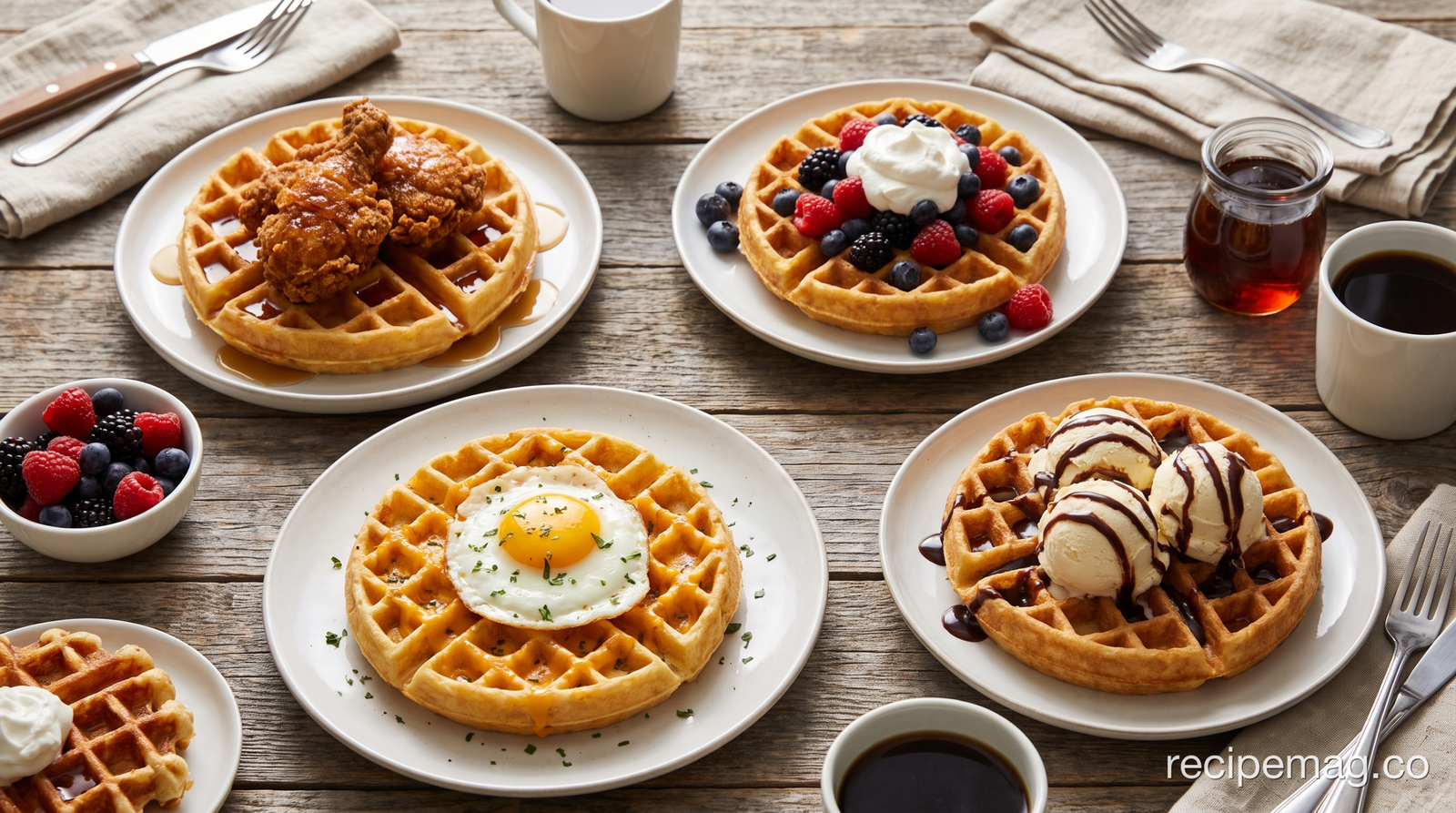
National Waffle Day falls on August 24, the anniversary of the first U.S. patent for a waffle iron, granted to Cornelius Swartwout in 1869. The date is a good excuse to stop treating the waffle iron as a once-a-month breakfast appliance. A waffle iron is really a two-sided contact grill, and almost anything that benefits from a crisp exterior and a fast cook can go in it. Below are ten ways to use one, only three of which involve syrup.
Key Takeaways
- National Waffle Day is August 24, marking Cornelius Swartwout’s 1869 waffle iron patent.
- The deep-pocketed Belgian waffle entered American awareness at the 1964 New York World’s Fair.
- A waffle iron cooks from both sides at once, which is why it crisps where a pan does not.
- Savoury waffles work as well as sweet, and hash brown waffles are the best use of the appliance.
- Batter rested 15 minutes produces a noticeably crisper waffle than batter used immediately.
Why the Waffle Iron Works So Well
The grid is the whole point. Those ridges roughly double the surface area in contact with hot metal, and heat arrives from above and below simultaneously. That combination drives moisture off the exterior fast while the inside is still steaming, which is exactly the contrast that defines a good waffle: crisp shell, tender middle.
It also explains why nearly the same batter makes a limp pancake and a crisp waffle. Nothing about the ingredients has fundamentally changed; the geometry has. Once you see the appliance as a double-sided press rather than a breakfast machine, the list of things worth putting in it gets long.
One historical note worth knowing: the deep-pocketed Belgian waffle most Americans picture was popularised at the 1964 New York World’s Fair, sold as the “Bel-Gem” waffle with strawberries and cream. The thinner, denser American waffle predates it by nearly a century.
10 Ways to Use a Waffle Iron
1. Crispy Buttermilk Waffles
The baseline, and worth getting right before anything else. Buttermilk’s acidity reacts with baking soda for lift, and a rested batter gives a crisper shell. Full method in our crispy buttermilk waffles from scratch.
2. Chicken and Waffles
Fried chicken on a waffle with hot honey is the dish that proves waffles are not breakfast-only. The salt-sweet-heat combination is the entire argument. See our chicken and waffles with hot honey.
3. Hash Brown Waffles
Squeeze the water out of grated potato, season it, and press it into a hot buttered iron for eight minutes. The result is crisper than any pan-fried hash brown, because both sides cook at once and the ridges let fat drain away.
4. Savoury Cheese and Herb Waffles
Fold sharp cheddar, scallions, and black pepper into the batter and drop the sugar. Serve under a fried egg, or use two as the bread for a sandwich.
5. Leftover Mashed Potato Waffles
Mix cold mashed potato with an egg, a spoonful of flour, and cheese, then waffle it. It is the single best thing to do with leftover mash and takes six minutes.
6. Grilled Cheese
Butter the outside of a sandwich and close the iron gently. You get ridged, evenly pressed grilled cheese with no flipping and no pan to wash.
7. Waffled Fritters
Any fritter batter that would normally be fried works here with a fraction of the oil. Zucchini fritters in particular waffle beautifully, which is useful if you are still working through a squash glut, as in our zucchini glut roundup.
8. Cornbread Waffles
Cornbread batter in a waffle iron gives you crisp edges throughout instead of only at the pan’s rim. Serve alongside chilli, or under pulled pork like our slow-cooker pulled pork.
9. Waffled Brownies and Cookie Dough
Brownie batter cooks in about four minutes and comes out fudgy inside with crisp ridges. Cookie dough behaves the same way. Both want a well-greased iron and a light touch on the lid.
10. Waffle Iron Bacon
Lay the strips flat, close the lid, and cook about six minutes. The fat drains into the channels and the bacon comes out flat and uniformly crisp. Line the counter with paper towels first; this one spatters.
Getting Waffles Right
Let the iron get fully hot. Most indicator lights signal early; give it an extra two minutes past the beep. Batter hitting a lukewarm plate steams instead of searing, and that is the main cause of pale, floppy waffles.
Rest the batter. Fifteen minutes lets the flour hydrate and the leavening begin working. The difference in crispness is obvious in a side-by-side test.
Do not stack them. Waffles piled on a plate steam each other soft within a minute. Hold them in a single layer on a rack in a 200°F oven until you are ready to serve.
Fat is the crisping agent. A batter with real butter or oil crisps; a lean batter does not. This is not the place to economise.
Freeze the extras. Cooled waffles freeze flat and reheat straight from frozen in a toaster in about three minutes, which makes a double batch on Sunday worth the trouble. That logic belongs in the same column as our make-ahead back-to-school lunches.
Sweet Toppings Worth the Detour
Syrup is fine, but late August has better options sitting on the counter. Macerated peaches with a squeeze of lemon take ten minutes and are the seasonal move right now; our guide to using peak peaches covers how to pick them.
Warm berry compote, made by simmering fruit with a spoonful of sugar until it collapses, keeps a week in the fridge. Whipped ricotta with honey is faster than whipped cream and less sweet. Hot honey, chilli-infused, bridges sweet and savoury and belongs on more waffles than it currently sees.
For a dessert version, a scoop of ice cream on a hot waffle is the shortest path to something that tastes like effort. Our no-machine ice cream recipes handle that end of it.
Choosing and Caring for the Iron
Most waffle irons fall into two camps. Flip models, which rotate 180 degrees, distribute batter more evenly and produce a taller, more uniform waffle, which is why diners use them. Stationary models are cheaper, take less counter space, and make a perfectly good waffle if you accept slightly uneven pockets.
Depth matters more than brand. Deep Belgian-style plates hold more topping and give a bigger contrast between crisp shell and soft interior. Shallow American plates cook faster and suit savoury applications better, since a hash brown or a grilled cheese does not want a one-inch pocket.
Cleaning is where irons die. Never submerge one or take a scouring pad to the plates. Wipe them with a dry paper towel while still warm, which lifts almost everything, and use a soft brush for anything stubborn in the grooves. For baked-on batter, lay a damp paper towel across the closed plates for ten minutes and it will steam itself loose.
Season the plates occasionally the way you would cast iron: a very thin film of neutral oil, heated, then wiped off. It costs two minutes and it keeps a cheap iron performing like an expensive one for years.
Frequently Asked Questions
When is National Waffle Day?
August 24. It marks the 1869 U.S. patent for a waffle iron issued to Cornelius Swartwout. A separate International Waffle Day falls on March 25 and comes from a Swedish tradition.
What is the difference between Belgian and American waffles?
Belgian waffles are thicker with deeper pockets and are usually leavened with yeast or beaten egg whites. American waffles are thinner and denser, typically leavened with baking powder. The Belgian style became widely known in the U.S. after the 1964 New York World’s Fair.
Why are my waffles soggy?
Usually the iron was not hot enough, the batter was too lean, or the waffles were stacked after cooking. Hold finished waffles in a single layer on a rack in a low oven instead of piling them.
Can I use pancake batter in a waffle iron?
You can, but it will not crisp properly. Pancake batter carries less fat and sugar than waffle batter, and both are what create the crisp shell. Add two extra tablespoons of melted butter per cup of batter to compensate.
Do I need to grease a non-stick waffle iron?
A light brushing of oil on the first waffle helps even on non-stick plates, and it matters a great deal for anything low in fat such as potato or fritter batter. Use oil rather than butter, which burns and leaves residue.
Can waffles be made ahead?
Yes. Cool them completely on a rack, freeze in a single layer, then bag them. They reheat from frozen in a toaster in about three minutes and are markedly better than store-bought frozen waffles.
