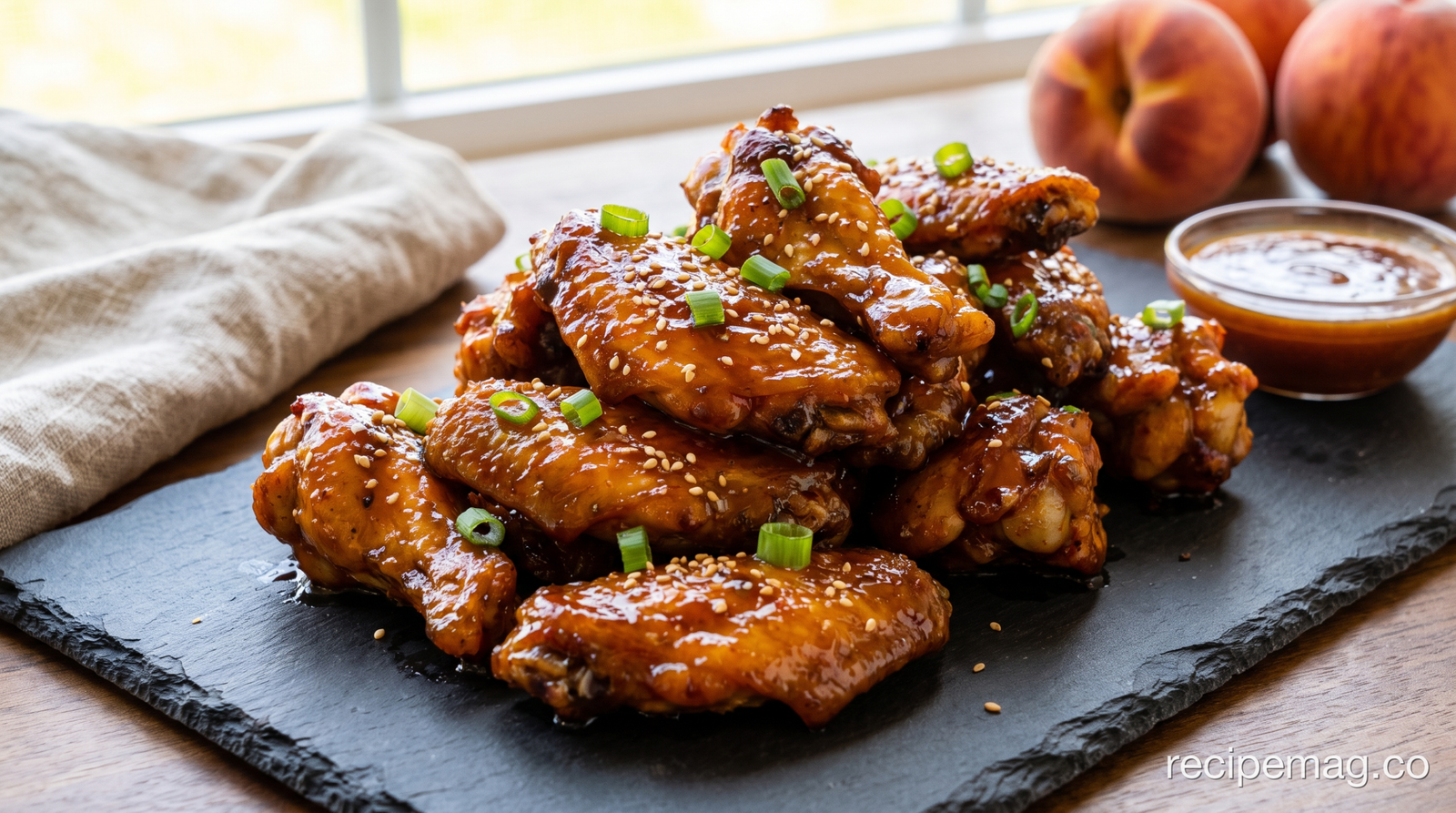
Fresh peaches make a better barbecue sauce than any jar, because their natural sugars caramelize into a glaze that clings instead of sliding off. The trick with wings is sequencing: cook them through over indirect heat first, then glaze only in the last few minutes. Sugar burns fast, so a sauce applied early turns black long before the wings hit the 165°F they need (USDA FSIS, 2023).
Key Takeaways
- The sauce is built from two fresh peaches simmered down with bourbon, vinegar, and tomato paste.
- Wings cook indirect for about 30 minutes, then get glazed and seared for the last 6 to 8.
- Glazing early is the number one cause of burnt wings, because sugar scorches at grilling temperatures.
- Baking powder in the dry rub is what produces crisp skin without a deep fryer.
- Chicken is done at 165°F, though wings are better closer to 180°F (USDA FSIS, 2023).
Ingredients
Serves 4 to 6. Active time 30 minutes. Total time 1 hour.
For the wings:
- 3 lbs chicken wings, split into flats and drumettes
- 1 tbsp baking powder, aluminum-free
- 2 tsp kosher salt
- 1 tsp smoked paprika
- 1 tsp garlic powder
- 1/2 tsp black pepper
For the bourbon peach BBQ sauce:
- 2 ripe peaches, peeled and diced, about 1 1/2 cups
- 1/3 cup bourbon
- 1/3 cup ketchup
- 2 tbsp tomato paste
- 3 tbsp dark brown sugar
- 2 tbsp apple cider vinegar
- 1 tbsp Dijon mustard
- 1 tsp Worcestershire sauce
- 1/2 tsp smoked paprika
- 1/4 tsp cayenne, or more to taste
- 1/2 tsp kosher salt
- 2 tbsp butter
Use a ripe, fragrant peach. A firm supermarket peach has almost no aroma and produces a sauce that tastes like sweetened ketchup. Our guide to buying and ripening peaches covers how to tell before you get home.
Make the Sauce
1. Reduce the bourbon. Melt the butter in a saucepan over medium heat, add the diced peaches, and cook for 5 minutes until they soften and release juice. Add the bourbon and let it simmer 2 to 3 minutes to cook off the raw alcohol. Stand back when it goes in if you are cooking on gas.
2. Build the sauce. Stir in the ketchup, tomato paste, brown sugar, vinegar, Dijon, Worcestershire, smoked paprika, cayenne, and salt. Simmer gently for 15 minutes, stirring occasionally, until the peaches collapse and the sauce thickens enough to coat a spoon.
3. Blend or leave it rustic. Blend smooth for a glaze that coats evenly, or mash it with a fork if you want visible fruit. Smooth is the better choice for wings, since chunks fall off.
4. Split it. Set aside about a third of the sauce in a separate bowl for serving. The rest is your grilling glaze. Never reuse the brush bowl at the table after it has touched raw chicken.
The sauce keeps a week refrigerated and freezes for three months, so a double batch is worth the same effort.
Grill the Wings
1. Dry and season. Pat the wings thoroughly dry, then toss with the baking powder, salt, smoked paprika, garlic powder, and pepper. The baking powder raises the skin’s pH, which speeds browning and produces a crisp, blistered surface that a plain rub cannot match. If you have time, leave them uncovered on a rack in the fridge for an hour or overnight.
2. Build two zones. Bank the coals to one side, or light half the burners on gas, targeting about 375°F on the indirect side. Two zones are essential, since wings have enough fat to cause serious flare-ups over direct flame.
3. Cook indirect. Arrange the wings on the cool side, close the lid, and cook 25 to 30 minutes, turning once halfway. They should be lightly golden and mostly cooked through at this point.
4. Glaze and sear. Brush the wings generously with the peach sauce and move them over direct heat. Grill 3 to 4 minutes per side, brushing once more, until the glaze is sticky, darkened, and tacky rather than wet. Watch them constantly at this stage; this is where wings are lost.
5. Check and serve. Wings are safe at 165°F, but they eat much better at 175 to 180°F, where the connective tissue has broken down (USDA FSIS, 2023). Toss with the reserved sauce, then finish with sliced scallions and toasted sesame seeds.
Oven and Air Fryer Methods
Oven. Arrange the seasoned wings on a rack over a foil-lined sheet pan and bake at 250°F for 30 minutes, then raise the heat to 425°F and bake 40 to 45 minutes more until deeply golden. The low stage renders the fat; the high stage crisps the skin. Brush with the glaze in the final 5 minutes and finish under the broiler for 2 minutes.
Air fryer. Cook at 380°F for 12 minutes, shake, then 10 to 12 minutes more at 400°F. Toss with warm sauce after cooking rather than before, since the glaze will smoke in the basket.
Both methods lose the smoke, which is the main thing the grill contributes. If you are going indoors, add a quarter teaspoon of liquid smoke to the sauce to compensate.
What to Serve With Them
Wings this sweet need sharp, cold things beside them. Refrigerator pickles are the obvious answer, and a vinegary slaw does the same work. Watermelon cucumber salad is the seasonal version.
For a larger spread, they sit naturally alongside make-ahead baked beans and grilled corn ribs. Our 12 best summer side dishes covers the rest of the table, and the whole thing scales cleanly into our Labor Day cookout timeline, since the sauce is a three-days-ahead job.
Buying and Prepping Wings
Wings come three ways, and the format changes the work. Whole wings are cheapest and include the tip, the flat, and the drumette in one piece. Party wings or wing sections are already split and tips removed, which costs slightly more and saves ten minutes. Frozen bagged wings are the cheapest per pound but hold added water, which fights crisping.
If you buy whole wings, splitting them takes a sharp knife and about five minutes. Feel for the joint between the drumette and the flat, cut straight through the soft spot rather than the bone, then remove the tip at the next joint. Freeze the tips for stock; they are almost pure collagen and make the most gelatinous stock of any chicken part.
Plan on about three-quarters of a pound of whole wings per person as a main, or a half pound as an appetizer among other food. Three pounds serves four to six depending on what else is on the table, and wings disappear faster than any host predicts.
The prep detail that matters most is drying. Pat every piece dry with paper towels, then let them sit uncovered on a rack in the refrigerator for an hour or overnight. Surface moisture is what stands between you and crisp skin, and no amount of heat compensates for a wet wing.
Buying and Prepping the Wings
Buy whole wings and split them yourself if the price difference is meaningful, which it usually is. A whole wing has three sections: the drumette, the flat, and the tip. Cut through the two joints with a heavy knife, keeping the drumette and flat and freezing the tips for stock, where they make an exceptionally gelatinous broth.
Pre-split wings are a fine shortcut, but check that they are not pre-brined or injected with a salt solution, which many supermarket packages are. Those wings arrive already wet and salty, and adding a dry rub on top produces something inedibly salty with skin that refuses to crisp.
Drying is the step that separates good wings from great ones. Pat them thoroughly with paper towels, then leave them uncovered on a rack in the refrigerator for at least an hour, or overnight if you can. Cold circulating air pulls moisture from the skin, and dry skin browns while wet skin steams.
Three pounds of wings feeds four to six people as a main, or eight as an appetizer alongside other food. Wings disappear faster than almost anything else at a cookout, so if they are the centerpiece rather than a starter, buy four pounds and plan the same timing.
Frequently Asked Questions
Why do you add baking powder to the wings?
It raises the skin’s surface pH, which accelerates browning and helps draw out moisture, producing crisp skin without frying. Use aluminum-free baking powder, and never baking soda, which tastes metallic.
When should I sauce grilled wings?
Only in the last 6 to 8 minutes, over direct heat. Sugar-based sauces begin to burn well below normal grilling temperatures, so early glazing produces black wings that are still raw inside.
Can I make the sauce without bourbon?
Yes. Replace it with apple juice plus a teaspoon of vanilla extract for a similar sweetness and depth. You will lose some of the oak character but the sauce still works.
What temperature should chicken wings reach?
165°F is the safe minimum, but wings are noticeably better at 175 to 180°F, where the collagen in the joints has rendered and the meat pulls easily from the bone.
Can I use frozen wings?
Thaw them fully in the refrigerator first, then dry them very thoroughly. Frozen wings release too much water to crisp properly, and wet skin steams instead of browning.
How far ahead can I make the sauce?
Up to a week refrigerated, or three months frozen. The flavor deepens after a day or two, so making it ahead is an improvement rather than a compromise.
