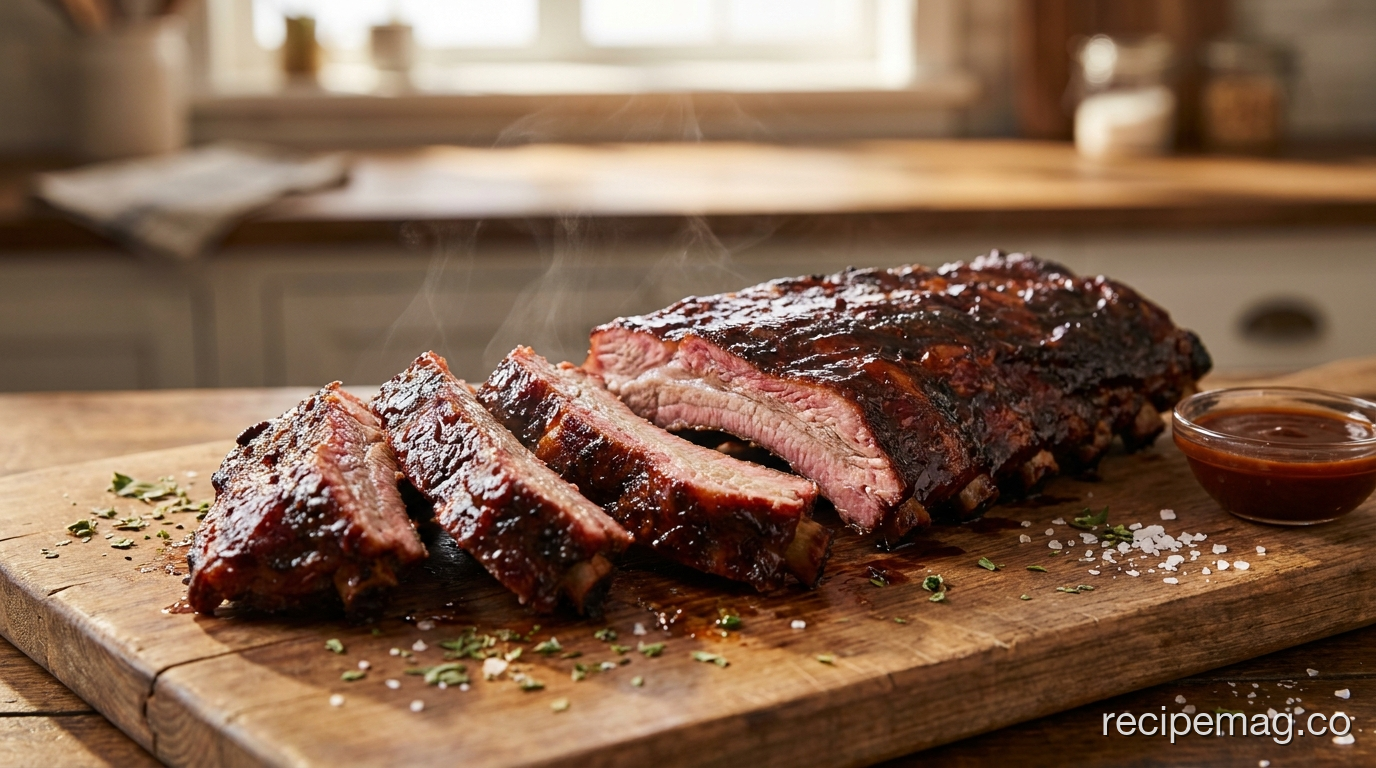
Smoked baby back ribs turn out tender when you cook them low and slow at 225°F for about five hours, until the internal temperature reaches 195°F to 203°F. At that point the tough collagen in the meat melts into gelatin, giving ribs their signature bite. Smoker ownership keeps climbing, with the Hearth, Patio & Barbecue Association reporting that 64% of U.S. households now own a grill or smoker (HPBA, 2023). This guide walks you through every step, from the rub to the rest.
Key Takeaways
- Smoke baby back ribs at 225°F for roughly 5 hours using the 2-2-1 method.
- Ribs are done for tenderness at 195°F to 203°F, well past pork’s 145°F safe minimum. ([USDA FSIS](https://www.fsis.usda.gov), 2023)
- Always remove the thin membrane from the bone side before seasoning.
- Fruit woods like apple and cherry give a milder, sweeter smoke than hickory.
- Rest the ribs 10 to 15 minutes before slicing so the juices redistribute.
What Makes Smoked Baby Back Ribs Tender?
Ribs turn tender through collagen, not just time. Baby backs are full of connective tissue that stays tough until slow heat converts it to soft gelatin. That conversion happens well above the 145°F safe minimum for pork set by the USDA Food Safety and Inspection Service, up in the 195°F to 203°F range (USDA FSIS, 2023). Rush the cook and the ribs stay chewy no matter how good the rub.
Low and slow is the method for a reason. At 225°F, the meat has enough time for that collagen to break down before the lean muscle dries out. Cooking authorities like Serious Eats note that collagen begins melting into gelatin around 160°F but needs sustained heat to finish, which is why the last stretch of a rib cook matters most (Serious Eats, 2022).
Fat plays a supporting role. Baby backs are leaner than spare ribs, so they cook a little faster but also dry out sooner if you push the heat. The whole game is patience: give the connective tissue time at a gentle temperature and the ribs reward you.
What You Need to Smoke Baby Back Ribs
You need surprisingly little gear to smoke great ribs, which is part of why home smoking has surged. HPBA data shows 64% of American households own a grill or smoker, and interest in low-and-slow cooking has grown steadily alongside that (HPBA, 2023). A basic setup and a good thermometer will out-cook expensive equipment used carelessly.
Equipment
- A smoker or a charcoal grill set up for indirect heat
- Smoking wood: chunks, chips, or pellets depending on your smoker
- An instant-read thermometer, plus a leave-in probe if you have one
- Heavy-duty aluminum foil or butcher paper for wrapping
- A spray bottle for spritzing and tongs for handling
For the Ribs and Rub
- 2 racks baby back ribs (about 2 to 2.5 pounds each)
- 2 tablespoons brown sugar
- 2 tablespoons paprika
- 1 tablespoon kosher salt
- 1 tablespoon black pepper
- 2 teaspoons garlic powder
- 1 teaspoon onion powder
- 1 teaspoon cayenne (optional, for heat)
- Yellow mustard, as a binder for the rub
- Your favorite barbecue sauce, for the final glaze
How Do You Prep Baby Back Ribs Before Smoking?
Good ribs start before the smoke, with two prep steps most beginners skip. The first is removing the tough membrane on the bone side; the second is applying the rub. Skipping the membrane leaves a chewy, rubbery layer that blocks smoke and seasoning, a point echoed across culinary authorities like America’s Test Kitchen (America’s Test Kitchen, 2022). Ten minutes of prep sets up the whole cook.
Remove the Membrane
Flip the rack bone-side up and find the thin, shiny membrane running along the bones. Slide a butter knife under it at one end, lift a corner, grab it with a paper towel, and peel it off in one piece. It often comes away in a single sheet, which is oddly satisfying.
Apply the Binder and Rub
Coat both sides of the ribs with a thin layer of yellow mustard. You will not taste it after cooking; it simply helps the rub stick and stay put. Then sprinkle the rub evenly over both sides and press it in gently. Let the ribs sit at room temperature for 30 minutes while the smoker heats.
What Is the 2-2-1 Method for Smoking Baby Back Ribs?
The 2-2-1 method is the most reliable framework for baby back ribs, and the numbers are the hours in each stage. You smoke them unwrapped for 2 hours, wrapped for 2 hours, then sauced and unwrapped for 1 hour, all at 225°F. The approach is a barbecue standard cited by sources like Serious Eats for producing consistently tender ribs (Serious Eats, 2022).
Step-by-Step 2-2-1 Instructions
- Preheat the smoker to 225°F. Add your wood and let the temperature settle before the ribs go on. A steady temperature matters more than a high one.
- Smoke unwrapped for 2 hours. Place the ribs bone-side down. Spritz with apple juice or water every 45 minutes after the first hour to keep the surface moist and help smoke cling.
- Wrap for 2 hours. Lay each rack on a double sheet of foil, add a splash of apple juice and a pat of butter, and seal tightly. Wrapping traps steam that speeds up the collagen breakdown, a phase pitmasters call the Texas crutch.
- Unwrap, sauce, and smoke 1 hour. Open the foil, brush the ribs with barbecue sauce, and return them to the smoker uncovered so the glaze sets into a sticky finish.
- Check for doneness. Start checking near the end of hour five. The ribs are ready when they hit 195°F to 203°F and bend with a slight crack when lifted.
Adjust the timing to the ribs, not the clock. Smaller racks may finish 20 to 30 minutes early, and a smoker that runs cool will need more time. The numbers are a guide, and your thermometer is the referee.
What Temperature Are Baby Back Ribs Done?
Baby back ribs are done at 195°F to 203°F internal, not at the 145°F that makes pork safe to eat. Those are two different goals: 145°F is the safe minimum from the USDA FSIS, while the higher window is where connective tissue finishes turning to gelatin (USDA FSIS, 2023). Trust temperature and feel over a strict clock every time.
Use two doneness checks together. Slide your thermometer into the meat between the bones, avoiding contact with bone, and look for that 195°F to 203°F range. Then do the bend test: lift the rack from one end with tongs, and if the surface cracks slightly and the meat starts to split, they are ready.
Skip the fall-off-the-bone myth. Ribs that literally fall apart are usually overcooked and mushy. Competition-quality ribs pull cleanly off the bone with a gentle tug but still hold their shape, which is exactly what the 195°F to 203°F window delivers.
Which Wood Is Best for Smoking Ribs?
Wood choice sets the flavor, and for ribs, milder is usually better. Fruit woods like apple and cherry give a sweet, gentle smoke that suits pork, while hickory brings a stronger, bacon-like punch. The goal is smoke that complements the meat rather than overwhelming it, a balance long emphasized by barbecue authorities such as Serious Eats (Serious Eats, 2022).
Best Woods for Baby Back Ribs
- Apple. Mild and slightly sweet, the most forgiving choice for pork ribs and a safe bet for beginners.
- Cherry. Sweet with a mild fruitiness, and it lends the bark a deeper mahogany color.
- Hickory. Bold and classic, best used in moderation or blended with a fruit wood so it does not turn bitter.
- Pecan. Nutty and softer than hickory, a nice middle ground between fruit and hardwood.
Less smoke is often more. In our experience, beginners tend to over-smoke, adding wood the entire cook until the ribs taste acrid and ashy. You mainly need smoke during the first two unwrapped hours, when the surface absorbs it best. After that, clean heat finishes the job.
What Are the Most Common Rib-Smoking Mistakes?
Most failed rib cooks trace back to a handful of avoidable errors. The biggest is cooking to time instead of temperature, which produces ribs that are tough one week and mushy the next. Since ribs finish far above the 145°F safe minimum, a thermometer is the only way to hit the tender window reliably (USDA FSIS, 2023). Sidestep these and your ribs improve overnight.
- Leaving the membrane on. It blocks smoke and turns rubbery. Peel it off every time.
- Running the smoker too hot. Above 275°F, the meat dries before the collagen breaks down. Hold 225°F.
- Opening the lid constantly. Every peek drops the temperature and adds time. Spritz quickly and close it.
- Saucing too early. The sugar in barbecue sauce burns over long heat, so add it only in the final hour.
- Skipping the rest. Slicing immediately spills the juices. Rest the ribs 10 to 15 minutes first.
Frequently Asked Questions About Smoked Baby Back Ribs
How long does it take to smoke baby back ribs at 225°F?
About 5 hours using the 2-2-1 method: 2 hours unwrapped, 2 hours wrapped, and 1 hour sauced. Smaller or leaner racks can finish 20 to 30 minutes early, while a smoker that runs cool needs longer. Always confirm with a thermometer rather than the clock. The ribs are ready when they reach 195°F to 203°F internal and pass the bend test, regardless of the exact elapsed time.
Do you smoke ribs bone-side up or down?
Start bone-side down for the unwrapped stage. That position shields the meat from the most direct heat and lets the top surface build bark and absorb smoke. When you wrap the ribs, meat-side down inside the foil helps the top soak up the butter and juices. For the final sauced hour, return them bone-side down so the glaze sets cleanly on top without sticking to the grate.
Should I wrap baby back ribs while smoking?
Wrapping is optional but recommended for beginners. The foil stage, sometimes called the Texas crutch, traps steam that speeds collagen breakdown and keeps the meat moist, which makes tender results more reliable. Some pitmasters skip it for a firmer bark and a more traditional bite. If you want that, run a straight unwrapped cook and simply add time, checking temperature toward the end.
Why are my smoked ribs tough?
Tough ribs are almost always undercooked. Collagen needs to reach 195°F to 203°F to melt into gelatin, and that happens well past pork’s 145°F safe minimum, per USDA FSIS guidance (USDA FSIS, 2023). If your ribs are chewy, they came off too early or the smoker ran too hot and dried the meat before the connective tissue softened. Hold 225°F, cook to temperature, and give them the full time.
What is the pink ring inside smoked ribs?
That is the smoke ring, and it is a sign of good smoking, not undercooked meat. It forms when gases from burning wood react with myoglobin in the meat surface, fixing the pink color during the early hours of the cook. It is purely cosmetic and does not affect safety or flavor, as sources like Serious Eats explain (Serious Eats, 2022). Well-cooked ribs can have a deep ring or almost none.
Fire Up the Smoker This Weekend
Great smoked ribs are less about equipment and more about patience and temperature. Peel the membrane, season simply, hold a steady 225°F, and cook to 195°F to 203°F rather than to the clock. That formula works on a dedicated smoker or a humble charcoal grill.
Start with the 2-2-1 method your first few times, then adjust the wrap and smoke to your own taste. Once you learn what tender ribs feel like when you lift the rack, you will stop needing the timer at all. Rest them, slice between the bones, and serve.
