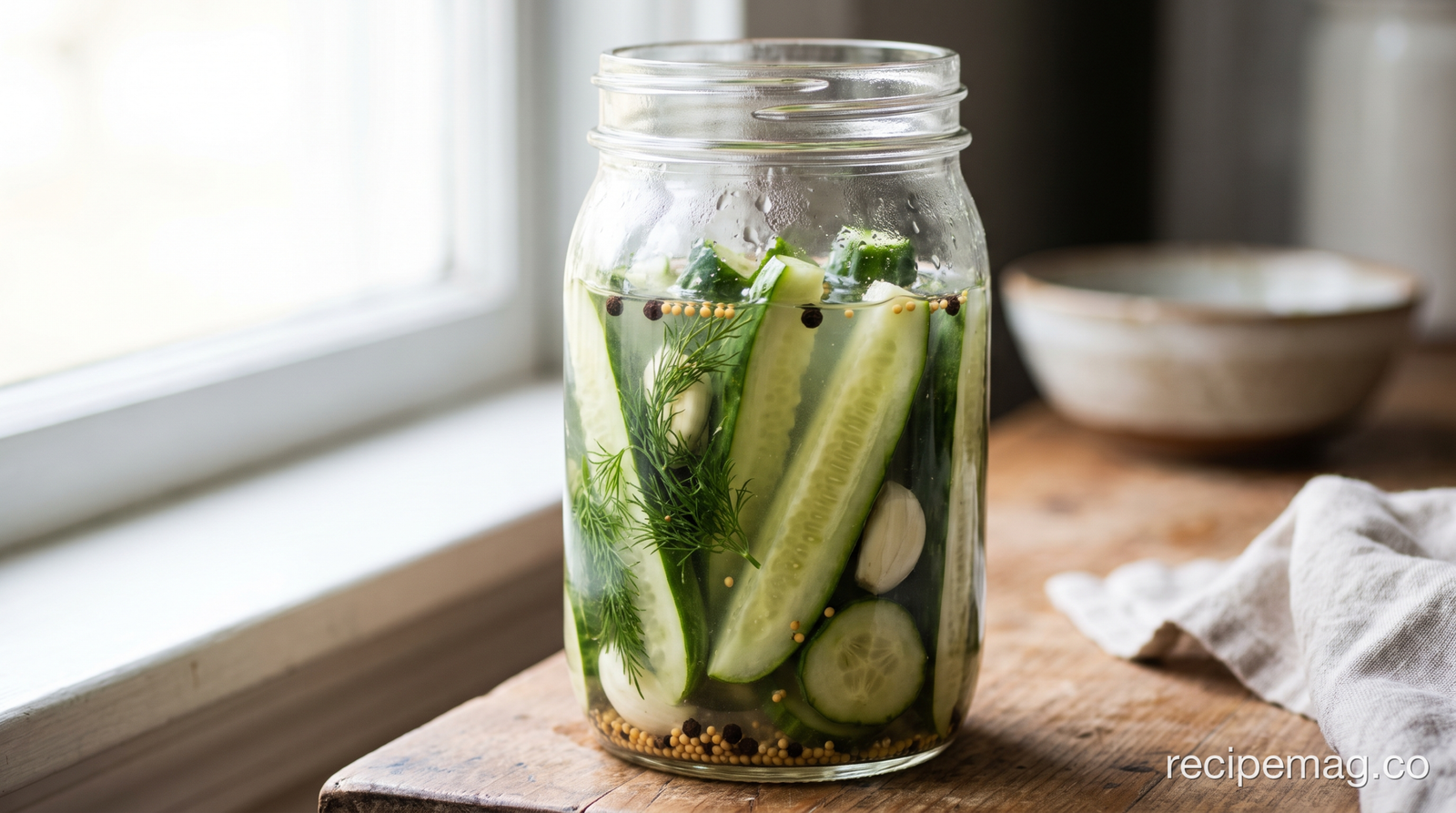
Refrigerator pickles are the fastest real preserving project in the kitchen: you pour hot brine over cucumbers, cool the jar, and refrigerate. There is no canner and no processing, which also means they are never shelf-stable and must stay cold, with a practical window of about two months (National Center for Home Food Preservation, 2024). They are ready to eat in 24 hours and genuinely good by day three.
Key Takeaways
- One master brine of equal parts vinegar and water, plus salt and sugar, handles every vegetable you throw at it.
- Ready in 24 hours, best from day three onward, and good for about two months refrigerated.
- Kirby or Persian cucumbers stay crisp; standard slicing cucumbers go soft.
- Trimming the blossom end removes an enzyme that softens pickles in storage.
- These are not shelf-stable pickles, so they never leave the refrigerator (NCHFP, 2024).
Ingredients
Makes 2 pint jars. Active time 15 minutes. Ready in 24 hours.
- 1 lb Kirby or Persian cucumbers, about 5 to 6 small
- 1 cup distilled white vinegar
- 1 cup water
- 1 tbsp kosher salt
- 1 tbsp granulated sugar
- 4 garlic cloves, lightly smashed
- 1 tsp black peppercorns
- 1 tsp yellow mustard seed
- 1/2 tsp coriander seed
- 1/4 tsp red pepper flakes, optional
- 1 large handful fresh dill, stems included
Use kosher or pickling salt rather than table salt. The anti-caking agents in table salt cloud the brine, which is cosmetic but unappealing in a clear jar.
How to Make Them
1. Prep the cucumbers. Wash them well and trim about 1/16 inch off the blossom end, the end opposite the stem. That end carries an enzyme that softens pickles over time, and cutting it away is the single best thing you can do for crispness (National Center for Home Food Preservation, 2024). Cut them into spears, or into 1/4-inch coins if you want burger pickles.
2. Pack the jars. Divide the garlic, peppercorns, mustard seed, coriander, pepper flakes, and dill between two clean pint jars. Pack the cucumbers in vertically and tightly, so they cannot float once the brine goes in. Tight packing is what keeps everything submerged.
3. Make the brine. Combine the vinegar, water, salt, and sugar in a small saucepan and bring it to a simmer, stirring until the salt and sugar dissolve. That is the whole brine. Do not boil it down.
4. Pour and cool. Pour the hot brine over the cucumbers, leaving about half an inch of space at the top and making sure everything is covered. Let the jars sit uncovered on the counter until they reach room temperature, roughly an hour.
5. Chill and wait. Screw on the lids and refrigerate. They are edible after 24 hours, noticeably better at 72 hours, and at their peak somewhere in the first two weeks.
How to Keep Them Crisp
Softness is the only real failure mode here, and it has three usual causes. The first is the wrong cucumber. Kirby and Persian cucumbers have thick skins, dense flesh, and small seed cavities. Standard waxed slicing cucumbers have none of those things and will disappoint you.
The second is the blossom end, covered above. The third is heat: pouring boiling brine directly onto thin coins partially cooks them. If you are pickling coins rather than spears, let the brine cool for five minutes before pouring.
A few optional insurance policies help. A grape leaf, a black tea bag, or a small piece of oak leaf added to each jar contributes tannins that firm up the texture. None of this is required, but if you are pickling a large batch to eat over weeks rather than days, it earns its place.
Beyond Cucumbers
The brine above is a template, and swapping the vegetable is the easiest way to clear a crowded crisper drawer. Green beans want a 30-second blanch first, then the same treatment, and they make an excellent Bloody Mary garnish. Carrot sticks work raw and stay crunchy for weeks. Thinly sliced red onion needs only 30 minutes to turn bright pink and is the fastest upgrade to any sandwich or taco.
Sliced jalapeños pickle beautifully and mellow as they sit. Cauliflower florets, radish coins, and even watermelon rind all take the same brine. If the vegetable is dense, blanch it briefly. If it is tender, use it raw.
For a sweeter profile, double the sugar and add a cinnamon stick and a few allspice berries. For a Southeast Asian direction, swap in rice vinegar, drop the dill, and add sliced ginger and a smashed lemongrass stalk.
What to Serve Them With
These earn their keep as the acid on a heavy plate. They cut straight through smoked baby back ribs and belong on the side of any pulled chicken sandwich. Chopped, they turn into a quick relish for grilled hot dogs.
They also travel well, which makes them a genuinely useful thing to bring to someone else’s cookout. If you are planning one yourself, they slot neatly into the make-ahead column of our Labor Day cookout timeline, since they actively improve in the days before the party.
And if this is your entry point into preserving, our broader guide to freezing, pickling, and canning summer produce covers what to do with everything else the season is currently handing you.
Why This Brine Ratio Works
The one-to-one vinegar and water ratio is not arbitrary. Straight vinegar makes pickles so sharp that most people stop after one, while a weaker brine leaves the cucumbers tasting like salted water. Splitting the difference gives you enough acid to preserve and enough restraint to eat a whole jar.
Salt does two jobs. It draws water out of the cucumbers, which firms them and prevents the brine from being diluted into blandness by day three, and it carries flavor into the flesh. Sugar is there strictly for balance, rounding the vinegar’s edge without making the pickles sweet at this quantity.
The whole spices matter more than ground ones. Ground spice clouds the brine and turns muddy after a week, while whole peppercorns, mustard seed, and coriander release their oils slowly and keep the jar clear. Toasting the mustard and coriander in a dry pan for 30 seconds before they go in deepens them noticeably, and costs you nothing.
Storage, Timing, and Troubleshooting
Timing changes the pickle. At 24 hours the cucumber is still mostly raw with a seasoned exterior, which some people prefer for its snap. At 72 hours the brine has reached the center and the flavor is even. Past two weeks the texture starts a slow decline, though they stay perfectly good to eat for the full two months.
Keep the vegetables submerged. Anything poking above the brine line will discolor and soften faster, so if the jar settles, push the spears back down or top it off with a little extra brine made at the same ratio. A small folded piece of parchment tucked under the lid works as a makeshift weight.
Cloudiness is usually harmless and comes from table salt, garlic, or spice sediment. What is not harmless is a lid that bulges, a slimy or ropy brine, a fizzing sound, or any off smell when you open the jar. Those mean spoilage, and the jar goes in the trash rather than the sink.
Frequently Asked Questions
How long do refrigerator pickles last?
About two months in the refrigerator. They stay safe as long as they remain cold and submerged in brine, but texture softens gradually, so the first few weeks are the best eating.
Can I can these to make them shelf-stable?
Not with this recipe. Shelf-stable pickles require a tested recipe processed in a boiling-water canner with the correct acidity and processing time. Treat this one as a refrigerator recipe only.
Why did my pickles turn out soft?
Usually one of three reasons: you used a standard slicing cucumber instead of a Kirby or Persian, you left the blossom end on, or the brine was too hot when it hit thin slices. Fix all three and the texture holds.
Can I reuse the brine for a second batch?
You can use leftover brine once for a quick batch of onions or a light vegetable eaten within a week, but the salt and acid have been diluted by the first batch. For anything you want to keep for weeks, make fresh brine.
Do I have to use sugar?
No. The sugar balances the vinegar’s sharpness rather than preserving anything, so you can reduce or omit it. Without it the pickles read distinctly sourer.
What vinegar works best?
Distilled white vinegar gives the cleanest, most classic dill pickle flavor. Apple cider vinegar works and adds a fruity note. Whatever you choose, use a vinegar with at least 5 percent acidity.
