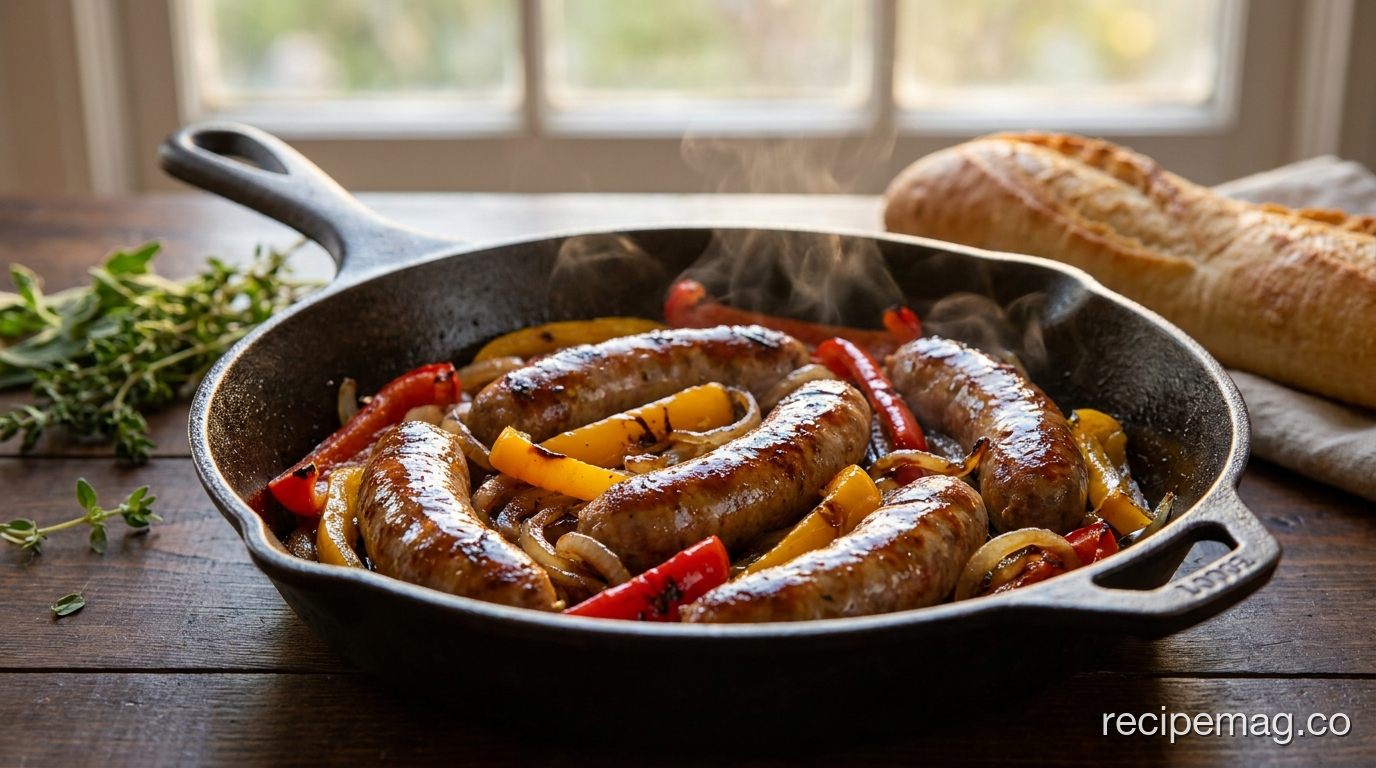
Grilled Italian sausage and peppers is the kind of dinner that feels like a street fair in your backyard. Smoky sausage, sweet charred peppers, and jammy onions come together in about 30 minutes over a hot grill. The trick is pulling the sausage at the right moment: cook it to an internal 160°F, the safe minimum the USDA sets for fresh pork and beef sausage, and it stays juicy instead of dry (USDA Food Safety and Inspection Service, 2023). Pile it on a roll or serve it over polenta.
Key Takeaways
- A 30-minute, one-technique dinner that needs almost no cleanup.
- Grill fresh sausage to an internal 160°F for juicy, food-safe results. ([USDA FSIS](https://www.fsis.usda.gov), 2023)
- Two-zone grilling cooks the sausage through without splitting or burning the casing.
- One cup of chopped red bell pepper delivers well over 100% of the daily vitamin C target. ([USDA FoodData Central](https://fdc.nal.usda.gov), 2023)
- Serve it on hoagie rolls, over creamy polenta, or tossed with pasta.
Why Grill Sausage and Peppers Instead of Cooking Them Inside?
The grill does two things a skillet can’t: it chars and it clears the kitchen. High, direct heat triggers the Maillard reaction, the browning that gives grilled food its deep, savory edge, according to research published in Food Chemistry (Food Chemistry, Elsevier, 2021). Those blistered pepper skins and browned sausage links simply taste more intense than anything cooked on the stove.
There’s also the summer factor. Grilling is how America cooks in July. The Hearth, Patio and Barbecue Association reports that roughly 70% of U.S. households own a grill or smoker, and usage peaks in the warm months (HPBA, 2023). Sausage and peppers is one of the best ways to use that grill, because the ingredients are cheap, forgiving, and cook in one pass.
[PERSONAL EXPERIENCE] We’ve cooked this both ways many times, and the grilled version wins on flavor every single time. The rendered fat dripping onto the coals sends smoke back up into the casings, and the peppers pick up a char you just can’t fake in a pan. It’s the difference between good and memorable.
Ingredients for Grilled Sausage and Peppers
This dish rewards good sausage and a mix of colorful peppers. Buy fresh Italian sausage, sweet or hot, from a butcher counter if you can. For the peppers, a spread of red, yellow, and green isn’t just pretty: it balances sweetness and a little bitterness. Red and yellow peppers are the sweetest because they ripen longest on the plant, while green brings a sharper bite.
For the Grill
- 1½ pounds fresh Italian sausage (sweet, hot, or a mix), about 6 links
- 3 large bell peppers (a mix of red, yellow, and green), cut into wide strips
- 2 large yellow onions, cut into thick wedges
- 3 tablespoons olive oil
- 3 garlic cloves, minced
- 1 teaspoon dried oregano
- ½ teaspoon red pepper flakes (optional)
- Salt and black pepper to taste
- 1 tablespoon balsamic vinegar (optional, added at the end)
- Fresh basil, torn, for serving
For Serving
- 4 to 6 hoagie or Italian sub rolls, OR
- A batch of creamy polenta, OR
- 1 pound of pasta such as rigatoni or orecchiette
Keep the pepper and onion pieces large. Thin slices fall through the grates and burn before they soften. Wide strips and thick wedges char on the outside while turning tender and sweet inside, and they’re easy to flip with tongs or corral in a grill basket.
How Do You Grill Italian Sausage Without Burning It?
The most common sausage mistake is cranking the heat and blackening the casing while the center stays raw. The fix is two-zone grilling. The USDA sets 160°F as the safe internal temperature for fresh pork and beef sausage, and 165°F for poultry (USDA FSIS, 2023). An instant-read thermometer is the only honest way to know you’re there, because a browned casing can hide a pink middle.
Step-by-Step Grilling
- Set up two zones. Build a medium-high fire on one side and leave the other side empty. On a gas grill, light half the burners.
- Start over indirect heat. Place the sausages on the cooler side, close the lid, and cook for 10 to 12 minutes, turning once. This cooks them through gently.
- Finish over direct heat. Move the links to the hot side for the last 4 to 6 minutes, turning often, until the casings are browned and blistered.
- Check the temperature. Insert a thermometer into the center of a link. Pull the sausages at 160°F.
- Rest before serving. Let the sausages sit for 5 minutes so the juices settle back into the meat instead of running out on the first bite.
[UNIQUE INSIGHT] Don’t pierce the sausages to “let steam out.” That old habit just drains the fat and juice that keep them moist, and it invites flare-ups. Leave the casings intact, control the flames with the two-zone setup, and the links stay plump. A whole sausage that browns slowly beats a punctured one that dries out.
How to Grill the Peppers and Onions
Peppers and onions want direct heat and a little patience. Toss the strips and wedges with olive oil, salt, and pepper, then lay them across the hot zone in a grill basket or straight on the grates. You’re after real color: blistered, blackened edges that signal the sugars have caramelized. Beyond flavor, the payoff is nutrition. One cup of chopped red bell pepper provides well over 100% of the daily vitamin C target, according to USDA FoodData Central (USDA FoodData Central, 2023).
Grilling Steps
- Toss to coat. Combine peppers and onions with the olive oil, salt, and pepper in a bowl.
- Grill hot. Spread them in a grill basket over direct heat. Cook for 10 to 12 minutes, tossing every few minutes.
- Char, don’t stir constantly. Let them sit long enough between tosses to pick up dark, blistered edges. Constant stirring steams instead of chars.
- Add aromatics at the end. In the last minute, stir in the minced garlic, oregano, and red pepper flakes so the garlic doesn’t scorch.
Once the vegetables are soft and charred, pull them into a bowl and toss with the optional splash of balsamic vinegar. The acid wakes everything up and glazes the peppers with a glossy, sweet-tart finish that plays against the rich sausage.
How to Bring It All Together
The final move is simple: slice or leave the sausages whole, then fold them into the charred peppers and onions. Sausage and peppers is endlessly adaptable at this stage, which is why it has stayed a staple of Italian-American cooking and street festivals like New York’s Feast of San Gennaro for more than a century.
Three Ways to Serve It
- On a roll. The classic. Tuck a whole grilled sausage into a toasted hoagie and heap the peppers and onions on top. Griddle the cut side of the roll for extra crunch.
- Over polenta. Slice the sausages and spoon everything over a bowl of creamy polenta. The soft cornmeal soaks up the pepper juices beautifully.
- Tossed with pasta. Cut the sausage into coins, combine with the peppers and a ladle of pasta water, and toss with rigatoni for a fast, rustic dinner.
Finish any version with torn fresh basil and, if you like, a shower of grated Parmesan. A few extra red pepper flakes add heat for anyone who wants it.
Storage and Reheating Tips
Leftovers here are a gift, because the flavors deepen overnight. The USDA recommends refrigerating cooked sausage and vegetables in airtight containers within two hours, where they stay safe and good for three to four days (USDA FSIS, 2023). Reheated the next day, the peppers taste even sweeter and the sausage soaks up more of the pan juices.
- Refrigerate: Store sausage and peppers together in a sealed container for 3 to 4 days.
- Reheat: Warm in a skillet over medium heat with a splash of water or broth. The stovetop keeps the sausage from drying out the way a microwave can.
- Freeze: The mixture freezes well for up to 2 months. Thaw overnight in the fridge before reheating.
- Repurpose: Fold leftovers into a frittata, pile them onto pizza, or stuff them into a pepper for a second dinner that feels brand new.
—
Grilled Italian Sausage and Peppers
Prep Time: 10 minutes | Cook Time: 20 minutes | Serves: 4 to 6
Ingredients
- 1½ pounds fresh Italian sausage (about 6 links)
- 3 large bell peppers (red, yellow, green), cut into wide strips
- 2 large yellow onions, cut into thick wedges
- 3 tablespoons olive oil
- 3 garlic cloves, minced
- 1 teaspoon dried oregano
- ½ teaspoon red pepper flakes (optional)
- Salt and black pepper to taste
- 1 tablespoon balsamic vinegar (optional)
- Fresh basil, for serving
- Hoagie rolls, polenta, or pasta, for serving
Instructions
- Set up a two-zone fire: medium-high heat on one side, no heat on the other.
- Grill sausages over indirect heat with the lid closed for 10 to 12 minutes, turning once.
- Move sausages to direct heat for 4 to 6 minutes, turning often, until browned and 160°F inside. Rest 5 minutes.
- Meanwhile, toss peppers and onions with olive oil, salt, and pepper. Grill in a basket over direct heat for 10 to 12 minutes, tossing, until charred and tender.
- Stir garlic, oregano, and red pepper flakes into the vegetables in the last minute. Toss with balsamic vinegar off the heat.
- Combine sausage and peppers. Serve on rolls, over polenta, or with pasta, finished with fresh basil.
Notes
- Use an instant-read thermometer. Pull fresh pork or beef sausage at 160°F, poultry sausage at 165°F.
- Don’t pierce the casings. Intact sausages stay juicier and cause fewer flare-ups.
- Keep pepper and onion pieces large so they don’t fall through the grates.
- Leftovers keep 3 to 4 days refrigerated and reheat best in a skillet.
—
Frequently Asked Questions About Sausage and Peppers
What temperature should Italian sausage reach on the grill?
Fresh pork or beef Italian sausage is safe at an internal temperature of 160°F, while poultry sausage needs 165°F, per USDA guidelines. Color is unreliable, so use an instant-read thermometer inserted into the center of a link. Pull the sausages the moment they hit temperature and let them rest five minutes. Overcooking past 160°F is what dries them out and toughens the casing.
Should I boil sausages before grilling them?
You don’t need to, and we usually skip it. Two-zone grilling cooks the links through gently over indirect heat, then browns them over direct heat, so parboiling is redundant. Some cooks poach sausages first to guarantee even cooking for a crowd, which is fine, but it costs you some flavor and browning. For most home grilling, the indirect-then-direct method is all you need.
What kind of peppers work best?
A mix of red, yellow, and green bell peppers gives the best balance. Red and yellow are the sweetest because they ripen longest on the vine, while green adds a sharper, slightly bitter note that keeps the dish from tasting one-dimensional. For heat, throw a couple of Italian long hots or a sliced jalapeño on the grill alongside the bells.
Can I make this without a grill?
Yes. A cast-iron skillet or sheet pan gets you close. Sear the sausages in a hot skillet, then roast everything on a sheet pan at 425°F for about 20 minutes until the sausage hits 160°F and the peppers char at the edges. You’ll miss some of the smoke, but the high-heat browning still delivers that deep, savory flavor.
What should I serve with sausage and peppers?
It’s flexible. Classic choices are a toasted hoagie roll, creamy polenta, or a tangle of rigatoni tossed in the pan juices. On the side, a simple green salad, garlic bread, or grilled corn rounds out the plate. A cold drink and a paper napkin, and you’ve basically recreated an Italian street festival at home.
Fire Up the Grill This Weekend
Grilled Italian sausage and peppers is proof that a genuinely great dinner can come from five main ingredients and one hot grill. Thirty minutes of easy work gives you smoky sausage, sweet charred peppers, and enough leftovers to make tomorrow’s lunch a highlight.
Nail the two-zone setup and keep a thermometer close, and the rest is hard to mess up. Serve it on a roll for a casual night, over polenta when you want something cozier, or tossed with pasta when the table is hungry.
Light the grill, cut the peppers big, and don’t walk away from that thermometer. Everything else takes care of itself.
