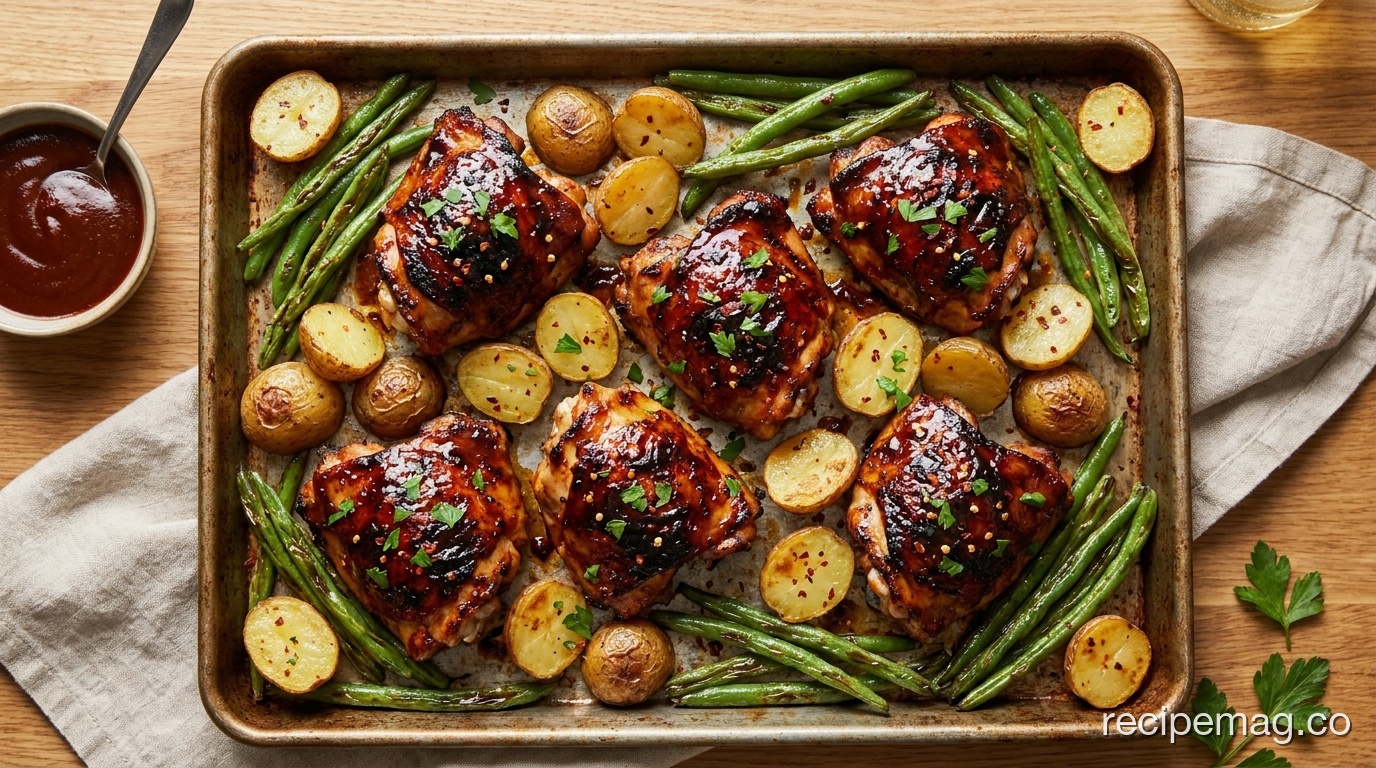
Sheet-pan BBQ chicken and vegetables is a full dinner that roasts on a single pan in about 40 minutes. Juicy, sauce-glazed chicken shares the tray with charred summer vegetables, and there’s almost nothing to wash afterward. Chicken has become the meat Americans reach for most, at roughly 100 pounds per person each year (USDA Economic Research Service, 2023). This recipe is one of the easiest ways to put it to work on a busy weeknight.
Key Takeaways
- One pan, about 40 minutes, and dinner is done with minimal cleanup.
- Chicken is safe to eat at an internal temperature of 165°F, checked with a thermometer. ([USDA FSIS](https://www.fsis.usda.gov), 2023)
- A 4-ounce chicken thigh delivers around 21 grams of protein. ([USDA FoodData Central](https://fdc.nal.usda.gov), 2023)
- Add the BBQ sauce late so its sugars glaze the chicken instead of burning.
- Start the potatoes first, then add quicker-cooking vegetables so everything finishes together.
Why Sheet-Pan BBQ Chicken Is a Weeknight Winner
The appeal is obvious the first time you make it. Convenience and time savings rank among the top factors shaping how Americans cook, according to a 2023 survey by the International Food Information Council (International Food Information Council, 2023). A sheet-pan dinner answers that directly: protein and vegetables roast together, the oven does the work, and one tray covers the entire meal.
There’s a flavor payoff too. Roasting everything on one pan lets the meat’s juices and the BBQ glaze soak into the vegetables underneath. Everything caramelizes at the edges. You get smoky, sweet, savory results that taste like far more effort than they took.
Built for Summer Produce
This recipe flexes with whatever’s in the crisper drawer. Bell peppers, zucchini, red onion, and baby potatoes are the summer lineup here, but corn, cherry tomatoes, and green beans all work. Peak-season vegetables need little more than oil, salt, and high heat to shine, which keeps the whole dish simple.
What You Need for Sheet-Pan BBQ Chicken
Bone-in, skin-on chicken thighs are the best choice for this dish. They stay juicy under high heat and forgive a few extra minutes in the oven. They’re also nutritious: a 4-ounce thigh provides roughly 21 grams of protein (USDA FoodData Central, 2023). Drumsticks or boneless thighs work too; just adjust the cooking time to match.
Prep Time: 15 minutes | Cook Time: 40 minutes | Serves: 4
For the Chicken and Vegetables
- 2 lbs bone-in, skin-on chicken thighs (about 6 pieces)
- 1 lb baby potatoes, halved
- 2 bell peppers, cut into large chunks
- 1 red onion, cut into wedges
- 1 medium zucchini, cut into thick half-moons
- 2 tablespoons olive oil
- 1 teaspoon garlic powder
- 1 teaspoon smoked paprika
- Salt and black pepper to taste
For the Glaze
- ¾ cup BBQ sauce, plus more for serving
- Fresh chopped parsley or sliced scallions, to garnish
How to Make Sheet-Pan BBQ Chicken and Vegetables
The key to a sheet-pan dinner is staggered timing, since not everything cooks at the same rate. Potatoes are dense and slow, so they get a head start. Everything else joins later. Always check the chicken with a thermometer: the USDA requires poultry to reach 165°F in the thickest part to be safe (USDA FSIS, 2023).
Step-by-Step Instructions
- Preheat and prep. Heat the oven to 425°F (220°C). Line a large rimmed sheet pan with parchment or foil for easy cleanup.
- Season everything. In a bowl, toss the potatoes and vegetables with olive oil, garlic powder, smoked paprika, salt, and pepper. Rub the chicken thighs with the same seasoning.
- Give the potatoes a head start. Spread the halved potatoes on the pan and roast alone for 10 minutes so they get a jump on the softer vegetables.
- Add the chicken and vegetables. Push the potatoes to one side. Arrange the chicken skin-side up on the pan and scatter the peppers, onion, and zucchini around it in a single layer. Roast for 20 minutes.
- Glaze the chicken. Brush the BBQ sauce generously over the chicken. Return to the oven for 8 to 12 more minutes, until the chicken reaches 165°F and the glaze is sticky.
- Rest and serve. Let the chicken rest 5 minutes. Garnish with parsley or scallions and serve with extra BBQ sauce on the side.
Tips for the Best Sheet-Pan BBQ Chicken
A handful of small choices decide whether this comes out great or just fine. These are the ones that matter most.
- Add the sauce late. BBQ sauce is full of sugar that burns at high heat. Brushing it on in the last 10 minutes gives you a glossy glaze instead of scorched, bitter patches.
- Don’t crowd the pan. Vegetables need space to roast. Packed too tightly, they steam and turn soft. Use a second pan if your first one is full.
- Cut vegetables evenly. Uniform pieces cook at the same rate, so nothing is raw while the rest turns to mush.
- Use a thermometer. It’s the only reliable way to know the chicken is done. Aim for 165°F in the thickest part, away from the bone.
- Broil for the finish. For extra-caramelized edges, run the pan under the broiler for the last 2 to 3 minutes. Watch it closely.
Best Vegetables and Easy Swaps
High heat is what makes roasted vegetables taste roasted rather than boiled. Research in the journal Food Chemistry found that roasting above 400°F drives the Maillard reaction, creating the browned, savory compounds that raw or steamed vegetables lack (Food Chemistry, Elsevier, 2021). At 425°F, these vegetables develop deep, caramelized edges.
Match your swaps to cooking time. Dense vegetables like carrots and sweet potatoes roast at the pace of the potatoes, so add them early. Quick cookers such as cherry tomatoes, corn, and green beans go in with the softer summer vegetables. Keep the pieces a similar size and this dish works with almost anything in season.
How to Store and Reheat Leftovers
Leftovers make excellent lunches. The USDA recommends refrigerating cooked chicken within 2 hours and using it within 3 to 4 days (USDA FSIS, 2023). Store the chicken and vegetables together in an airtight container. Reheat in a 375°F oven for about 10 minutes to keep the chicken skin from going rubbery.
The leftovers stretch nicely. Shred the chicken into wraps or over a grain bowl, or chop the vegetables into a quick hash. Cooked chicken freezes well for up to 3 months.
Frequently Asked Questions About Sheet-Pan BBQ Chicken
Can I use chicken breast instead of thighs?
Yes, though breasts cook faster and dry out more easily. Boneless breasts are usually done in about 20 to 25 minutes, so add them after the potatoes and check early. Pull them the moment they hit 165°F. Thighs stay juicier under high heat and forgive extra time, which is why they’re the recommended cut for this recipe.
Why does my BBQ sauce keep burning in the oven?
BBQ sauce is loaded with sugar, and sugar chars quickly at 425°F. The fix is timing: brush the sauce on only in the last 8 to 10 minutes of roasting. That’s long enough to set into a sticky glaze but short enough to avoid scorching. Add the first coat, then serve with fresh sauce on the side for more flavor.
How do I keep the vegetables from getting soggy?
Give them room and don’t skip the head start for the potatoes. Crowding traps steam, which softens vegetables instead of roasting them. Spread everything in a single layer, using two pans if needed. Cutting pieces to a similar size also helps them cook evenly, so nothing turns to mush while the rest finishes.
What internal temperature should the chicken reach?
All poultry needs to reach 165°F to be safe, according to the USDA (USDA FSIS, 2023). Measure with a food thermometer in the thickest part of the thigh, avoiding the bone. Color and clear juices aren’t reliable indicators. A thermometer is the only way to be sure the chicken is both safe and not overcooked.
Get This on the Table Tonight
Sheet-pan BBQ chicken and vegetables earns its place in the weeknight rotation. It’s fast, flexible, and forgiving, and it leaves you with one pan to wash instead of a sink full. Real dinner, real flavor, minimal fuss.
Start with the recipe as written, then adapt it to your kitchen. Swap the vegetables for whatever looks best, change up the BBQ sauce, or add a squeeze of lime at the end. The method stays the same no matter what you roast.
Line the pan, crank the oven, and let it do the heavy lifting. Dinner will be ready before you’ve finished setting the table.
