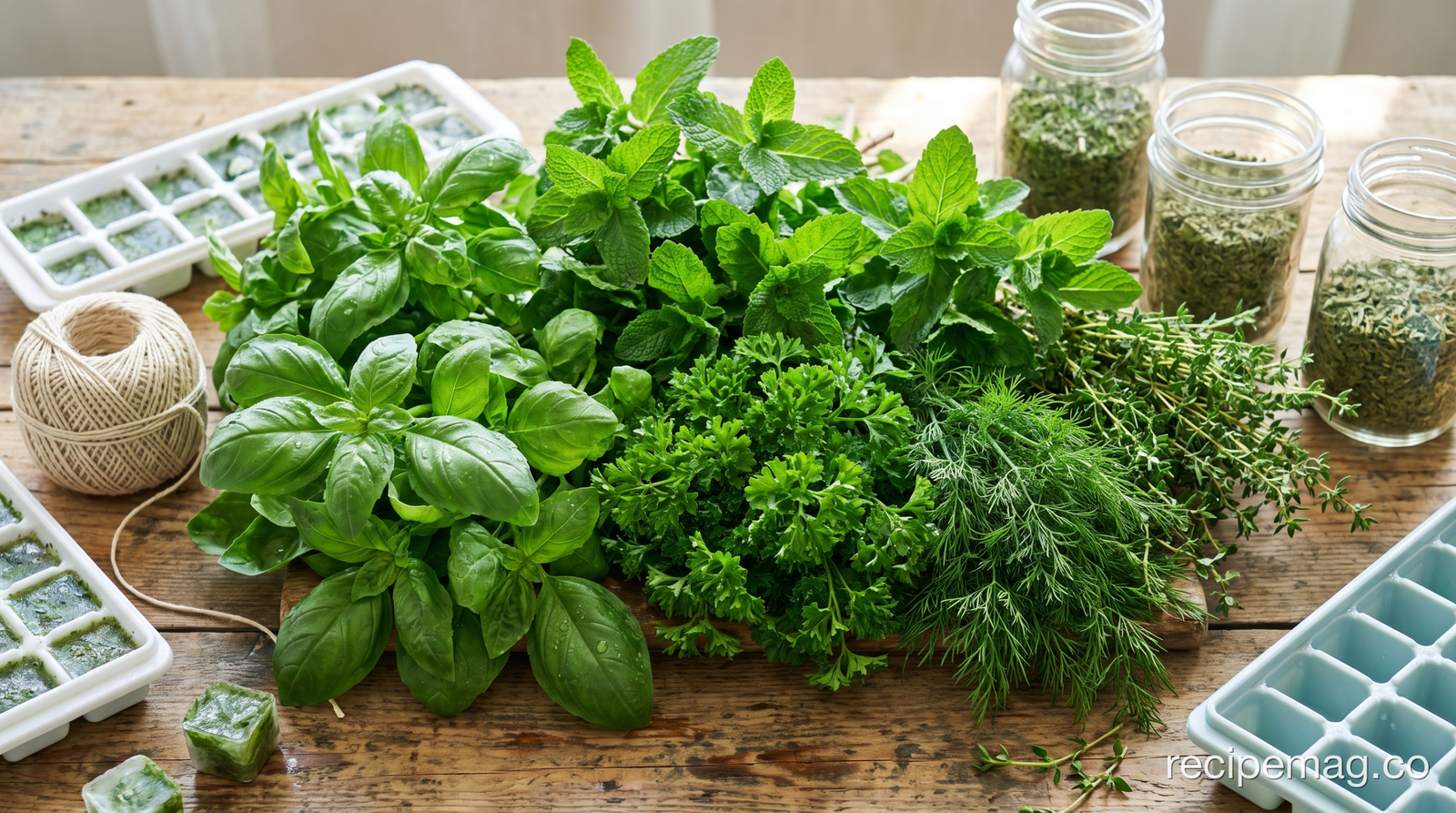
Soft herbs are the most wasted thing in a late-summer kitchen. Basil in particular is on a countdown: it is a tropical plant that blackens at temperatures below about 50°F, so the first genuinely cool night ends the crop. The good news is that soft herbs preserve far better in fat or water than they do dried, and both methods take minutes.
Key Takeaways
- Basil is cold-sensitive and blackens below roughly 50°F, so it goes first.
- Soft herbs (basil, parsley, cilantro, dill, mint) lose almost everything when dried.
- Hard herbs (rosemary, thyme, sage, oregano) dry well and keep for months.
- Freezing in oil or butter preserves flavour far better than freezing dry.
- Store soft herbs upright in water in the fridge; store basil upright on the counter.
Soft Herbs vs Hard Herbs
The split determines every decision that follows. Soft herbs have tender green stems and delicate leaves: basil, parsley, cilantro, dill, mint, tarragon, chervil. Their aroma comes from highly volatile compounds that evaporate during drying, which is exactly why dried basil and dried parsley taste like green dust.
Hard herbs have woody stems and tougher leaves: rosemary, thyme, sage, oregano, marjoram. Their aromatic compounds are more heat-stable and better protected, so drying concentrates them rather than destroying them. Dried oregano is genuinely useful, and in some dishes preferable to fresh.
So: dry the hard herbs, freeze the soft ones. Trying to dry a bunch of basil is the most common and most disappointing preservation mistake of the season.
How to Store Fresh Herbs Right Now
Soft herbs, except basil. Trim the stem ends, stand the bunch in a jar with an inch of water, cover loosely with a bag, and refrigerate. Parsley and cilantro treated this way last two weeks rather than four days. Change the water when it clouds.
Basil. Same jar of water, but leave it on the counter. Refrigerating basil causes chilling injury and the leaves blacken within a day or two. Do not cover it; trapped humidity rots the leaves.
Hard herbs. Wrap loosely in a slightly damp paper towel and refrigerate in a bag. They keep two to three weeks and can simply be left to dry out if you would rather.
Wash herbs only when you are about to use them. Wet leaves in storage turn slimy fast, and a bunch washed on Sunday will not survive to Thursday.
Five Ways to Preserve a Herb Glut
1. Freeze in oil
The best general method for soft herbs. Chop them, pack into an ice cube tray, top with olive oil, and freeze. The oil excludes air, which is what prevents both freezer burn and the oxidation that turns herbs brown. Pop the cubes into a bag once solid; each one is a portion for a pan.
2. Herb butter
Blend chopped soft herbs with softened butter, a little lemon zest, and salt. Roll into a log in parchment and freeze. Slice off coins for steak, fish, vegetables, or bread. It keeps six months and turns a plain weeknight protein into something finished.
3. Pesto, then freeze
The highest-value use of a basil glut, and it works with parsley, cilantro, or carrot tops too. Our classic basil pesto and how to freeze it covers the blanching trick that keeps it green.
4. Dry the hard herbs
Bundle rosemary, thyme, or oregano and hang them somewhere dry and dark for one to two weeks, or spread on a tray in a 170°F oven for two to three hours. Strip the leaves and store whole in a jar; crush them only as you use them, because grinding releases the oils you spent time preserving.
5. Herb salt and herb vinegar
Blitz hard herbs with coarse salt at roughly one part herb to three parts salt, then dry on a tray. It keeps a year. For vinegar, pack soft herbs into a jar, cover with white wine vinegar, and steep two weeks before straining.
Cooking Through the Rest
Preservation handles the surplus, but the fastest way through a glut is simply to use herbs in quantities that feel excessive. Most home cooking treats them as garnish; treat them as a vegetable instead.
Green sauces are the obvious route. Chimichurri, salsa verde, zhoug, and green goddess all use whole bunches rather than sprigs, and all keep a week. Our green goddess roast chicken puts an entire herb drawer to work in one sauce.
Herb salads are underrated. A bowl of parsley, mint, and dill leaves dressed with lemon and oil is a genuine side dish, not a garnish, and it cuts through anything rich.
Beyond that: fold handfuls into the last of the summer tomatoes, stir them through minestrone off the heat, or scatter them over focaccia before baking. For the broader end-of-season plan, our guide to preserving summer produce covers everything that is not a herb.
Herbs Worth Growing Indoors Through Winter
Once the outdoor herbs are gone, a windowsill covers a surprising amount of the gap, and late August is the right time to start because the plants establish before light levels drop.
Best indoors: chives, mint, parsley, and thyme. All four tolerate lower light and cooler temperatures, and all four regrow steadily from cutting. Mint in particular is nearly impossible to kill and should always be in its own pot, because it will strangle anything sharing soil with it.
Difficult indoors: basil and cilantro. Basil wants heat and six hours of direct sun, which most windowsills cannot supply in winter; it survives but grows leggy and sparse. Cilantro bolts quickly and is usually better bought.
The most common mistake is overwatering. Indoor herbs need far less than outdoor ones because they lose less to evaporation, and soggy roots kill more windowsill herbs than neglect does. Water when the top inch is dry, and make sure the pot drains.
Harvest often and from the top. Regular cutting encourages branching and keeps the plant compact; letting it grow tall and then stripping it produces a leggy stem and little else. Even a modest windowsill will handle the garnish-level quantities that winter cooking actually needs.
Frequently Asked Questions
Can I freeze herbs without oil?
You can, and they will be usable in cooked dishes, but they darken and lose aroma faster. Oil or butter excludes air and preserves both colour and flavour considerably better.
Why does dried basil taste like nothing?
Basil’s aromatic compounds are highly volatile and mostly evaporate during drying. Freezing it in oil, or turning it into pesto, retains far more of what makes it worth having.
Should basil go in the refrigerator?
No. Basil suffers chilling injury and blackens in the fridge. Keep it stem-down in water on the counter, out of direct sun.
Can I use herb stems?
Yes, and you should. Parsley and cilantro stems carry more flavour than the leaves and are excellent finely chopped into sauces or simmered in stock. Only woody stems are worth discarding.
How long do frozen herb cubes keep?
About six months at good quality, and they stay safe indefinitely. Use them straight from frozen; there is no need to thaw.
What is the single best use of a large basil glut?
Pesto, frozen in portions. It is the most concentrated form, the most versatile later, and the fastest to make in bulk.
