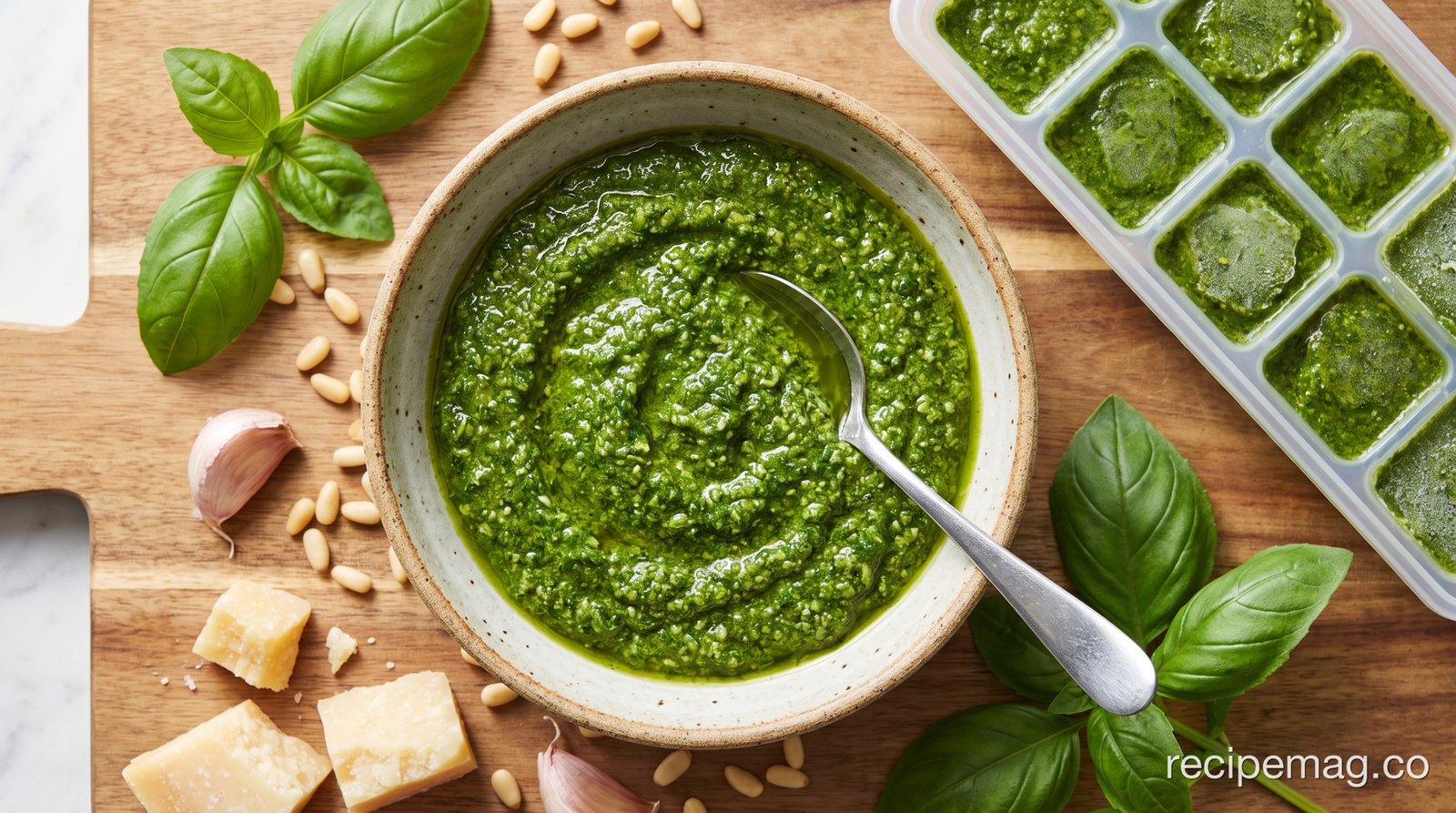
Pesto browns for the same reason a cut apple does: an enzyme called polyphenol oxidase reacts with oxygen the moment the leaves are bruised. A thirty-second blanch deactivates that enzyme, which is why blanched pesto stays vividly green for months in the freezer while unblanched pesto turns army-drab within days. It is the one extra step worth taking, and only when you are freezing.
Key Takeaways
- Blanching basil for 30 seconds deactivates the enzyme that browns pesto.
- Blanch only for freezing; for pesto eaten today, raw basil tastes better.
- Toast the pine nuts. It is 4 minutes and it doubles the depth.
- Add cheese by hand at the end, not in the processor, where it heats and clumps.
- Freeze in ice cube trays under a film of oil for portioned use all winter.
Ingredients
Makes about 1 1/2 cups. Active time 15 minutes.
- 4 packed cups fresh basil leaves, about 4 oz
- 1/2 cup pine nuts
- 2 garlic cloves
- 3/4 cup finely grated parmesan
- 2 tbsp finely grated pecorino, optional
- 3/4 cup extra-virgin olive oil
- 1 tsp kosher salt, plus more to taste
- 1 tbsp lemon juice, optional
Pine nuts are traditional and expensive. Walnuts, almonds, or sunflower seeds all work and none of them ruin the result; walnuts in particular make an excellent, slightly more bitter pesto.
How to Make It
1. Toast the nuts. Toast the pine nuts in a dry pan over medium heat for 3 to 4 minutes, shaking often, until fragrant and lightly golden. Watch them constantly; they go from pale to burnt in about twenty seconds. Cool completely before using.
2. Blanch the basil, if freezing. Drop the leaves into boiling water for 30 seconds, then transfer immediately to ice water. Drain and squeeze dry, hard. Skip this step entirely if you plan to eat the pesto within two days; raw basil has a brighter, peppery flavour that blanching softens.
3. Process the base. Pulse the garlic and cooled nuts in a food processor until coarsely ground. Add the basil and pulse again to a rough paste, scraping down the sides.
4. Stream in the oil. With the motor running, add the olive oil in a steady stream. Stop as soon as it comes together. Over-processing heats the mixture through friction, and heat is what dulls both colour and flavour.
5. Fold in the cheese by hand. Transfer to a bowl and stir in the parmesan and pecorino with a spoon. Cheese blitzed in the processor warms, clumps, and turns the texture pasty.
6. Season. Add the salt and taste. Parmesan is already salty, so add gradually. A squeeze of lemon lifts it, though purists will tell you it does not belong.
Freezing It Properly
Ice cube trays are the right vessel. Spoon the pesto in, level the tops, and float a thin film of olive oil over each cube to seal out air. Freeze solid, then transfer to a bag. Each cube is roughly two tablespoons, which is one portion of pasta or one spoonful stirred into soup.
Blanched and frozen this way, pesto stays green and usable for six months. Unblanched pesto frozen the same way tastes fine but looks dull olive within weeks, which matters more than it should when you are spooning it onto food.
One variation worth knowing for freezing: leave the cheese out. Dairy can turn slightly grainy through a freeze-thaw cycle. Freeze the basil, nut, garlic, and oil base, then stir in fresh parmesan after thawing. It is a small extra step for a noticeably better result.
In the fridge, pesto keeps a week with a film of oil on the surface to block air contact. It is the same principle as the freezer method, at shorter range. For the wider end-of-season plan, see our guide to using up every last summer herb.
Variations and Uses
Other greens. Arugula makes a peppery pesto, spinach a mild one, and carrot tops a genuinely good one that costs nothing. Kale pesto wants blanching regardless of storage plans, to soften it.
Other nuts. Walnuts, almonds, pistachios, or sunflower seeds. Pistachio pesto with mint is exceptional with lamb.
Dairy-free. Replace the cheese with two tablespoons of nutritional yeast and an extra pinch of salt.
Beyond pasta, where a splash of starchy cooking water is essential to make it cling, pesto is a sauce for grilled fish and chicken, a spread for sandwiches, a swirl for soup, and a dressing for a grain bowl. A spoonful stirred into minestrone at the table is the Ligurian way and a genuine upgrade. It also goes on focaccia and under a roast chicken’s skin.
Getting Pesto to Cling to Pasta
Pesto tossed straight onto drained pasta slides off and pools at the bottom of the bowl. The Italian fix has three parts and takes an extra minute.
Save the pasta water. Reserve a cup before draining. It is full of dissolved starch, and that starch is an emulsifier: it binds the oil in the pesto to the water clinging to the pasta, producing a sauce that coats rather than separates.
Loosen the pesto off the heat. Put the pesto in a warm bowl, not a hot pan, and stir in two or three tablespoons of the pasta water until it becomes a pourable cream. Heating pesto directly dulls the basil and can make the cheese stringy.
Toss vigorously. Add the drained pasta and toss hard for thirty seconds, adding more water a splash at a time. The sauce should visibly tighten and grip. If it looks dry, it wants more water, not more pesto.
The traditional Ligurian version adds boiled potato cubes and green beans to the pot with the pasta, which sounds odd and is excellent; the potato starch reinforces the same emulsion. Whichever route you take, serve it immediately, because pesto pasta does not hold.
Frequently Asked Questions
Why does my pesto turn brown?
Oxidation. The enzyme polyphenol oxidase reacts with air as soon as the leaves are bruised. Blanching for 30 seconds deactivates it, and a film of oil on the surface slows it during storage.
Should I always blanch the basil?
No. Blanch only when freezing or storing more than two days. Raw basil pesto eaten fresh has a brighter, more peppery flavour.
Can I make pesto without a food processor?
Yes, and a mortar and pestle is the traditional method that gives the best texture. It takes about fifteen minutes of work and the result is noticeably more luxurious.
Why is my pesto bitter?
Usually over-processed olive oil, which turns bitter under high-speed blades, or burnt nuts. Stir the oil in by hand at the end if it keeps happening.
How long does pesto keep?
A week refrigerated under a film of oil, or six months frozen. Blanched pesto holds its colour far longer than unblanched.
Can I use dried basil?
No. Pesto depends entirely on the volatile aromatics in fresh basil, and those are precisely what drying destroys.
