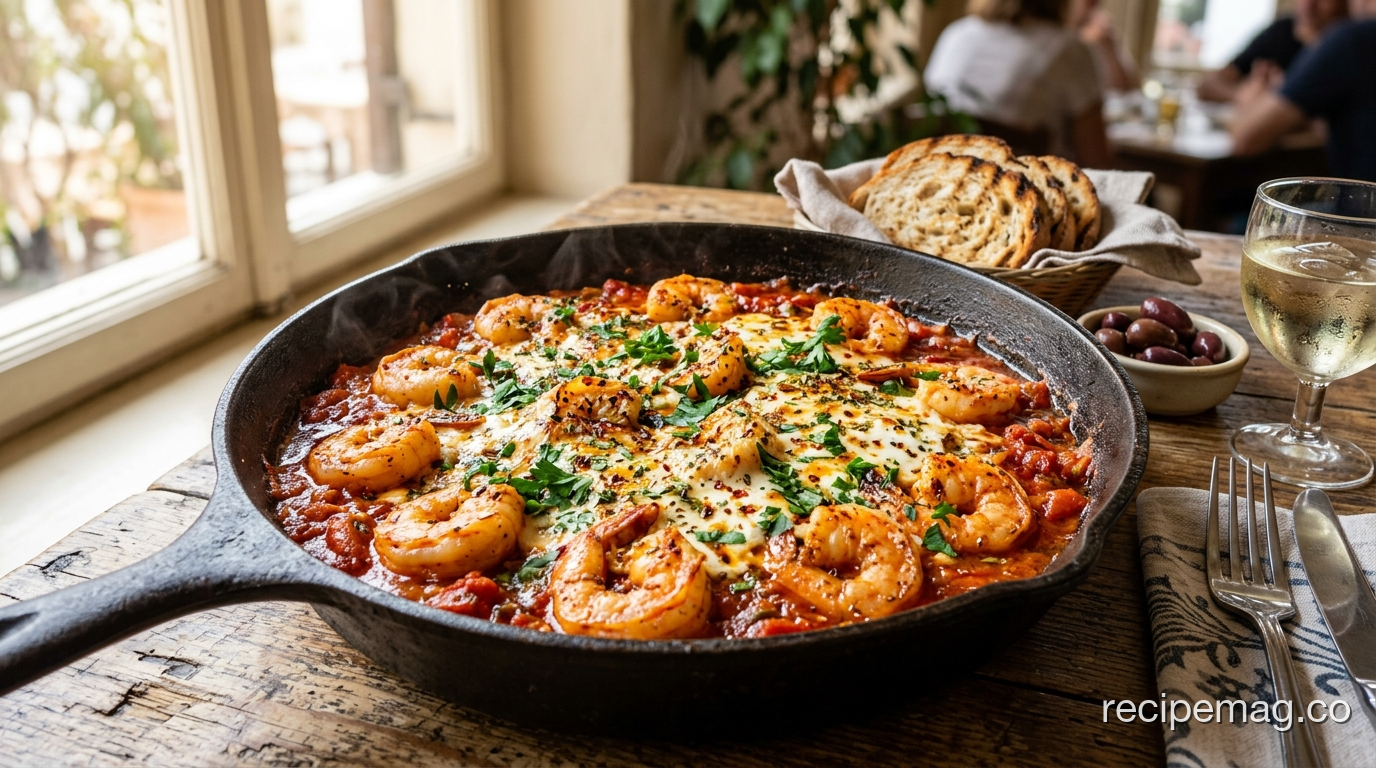
Shrimp saganaki is a Greek skillet dish where plump shrimp poach in a bright, garlicky tomato sauce, then get crowned with feta that softens under the heat. It cooks in one pan in about 30 minutes and feeds four. Shrimp is the reason it comes together so fast: it’s the most-consumed seafood in the United States, at roughly 5 pounds per person each year (NOAA Fisheries, 2023), and it cooks in just a few minutes. Serve it hot with crusty bread to catch every drop of sauce.
Key Takeaways
- Shrimp saganaki is a one-skillet Greek dinner ready in about 30 minutes.
- Shrimp is America’s top seafood at roughly 5 pounds per person each year. ([NOAA Fisheries](https://www.fisheries.noaa.gov), 2023)
- Shrimp cook in just 2 to 3 minutes, so they go in near the end to stay tender.
- Block feta added at the finish softens and melts into the sauce for richness.
- A splash of ouzo or dry white wine is the traditional flavor backbone.
What Is Shrimp Saganaki?
Shrimp saganaki, or garides saganaki in Greek, takes its name from the sagani, the small two-handled pan it’s traditionally cooked and served in. The dish layers three ingredients that define Greek coastal cooking: sweet shrimp, ripe tomato, and salty feta. It’s a taverna staple all along the Aegean, usually served as a shared plate with bread and a cold glass of white.
The magic is in the contrast. The tomato sauce is bright and slightly sweet, the feta is sharp and salty, and the shrimp sit somewhere in the middle, tender and mild. A hit of fresh herbs and a squeeze of lemon at the end pulls it all into focus. It reads as fancy but cooks like a weeknight.
[PERSONAL EXPERIENCE] We’ve made this dish for guests who assumed it took hours, then watched their faces when it hit the table 30 minutes after we started chopping. It’s the kind of recipe that earns you an outsized reputation for the actual effort involved.
What Ingredients Make the Best Shrimp Saganaki?
Good shrimp saganaki starts with two non-negotiables: raw shrimp and real block feta. Genuine feta, made from sheep’s milk or a sheep-goat blend, carries an EU Protected Designation of Origin and brings about 4 grams of protein and 140 milligrams of calcium per ounce (USDA FoodData Central, 2023). Skip the pre-crumbled kind; a block softens into the sauce far better.
Ingredients
- 1 lb large raw shrimp, peeled and deveined, tails on or off
- 3 tablespoons extra-virgin olive oil
- 1 medium onion, finely chopped
- 4 garlic cloves, thinly sliced
- 1/4 cup ouzo or dry white wine
- 1 can (28 oz) crushed tomatoes, or 2 lbs fresh tomatoes, grated
- 1/2 teaspoon red pepper flakes
- 1 teaspoon dried oregano
- 6 oz block feta, cut into chunks or crumbled by hand
- 1/4 cup chopped fresh parsley
- 2 tablespoons chopped fresh dill (optional)
- Salt and black pepper to taste
- Lemon wedges and crusty bread, to serve
Buy the largest shrimp you can, ideally 16/20 count, so they stay juicy through the quick cook. Fresh or thawed both work; if using frozen, thaw them fully and pat dry so they sear rather than steam. The onion and garlic build the base, and the ouzo brings that distinct anise note that marks the dish as genuinely Greek.
How Do You Make Shrimp Saganaki Step by Step?
The whole dish builds in one skillet, and timing the shrimp is the only real skill involved. Shrimp cook in just 2 to 3 minutes and turn rubbery fast, so they go in near the end. Watch for them to curl into a loose C and turn pink and opaque; a tight O shape means they’ve gone too far (Serious Eats, 2022). Build the sauce first, add shrimp last.
Instructions
- Build the base. Heat the olive oil in a large skillet over medium heat. Add the onion with a pinch of salt and cook 5 minutes until soft. Add the garlic and red pepper flakes and cook 1 minute until fragrant.
- Deglaze. Pour in the ouzo or white wine. Let it bubble and reduce by half, about 2 minutes, scraping up anything stuck to the pan.
- Simmer the sauce. Add the crushed tomatoes and oregano. Season with salt and black pepper. Simmer uncovered for 12 to 15 minutes, stirring now and then, until the sauce thickens and deepens in color.
- Add the shrimp. Nestle the shrimp into the sauce in a single layer. Cook 2 to 3 minutes, turning once, until they just turn pink and opaque.
- Add the feta. Scatter the feta chunks over the top. Cover the pan and cook 2 more minutes, or slide the skillet under a hot broiler for 3 minutes, until the feta softens and starts to melt at the edges.
- Finish. Kill the heat. Shower with parsley and dill, and finish with a squeeze of lemon. Serve straight from the pan with plenty of bread.
Prep time: 10 minutes | Cook time: 20 minutes | Serves: 4
[UNIQUE INSIGHT] The most common failure here is a watery sauce, and it comes from rushing step three. People add the shrimp before the tomatoes have reduced, then the shrimp release their own liquid on top of that, and you end up with soup. Let the sauce get genuinely thick and jammy before the shrimp ever touch the pan. That patience is the whole difference.
What Should You Serve With Shrimp Saganaki?
Shrimp saganaki is built to be shared, and it pairs best with simple sides that soak up or balance the sauce. It also fits neatly into healthy eating: the American Heart Association advises seafood at least twice weekly and points to shrimp as a lean, low-saturated-fat protein (American Heart Association, 2021). Round it out with vegetables and a grain and you have a full Mediterranean meal.
Best Pairings
- Crusty bread. Non-negotiable. The sauce is half the point, and bread is how you get it.
- Rice or orzo. Spoon the shrimp and sauce over either for a heartier plate.
- Greek salad. The cool crunch of cucumber and tomato balances the rich, salty skillet.
- Grilled vegetables. Zucchini, peppers, and eggplant echo the Mediterranean theme.
- A cold white wine. A crisp Assyrtiko or Sauvignon Blanc cuts the richness perfectly.
For storage, saganaki keeps in the fridge for up to two days, which aligns with USDA guidance on cooked seafood held at 40°F or below (USDA Food Safety and Inspection Service, 2023). Reheat gently over low heat just until warm; blasting it hot will overcook the shrimp and turn them tough. It’s genuinely best fresh, so make only what you’ll eat when you can.
Frequently Asked Questions About Shrimp Saganaki
Can I make shrimp saganaki without ouzo?
Yes. Ouzo adds a distinctive anise note, but the dish is excellent without it. Substitute an equal amount of dry white wine for a cleaner flavor, or use a splash of Pernod if you want the anise character without a full bottle of ouzo. In a pinch, skip the alcohol entirely and add a tablespoon of lemon juice at the end for brightness instead.
Should the shrimp be peeled before cooking?
For easy eating, yes, peel and devein them first. Leaving the tails on looks attractive and adds a little flavor, but fully peeled shrimp let guests scoop everything up with bread without messy fingers. If you want maximum flavor, simmer the shells in the tomato sauce for ten minutes, then remove them before adding the peeled shrimp.
Can I use frozen shrimp?
Absolutely, and most shrimp sold as fresh was previously frozen anyway. Thaw them completely in the fridge overnight or under cold running water, then pat them thoroughly dry before cooking. Excess water will thin your sauce and prevent proper cooking. Thawed frozen shrimp perform just as well as fresh in this dish, so buy whatever quality is better at your store.
What kind of feta melts best?
Block feta packed in brine softens best. It doesn’t melt smoothly like mozzarella; instead it warms and turns creamy while holding some shape, which is exactly what you want here. Greek sheep’s-milk feta is the traditional and most flavorful choice. Avoid pre-crumbled feta, which is drier and coated with anti-caking starch that keeps it from softening into the sauce.
Is shrimp saganaki served as an appetizer or a main?
Both, depending on portion. In Greek tavernas it’s often a shared meze plate alongside other small dishes. At home, a full pound of shrimp with bread and a salad easily makes a main course for four. Serve smaller portions in individual ramekins for a starter, or bring the whole skillet to the table for a family-style dinner.
Bring the Taverna Home Tonight
Shrimp saganaki proves that a genuinely impressive dinner can take one pan and half an hour. Build a good tomato sauce, add the shrimp at the last minute, crown it with feta, and you’ve made something that tastes like a seaside vacation.
The details that matter are few but real. Reduce the sauce until it’s thick. Pull the shrimp the second they turn pink. Don’t skimp on the bread. Get those three right and the rest is hard to mess up.
Pour a cold glass of white, put the skillet in the middle of the table, and let everyone dig in together. That’s exactly how it’s meant to be eaten.
