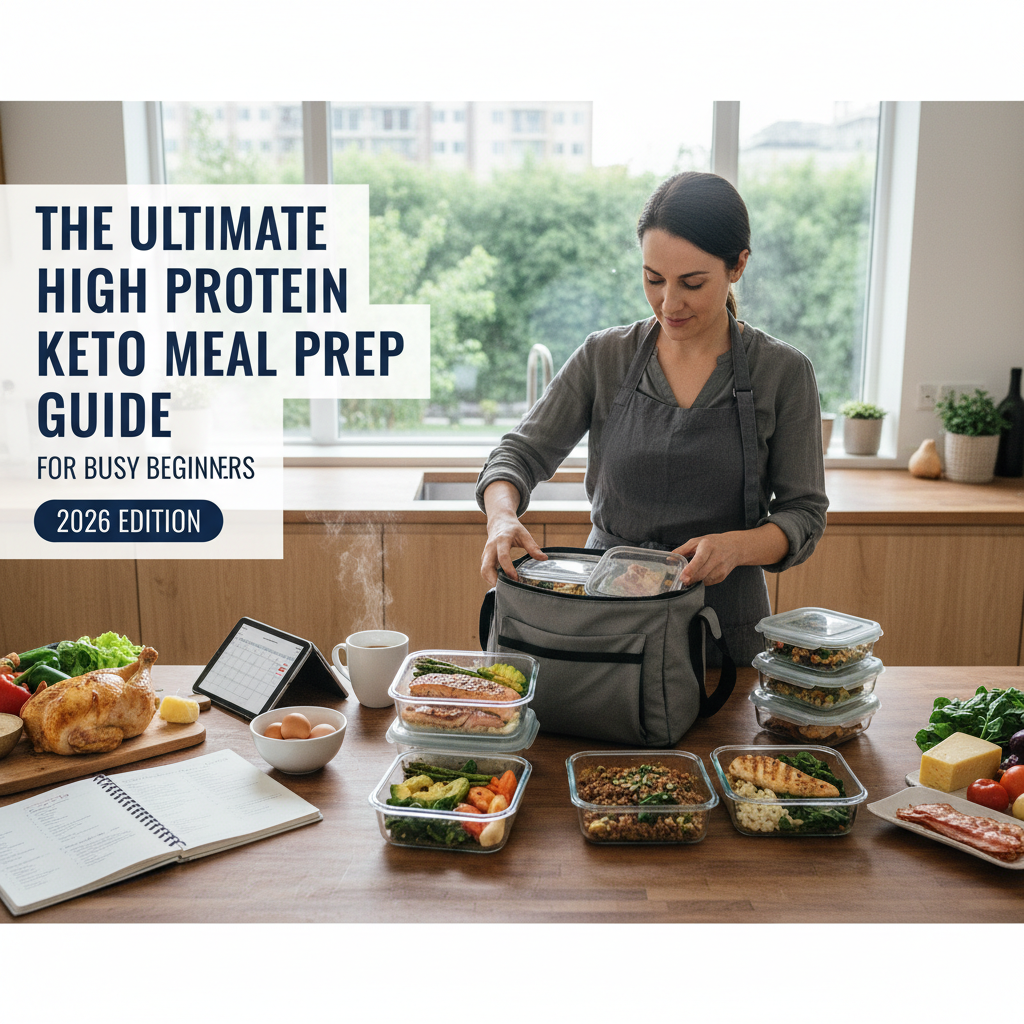
- High Protein Keto Meal Prep is the strategic practice of batch-cooking nutrient-dense meals that prioritize lean protein while maintaining a low-carbohydrate limit to induce ketosis. Unlike traditional keto, which relies heavily on added fats, this efficient method targets muscle retention, satiety, and metabolic flexibility*. By dedicating 60–90 minutes once a week to prep specifically calculated protein portions (1.2g–2.0g per kg of body weight), busy individuals can secure a week’s worth of weight-loss-friendly meals, eliminating decision fatigue and ensuring adherence to 2026’s most effective nutritional protocol.
Why High Protein Keto is the 2026 Efficiency Hack
As we move into 2026, the nutritional landscape has shifted away from the “fat bomb” era of the late 2010s toward a more sustainable, performance-based approach. High Protein Keto is the efficiency hack for the modern professional because it leverages the Thermic Effect of Food (TEF). Your body burns more calories digesting protein than it does fat or carbs, effectively boosting your metabolism while you sit at your desk.
Furthermore, this approach fixes the primary failure point of traditional keto: hunger. By centering prep around protein rather than oils, you maximize fullness per calorie. This guide streamlines that science into a practical workflow, proving that you don’t need endless hours in the kitchen to achieve elite body composition.
The 30-Second Guide to High Protein Keto Prep
If you are reading this on the go, here is the condensed operational logic for successful prep. This formula ensures you stay in ketosis while hitting protein targets without tracking every single bite during the week.
- Calculate: Aim for 1.5g of protein per kg of ideal body weight.
- Shop: Buy bulk lean meats (chicken breast, turkey, white fish) and low-carb veg (spinach, broccoli). Avoid excessive heavy cream or butter.
- Batch: Roast all proteins and vegetables on two sheet pans at 400°F (200°C) for 20–25 minutes.
- Portion: Divide into glass containers. Add healthy fats (avocado, olive oil) after reheating to preserve flavor.
- Repeat: Do this every Sunday.
Key Takeaways: Quick Summary for Busy Beginners
- Protein Prioritization: Shift your mindset from “eat fat to burn fat” to “eat protein to protect muscle and burn body fat.”
- The “Cook Once” Rule: Never cook a single meal. If the oven is on, it should be full.
- Macro Ratios: Aim for approximately 35% Protein, 60% Fat, and 5% Carbs, rather than the old-school 20% Protein cap.
- Simplicity Wins: Complex recipes kill consistency. Stick to the “Protein + Green Veg + Fat Source” formula.
- Storage Matters: Glass containers keep food fresher and free from plastic chemicals significantly longer than cheap plastic tubs.
Concept Definition: What is High Protein Keto Meal Prep?
Understanding the nuance between standard ketogenic diets and the high-protein variant is crucial for long-term success. High Protein Keto Meal Prep is not just about removing carbs; it is about deliberately structuring nutrition to support an active, demanding lifestyle.
High Protein vs. Standard Keto: Understanding the Macro Shift
Standard Keto (SKD) was originally designed for epilepsy management, requiring up to 90% fat. For weight loss and general health in 2026, this is often unnecessary and calorie-dense.
- High Protein Keto (HPK)* alters the ratios. Instead of drowning meals in butter, you increase the portion size of the meat, fish, or eggs.
- Standard Keto: High Fat (75%), Moderate Protein (20%), Low Carb (5%).
- High Protein Keto: Moderate Fat (60%), High Protein (35%), Low Carb (5%).
This shift prevents the “skinny fat” look by providing enough amino acids to build and repair tissue while still keeping insulin levels low enough to facilitate fat burning.
The Metabolic Advantage: Satiety and Muscle Retention Data
The primary reason this method works for busy beginners is gluconeogenesis—a process often feared by keto purists but embraced by experts. While some fear protein turns to sugar, this process is demand-driven, not supply-driven.
Your body will only convert protein to glucose if it absolutely needs it. More importantly, protein triggers the release of satiety hormones like GLP-1 and PYY more effectively than fat does. This means your prepped meals will keep you fuller for 4–6 hours, eliminating the need for snacking and reducing your daily caloric intake effortlessly.
Getting Started: How to Start High Protein Keto Meal Prep Beginner
Starting a new meal prep routine can be overwhelming, but it requires only three foundational steps. Ignore the fancy gadgets for now; focus on the metrics and the method.
Step 1: Calculating Your Protein Threshold (1.2g–2.0g/kg)
To prep effectively, you must know your numbers. The blanket “eats 2,000 calories” advice is outdated.
- Sedentary: 1.2g of protein per kg of ideal body weight.
- Active: 1.6g–2.0g of protein per kg of ideal body weight.
- Example:* If your ideal weight is 70kg and you work out 3 times a week, you need roughly 112g–140g of protein daily. This means each of your 3 prepped meals should contain roughly 40g–45g of protein (e.g., 6oz of chicken breast).
Step 2: Selecting the Right Containers and Tools
Your gear dictates your longevity. Plastic containers stain, retain odors, and can leech chemicals when microwaved.
- Must-Have: Dual-compartment glass containers (prevents soggy vegetables
