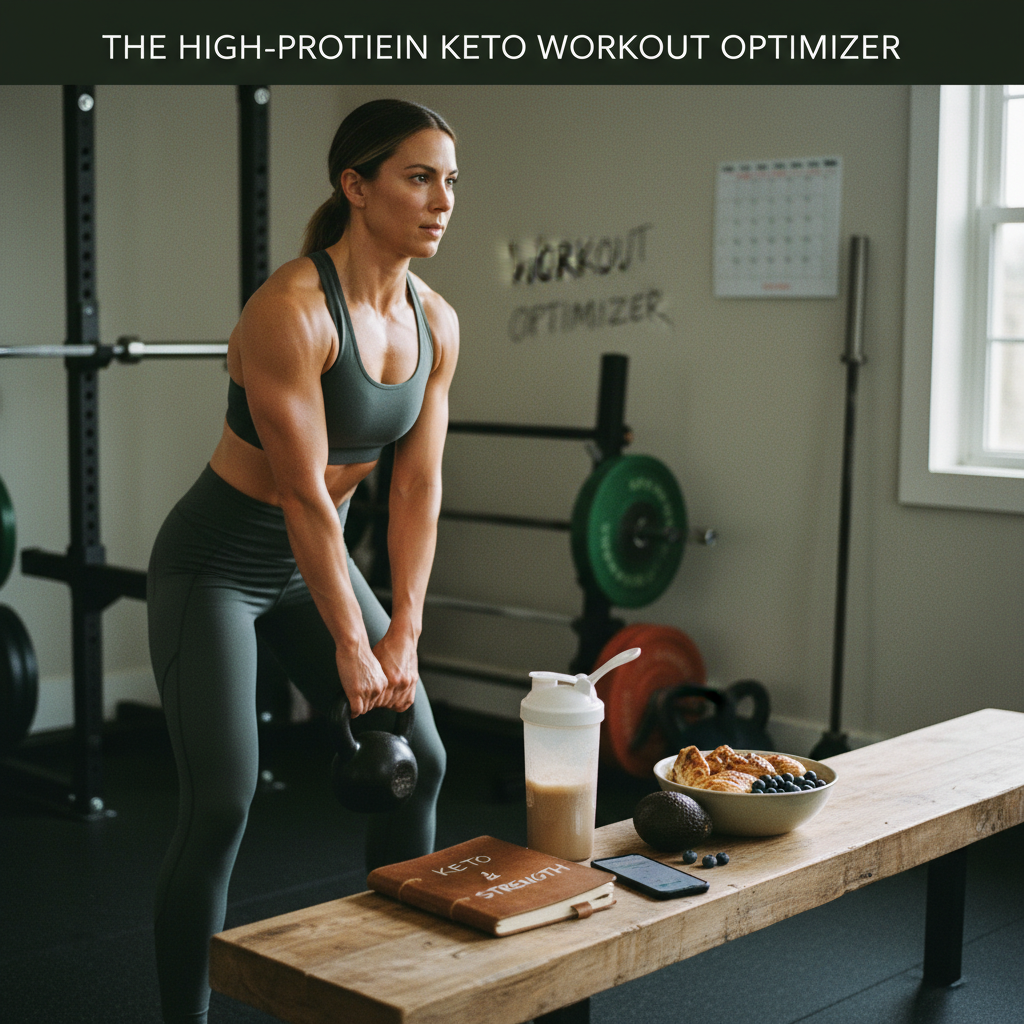
The High-Protein Keto Workout Optimizer is a specialized nutritional strategy that combines metabolic fat adaptation with elevated protein intake (1.6g–2.2g/kg) to maximize muscle protein synthesis while simultaneously accelerating fat loss. Unlike standard ketogenic protocols that prioritize high fat consumption (75%+), this approach leverages sufficient amino acids to prevent muscle catabolism during intense training, fundamentally proving that carbohydrates are not a strict requirement for hypertrophy or athletic performance.
Shattering the Myth of Muscle Loss on Keto
For decades, the fitness industry has perpetuated the idea that muscle cannot be built without glycogen derived from carbohydrates. The fear is that in the absence of glucose, the body will “burn” muscle tissue for fuel. This is a misunderstanding of metabolic flexibility.
When executed correctly, a ketogenic diet is actually muscle-sparing. By utilizing ketones and free fatty acids for energy, the body preserves lean tissue. However, the standard “medical keto” diet often lacks the protein required for athletes. The High-Protein Keto approach fixes this flaw, turning your body into a fat-burning machine that retains the bricks needed to build a stronger physique.
The High-Protein Keto Advantage for Body Recomposition
Body recomposition—losing fat and building muscle simultaneously—is the holy grail of fitness. The High-Protein Keto diet is uniquely suited for this because it keeps insulin levels low (unlocking fat stores) while keeping amino acid pools high (signaling growth).
What Is the High-Protein Keto Workout Optimizer?
The High-Protein Keto Workout Optimizer is a macronutrient framework designed for active individuals. It shifts the traditional keto macros from a “High Fat/Moderate Protein” model to a “High Protein/Moderate Fat” model. The goal is to consume just enough fat to maintain hormonal health and energy, minimal carbs to stay in ketosis, and maximal protein to support recovery.
Combining Targeted Protein Intake with Ketogenic Lipolysis
This strategy relies on two physiological states working in tandem. First, Ketogenic Lipolysis: by keeping carbohydrates below 30g–50g, your liver produces ketones, providing a steady fuel source that doesn’t spike blood sugar.
Second, Anabolic Signaling: By increasing protein intake, you trigger mTOR (mammalian target of rapamycin), the master growth regulator in cells. This allows you to lift heavy and recover quickly, even in a caloric deficit.
Why 1.6g-2.2g Protein/kg is Crucial for Athletes
Standard keto suggests 1.0g of protein per kg of body weight. For an athlete, this is insufficient. The “Golden Ratio” for the High-Protein Keto Optimizer is 1.6g to 2.2g per kg of lean body mass.
- Satiety: Protein is the most satiating macronutrient, preventing hunger pangs during a cut.
- Thermic Effect of Food (TEF): Your body burns more calories digesting protein than fat or carbs.
- Nitrogen Balance: Higher intake ensures a positive nitrogen balance, essential for preventing muscle breakdown.
Can You Build Muscle on a High-Protein Keto Diet?
The short answer is yes. While glycogen contributes to muscle “fullness” (water retention), true muscle fiber growth (myofibrillar hypertrophy) is driven by mechanical tension and protein availability, not sugar.
Mechanisms of Hypertrophy Without Glycogen
When you restrict carbs, your muscles learn to use Intramuscular Triglycerides (IMTG)—droplets of fat stored within the muscle—for fuel. Studies show that keto-adapted athletes can replenish these fuel stores just as effectively as glycogen-fueled athletes replenish sugar.
Furthermore, mechanical stress from lifting weights triggers repair processes regardless of your fuel source. As long as essential amino acids are present in the bloodstream, your body will repair the micro-tears in muscle fibers, leading to growth.
The Gluconeogenesis Myth
The most persistent myth in the keto community is that “too much protein turns into sugar.” This process is called Gluconeogenesis (GNG).
Here is the reality: GNG is demand-driven, not supply-driven. Your body does not convert excess steak into chocolate cake. It only creates glucose from protein if your brain desperately needs it. In a high-protein keto context, having extra amino acids actually protects your muscles; your body uses the dietary protein for glucose maintenance rather than stripping your own muscle tissue.
Comparing Standard Keto vs. High-Protein Keto for Weight Loss
The following table illustrates why the High-Protein variation is superior for those seeking a lean, athletic physique rather than just weight loss on the scale.
| Feature | Standard Therapeutic Keto | High-Protein Keto Optimizer |
|---|---|---|
| Primary Goal | Epilepsy management, sedentary weight loss | Muscle retention, athletic performance, recomposition |
| Protein Intake | Low to Moderate (10-15% of calories) | High (30-40% of calories) |
| Fat Intake | Very High (75-80% of calories) | Moderate (Lever for energy balance) |
| Muscle Risk | Moderate risk of muscle atrophy | Minimal risk (Muscle Sparing) |
| Satiety Level | High (due to fat) | Very High (Protein + Fat) |
| Recovery Speed | Slower (insufficient amino acids) | Faster (Optimized MPS) |
The 3-Step Optimizer Framework
To execute this strategy effectively, you cannot simply eat at random. You must structure your nutrition around your training window to ensure you have energy to lift and nutrients to recover.
Pre-Workout Nutrition for Explosive Energy
Without carbs, you need a different spark for your engine. The goal here is cognitive alertness and readily available ketone bodies.
What to Eat Before a Keto Workout to Prevent Bonking
Avoid heavy, slow-digesting fat meals right before training. Instead, opt for easily digestible sources. A small portion of lean protein combined with fast-acting fats is ideal.
MCTs and Essential Amino Acids
- MCT Oil (C8 Chain): Take 1 tablespoon 30 minutes before training. C8 MCTs bypass the lymphatic system and go straight to the liver for immediate ketone production.
- Essential Amino Acids (EAAs): Consuming EAAs pre-workout floods the blood with the building blocks of muscle, sparing your own tissue during the catabolic stress of lifting.
Intra-Workout Hydration and Electrolytes
On a ketogenic diet, your kidneys excrete water and electrolytes at a faster rate. If you feel dizzy or weak during a workout, it is rarely a lack of fuel; it is almost always an electrolyte imbalance.
The Critical Sodium-Potassium Ratio for Muscle Contraction
Your performance relies on the “sodium pump” in your cells.
- Sodium: You need significantly more than the average person. Aim for 1000mg of sodium before or during your workout.
- Potassium: Helps prevent cramping.
- Magnesium: Supports energy production (ATP).
- Optimizer Tip:* Mix 1/2 tsp of pink Himalayan salt into your water bottle for the gym.
Post-Workout Recovery and Anabolic Signaling
The “anabolic window” isn’t as short as magazines claim, but on keto, getting nutrients in quickly helps lower cortisol levels raised during training.
Best High-Protein Keto Snacks for Post-Workout Refueling
Focus on fast-digesting proteins.
- Whey Protein Isolate (lowest carb option).
- Egg whites.
- Lean chicken breast.
Triggering MPS Without Insulin Spikes
- Leucine* is the key amino acid that flips the “growth switch.” You need roughly 2.5g to 3g of Leucine to trigger Muscle Protein Synthesis (MPS). Since you aren’t using insulin (from carbs) to drive nutrients into cells, you must rely on hitting this Leucine threshold to ensure recovery happens.
High-Protein Keto Food List for Intense Workouts
Stock your kitchen with these essentials to ensure you never fall into the “dirty keto” trap of processing meats and vegetable oils.
Leucine-Rich Animal Proteins
These are your primary muscle builders.
- Eggs: The gold standard of bioavailability. Eat the yolks!
- Beef: Rich in creatine and B-vitamins.
- Whey Isolate: The fastest absorption rate for post-workout.
- Salmon: High protein plus Omega-3s for inflammation reduction.
Nutrient-Dense Fats for Sustained Energy
Use these as a lever. If you want to lose fat, reduce these. If you need energy, increase them.
- Avocado: High potassium and fiber.
- Grass-fed Butter/Ghee: Contains CLA.
- MCT Oil: For performance energy.
- Macadamia Nuts: Great lipid profile.
Portable Options for Meal Prep
- Canned Tuna/Sardines: Emergency protein.
- Beef Jerky / Biltong: Watch for added sugars.
- Hard-Boiled Eggs: Pre-peel them for instant snacks.
7-Day High-Protein Keto Meal Plan for Muscle Gain and Weight Loss
Success lies in planning. Below are two sample days demonstrating how to adjust macros based on your goals.
The Hypertrophy Day (Surplus)
- Breakfast: 4 whole eggs, 2 slices bacon, sautéed spinach.
- Lunch: 8oz Ground Beef (85/15), 1/2 avocado, zucchini noodles.
- Pre-Workout: Black coffee, 1 scoop MCT powder.
- Post-Workout: Whey Isolate shake with almond milk.
- Dinner: 8oz Ribeye steak, asparagus with butter.
- Macros: High Protein, Moderate-High Fat, Low Carb.
The Cutting Day (Deficit)
- Breakfast: 1 whole egg, 1 cup egg whites, spinach (low fat, high protein).
- Lunch: 8oz Chicken breast, large salad with olive oil dressing.
- Pre-Workout: Black coffee, salt.
- Post-Workout: Whey Isolate (water only).
- Dinner: 8oz White fish (Cod or Tilapia), broccoli, small pat of butter.
- Macros: High Protein, Low-Moderate Fat, Low Carb. (Body fat provides the fuel deficit).
Specific Strategies by Demographic
The High-Protein Keto Workout Optimizer is not one-size-fits-all. Adjustments must be made based on physiology and training style.
Women’s Guide: Keto Diet and Strength Training
Women often respond differently to cortisol and fasting.
- Avoid excessive fasting: Extremely long fasting windows combined with hard training can disrupt hormones.
- Prioritize Iron: Red meat is crucial for active women.
- Cycle Carbs (Optional): Some women find adding a small serving of complex carbs around their period helps energy levels without ruining progress.
Endurance Athletes vs. Powerlifters
- Endurance: Once fat-adapted (usually 4-6 weeks), endurance athletes become bulletproof against “hitting the wall” because body fat stores are virtually limitless fuel.
- Powerlifters: You may lack the “snap” or top-end explosiveness initially. Rely on Creatine Monohydrate (5g daily) to restore ATP stores that are usually supported by glycogen.
Troubleshooting Performance Plateaus
If you have been following the protocol for 4 weeks and performance is stalling, check these variables.
Undereating Protein vs. Undereating Fat
- Undereating Protein: You feel sore for days, recover slowly, and are losing strength on your main lifts. Solution: Add another scoop of whey or 4oz of chicken.
- Undereating Fat: You feel “wired but tired,” have a low libido, or feel constantly cold. Solution: Add avocado or olive oil to dinner.
When to Consider a Targeted Ketogenic Diet (TKD)
If you are an advanced athlete doing high-volume CrossFit or HIIT, standard keto might not suffice. A Targeted Ketogenic Diet (TKD) involves consuming 15g-25g of fast-digesting carbs (like Dextrose or Gummy Bears) 30 minutes before the workout. This provides just enough glycogen for the intense effort, which is burned off immediately, allowing you to return to ketosis post-workout.
The Optimizer Checklist
- Prioritize Protein: Aim for 1.6g–2.2g per kg of body weight.
- Hydrate with Salt: Sodium is your performance throttle.
- Use MCTs: Your secret weapon for instant brain and body energy.
- Hit Leucine Thresholds: Ensure every meal has at least 30g of high-quality protein.
- Don’t Fear Gluconeogenesis: Your body creates glucose because it needs it, not because you ate a steak.
Sustainable Performance and Leanness
The High-Protein Keto Workout Optimizer offers a sustainable path to a lean, muscular physique. By removing the dependency on carbohydrates and embracing protein as a functional tool for recovery, you unlock a metabolism that burns fat 24/7 without sacrificing the intensity of your workouts. This is not just a diet; it is a metabolic recalibration for peak performance.
