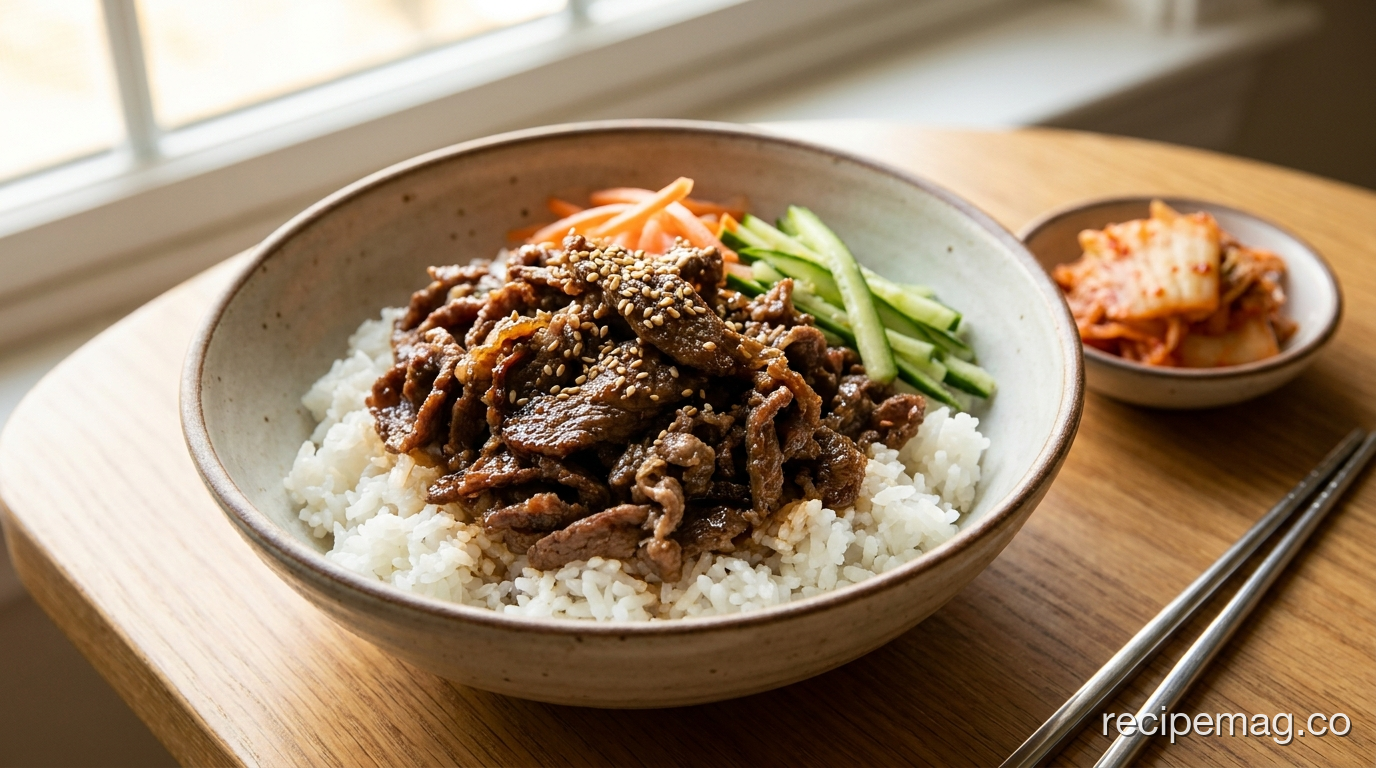
Bulgogi is the gateway dish of Korean cooking, and for good reason. Thin slices of beef soak in a sweet-savory marinade, then hit a screaming-hot pan and caramelize in minutes. Piled over warm rice with crisp vegetables and a fried egg, it becomes a complete meal in about 40 minutes. Korean flavors have surged into the mainstream: the National Restaurant Association named Korean cuisine among its top global flavor trends for multiple years running ([National Restaurant Association](https://restaurant.org), 2023). This bulgogi bowl is the easiest place to start.
Key Takeaways
- Ready in about 40 minutes, with most of that time hands-off while the beef marinates.
- Grated Asian pear tenderizes the beef naturally, thanks to its proteolytic enzymes ([Journal of Food Science](https://onlinelibrary.wiley.com/journal/17503841), 2019).
- Freezing the beef for 30 minutes makes it far easier to slice paper-thin.
- A 3-ounce serving of beef delivers roughly 23 grams of protein ([USDA FoodData Central](https://fdc.nal.usda.gov), 2023).
- Fully customizable: swap the protein, grain, or toppings to fit what you have.
What Makes Bulgogi Bowls So Good?
Bulgogi, which translates to “fire meat,” is Korea’s most beloved grilled beef dish, and turning it into a bowl makes it a weeknight staple. The magic is in the marinade: soy sauce for salt and umami, brown sugar for caramelization, sesame oil for nuttiness, garlic and ginger for depth, and grated Asian pear for both sweetness and tenderness. Thin slicing means the beef cooks in two to three minutes and soaks up flavor fast. Layered over rice, it needs almost nothing else.
What sells the bowl format is balance. You get sticky-sweet caramelized beef, plain rice to soak up the juices, cool crunchy vegetables, and a rich yolk if you add the egg. Every bite hits a different note. It’s satisfying without feeling heavy, and it comes together far faster than the tabletop-grill version served in restaurants.
Ingredients for Bulgogi Bowls
Most of these ingredients live at any well-stocked grocery store, and the marinade uses pantry staples you likely already own. Beef is a nutritional workhorse here: according to USDA FoodData Central, a 3-ounce cooked serving provides roughly 23 grams of complete protein along with iron, zinc, and B12 ([USDA FoodData Central](https://fdc.nal.usda.gov), 2023). Ribeye is the traditional cut, but sirloin works well and costs less.
For the Beef and Marinade
- 1 lb ribeye or top sirloin, sliced paper-thin against the grain
- ¼ cup soy sauce
- 2 tablespoons brown sugar
- 2 tablespoons grated Asian pear (about a quarter of a pear)
- 1 tablespoon toasted sesame oil
- 3 garlic cloves, grated or minced
- 1 teaspoon grated fresh ginger
- 2 scallions, thinly sliced
- 1 teaspoon toasted sesame seeds
- Black pepper to taste
For the Bowls
- 3 cups cooked short-grain white rice
- 1 cup kimchi
- 1 cucumber, thinly sliced
- 2 carrots, julienned or shredded
- 4 eggs, fried (optional)
- Extra scallions and sesame seeds for garnish
- Gochujang or sriracha, to serve
The Secret to Tender Bulgogi: Asian Pear
Asian pear is the ingredient that separates real bulgogi from a soy-sugar imitation. It does two jobs at once. The fruit adds a clean, floral sweetness, and it tenderizes the beef through natural proteolytic enzymes that gently break down muscle proteins ([Journal of Food Science](https://onlinelibrary.wiley.com/journal/17503841), 2019). Grate it on the fine side of a box grater so it melts into the marinade rather than sitting in chunks.
No Asian pear on hand? A regular Bosc pear or even a few tablespoons of grated apple or kiwi will do in a pinch, since all contain similar enzymes. Just don’t over-marinate when using kiwi, which is far more aggressive and can turn the beef mushy within an hour. With Asian pear, an hour to overnight is the sweet spot.
How to Make Bulgogi Bowls Step by Step
The trickiest part of bulgogi isn’t the cooking, it’s the slicing. Beef is much easier to cut thin when it’s partly frozen. America’s Test Kitchen recommends freezing steak for 30 to 45 minutes until firm but not solid, which lets your knife glide through into the paper-thin slices bulgogi needs ([America’s Test Kitchen](https://www.americastestkitchen.com), 2022). Once the beef is sliced, everything else moves fast.
Step-by-Step Instructions
- Freeze and slice the beef. Freeze the ribeye for 30 to 45 minutes. Slice it against the grain as thinly as you can, aiming for about ⅛ inch.
- Mix the marinade. Whisk soy sauce, brown sugar, grated pear, sesame oil, garlic, ginger, scallions, sesame seeds, and black pepper in a large bowl.
- Marinate. Add the sliced beef and toss to coat every piece. Cover and refrigerate for at least 30 minutes, or up to overnight for deeper flavor.
- Cook the beef hot and fast. Heat a large skillet or cast-iron pan over high heat. Working in batches, spread the beef in a single layer and cook 2 to 3 minutes, until caramelized at the edges. Crowding the pan steams the meat, so don’t rush it all in at once.
- Prep the bowls. While the beef cooks, divide warm rice among four bowls and arrange the kimchi, cucumber, and carrots around the edges.
- Assemble and finish. Pile the hot bulgogi over the rice. Top each bowl with a fried egg if using, then garnish with scallions, sesame seeds, and a drizzle of gochujang.
[PERSONAL EXPERIENCE] We’ve cooked this dozens of ways, and high heat with small batches is non-negotiable. The first time we dumped the whole pound into one pan, the beef released its juices and simmered into a gray, wet mess. Two or three batches over a rip-roaring pan gives you the caramelized, slightly charred edges that make bulgogi taste like it came off a grill.
Building a Better Bulgogi Bowl
The beef is the star, but the toppings turn a plate of meat and rice into a balanced bowl. Kimchi earns its spot beyond flavor: fermented foods deliver beneficial probiotics that support gut health, according to Harvard’s nutrition researchers ([Harvard T.H. Chan School of Public Health](https://www.hsph.harvard.edu), 2022). Its tang and funk cut straight through the sweet, rich beef.
Beyond kimchi, aim for contrast in every bowl. Cool cucumber and shredded carrot add crunch and freshness. A runny fried egg brings richness and helps bind everything together as the yolk breaks. A drizzle of gochujang or a squeeze of sriracha adds heat. Steamed spinach with sesame, quick-pickled radish, or blanched bean sprouts all make excellent additions if you want to build it out further.
Tips for the Best Bulgogi Bowls
A few small choices make a big difference between good bulgogi and great bulgogi. These are the details worth getting right.
- Slice against the grain. Cutting perpendicular to the muscle fibers shortens them, giving you tender, easy-to-chew beef instead of stringy, chewy pieces.
- Get the pan truly hot. You want an audible sizzle and visible caramelization. A lukewarm pan produces boiled beef, not seared beef.
- Don’t skip the sesame oil. Add it to the marinade, and drizzle a little more at the end. Its toasty aroma is central to the dish.
- Rest the marinade time. Even 30 minutes helps, but an overnight soak in the fridge gives noticeably deeper flavor and more tenderness.
- Prep rice ahead. Day-old refrigerated rice reheats beautifully and keeps bowl assembly to just a few minutes.
Korean BBQ Beef Bulgogi Bowls
Prep Time: 15 minutes | Marinate: 30 minutes | Cook Time: 10 minutes | Serves: 4
Ingredients
Beef and Marinade
- 1 lb ribeye or top sirloin, sliced paper-thin against the grain
- ¼ cup soy sauce
- 2 tablespoons brown sugar
- 2 tablespoons grated Asian pear
- 1 tablespoon toasted sesame oil
- 3 garlic cloves, grated
- 1 teaspoon grated fresh ginger
- 2 scallions, thinly sliced
- 1 teaspoon toasted sesame seeds
- Black pepper to taste
Bowls
- 3 cups cooked short-grain white rice
- 1 cup kimchi
- 1 cucumber, thinly sliced
- 2 carrots, julienned
- 4 eggs, fried (optional)
- Scallions, sesame seeds, and gochujang to serve
Instructions
- Freeze the beef 30 to 45 minutes, then slice paper-thin against the grain.
- Whisk soy sauce, brown sugar, grated pear, sesame oil, garlic, ginger, scallions, sesame seeds, and pepper in a large bowl.
- Add the beef, toss to coat, and marinate at least 30 minutes or overnight in the fridge.
- Heat a skillet over high heat. Cook the beef in batches, 2 to 3 minutes each, until caramelized. Don’t crowd the pan.
- Divide warm rice among 4 bowls. Arrange kimchi, cucumber, and carrots alongside.
- Top with bulgogi and a fried egg. Garnish with scallions, sesame seeds, and gochujang. Serve hot.
Notes
- No Asian pear? Substitute grated Bosc pear or apple. Use kiwi sparingly and marinate no longer than one hour.
- Swap the protein: thin-sliced chicken thigh or firm tofu both work with the same marinade.
- Make it a meal-prep bowl by storing rice, cooked beef, and raw toppings separately for up to 3 days.
Frequently Asked Questions About Bulgogi Bowls
What is the best cut of beef for bulgogi?
Ribeye is traditional and prized for its marbling, which keeps the thin slices tender and flavorful. Top sirloin is a leaner, more affordable option that still works well. Whatever you choose, look for a cut you can slice thin, and always cut against the grain. Skirt and flank steak also work, though they need extra-thin slicing to stay tender.
Can I make bulgogi bowls ahead of time?
Yes. The beef can marinate overnight, and it actually improves with time in the fridge. For full meal prep, cook the beef, then store it separately from the rice and raw toppings in airtight containers for up to three days. Reheat the beef quickly in a hot pan, assemble fresh bowls, and add the fried egg and kimchi just before eating for the best texture.
Is bulgogi spicy?
Traditional bulgogi is not spicy. The classic marinade is sweet and savory, built on soy sauce, sugar, sesame, and pear, with no chili at all. The heat in a bulgogi bowl usually comes from the toppings, like kimchi or a drizzle of gochujang. If you prefer a spicier version, add a tablespoon of gochujang directly to the marinade for a dish closer to spicy pork bulgogi.
What can I serve instead of rice?
Plenty of options work. Cauliflower rice keeps the bowl lower in carbs, while brown rice or quinoa add fiber and a nuttier taste. You can also serve bulgogi in lettuce cups for a lighter, hand-held version called ssam, or over cold soba noodles for a summer-friendly bowl. The sweet-savory beef pairs with almost any neutral base you like.
How thin should I slice the beef?
Aim for about ⅛ inch, thin enough to see light through it. Thin slices cook in two to three minutes, absorb the marinade quickly, and stay tender. The easiest way to get there is to partly freeze the beef for 30 to 45 minutes first, which firms it up so your knife cuts clean, even slices instead of tearing through soft meat.
Bulgogi bowls prove that restaurant-level Korean food is well within reach on a Tuesday night. The marinade does most of the work while you go about your day, and the final cook takes less time than boiling the rice.
Start with the recipe as written, then make it your own. Pile on the kimchi, add a jammy egg, or turn the whole thing into lettuce wraps for a lighter dinner. Once you’ve got the technique down, bulgogi becomes one of those dishes you’ll reach for again and again.
Slice thin, cook hot, and don’t skip the pear. That’s the whole secret.
