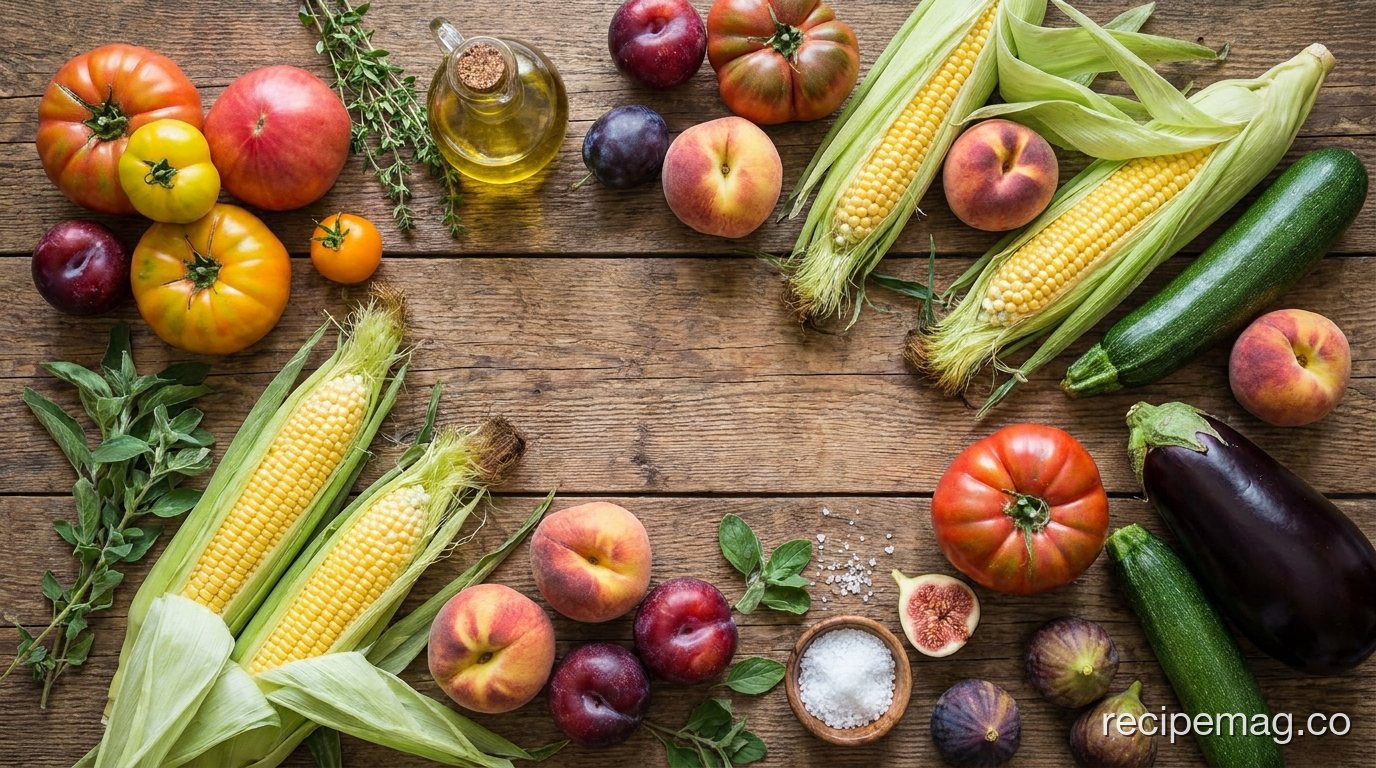
August is the busiest month at any farmers market, and for good reason. This is when tomatoes, sweet corn, peppers, eggplant, peaches, and melons all hit their peak at once. The USDA’s National Farmers Market Directory now lists more than 8,600 markets across the country, most of them overflowing in late summer (USDA Agricultural Marketing Service, 2023). Here’s what to cook in August, how to pick it, and how to keep it from going soft before dinner.
Key Takeaways
- August is peak month for tomatoes, sweet corn, peppers, eggplant, zucchini, peaches, plums, and melons all at the same time.
- Seasonal produce eaten near harvest retains 20-40% more antioxidants than produce stored for weeks. ([Frontiers in Nutrition](https://www.frontiersin.org/journals/nutrition), 2021)
- Never refrigerate whole tomatoes: cold below 55°F suppresses the genes that make them taste good.
- Sweet corn loses sugar fast after picking, so cook it the day you buy it.
- Store each fruit type separately, since high-ethylene peaches and plums speed up spoilage in nearby produce.
What Produce Is in Season in August?
August is the fullest month of the produce year. Nearly every warm-weather crop peaks at once: tomatoes, sweet corn, bell and chili peppers, eggplant, zucchini, cucumbers, green beans, okra, peaches, plums, figs, and melons. The USDA’s seasonal food guides confirm that late summer delivers the widest domestic variety of any month (USDA Agricultural Marketing Service, 2023). If you shop by season, August is the easiest month to eat well.
The trick is knowing what’s truly at its peak versus what’s fading or just arriving. Strawberries and cherries are gone by now. Winter squash is weeks away. What’s left is the good stuff: sun-ripened fruit and vegetables that need almost nothing done to them.
| Produce | August Status | Pick For | Best Use |
|---|---|---|---|
| Tomatoes | Peak | Heavy, fragrant, deep color | Raw salads, sauce, sandwiches |
| Sweet corn | Peak | Green husk, plump kernels | Grilled, salads, chowder |
| Bell & chili peppers | Peak | Firm, glossy, no wrinkles | Grilled, roasted, stuffed |
| Eggplant | Peak | Firm, shiny, light for its size | Grilled, roasted, braised |
| Zucchini | Peak | Small to medium, firm skin | Grilled, sauteed, baked |
| Peaches & plums | Peak | Slight give, floral scent | Grilled, baked, fresh |
| Melons | Peak | Heavy, hollow thump | Fresh, salads, agua fresca |
| Figs | Peak (second crop) | Heavy, soft, splitting | Roasted, cheese boards |
Why Does August Produce Taste Better?
Late-summer produce tastes better because it ripens fully in the sun before it’s picked, not in a refrigerated truck. A 2021 review in Frontiers in Nutrition found that fresh seasonal produce retained 20-40% more antioxidants than produce held in storage for three weeks or more (Frontiers in Nutrition, 2021). Sugar, acid, and aroma all peak on the plant. That’s why an August tomato tastes nothing like a February one.
Flavor is chemistry, and heat drives it. Through the summer, warm days let fruit convert starch into sugar and build the volatile compounds we read as “ripe.” The University of California, Davis found that produce loses vitamin C steadily during storage, so the shorter the trip from field to plate, the more nutrients and flavor survive (UC Davis Postharvest Technology Center, 2022).
There’s a health reason to lean in, too. The CDC reports that only about 1 in 10 American adults eats enough vegetables each day (CDC, 2022). August makes that easier than any other month. When a tomato tastes like candy and corn is sweet enough to eat raw, eating your vegetables stops feeling like a chore.
What Should You Cook With August Tomatoes and Peppers?
With peak tomatoes and peppers, the best recipes get out of the way. Raw or barely cooked wins in August. A ripe tomato holds real nutrition: USDA FoodData Central lists a medium tomato at about 17 milligrams of vitamin C and only 22 calories (USDA FoodData Central, 2023). Slice it thick, add flaky salt and good oil, and you have most of a meal.
Tomatoes
Make a tomato salad first. Thick slices, olive oil, salt, and torn basil. From there, build a panzanella with day-old bread, a fresh no-cook tomato sauce for pasta, or a slow-roasted batch to freeze for winter. Grate overripe tomatoes into a quick pan con tomate for toast.
Peppers
Bell peppers hit peak sweetness in August, and chili peppers turn hot. Char bell peppers whole on the grill, then peel and marinate them in oil and garlic. Roast a batch for sandwiches. Stuff larger peppers with rice and herbs. Blister shishito or padrón peppers in a hot pan for a five-minute snack.
[UNIQUE INSIGHT] The most common August mistake is overcooking peak tomatoes into a heavy sauce. In our experience, a raw sauce, just chopped tomatoes, garlic, oil, and salt left to sit for 20 minutes, tastes brighter and more like summer than anything simmered for an hour. Save the long-cooked sauce for the mealy tomatoes of winter.
What to Cook With Sweet Corn, Zucchini, and Eggplant?
Sweet corn, zucchini, and eggplant are the workhorses of the August kitchen, and all three love the grill. Timing matters most with corn. University of Illinois Extension notes that sweet corn begins converting sugar to starch the moment it’s picked, losing sweetness within a day at room temperature (University of Illinois Extension, 2022). Buy it the day you’ll cook it, and keep it cold until then.
Sweet Corn
Grill it in the husk for steamed, smoky kernels, or shuck and char it directly over the flame. Cut the kernels off for a corn salad with lime and cotija, fold them into fritters, or simmer the cobs for a fast chowder base. Genuinely fresh August corn is sweet enough to eat raw off the cob.
Zucchini and Eggplant
Both grill beautifully in thick planks brushed with oil. Zucchini also shreds into fritters or bakes into quick bread when your garden gives you too much. Eggplant wants high heat and salt: grill it for baba ganoush, roast it for a silky dip, or layer it into a summer ratatouille with the peppers and tomatoes above.
What to Cook With August Fruit: Peaches, Melons, and Figs?
August fruit is sweet enough to serve alone, but heat and salt make it shine. Peaches peak now: the USDA NASS crop calendar confirms peak U.S. peach harvest runs from July through August across Georgia, South Carolina, and California (USDA NASS, 2023). Grill halved peaches for four minutes and they turn jammy and caramelized, a five-minute dessert with a scoop of ice cream.
Melons want contrast. Cube watermelon with feta, mint, and lime, or wrap cantaloupe in prosciutto for a no-cook appetizer. Both blend into agua fresca in minutes. Figs, in their second and better crop this month, are perishable and rich. Halve them over ricotta, roast them with honey, or drape them across a cheese board with walnuts.
[PERSONAL EXPERIENCE] We’ve found that a pinch of flaky salt on ripe summer fruit does more than any amount of added sugar. Salt on watermelon, salt on peaches, even a little on figs. It pulls the sweetness forward and adds a savory edge that keeps a fruit plate interesting past the first few bites.
How Do You Store August Produce So It Lasts?
Storage decides whether your market haul lasts three days or goes soft overnight. The FDA warns that cut produce held above 40°F for more than two hours enters the bacterial danger zone (FDA, 2023). Cut melon goes straight to the fridge. But some whole produce, especially tomatoes, does worse in the cold, so the rules differ by item.
Keep These on the Counter
Tomatoes, peaches, plums, and melons ripen and taste best at room temperature. A study in the Proceedings of the National Academy of Sciences found that storing tomatoes below 55°F suppresses the genes responsible for their flavor, producing that flat, mealy supermarket texture (PNAS, 2016). Leave whole tomatoes stem-side down on the counter, out of direct sun.
Refrigerate These
Sweet corn, zucchini, eggplant, peppers, green beans, and figs all keep best cold. Store corn in its husk. Keep figs in a single layer and eat them within two or three days. Store fruit types separately: the University of Maine Cooperative Extension notes that high-ethylene producers like peaches and plums speed ripening and spoilage in nearby produce (UMaine Extension, 2022).
Frequently Asked Questions About August Seasonal Produce
What fruits and vegetables are in season in August?
August is peak season for tomatoes, sweet corn, bell and chili peppers, eggplant, zucchini, cucumbers, green beans, okra, peaches, plums, figs, and melons. It’s the widest domestic variety of any month, per the USDA Agricultural Marketing Service (2023). Berries and cherries are mostly finished, while winter squash and apples are still a few weeks out.
Why shouldn’t you refrigerate tomatoes?
Cold destroys tomato flavor. A study in the Proceedings of the National Academy of Sciences found that temperatures below 55°F suppress the genes that produce a tomato’s aromatic flavor compounds, creating a mealy texture (PNAS, 2016). Keep whole ripe tomatoes on the counter and only refrigerate cut ones, briefly, then bring them back to room temperature before serving.
How soon should you eat sweet corn after buying it?
Cook sweet corn the same day if you can. University of Illinois Extension notes that corn starts converting its sugar to starch immediately after harvest, losing noticeable sweetness within a day at room temperature (University of Illinois Extension, 2022). Keep it cold in the husk until cooking. Truly fresh August corn is sweet enough to eat raw.
Is farmers market produce actually more nutritious?
Often, yes, because it’s usually picked closer to ripeness and sold within a day or two. UC Davis research shows produce loses vitamin C steadily during storage and transport (UC Davis Postharvest Technology Center, 2022). A 2021 review in Frontiers in Nutrition found fresh seasonal produce kept 20-40% more antioxidants than long-stored produce. Shorter trips mean more nutrients survive.
What is the easiest August produce to cook with?
Tomatoes and peaches need almost no cooking. A sliced tomato with salt and oil or a grilled peach with ice cream are both five-minute wins. Sweet corn, zucchini, and eggplant are the most forgiving on the grill. Start with whatever smells best at the market: ripe August produce rewards the simplest treatment.
Cook the Season While It’s Here
August is short. The tomatoes that taste like candy right now will be gone by October, and the corn is at its sweetest for only a few weeks. This is the month to shop by smell, buy heavy, and cook simply.
Keep the rules straight and the produce takes care of itself. Tomatoes, peaches, and melons stay on the counter. Corn, peppers, eggplant, and figs go in the fridge. Eat the fast-fading fruit first and grill the vegetables that pile up. Almost nothing this month needs a complicated recipe.
Take one trip to the market this week and buy whatever looks best rather than whatever your list says. Then cook it within a day or two. The season is doing most of the work: your job is mostly not to overthink it.
