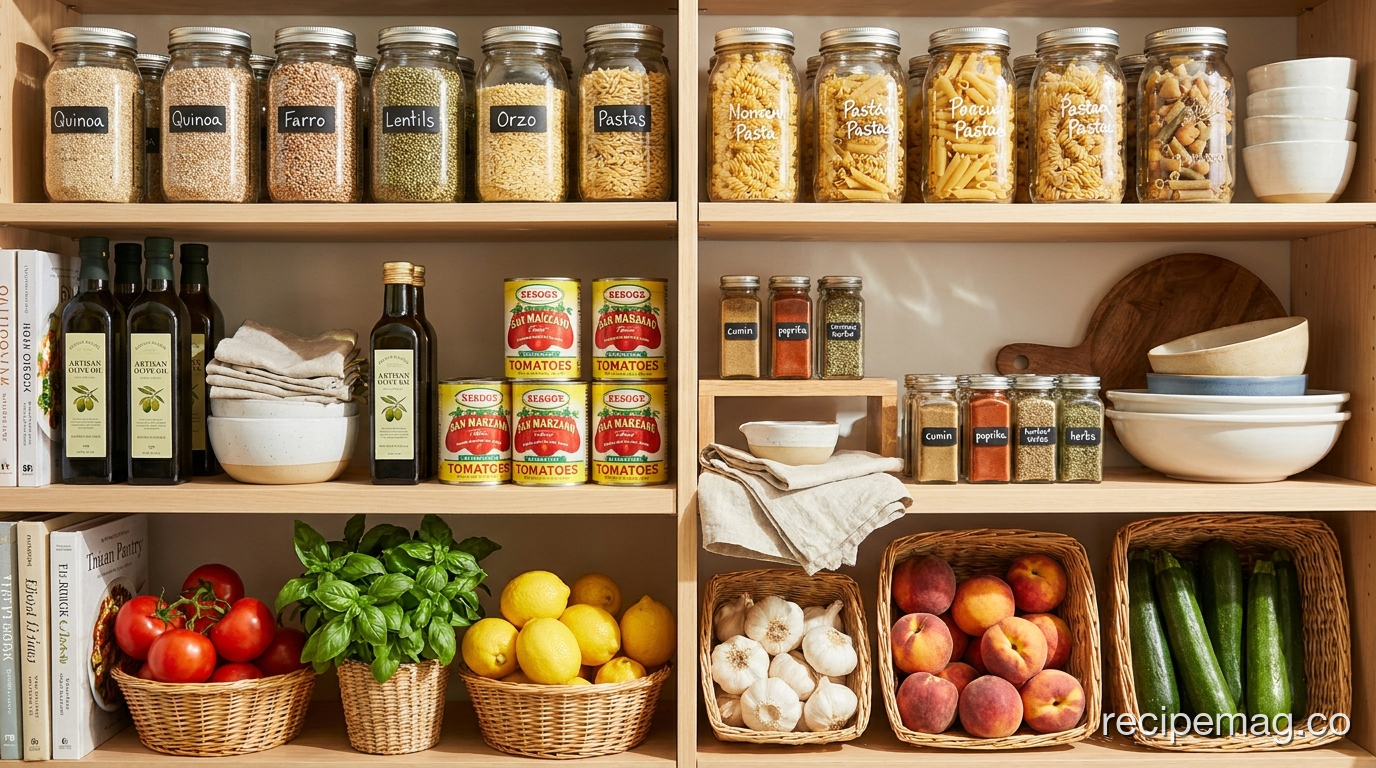
Stocking the right summer pantry essentials means you can make dinner without turning on the oven, even at the end of a long, hot day. A well-built pantry cuts grocery trips and food waste dramatically: the USDA estimates American households throw out roughly 30% of the food they buy (USDA, 2023). Keep the right shelf-stable staples on hand and a fresh, fast meal is always 15 minutes away. This guide lays out exactly what to buy, how to store it through the heat, and how to turn it into food.
Key Takeaways
- A summer pantry should lean on no-cook and quick-cook staples: canned beans, tinned fish, good olive oil, vinegars, and quick grains.
- Heat and humidity shorten shelf life. Store oils, nuts, and whole grains in cool, dark, airtight containers.
- Roughly 30% of household food gets thrown away, per the USDA (2023). Smart stocking is the simplest fix.
- Five pantry formulas (grain bowl, bean salad, tinned-fish toast, no-cook pasta, quick pickle) cover most summer dinners.
- Rotate stock first-in, first-out and check oils and nuts for rancidity every few weeks.
What Makes a Pantry “Summer-Ready”?
A summer-ready pantry is built around foods that need little or no cooking and that survive a hot kitchen. The USDA Food Safety and Inspection Service warns that pantry shelf life drops sharply as temperatures climb, with many staples losing half their quality life for every 10.8°F increase in storage heat (USDA FSIS, 2023). The goal is simple: stock fast-assembly ingredients and protect them from the heat.
Think in terms of building blocks, not finished meals. A good acid, a good fat, a protein, a grain, and something briny will turn almost any handful of fresh summer produce into dinner. You’re not stocking for recipes. You’re stocking for flexibility.
Summer also rewards lighter cooking. Long braises and heavy stews lose their appeal in July. The pantry that serves you best is one weighted toward bright, acidic, quick-assembly foods: vinegars, citrus, canned legumes, tinned fish, and quick-cooking grains that you can boil once and eat cold for three days.
The 30 Summer Pantry Essentials to Stock
These thirty staples cover breakfast through dinner with minimal cooking. Buy what you’ll actually eat, and don’t try to stock everything at once. Build the list over two or three grocery trips so nothing sits unused.
Fats and Acids (the Flavor Base)
- Extra-virgin olive oil. Your most-used summer ingredient. Buy a mid-priced bottle for cooking and a better one for drizzling raw.
- Neutral oil (grapeseed or avocado) for high-heat grilling and dressings that shouldn’t taste of olive.
- Red wine and sherry vinegars. The backbone of vinaigrettes and quick pickles.
- Rice vinegar for lighter, sweeter dressings and slaws.
- Dijon mustard to emulsify dressings and add sharpness.
Shelf-Stable Proteins
- Canned chickpeas and white beans. Rinse and they’re ready for salads in seconds.
- Tinned fish: sardines, tuna in oil, and anchovies. Protein, salt, and umami in one can.
- Lentils (canned or quick-cooking) for cold lentil salads.
- Nut butters for sauces, dressings, and fast breakfasts.
Quick-Cooking Grains and Carbs
- Couscous and orzo cook in under 10 minutes and eat well cold.
- Quick-cook farro or bulgur for grain bowls and tabbouleh.
- A short pasta like fusilli that holds dressing for cold pasta salad.
- Good crusty bread or flatbread (freeze extra loaves).
- Crackers or crispbread for tinned-fish snacks.
Briny, Bright, and Aromatic
- Capers, olives, and pickled peppers for instant acidity and salt.
- Sun-dried tomatoes packed in oil.
- Canned whole tomatoes for fast no-simmer sauces.
- Garlic, shallots, and onions stored in a cool, dark, ventilated spot.
- Lemons and limes kept on the counter or in the fridge door.
- Honey and maple syrup for balancing acid in dressings.
Seasoning and Finishing
- Flaky finishing salt and fine sea salt.
- Black peppercorns, red pepper flakes, smoked paprika, cumin, and dried oregano.
- Soy sauce or tamari for quick marinades.
- Hot sauce and a jar of harissa or chili crisp.
- Tahini for dressings and dips.
- Nuts and seeds (almonds, pistachios, sesame) for crunch.
- Dried fruit for grain salads.
- Stock concentrate or bouillon for the rare time you do cook.
- Coconut milk for chilled soups and quick curries.
How Should You Store Pantry Staples in Summer Heat?
Heat is the enemy of a summer pantry, and the fix is mostly about location. Penn State Extension notes that heat, light, and oxygen drive the oxidation that turns oils and nuts rancid, so cool and dark storage meaningfully extends shelf life (Penn State Extension, 2022). Move staples out of cabinets above the stove and away from sunny windows.
Oils deserve special attention. Buy olive oil in dark glass or tins, store it in your coolest cabinet, and use it within a few months of opening. If your kitchen runs hot, keep backup bottles in a basement or the coolest interior closet.
Nuts, seeds, whole grains, and whole-grain flours go rancid fastest because of their oil content. The fridge or freezer is the safest home for them in summer. They take up little space and last months longer cold.
[PERSONAL EXPERIENCE] In our kitchen the single best summer habit is decanting into airtight glass jars with the purchase date written on tape. We’ve found that humidity is what wrecks crackers, flours, and brown sugar first, and a tight seal solves it. Clear jars also make it obvious when stock is running low, which cuts down on accidental doubles.
A Quick Storage Cheat Sheet
- Cool, dark cabinet: oils, vinegars, canned goods, pasta, honey.
- Fridge: nuts, seeds, whole-grain flours, tahini and nut butters once opened, citrus.
- Freezer: bread, extra nuts, coffee, whole grains you won’t use within a month.
- Counter (cool and shaded): garlic, onions, shallots, tomatoes, stone fruit ripening for that day.
What Quick Meals Can You Build From a Summer Pantry?
The point of stocking up is fast, satisfying meals on hot nights. The U.S. Bureau of Labor Statistics reports households now spend more than half their food budget eating out (U.S. BLS, 2023), much of it on nights no one wanted to cook. A pantry built for assembly fixes exactly that problem. Here are five formulas, not strict recipes, that flex with whatever produce you have.
[UNIQUE INSIGHT] The most useful summer pantry skill isn’t following recipes, it’s learning one ratio: three parts fat to one part acid, plus salt. Master that single vinaigrette ratio and every pantry item above becomes a meal. A can of chickpeas, a handful of herbs, and that dressing is lunch. The same dressing over grilled vegetables and grains is dinner. The pantry supplies the constants; the season supplies the variables.
1. The 10-Minute Grain Bowl
Cooked couscous or farro, a rinsed can of chickpeas, chopped cucumber or tomato, olives, a fistful of herbs, and lemon-tahini dressing. Eat warm or cold.
2. Smashed Bean Salad
White beans crushed with olive oil, sherry vinegar, capers, and red pepper flakes. Pile it on toast or fold in arugula for a full plate.
3. Tinned-Fish Toast
Good bread, butter or mashed avocado, sardines or tuna, a squeeze of lemon, flaky salt, and a few sliced radishes or tomatoes. Five minutes, no stove.
4. No-Cook Pasta Sauce
Toss hot short pasta with sun-dried tomatoes, olives, capers, garlic warmed in olive oil, and torn basil. The pasta’s heat is the only cooking required.
5. Quick Pickle Plate
Thin-sliced cucumber or onion in rice vinegar, salt, and sugar for 20 minutes. Serve alongside tinned fish, crackers, and cheese for an effortless cold supper.
How Do You Keep a Pantry Stocked Without Wasting Food?
A pantry only saves money if you actually use what’s in it. The EPA reports that food is the most common material landfilled in the U.S., a waste stream the USDA values in the billions of dollars each year (EPA, 2023). The defense is dull but effective: rotate, label, and shop your shelves before the store.
Practice first-in, first-out. When you restock, move older cans and jars to the front and put new purchases behind them. Once a week, build at least one meal entirely from what’s already open or aging. That habit alone catches most would-be waste.
Resist the urge to over-buy. A summer pantry should feel lean and current, not like a bunker. Buy the staples you reach for weekly in slightly larger quantities, and treat specialty items as single purchases until you’ve proven you’ll use them.
Frequently Asked Questions About Summer Pantry Essentials
What are the most important summer pantry essentials to start with?
Start with five anchors: extra-virgin olive oil, a good vinegar, canned beans, tinned fish, and a quick-cooking grain like couscous. Add Dijon, lemons, capers, and flaky salt, and you can build dressings, grain bowls, and no-cook plates immediately. Everything else on the 30-item list expands variety, but these nine cover most summer dinners.
How long do canned and jarred pantry staples actually last?
Most commercially canned goods stay safe well past the printed date if the can is undamaged, though quality slowly declines. The USDA notes high-acid foods like tomatoes keep best for 12 to 18 months, while low-acid canned beans and fish last 2 to 5 years (USDA FSIS, 2023). Store them cool and discard any bulging or leaking cans.
Does olive oil go bad faster in summer?
Yes. Heat and light accelerate oxidation, so a bottle stored near the stove or in a sunny window can turn rancid within weeks. Keep olive oil in dark glass or a tin in your coolest cabinet, and aim to use opened bottles within a few months. Rancid oil smells like crayons or putty and tastes bitter.
Should I refrigerate nuts and whole grains in summer?
For anything you won’t finish within a month, yes. Nuts, seeds, and whole-grain flours contain oils that go rancid quickly in heat. The fridge or freezer can extend their life by several months. Let them come to room temperature before using in baking, and store them in airtight containers to prevent moisture and odor absorption.
How do I stock a summer pantry on a budget?
Build it over several shopping trips instead of all at once, and prioritize multi-use staples. Dried beans, couscous, canned tomatoes, and store-brand olive oil deliver the most meals per dollar. Buy spices from bulk bins in small amounts so they stay fresh, and let seasonal produce sales dictate which fresh items you pair with your pantry base.
Stock Smart, Cook Easy All Summer
A summer pantry isn’t about hoarding ingredients. It’s about removing friction from dinner so a hot night never ends in takeout you didn’t want. Stock the anchors, protect them from the heat, and learn one or two flexible formulas you can repeat without thinking.
Start small this week. Pick up olive oil, a good vinegar, a few cans of beans and fish, and a bag of couscous. Make one grain bowl and one tinned-fish toast, and you’ll feel how much easier cooking gets when the foundation is already on the shelf.
By August, this will be second nature. You’ll glance at the counter, see ripe tomatoes and a few herbs, and know dinner is fifteen minutes away. That’s the whole point: less effort, less waste, and better food all summer long.
