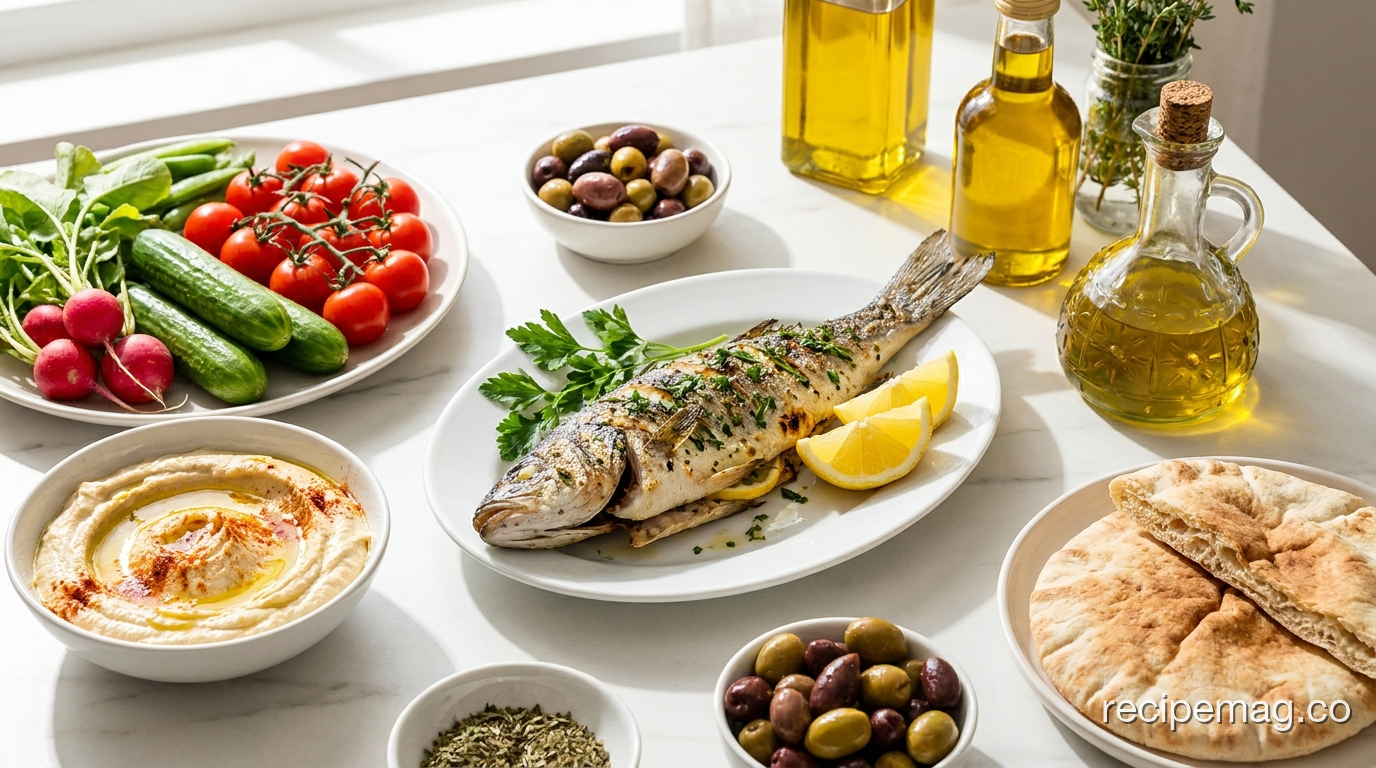
Eating Mediterranean in summer is less about recipes and more about a simple habit: build meals around vegetables, olive oil, seafood, and whole grains, then let the season do the heavy lifting. The pattern works. A landmark trial found that a Mediterranean diet rich in olive oil and nuts cut major cardiovascular events by roughly 30% compared to a low-fat control (New England Journal of Medicine, PREDIMED, 2018). Warm months make it even easier, because the produce is at its peak and you barely need to turn on the stove.
Key Takeaways
- Summer is the easiest season to eat Mediterranean: peak produce means less cooking and more flavor.
- The PREDIMED trial linked a Mediterranean diet to a ~30% drop in major cardiovascular events. ([NEJM, PREDIMED](https://www.nejm.org), 2018)
- Stock a smart pantry once (olive oil, canned beans, tinned fish, whole grains) and weeknight meals build themselves.
- No-cook and grill-based plates keep the kitchen cool from June through August.
- Aim for a plate that is half vegetables, a quarter whole grains, and a quarter protein.
What Makes the Mediterranean Diet Easier in Summer?
Summer removes the two biggest barriers to Mediterranean eating: bland produce and the urge to cook heavy. Peak-season tomatoes, cucumbers, zucchini, and stone fruit arrive already full of flavor, so a plate needs little more than olive oil, salt, and acid. The USDA notes the Mediterranean pattern, heavy on vegetables, legumes, and olive oil, maps neatly onto the Dietary Guidelines for Americans and tracks with lower chronic-disease risk (USDA MyPlate, 2023).
There’s also a practical rhythm to it. When it’s 90 degrees outside, nobody wants a braise. That instinct pushes you toward exactly the foods this diet favors: raw salads, grilled fish, chilled soups, and bean dishes served at room temperature. The weather does the nudging for you.
[PERSONAL EXPERIENCE] We’ve found the households that stick with Mediterranean eating year-round almost always start in summer. The wins come fast and easy. A tomato salad that takes four minutes tastes better than most restaurant appetizers in July, and that early success builds the habit that carries into the harder months.
How Do You Stock a Mediterranean Summer Pantry?
A good pantry turns “I have nothing to eat” into dinner in ten minutes. The single most important item is extra-virgin olive oil, the primary fat in this diet. Harvard nutrition researchers report that swapping saturated fats for olive oil is tied to lower cardiovascular risk (Harvard T.H. Chan School of Public Health, 2022). Buy a bottle you actually like the taste of, because in summer you’ll use it raw.
The Non-Perishable Core
- Extra-virgin olive oil. One everyday bottle for cooking, one better bottle for finishing.
- Canned beans and chickpeas. Rinsed, they become salads, dips, and quick protein in seconds.
- Tinned fish. Sardines, tuna in olive oil, and anchovies deliver omega-3s with zero cooking.
- Whole grains. Farro, bulgur, and whole-wheat couscous cook fast and hold up cold.
- Olives, capers, and sun-dried tomatoes. Salt and umami that wake up any plate.
- Red wine vinegar and lemons. Acid is what makes vegetables taste finished.
The Fresh Rotation
- Tomatoes, cucumbers, zucchini, peppers, and eggplant. The backbone of summer produce.
- Feta and plain Greek yogurt. Tangy dairy used in small, high-impact amounts.
- Fresh herbs. Parsley, mint, dill, and basil turn simple into memorable.
- Fish and seafood. Shrimp, white fish, and salmon cook in minutes on a grill or in a pan.
[UNIQUE INSIGHT] Most beginners over-invest in fresh ingredients and under-invest in the salty, briny pantry items. Those jars of olives, capers, and anchovies are what separate a boring bowl of beans from a plate you crave. Fresh produce brings sweetness and crunch; the pantry brings depth. You need both, and the pantry half keeps for months.
What Are the Easiest No-Cook Mediterranean Meals?
No-cook Mediterranean meals lean on beans, raw vegetables, and good fat, so they come together without heat. A cup of cooked chickpeas alone brings about 15 grams of protein and 12 grams of fiber (USDA FoodData Central, 2023), which is why a bean salad genuinely fills you up. These plates take minutes and taste better on the second day.
Five No-Cook Plates to Rotate
- Greek salad, the real one. Big tomato wedges, cucumber, red onion, green pepper, olives, and a slab of feta. No lettuce. Olive oil, red wine vinegar, oregano, salt.
- White bean and tuna salad. Cannellini beans, tinned tuna in olive oil, red onion, parsley, lemon. A 5-minute lunch that eats like a meal.
- Chickpea and cucumber bowl. Chickpeas, diced cucumber, cherry tomatoes, feta, mint, and a lemon-olive oil dressing over a scoop of cold farro.
- Mezze plate. Store-bought or homemade hummus, cut vegetables, olives, feta, and warm pita. Dinner as assembly, not cooking.
- Tomato and bread salad (panzanella). Ripe tomatoes, torn day-old bread, basil, olive oil, and vinegar left to sit 15 minutes so the bread drinks up the juices.
The trick with every one of these is seasoning in layers. Salt the tomatoes first and let them sit. Dress the salad, taste, then adjust the acid. A no-cook meal has nowhere to hide, so those two minutes of tasting matter more than any technique.
How Do You Use the Grill the Mediterranean Way?
Grilling is the Mediterranean summer’s best friend because it adds smoke and char without heating the kitchen. It’s also the easiest way to hit the diet’s seafood target. The American Heart Association recommends eating fish, especially oily fish, at least twice a week for heart health (American Heart Association, 2021), and a grill makes that effortless. Fish, vegetables, and even fruit all take beautifully to live fire.
What to Grill
- Fish and seafood. Shrimp skewers, whole branzino, salmon fillets, and squid cook in minutes. Oil the grate well and don’t flip too soon.
- Vegetables. Zucchini planks, eggplant rounds, peppers, and red onion char fast and soak up a splash of vinegar off the heat.
- Halloumi. The one cheese that grills without melting into the coals. Golden on both sides in three minutes.
- Bread. Grilled bread rubbed with a raw garlic clove is the base for bruschetta and dips alike.
Finish everything the same way: a drizzle of good olive oil, a squeeze of lemon, flaky salt, and torn herbs. That four-part finish is the flavor signature of Mediterranean grilling, and it works on literally everything that comes off the grate.
How Should You Build a Balanced Mediterranean Plate?
A balanced Mediterranean plate follows a simple visual rule: fill half with vegetables, a quarter with whole grains, and a quarter with protein. The Mediterranean diet pyramid from Oldways and Harvard puts vegetables, whole grains, and olive oil at the daily base, with fish a few times weekly and red meat rare (Oldways, 2023). Get the proportions right and the specific recipe barely matters.
A Week of Easy Summer Dinners
- Monday: Grilled shrimp, tomato salad, and lemon farro.
- Tuesday: White bean and tuna salad with grilled bread.
- Wednesday: Grilled halloumi, roasted peppers, and chickpeas.
- Thursday: Salmon with cucumber-yogurt sauce and bulgur.
- Friday: Mezze night, hummus, feta, olives, vegetables, and pita.
- Weekend: Panzanella and whatever looked best at the market.
Notice how much repeats. The farro, chickpeas, and feta from Monday carry into three other nights. Mediterranean summer cooking rewards batch-prepping a grain and a legume on Sunday, then mixing and matching with whatever produce and protein you have on hand.
Frequently Asked Questions About Mediterranean Summer Recipes
Is the Mediterranean diet expensive?
It doesn’t have to be. The core proteins, beans, chickpeas, lentils, and tinned fish, are among the cheapest foods in the store. Buying produce in season keeps costs down further, and summer is the cheapest, most flavorful window of the year. Expensive cuts of meat are rare in this pattern by design, which actually lowers a typical grocery bill rather than raising it.
Do I need to give up meat entirely?
No. The Mediterranean diet includes poultry and even red meat, just less often and in smaller portions. Fish and seafood are the stars, appearing at least twice a week, while red meat is treated as an occasional food rather than a daily one. Think of meat as a flavoring or a weekend treat rather than the center of every plate.
Can I follow this diet if I don’t like fish?
Yes, though it takes a little more planning. Legumes, eggs, Greek yogurt, and cheese cover protein without seafood. If you’re avoiding fish for flavor rather than diet reasons, milder options like shrimp or a well-grilled salmon fillet convert many skeptics. Otherwise, lean on beans and chickpeas, which anchor countless traditional Mediterranean dishes on their own.
How much olive oil is too much?
Olive oil is calorie-dense, so portion still matters, but the Mediterranean diet uses it generously, often three to four tablespoons a day. Research from the PREDIMED trial actually assigned participants a full liter per week and saw cardiovascular benefits (NEJM, 2018). Use it freely for cooking and finishing, and simply account for it as your main fat rather than an add-on.
What’s the fastest Mediterranean meal I can make?
A white bean and tuna salad, ready in about five minutes. Rinse a can of cannellini beans, flake in a can of tuna packed in olive oil, add sliced red onion, chopped parsley, lemon juice, salt, and a glug of olive oil. Serve with bread. It needs no cooking, keeps overnight, and delivers protein, fiber, and healthy fat in one bowl.
Start With One Plate This Week
You don’t need to overhaul your kitchen to eat Mediterranean this summer. Pick one no-cook plate from the list above, buy the four or five ingredients it needs, and make it tonight. The point is momentum, not perfection.
Once the pantry is stocked and a grain is cooked, the rest builds itself. A tomato salad here, a batch of chickpeas there, fish on the grill twice a week. Before long you’re eating this way without thinking about it, which is exactly how the healthiest eaters in the Mediterranean have always done it.
The season is short and the produce is peaking right now. Start with the tomatoes while they’re perfect, and let summer make the rest easy.
