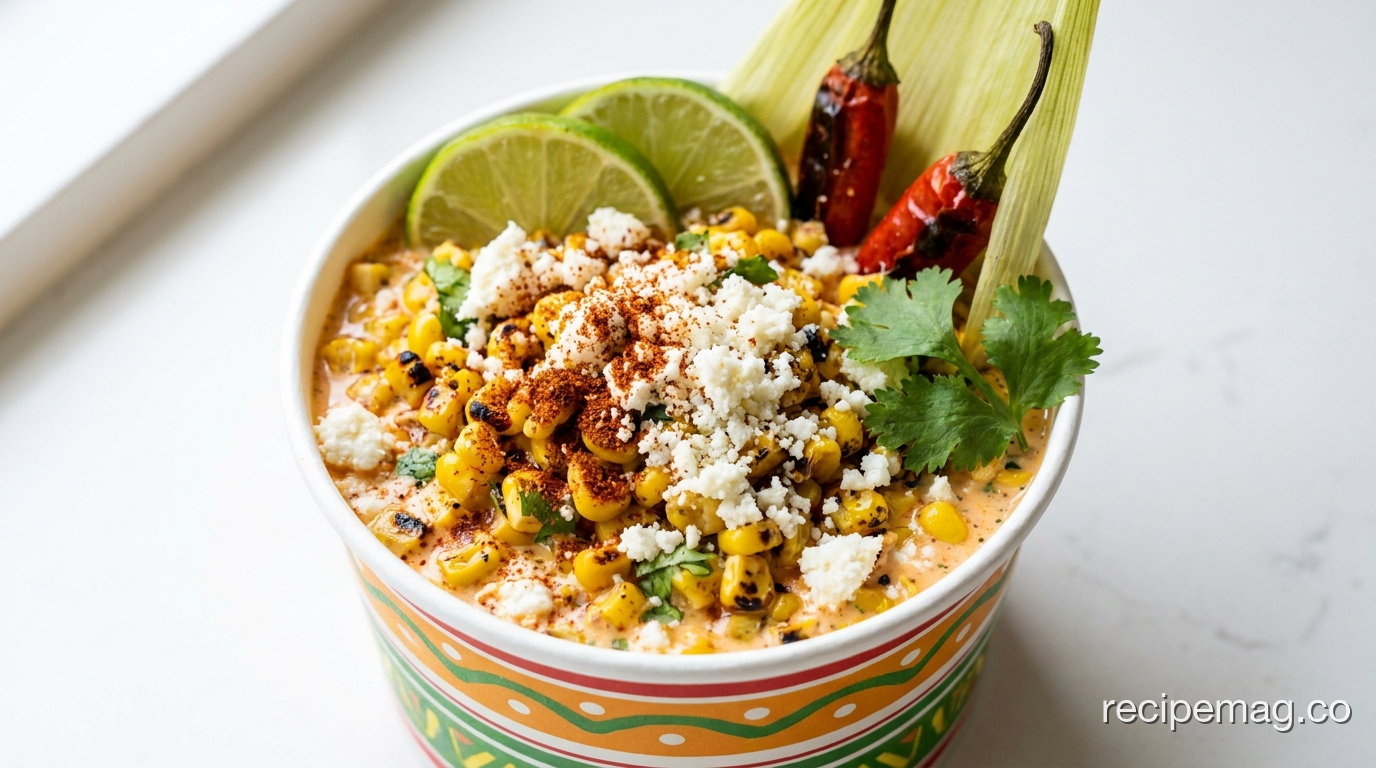
Esquites is the spoonable cousin of elote: charred sweet corn tossed with lime, mayo, salty cotija, and chili powder, served warm in a cup. This version comes together in 25 minutes and serves six as a side. Corn is one of the most-consumed vegetables in the United States, with Americans eating around 15 pounds of sweet corn per person each year (USDA Economic Research Service, 2022). Peak-summer corn is what makes this dish sing, so make it now while the ears are sweet.
Key Takeaways
- Esquites is elote off the cob: all the street-corn flavor, none of the mess, eaten with a spoon.
- Ready in 25 minutes and serves 6 as a side or 4 as a light main.
- Charring the corn is the non-negotiable step; the Maillard browning is where the flavor lives.
- Fresh summer corn peaks in flavor within 24 hours of picking, as its sugars convert to starch fast (University of Minnesota Extension, 2022).
- Serve warm or at room temperature; it holds beautifully for a party.
What Is Esquites and How Is It Different From Elote?
Esquites and elote share a flavor DNA but differ in format. Elote is grilled corn on the cob, slathered and eaten by hand. Esquites cuts the kernels off and serves them in a cup with a spoon. The name comes from the Nahuatl word izquitl, meaning toasted corn, a nod to its pre-Hispanic origins in central Mexico (Larousse Cocina, 2021). Same seasonings, far less mess.
That difference matters more than it sounds. Cutting the kernels off means every bite carries the full mix of lime, cheese, mayo, and chili, instead of the toppings sliding off a cob. It’s also easier to serve to a crowd, holds at room temperature, and travels to a potluck without a single napkin casualty.
The heart of both dishes is char. Street vendors toast the corn hard over a flat-top or open flame until the kernels blister and brown. That browning, the Maillard reaction, builds the deep, nutty, almost popcorn-like flavor that separates real esquites from a plain corn salad.
Why Does the Corn Need to Be Charred?
Charring is the single most important step, and skipping it produces a flat, ordinary corn salad. High, dry heat triggers the Maillard reaction, the browning process that kicks in above roughly 285°F and generates hundreds of new savory flavor compounds (Serious Eats, 2016). Those compounds are exactly what your tongue reads as “street corn.”
You have three good ways to get there. A cast-iron skillet on the stove is the most reliable indoors. A grill gives the smokiest result if you’re already cooking outside. And a hot outdoor griddle or comal mimics the vendor’s flat-top best of all. Whichever you choose, the goal is the same: leave the corn alone long enough to blister.
[UNIQUE INSIGHT] The mistake most home cooks make is stirring the corn too often. You want it to sit undisturbed against the hot metal for two to three minutes at a stretch, long enough to brown, before you toss it. Constant stirring drops the pan temperature and steams the kernels instead of charring them. Patience here is the whole recipe.
Ingredients for Esquites
Esquites needs just a handful of ingredients, but the quality of the corn and the cheese carries the dish. Sweet corn loses sweetness fast after harvest, converting sugar to starch within a day, which is why farmers-market corn beats week-old supermarket ears (University of Minnesota Extension, 2022). Buy the freshest corn you can find for this one.
For the Corn
- 6 ears fresh sweet corn, husked (about 4 to 5 cups kernels)
- 2 tablespoons neutral oil or butter, for charring
For the Dressing and Topping
- ¼ cup mayonnaise
- 2 tablespoons Mexican crema (or sour cream)
- 2 to 3 tablespoons fresh lime juice (about 2 limes)
- ½ cup crumbled cotija cheese, plus more for topping
- 1 clove garlic, minced or grated
- ½ cup chopped fresh cilantro
- 1 jalapeño or serrano, finely diced (optional, for heat)
- 1 teaspoon chili powder or Tajín, plus more for garnish
- ¼ teaspoon smoked paprika (optional)
- Salt to taste
Cotija is the traditional cheese here: a firm, salty, crumbly Mexican cheese often called the “Parmesan of Mexico.” If you can’t find it, crumbled feta is the closest swap, though it’s a touch tangier. Don’t substitute a melting cheese; you want crumbles that hold their shape and add salty punch, not a creamy sauce.
How Do You Make Esquites Step by Step?
The method is simple: char, then toss. The whole thing takes about 25 minutes start to finish, and most of that is charring the corn in batches. Work in batches rather than crowding the pan, since overcrowded kernels steam instead of brown, the same principle that governs roasting any vegetable at high heat (America’s Test Kitchen, 2021).
Step-by-Step Instructions
- Cut the kernels off the cob. Stand each ear in a wide bowl and slice downward with a sharp knife. You should have 4 to 5 cups of kernels.
- Heat the pan. Set a large cast-iron skillet over medium-high heat and add 1 tablespoon of oil. Let it get properly hot, until it shimmers.
- Char the corn in batches. Add half the kernels in a single layer. Let them sit undisturbed for 2 to 3 minutes until browned, then toss and char another 2 minutes. Transfer to a bowl and repeat with the rest.
- Make the dressing. In a large bowl, whisk together the mayonnaise, crema, lime juice, garlic, chili powder, and a pinch of salt.
- Combine while warm. Add the hot charred corn to the dressing along with the cotija, cilantro, and diced chile. Fold everything together.
- Taste and adjust. Add more lime, salt, or chili powder to balance. It should be bright, salty, creamy, and a little smoky.
- Serve. Spoon into cups or bowls, top with extra cotija, a dusting of chili powder or Tajín, and a final squeeze of lime.
Prep time: 10 minutes | Cook time: 15 minutes | Serves: 6 as a side
Tips for the Best Esquites
A few small choices separate good esquites from great. The biggest lever is the corn itself, but technique matters right behind it. Sweet corn’s sugar content can drop by as much as half within 24 hours of picking at room temperature, so refrigerate ears immediately and use them fast (University of Minnesota Extension, 2022).
Get the Best Flavor and Texture
- Dress the corn while it’s warm. Warm kernels absorb the dressing and melt the edges of the cotija slightly, tying everything together.
- Don’t skip the acid. Lime is what keeps the mayo and cheese from feeling heavy. Add it in stages and taste as you go.
- Use frozen corn in a pinch. Off-season, thaw and thoroughly pat dry frozen corn before charring. Dry kernels brown; wet ones steam.
- Add heat your way. Fresh serrano brings sharp heat; a pinch of cayenne or a splash of hot sauce works too. Tajín adds heat plus a citrusy, salty edge.
- Make it a meal. Fold in black beans and diced avocado, or spoon it over grilled chicken to turn the side into a main.
[PERSONAL EXPERIENCE] We’ve made esquites with grilled, skillet-charred, and broiled corn side by side. Skillet-charred in cast iron was the most consistent and the easiest to control indoors, while the grill won on pure smokiness when we were already cooking outside. Broiling worked but browned unevenly. For a weeknight batch, the cast-iron skillet is our default every time.
Frequently Asked Questions About Esquites
Can I make esquites ahead of time?
Yes, with one adjustment. Char the corn and store it separately from the dressing, then combine within a couple of hours of serving so the cotija and cilantro stay fresh. Fully assembled esquites keeps in the fridge for up to 3 days, though the texture is best on day one. Bring it back to room temperature or gently rewarm before serving for the best flavor.
What can I use instead of cotija cheese?
Crumbled feta is the closest widely available substitute; it’s saltier and tangier but works well. Queso fresco is milder and softer if you prefer a gentler cheese. In a real pinch, finely grated Parmesan approximates cotija’s salty, firm character. Avoid melting cheeses like Monterey Jack here, since you want distinct salty crumbles rather than a creamy, melted texture throughout the salad.
Is esquites served hot or cold?
Traditionally warm. Mexican street vendors serve esquites hot in a cup, often with the corn still steaming. That said, it’s excellent at room temperature and still very good cold, which makes it a reliable potluck and picnic dish. If you refrigerate leftovers, let them sit out for 15 minutes or warm them briefly so the dressing loosens and the flavors open back up.
Can I make esquites without mayonnaise?
Yes. Swap the mayo for extra Mexican crema, sour cream, or plain Greek yogurt for a tangier, lighter dressing. For a dairy-free version, use a plant-based mayo and skip the cotija or use a vegan feta. The lime, chili, and charred corn carry the dish, so it stays flavorful even with a leaner dressing. Just keep enough fat and acid to bind everything.
What do I serve esquites with?
Esquites shines alongside anything grilled and Mexican-inspired. It pairs naturally with carne asada tacos, grilled chicken, carnitas, or fish tacos. At a fiesta, set it out next to guacamole, salsas, and rice and beans as part of a build-your-own spread. Its bright, creamy, smoky profile also cuts through rich grilled meats, making it a smart counterpoint on a summer barbecue plate.
Make a Batch This Weekend
Esquites is proof that the best summer sides don’t need to be complicated. Six ears of corn, a hot skillet, and a handful of pantry staples give you a dish that tastes like a Mexico City street cart. The only real rule is to char the corn hard and dress it while it’s warm.
Buy the freshest corn you can find, ideally the same day it was picked. Char it in batches, keep the lime flowing, and taste as you build the dressing. From there it’s endlessly adaptable, hotter, cheesier, or bulked up into a full meal.
Spoon it into cups for your next cookout and watch it disappear before the mains are off the grill. Make a double batch. You’ll want the leftovers.
