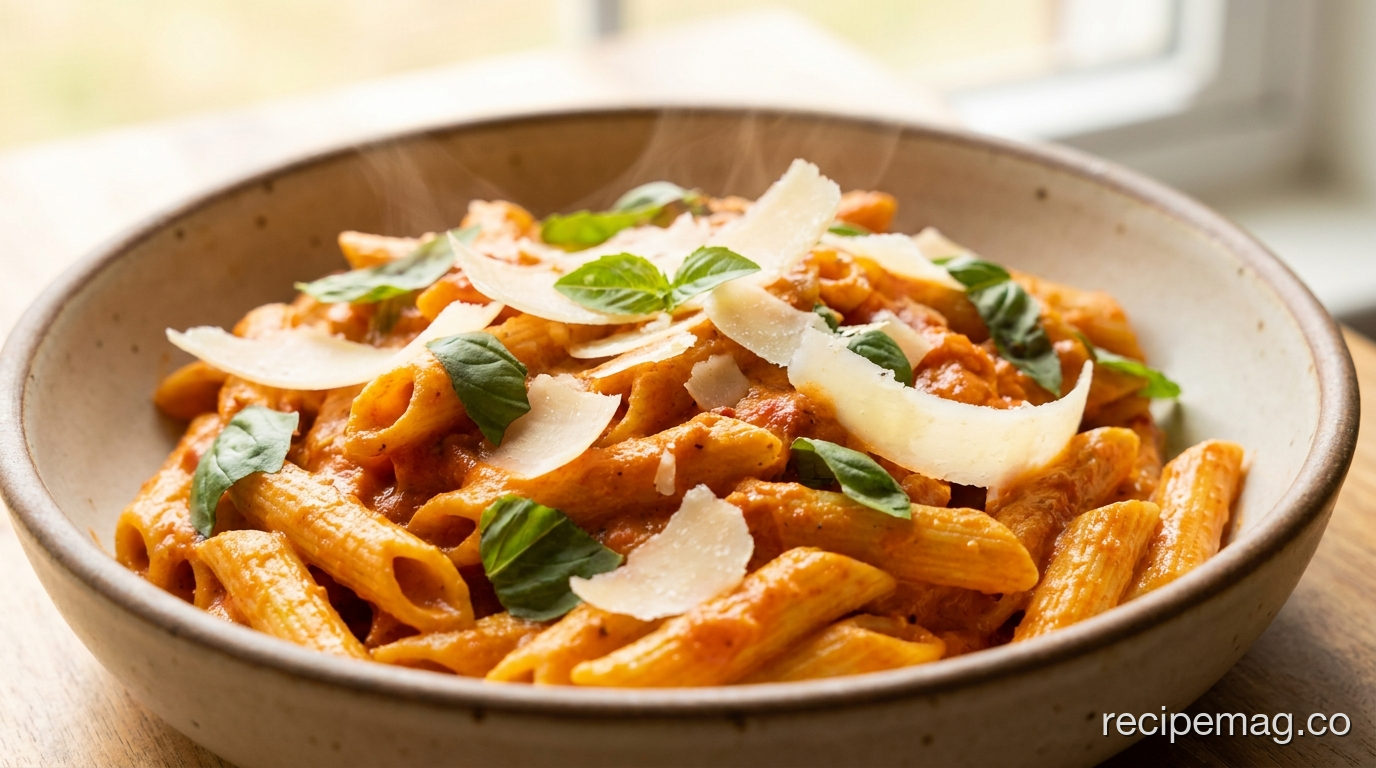
This creamy tomato basil pasta turns a can of tomatoes and a handful of basil into a silky, restaurant-style dinner in about 25 minutes. Cooking tomatoes actually makes them better for you: a Cornell University study found that heating tomatoes significantly increases the amount of absorbable lycopene, the antioxidant behind their deep red color. (Cornell University, 2002) A splash of cream rounds the acidity, and fresh basil ties it all together.
Key Takeaways
- Ready in about 25 minutes from pantry staples, making it a genuine weeknight dinner.
- Cooking tomatoes boosts absorbable lycopene, so this sauce is as good for you as it tastes. (Cornell University, 2002)
- A spoon of tomato paste and a pinch of sugar balance the acidity without dulling the flavor.
- Just half a cup of cream turns a sharp tomato sauce silky and rich.
- Add the fresh basil off the heat so it stays bright and fragrant.
Why This Creamy Tomato Basil Pasta Works
This recipe hits the sweet spot between fast and genuinely good. Pasta is the backbone of American weeknight cooking, with roughly 20 pounds eaten per person each year, and a creamy tomato sauce is the reason so many boxes get bought. (National Pasta Association, 2023) What sets this version apart is balance: enough cream to smooth the edges, enough acidity to keep it lively, and fresh basil to lift the whole bowl.
The sauce builds flavor in layers, and each one takes minutes. Softened onion and garlic form the base, tomato paste deepens the color and body, and crushed tomatoes simmer just long enough to lose their raw edge. Then cream and parmesan pull it into something velvety. Nothing here is fussy, but the order matters.
Late summer is the moment to make it. Tomatoes hit their domestic peak between July and September, when flavor climbs and prices fall, so fresh basil is cheap and everywhere too. (USDA AMS, 2023) Use good canned San Marzano tomatoes off-season, but in August, ripe fresh tomatoes turn this into something special.
Ingredients
Prep Time: 10 minutes | Cook Time: 20 minutes | Serves: 4
Every ingredient here is a pantry or produce-drawer staple, and most you likely already have. The heavy cream does the heavy lifting on texture: even a small amount coats the pasta and tames the tomatoes’ acidity. Grated parmesan adds salt and umami, while the fresh basil, stirred in at the end, keeps the sauce bright rather than cooked-down and flat.
For the Pasta and Sauce
- 12 ounces penne or rigatoni
- 2 tablespoons olive oil
- 1 tablespoon butter
- 1 small yellow onion, finely diced
- 4 garlic cloves, minced
- 2 tablespoons tomato paste
- 1 can (28 oz) crushed tomatoes (or 2 pounds fresh, chopped)
- ½ teaspoon red pepper flakes (optional)
- ½ teaspoon sugar
- ½ cup heavy cream
- ½ cup grated parmesan, plus more to serve
- 1 large handful fresh basil, torn
- Salt and black pepper to taste
A pinch of sugar is not about making the sauce sweet. It offsets the natural acidity of canned tomatoes, which can taste sharp on their own. Taste before adding more, since ripe fresh tomatoes may not need it at all.
How to Make Creamy Tomato Basil Pasta
The method comes down to building the sauce while the pasta boils, then marrying the two. Simmering the tomatoes does double duty: Cornell researchers found that cooking tomatoes for 30 minutes raised absorbable lycopene by up to 35 percent as heat breaks down the cell walls. (Cornell University, 2002) You get better flavor and better nutrition from the same pot.
Step-by-Step Instructions
- Boil the pasta. Bring a large pot of well-salted water to a boil and cook the penne until just al dente, about a minute shy of the package time. Reserve 1 cup of pasta water, then drain.
- Build the base. While the pasta cooks, warm the olive oil and butter in a large skillet over medium heat. Add the onion with a pinch of salt and cook until soft and translucent, about 5 minutes. Stir in the garlic and red pepper flakes and cook for 1 minute until fragrant.
- Deepen the flavor. Add the tomato paste and cook it for 2 minutes, stirring, until it darkens slightly. This step builds a savory, concentrated backbone.
- Simmer the tomatoes. Pour in the crushed tomatoes and add the sugar. Season with salt and pepper. Simmer gently for 10 to 12 minutes, stirring occasionally, until the sauce thickens and loses its raw edge.
- Make it creamy. Lower the heat and stir in the heavy cream and parmesan until smooth. Taste and adjust the salt.
- Toss and finish. Add the drained pasta to the skillet and toss to coat, loosening with reserved pasta water a splash at a time until the sauce clings. Off the heat, stir in most of the torn basil. Serve topped with the rest and extra parmesan.
Finishing the pasta in the sauce is the move that pulls it together. Those last two minutes let the noodles absorb flavor and the starchy water bind everything into a glossy coat.
Tips for the Best Tomato Basil Pasta
Add the Basil at the End
Fresh basil is delicate, and long cooking turns it dark and bitter. Stir most of it in off the heat so the leaves wilt gently and keep their perfume, then scatter the rest on top for color and aroma. If you only remember one tip, make it this one. The difference between basil added early and basil added late is the difference between muddy and fresh.
Balance the Acidity
Canned tomatoes vary a lot in sharpness, so taste as you go. If the sauce reads sour even after the sugar, a little more cream or a knob of butter smooths it out fast. A grating of parmesan also softens acidity while adding depth. Season in small increments and keep tasting until it lands.
Make It Your Own
This sauce is a template. Wilt in spinach, add sauteed mushrooms, or fold in cooked Italian sausage for a heartier plate. A spoon of ricotta stirred through at the end makes it even richer. Swap the penne for rigatoni, fusilli, or spaghetti.
Frequently Asked Questions About Creamy Tomato Basil Pasta
Can I make this pasta without cream?
Yes. For a lighter sauce, skip the cream and stir in an extra quarter cup of parmesan plus a splash of pasta water, which creates a silky texture on its own. A spoon of ricotta or mascarpone also adds creaminess with less fat. The tomato base is flavorful enough to stand alone, so the cream is about richness rather than necessity.
Should I use fresh or canned tomatoes?
Both work well, and the season decides. In late summer, ripe fresh tomatoes deliver unbeatable flavor, so use about 2 pounds, chopped, and simmer a few minutes longer to thicken. The rest of the year, good canned tomatoes like San Marzano are more consistent than pale off-season fresh ones. Quality matters more than the format, so buy the best you can.
How do I store and reheat leftovers?
Store cooled leftovers in an airtight container in the fridge for up to 3 days. The USDA advises keeping cooked pasta at 40°F or below and eating it within that window. (USDA FSIS, 2023) Reheat gently on the stove or in the microwave with a splash of water or milk, since the sauce thickens as it cools. Stir until it loosens back to a silky coat.
What pasta shape is best for creamy tomato sauce?
Short, ridged shapes hold creamy tomato sauce best. Penne and rigatoni have ridges and hollows that trap the sauce inside and out, so every bite is coated. Fusilli works well too. If you prefer long pasta, spaghetti or bucatini do the job, though the sauce clings a little less. Choose whatever shape you have and cook it al dente.
Can I make this vegan?
Yes, with two swaps. Replace the heavy cream with full-fat coconut milk or a plain oat cream, and use a vegan parmesan or a spoon of nutritional yeast for the savory, cheesy note. Skip the butter and use all olive oil. The tomato and basil base is already plant-based, so the sauce keeps its character with these easy substitutions.
Make This Tonight
Creamy tomato basil pasta is proof that a handful of humble ingredients can turn into something you’d happily order out. A can of tomatoes, a splash of cream, and fresh basil are all it takes to put a satisfying dinner on the table in under half an hour.
Taste as you build the sauce, balance the acidity to your liking, and always save that cup of pasta water before you drain. Make it once as written, then start playing: add sausage on a hungry night, wilt in greens for something lighter, or lean on fresh August tomatoes while they’re at their peak.
