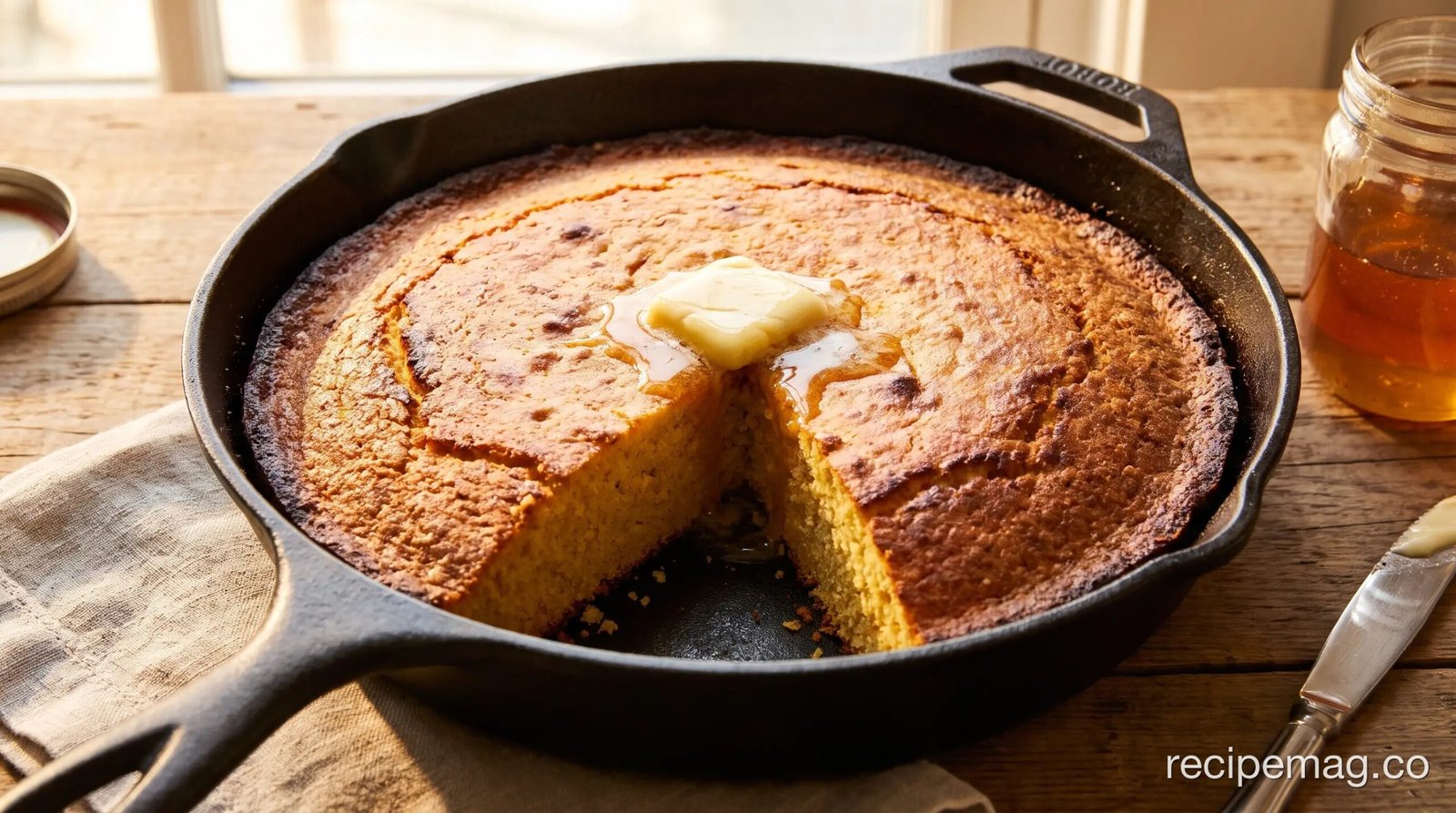
This buttermilk skillet cornbread gets its crackly, deep-golden edges from one move: pouring the batter into a cast-iron skillet that has been heating in a 425°F oven. A half cup of flour keeps the crumb tender, buttermilk keeps it moist and tangy, and a tablespoon of sugar is there if you want it. It also freezes well: USDA FSIS says food kept frozen at 0°F stays safe indefinitely (USDA FSIS, 2025), so you can bake it this weekend and pull it out on Thanksgiving morning.
Key Takeaways
- Heat the cast-iron skillet in the oven as it preheats to 425°F. The batter should sizzle when it hits the pan.
- Mostly cornmeal plus ½ cup of flour gives wedges that hold together without tasting like cake.
- Stir just until no dry streaks remain. Lumps are fine.
- Bake 18 to 22 minutes, until a toothpick in the center comes out clean.
- Frozen at 0°F, cornbread stays safe indefinitely, per USDA FSIS, which makes it an easy bake-ahead bread.
Why Does This Skillet Cornbread Work?
The hot skillet does half the baking. Batter that lands in a preheated, buttered pan starts setting on contact, which builds the crisp bottom and crunchy sides skillet cornbread is known for. A cold pan bakes a pale round with soft edges instead.
The batter is mostly cornmeal, with ½ cup of all-purpose flour for structure. Cornmeal has no gluten, so all-cornmeal bread is crumbly. That’s exactly right for our Southern cornbread dressing, which wants dry crumbs. This is the other kind: the cornbread you cut into wedges and butter at the table, so a little flour holds each slice together.
Sugar is the oldest cornbread argument, and we think honey butter settles it. One tablespoon in the batter is barely sweet; mostly, it helps the crust brown. The real sweetness goes on top, where each person decides how much they want. Leave the sugar out entirely for a strictly savory, old-school Southern loaf.
Ingredients
Serves 8. Prep time: 10 minutes. Cook time: 18 to 22 minutes, plus about 20 minutes to heat the oven and skillet. Total time: about 50 minutes, including cooling.
For the Cornbread
- 1½ cups fine- or medium-grind yellow cornmeal
- ½ cup all-purpose flour
- 1 tablespoon granulated sugar (optional)
- 1½ teaspoons baking powder
- ½ teaspoon baking soda
- 1 teaspoon kosher salt
- 2 large eggs
- 1½ cups buttermilk, well shaken
- 6 tablespoons unsalted butter, divided (4 tablespoons melted for the batter, 2 tablespoons for the skillet)
For the Honey Butter
- ½ cup (1 stick) unsalted butter, softened
- 2 tablespoons honey
- ¼ teaspoon flaky sea salt, or a pinch of kosher salt
Equipment: a 10-inch cast-iron skillet, two mixing bowls, a whisk, a sturdy oven mitt and a toothpick.
Fine or medium-grind cornmeal gives the most even crumb; stone-ground is coarser and a little gritty. White cornmeal works just as well. Use real buttermilk if you can: its acid reacts with the baking soda for lift and gives the bread its tang.
How to Make Buttermilk Skillet Cornbread, Step by Step
Hands-on time is about 10 minutes, and most of it happens while the oven heats. The batter contains eggs, and FoodSafety.gov sets 160°F as the safe minimum for egg dishes (FoodSafety.gov, 2025). A cornbread that passes the toothpick test is well past that, so texture is your guide.
- Heat the skillet. Set a rack in the center of the oven, put the empty 10-inch cast-iron skillet on it and heat the oven to 425°F. Give the skillet at least 15 minutes in the heat.
- Melt the butter. Melt 4 tablespoons of the butter and set it aside to cool slightly.
- Mix the dry ingredients. In a large bowl, whisk the cornmeal, flour, sugar (if using), baking powder, baking soda and salt.
- Mix the wet ingredients. In a second bowl, whisk the eggs until smooth. Whisk in the buttermilk, then the melted butter. Small clumps of butter are fine.
- Combine. Pour the wet ingredients into the dry and stir with a spatula just until no dry streaks remain. The batter will be thick and a little lumpy. Let it rest while the skillet finishes heating.
- Butter the skillet. With a thick, dry oven mitt, pull out the hot skillet and set it on the stovetop. Add the remaining 2 tablespoons of butter and swirl to coat the bottom and sides. It will foam right away.
- Bake. Scrape in the batter, which should sizzle at the edges, and smooth the top. Bake 18 to 22 minutes, until the top is deep golden, the edges pull away from the pan and a toothpick in the center comes out clean.
- Make the honey butter. While the cornbread bakes, mash the softened butter, honey and salt with a fork until smooth.
- Cool and serve. Cool the cornbread in the skillet for 10 minutes, then cut it into 8 wedges. Serve warm with the honey butter. Keep a towel over the hot handle.
How Do You Fit Cornbread Into the Thanksgiving Oven?
Bake it before the turkey goes in, or a day or two early. USDA estimates a 12- to 14-pound turkey needs 3 to 3¾ hours at 325°F (USDA FSIS, 2025), and cornbread wants a 425°F oven of its own. The two can’t share, and cornbread doesn’t need to be oven-fresh anyway.
On Thursday, wrap it in foil and rewarm it for 10 minutes while the turkey rests, in the same slot our Thanksgiving oven schedule saves for rolls. Want two breads in the basket? Pair it with a batch of buttery Parker House rolls baked ahead and frozen.
Tips for Crisp Edges and a Tender Crumb
- Stir less than you think. Overmixing develops the gluten in the flour and makes the bread tough. Stop when the dry streaks disappear.
- Try bacon drippings. Swap the 2 tablespoons of skillet butter for drippings for a savory, faintly smoky crust.
- No cast iron? A 9-inch square metal pan or a 9-inch round cake pan works. Heat it the same way and start checking a few minutes early. Skip glass, which isn’t made for an empty preheat.
- Add-ins: in step 5, fold in 1 cup of shredded sharp cheddar, 1 seeded and minced jalapeño or ¾ cup of thawed frozen corn kernels, patted dry.
One habit we’ve kept after a lot of test batches: mix the batter as soon as the oven goes on, then let it sit while the skillet heats. In our kitchen, rested batter bakes up with a finer, more even crumb, because the cornmeal has a few minutes to soak up the buttermilk.
Make-Ahead and Storage Notes
USDA FSIS says food kept frozen at 0°F stays safe indefinitely, though quality fades over time (USDA FSIS, 2025). In our kitchen, frozen cornbread tastes best within about 2 months. For the rest of the week, our Thanksgiving make-ahead guide maps out what to cook when.
- Room temperature: wrap the cooled cornbread tightly in foil or plastic and keep it for up to 2 days.
- Freezer: wrap wedges individually, then seal them in a freezer bag. Thaw on the counter for about an hour.
- Rewarming: wrap in foil and heat at 350°F to 375°F for 10 to 15 minutes.
- Honey butter: refrigerate, covered, for up to 1 week. Soften it for 30 minutes before serving.
Frequently Asked Questions About Buttermilk Cornbread
Can I make cornbread without buttermilk?
Yes. Stir 1½ tablespoons of lemon juice or white vinegar into enough milk to make 1½ cups, then let it stand for 5 minutes until it thickens slightly. You can also whisk ¾ cup of plain yogurt with ¾ cup of milk. Either swap has enough acid for the baking soda to work, though real buttermilk gives the most tang.
Why is my cornbread dry and crumbly?
Usually it baked too long, or the cornmeal was packed into the cup. Spoon the cornmeal and flour into the measuring cup and level it off instead of scooping, and start checking at 18 minutes. Coarse, stone-ground cornmeal also makes a crumblier bread, so switch to a fine or medium grind.
Can I bake this recipe as cornbread muffins?
Yes. Grease a 12-cup muffin tin well with butter or drippings, divide the batter among the cups and bake at 425°F for 14 to 18 minutes, until the tops spring back and a toothpick comes out clean. The crust is softer than the skillet version, but muffins pass easily around a crowded table.
Can I use this cornbread for dressing?
You can, especially if you skip the sugar. Bake it 1 to 2 days ahead, crumble it and let the crumbs dry overnight, or dry them at 300°F for 20 to 30 minutes. Because it contains flour, it makes a slightly softer, more cohesive dressing than an all-cornmeal bread.
Heat the Skillet and Bake a Test Batch
Skillet cornbread is a 10-minute job with a big payoff, and it needs no yeast, no kneading and no rise. Bake a test batch this weekend. If your crowd loves it, freeze one now or bake the real one on Wednesday.
On Thursday, rewarm it in foil while the turkey rests and set it out with a bowl of honey butter. It holds its own next to anything on our list of 25 Thanksgiving side dishes.
