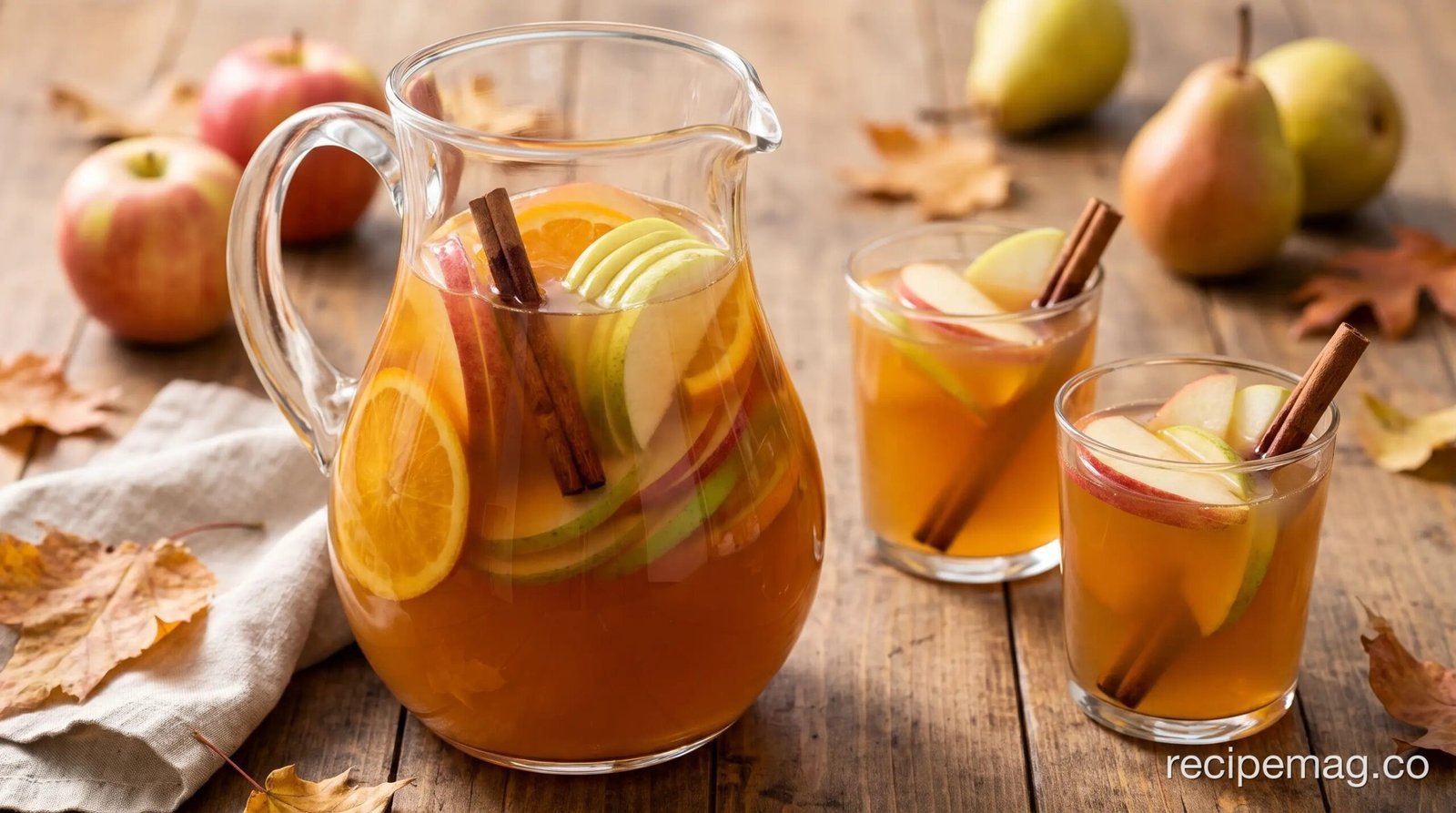
Apple cider sangria is a pitcher of dry white wine, fresh apple cider and a splash of brandy, steeped for at least 4 hours with sliced apples, pear, orange and cinnamon sticks. The cider does the sweetening: a cup of unsweetened apple juice carries about 24 grams of natural sugar, according to USDA FoodData Central (2026), so this recipe needs only an optional spoonful of maple syrup. It takes 15 minutes to mix and serves 8.
Key Takeaways
- Dry white wine keeps cider sangria bright. Red wine and cloudy cider can taste muddy.
- Steep 4 to 12 hours in the fridge. Past 24 hours, the apples go soft.
- Each 8-ounce pour holds about 1 standard drink by NIAAA’s definition, roughly 7 percent alcohol.
- Add ginger beer glass by glass so the pitcher stays fizzy.
- Swap in alcohol-free white wine for a version everyone can drink.
Why Does This Apple Cider Sangria Work?
Three ingredients balance each other. Dry white wine brings acidity, cider brings sweetness and body, and brandy adds a warm backbone without making the drink taste hot. The fruit soaks up all three as it chills, so by serving time the apples taste like boozy baked apples.
In our tests, white wine beats red. Red wine’s tannins plus cloudy cider turn the pitcher a murky brown and flatten the apple flavor, while a crisp white lets the cider lead and shows off the fruit through the glass. It’s the sangria on our Thanksgiving drinks menu, alongside a big-batch punch and five mocktails.
Ingredients
Serves 8 (about 8 cups). Prep time: 15 minutes. Chill time: 4 to 12 hours. Total time: about 4 hours 15 minutes.
- 1 bottle (750 ml) dry white wine, such as Sauvignon Blanc or Pinot Grigio, chilled
- 3 cups fresh apple cider, chilled
- ½ cup brandy or apple brandy
- 1 to 2 tablespoons pure maple syrup (optional)
- 2 crisp apples, such as Honeycrisp and Granny Smith
- 1 firm-ripe Bosc or Anjou pear
- 1 navel orange
- ½ cup fresh or frozen cranberries (optional)
- 3 cinnamon sticks
- 2 whole star anise (optional)
- 1½ cups chilled ginger beer or club soda
- Ice, for serving
Equipment: a pitcher or large jar that holds at least 3 quarts.
How to Make Apple Cider Sangria
- Slice the fruit. Core the apples and pear and slice them about ¼ inch thick, leaving the skin on for color. Cut the orange into thin rounds, then halve the rounds into half-moons.
- Start with the brandy. Put the apples, pear, orange, cranberries and star anise (if using) and the cinnamon sticks in the pitcher. Pour the brandy over the fruit and let it sit for 10 minutes.
- Add the wine and cider. Pour in the wine and cider and stir well.
- Taste and sweeten. Ciders vary a lot. If yours is tart, stir in the maple syrup 1 tablespoon at a time until the sangria tastes balanced.
- Chill. Cover and refrigerate for at least 4 hours and up to 12. Taste after 6 hours and pull out the cinnamon sticks if the spice is strong enough.
- Serve. Fill glasses with ice and spoon some fruit into each. Pour in the sangria, leaving room at the top, and finish each glass with about 3 tablespoons of ginger beer or club soda.
Which Wine and Cider Should You Use?
Use a dry, unoaked white you’d happily drink on its own, nothing expensive. Sauvignon Blanc and Pinot Grigio are our first picks, and a dry Riesling works if you like it a little sweeter. Skip oaky Chardonnay, since its vanilla notes clash with cider.
The Cider
Buy fresh, cloudy apple cider from the refrigerated section. It has more apple flavor than clear, shelf-stable juice, though juice works in a pinch with a squeeze of lemon. Serving young kids, older relatives or pregnant guests? Choose pasteurized cider. The FDA advises those groups to drink only pasteurized or otherwise treated juice.
The Brandy
Any inexpensive brandy works. Apple brandy, such as Calvados or American applejack, doubles down on the apple, and bourbon pushes the pitcher toward caramel.
How Strong Is Apple Cider Sangria?
Lighter than wine, but stronger than it tastes. The National Institute on Alcohol Abuse and Alcoholism (NIAAA) defines a U.S. standard drink as about 0.6 fluid ounces of pure alcohol, the amount in 5 ounces of 12 percent wine. By our math, this pitcher lands near 7 percent alcohol, or about 1 standard drink in every 8-ounce pour.
Here’s how that adds up, assuming a 12 percent wine and 80-proof brandy. The wine contributes about 3 ounces of pure alcohol and the brandy about 1.6 ounces, spread across roughly 65 ounces of liquid once the ginger beer goes in. That’s close to 8 standard drinks for the whole pitcher.
Because the cider masks the alcohol, sangria goes down like juice. Label the pitcher, keep water and an alcohol-free pitcher beside it, and make sure anyone drinking has a designated driver or a ride home.
Non-Alcoholic Apple Cider Sangria
Swap the wine for a 750 ml bottle of alcohol-free white wine. Or use 2 cups white grape juice plus 1 cup cooled brewed black tea and 2 tablespoons fresh lemon juice; the tea adds the grip that wine usually brings. Leave out the brandy and the maple syrup, then steep and serve exactly the same way.
Tips for Better Sangria
- Pick apples that stay crisp. Honeycrisp, Fuji and Granny Smith hold their crunch. McIntosh softens fast.
- Start cold. Chilled wine and cider mean the sangria is ready to pour the moment it has steeped.
- Keep ice out of the pitcher. Put it in the glasses so the last pour isn’t watery.
- Use whole spices. Ground cinnamon clouds the drink and settles as grit.
- Top glass by glass. Bubbles added to each glass stay lively for a long afternoon.
In our kitchen, the sweet spot is about 6 hours. At 2 hours the fruit still tastes like plain fruit. Past a day, the apples turn mealy and the orange pith starts to taste bitter. Mix it Thanksgiving morning, right after the turkey goes in, and it’s ready by early afternoon.
Make-Ahead and Storage Notes
Sangria is built to be made ahead, as long as it stays cold. The FDA (2026) recommends keeping your refrigerator at 40°F or below, which matters here because fresh cider is perishable.
- Fruit: slice it the day you mix, since cut apples and pears brown quickly.
- Steeping: 4 to 12 hours, refrigerated. Don’t go past 24.
- Leftovers: strain out the fruit and refrigerate the sangria, covered, for up to 3 days.
- Freezing: pour leftovers into ice cube trays and use the cubes to chill the next pitcher.
Frequently Asked Questions About Apple Cider Sangria
Can I make apple cider sangria with red wine?
You can, but choose a light, fruity red such as Beaujolais or Garnacha rather than a big Cabernet. The result tastes more like chilled mulled wine and turns a cloudy brick color. Add the full 2 tablespoons of maple syrup if the tannins taste harsh, and top with ginger beer rather than club soda for extra sweetness and spice.
How far ahead can I make sangria for Thanksgiving?
Mix it Thanksgiving morning or the night before, then keep it refrigerated. Four to 12 hours of steeping gives the best flavor and texture. If it goes past 24 hours, strain out the fruit, because the apples turn mealy and the orange peel turns bitter. Add the ginger beer or club soda only as you pour.
Can I serve apple cider sangria warm?
Yes. Skip the ginger beer, pour the steeped sangria and fruit into a pot, and warm it over low heat until it steams, about 10 minutes. Don’t let it boil, which drives off alcohol and cooks the fruit to mush. Ladle it into mugs and keep the pot covered on the lowest setting.
What food goes with apple cider sangria?
Salty, rich snacks: cheese boards, spiced nuts, pimento cheese and anything with bacon, like the spread in our no-oven Thanksgiving appetizers. Later, it pairs well with apple desserts such as our Dutch apple pie, because the cider and cinnamon echo the filling.
Mix the Pitcher Thanksgiving Morning
Slice the fruit, pour in the brandy, wine and cider, and slide the pitcher into the fridge right after the turkey goes in. By the time guests arrive, it has steeped. Pour it over ice, top each glass with ginger beer, and set an alcohol-free pitcher beside it so nobody’s left out.
Bringing it to someone else’s table? Carry the steeped sangria in a sealed jar inside a cooler and pack the ginger beer separately. It’s an easy, crowd-size contribution to any Friendsgiving potluck.
