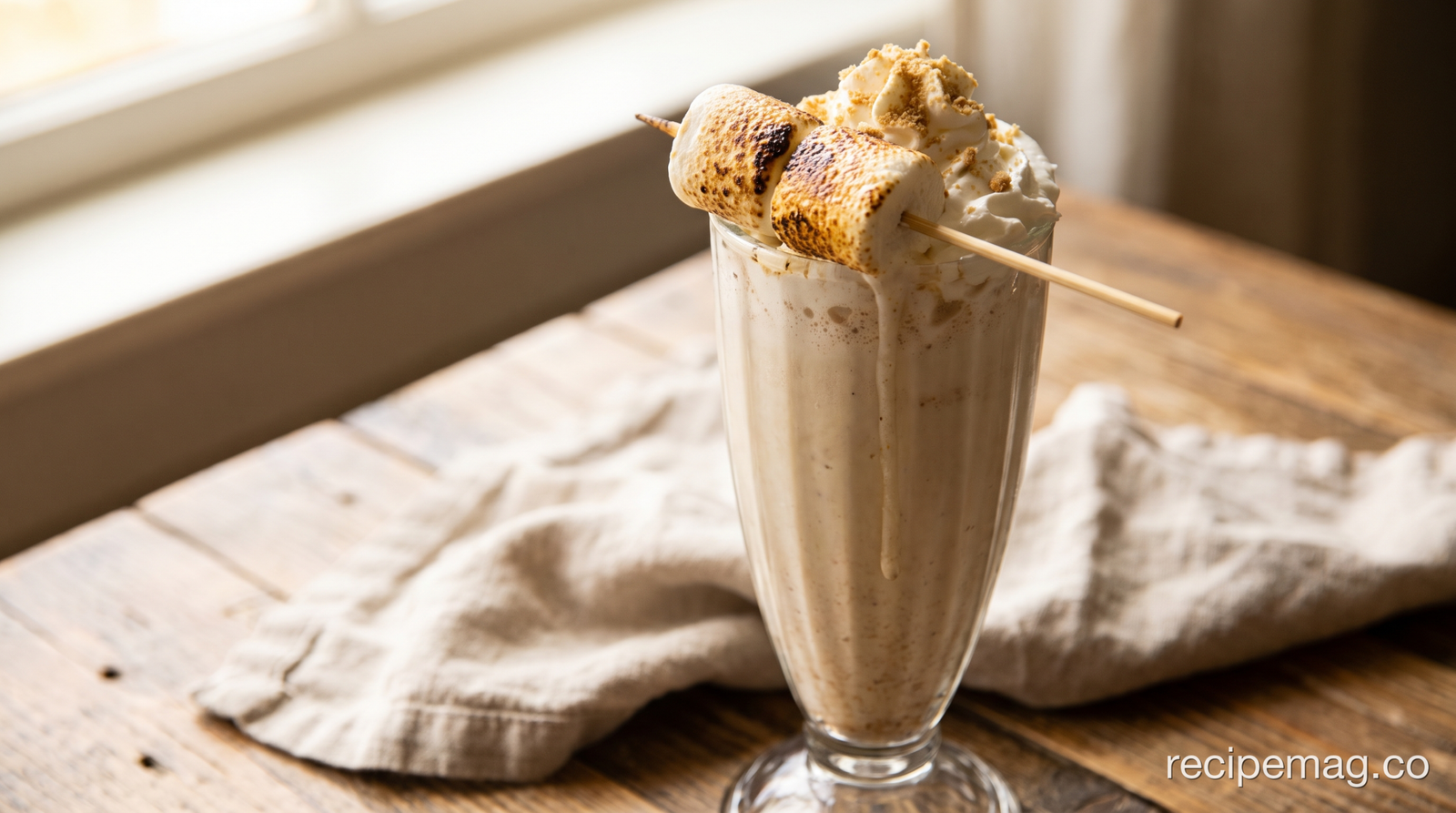
A toasted marshmallow milkshake is not a marshmallow-flavoured milkshake. The entire difference is in how far you take the torching: marshmallows browned lightly taste of sugar, while marshmallows taken to genuinely blackened taste of campfire. That charring produces bitter, smoky compounds that cut the sweetness, and without them the drink is just very sweet milk.
Key Takeaways
- Torch the marshmallows until genuinely blackened, not golden.
- Blend the toasted marshmallows into the shake, not just on top.
- Use less ice cream and more marshmallow than instinct suggests.
- A pinch of salt is what keeps it from being cloying.
- Works with a kitchen torch, a broiler, or an actual fire.
Ingredients
Makes 2 large shakes. Active time 10 minutes.
- 10 large marshmallows, plus 2 for garnish
- 3 cups vanilla ice cream
- 1/2 cup whole milk, plus more as needed
- 1/4 tsp kosher salt
- 1/2 tsp vanilla extract
- Graham cracker crumbs, for the rim
- Chocolate sauce, optional
- Whipped cream, to serve
Use full-fat ice cream. Low-fat versions produce a thin, icy shake because fat is what gives a milkshake body, and there is nothing else here doing that job.
How to Make It
1. Toast the marshmallows hard. Spread ten marshmallows on a foil-lined tray. Under a broiler set to high, watch them constantly: they will puff, then turn golden, then blacken, and the whole sequence takes 60 to 90 seconds. Pull them when the surfaces are properly blackened in patches, not merely tan. With a kitchen torch, do the same by hand.
This is the step that people undercook. Golden marshmallows give you sweetness with no character. The bitterness of the char is what makes the drink taste like something.
2. Cool briefly. Let them sit two minutes. Molten marshmallow seizes into strings when it hits cold ice cream, so a short cool makes them blend rather than clump.
3. Rim the glasses. Run chocolate sauce or a wet finger around the rim and dip into graham cracker crumbs. Do this before blending, while your hands are clean.
4. Blend. Combine the toasted marshmallows, ice cream, milk, salt, and vanilla. Blend in short pulses until just combined. Over-blending melts the shake through friction; you want it thick enough to hold a straw upright.
5. Adjust. Too thick, add milk a tablespoon at a time. Too thin, add ice cream, never ice, which waters it down.
6. Garnish. Pour into the rimmed glasses, top with whipped cream, and finish with a freshly torched marshmallow.
Why the Char Matters
A marshmallow is sugar, water, and gelatin. Heat drives three reactions in sequence: the sugars caramelise, the sugars and gelatin protein brown together through the Maillard reaction, and finally the surface pyrolyses, which is to say it burns.
Each stage adds flavour compounds the previous one did not have. Caramelisation gives the toffee note. Maillard adds savoury complexity. And pyrolysis contributes the bitter, smoky character that reads unmistakably as campfire. Stopping at golden means stopping two-thirds of the way through the flavour development.
The salt does related work from the other direction. A quarter teaspoon does not make the shake salty; it suppresses the perception of sweetness enough that the smoke and vanilla come forward. Leave it out and the drink flattens into sugar.
Variations
S’mores shake. Add two tablespoons of chocolate sauce and a full graham cracker to the blender. It becomes the drinkable version of our indoor s’mores dip.
Salted caramel. Two tablespoons of caramel sauce and an extra pinch of flaky salt.
Coffee. A shot of cooled espresso cuts the sweetness sharply and is the best variation here for adults.
Boozy. An ounce of bourbon or dark rum. The oak notes sit well against the char.
Dairy-free. Coconut or oat-based ice cream works; check the marshmallows, since most contain gelatin, and use a vegan brand if needed.
For more ways to end a late-summer evening, our frozen desserts roundup and no-machine ice cream cover the rest.
Milkshake Mechanics
A milkshake is an emulsion of fat, air, and ice crystals, and the difference between a good one and a thin one comes down to managing all three.
Fat gives body. Full-fat ice cream contains enough butterfat to hold air and produce a thick, coating texture. Low-fat versions have more water, which freezes into larger crystals and produces something icy rather than creamy.
Air is created by blending, and destroyed by over-blending. Short pulses incorporate air while keeping the mixture cold. Continuous high-speed blending generates friction heat, which melts the ice cream and collapses the foam you just built. Thirty seconds of pulsing beats two minutes of blending every time.
Temperature is the constraint. Everything should be as cold as possible at the start: ice cream straight from the freezer, cold milk, and ideally glasses chilled for twenty minutes. Every degree you begin with is a degree you do not have to fight.
This is also why adding ice is always a mistake. It thickens the shake by diluting it, which is the opposite of what you want. If a shake is too thin, the answer is more ice cream; if it is too thick, a splash of milk.
Toasting Marshmallows Without a Broiler
Three alternatives, in order of how close they get to the real thing.
An actual fire. A fire pit, a charcoal grill winding down, or a campfire produces the best result by a wide margin, because the smoke itself contributes flavour that no indoor method reproduces. If you are already outside for the last cookout of the season, toast a batch and keep them for shakes.
A gas hob. Thread marshmallows onto a metal skewer and hold them a few inches above the flame, turning constantly. It takes about thirty seconds each and works well. Keep them moving; a stationary marshmallow ignites, and a marshmallow on fire goes from blackened to carbon in seconds.
A kitchen torch. The most controllable option and the one worth buying if you make anything with meringue or crème brûlée. Set the marshmallows on a heatproof surface, keep the flame moving, and stop when the surface is blistered and dark.
Whichever method, do more than you need. Toasted marshmallows keep a day in an airtight container, they are the garnish as well as the base, and a few always get eaten before they make it into the blender.
Frequently Asked Questions
Do I need a kitchen torch?
No. A broiler works, and so does a gas hob with the marshmallows on a metal skewer. The torch is faster and gives more control, nothing more.
Why did my marshmallows turn into a sticky lump?
They went into the blender too hot. Let them cool two minutes so they firm slightly before they meet the cold ice cream.
Can I make this ahead?
No. Milkshakes separate within minutes. You can toast the marshmallows up to an hour ahead and blend to order.
How do I get it really thick?
Less milk, more ice cream, and pulse rather than blend continuously. Chilling the glasses in the freezer beforehand helps it stay thick in the hand.
Can I use marshmallow fluff instead?
It will not toast the same way and the flavour is flat. If it is all you have, brown a few spoonfuls under a broiler on foil first.
Is there a less sweet version?
Add espresso and increase the salt slightly. Both suppress sweetness without removing the marshmallow character.
