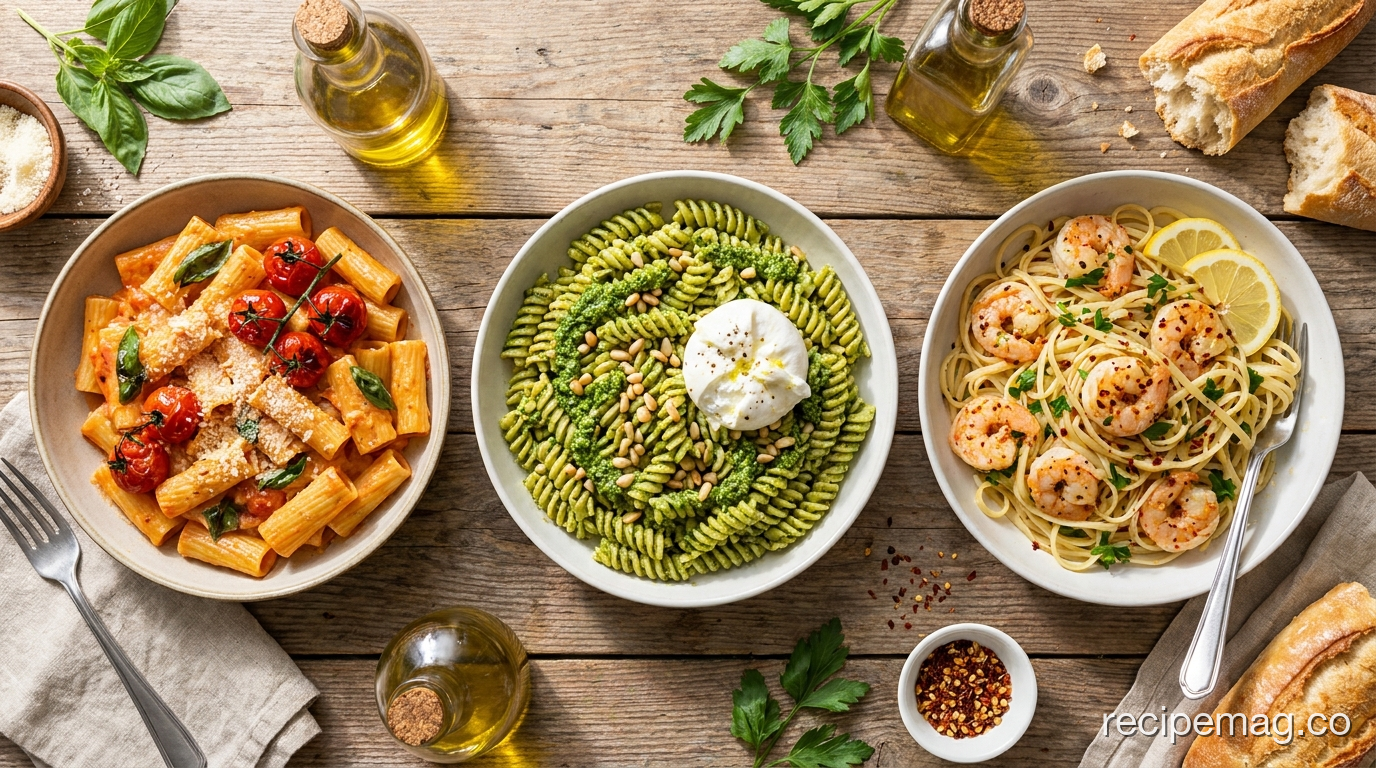
The best easy pasta dinners lean on late-summer produce and finish before the water even feels like a chore. Americans eat about 20 pounds of pasta per person each year, which makes it the quiet backbone of weeknight cooking. (National Pasta Association, 2023) These 12 recipes use peak tomatoes, zucchini, corn, and basil, and most land on the table in 30 minutes or less.
Key Takeaways
- Most of these 12 pasta dinners come together in 30 minutes or less, using one pot or one skillet.
- Late summer is peak season for tomatoes, zucchini, corn, and eggplant, so lean on them for flavor and low cost. (USDA AMS, 2023)
- Salt your pasta water well and reserve a cup before draining: the starchy liquid emulsifies almost any sauce.
- No-cook sauces like caprese and burst-tomato burrata skip the stove entirely on the hottest nights.
- Cooking pasta al dente lowers its glycemic impact and keeps the texture springy.
What Makes a Great Weeknight Pasta Dinner?
A great weeknight pasta respects your time and the season at once. Americans spend an average of about 53 minutes a day on food prep and cleanup, so any dinner that trims that number earns a permanent spot in the rotation. (U.S. Bureau of Labor Statistics, American Time Use Survey, 2023) The trick is matching a quick-cooking shape to a sauce that builds while the pasta boils.
Think in one-vessel terms. A single pot of salted water and one skillet for the sauce keep cleanup low, and both run at once. By the time the pasta hits al dente, the sauce is usually ready. That overlap is the whole game on a busy night.
Late summer does a lot of the flavor work for you. Ripe August tomatoes barely need cooking, zucchini softens in minutes, and torn basil finishes almost anything. In our experience, the pasta dinners people repeat most are the ones with five or six ingredients and produce that’s actually in season.
The 12 Easy Weeknight Pasta Dinners for Late Summer
These 12 dinners span quick, one-pot, no-cook, creamy, and spicy, so there’s a match for any night. August produce anchors most of them: the USDA Agricultural Marketing Service confirms tomatoes, zucchini, corn, peppers, and eggplant all peak from July through September. (USDA AMS, 2023) Pick two or three, keep a box of dried pasta on hand, and dinner is mostly solved.
1. Cherry Tomato Aglio e Olio
This is weeknight pasta at its leanest and best. Warm sliced garlic and chili flakes in good olive oil, then burst a pint of cherry tomatoes in the pan until they slump and release their juice. Toss with spaghetti and a splash of pasta water, then finish with parsley. Six ingredients, one skillet, roughly 20 minutes from start to bowl.
2. One-Pot Tomato Basil Pasta
Everything cooks in a single pot here, including the pasta. Simmer dried spaghetti with canned or fresh tomatoes, garlic, onion, and water until the noodles are tender and the liquid thickens into a glossy sauce. Stir in torn basil and parmesan off the heat. The starch that would normally go down the drain stays in the pot and does the thickening for you.
3. Pasta alla Norma
Sicily’s late-summer classic turns eggplant into the star. Fry or roast cubed eggplant until golden and creamy, then fold it into a quick tomato sauce with garlic and basil. Toss with rigatoni and shower it with salty ricotta salata. It’s rich, meaty, and fully vegetarian, and it makes a case for eggplant to anyone who thinks they don’t like it.
4. Fresh Basil Pesto Pasta
When basil is cheap and everywhere, make pesto. Blitz basil, garlic, pine nuts, parmesan, and olive oil into a bright green sauce, then loosen it with a spoon of pasta water so it clings to every strand. Trofie, fusilli, or linguine all work. Add halved cherry tomatoes or blanched green beans to stretch it into a full plate.
5. Caprese Pasta (No-Cook Sauce)
On the hottest nights, the sauce never touches the stove. Marinate chopped ripe tomatoes with garlic, olive oil, and salt while the pasta boils, then toss the hot noodles with the cold tomatoes, torn mozzarella, and a fistful of basil. The residual heat melts the cheese just enough. It tastes like the peak of August in a single bowl.
6. Zucchini Ribbon and Lemon Ricotta Pasta
Zucchini almost melts into a sauce when you treat it right. Ribbon it with a peeler, then saute in olive oil and garlic until silky. Toss with linguine, a generous scoop of ricotta, lemon zest, and black pepper. The ricotta turns creamy against the starchy pasta water without any cream at all. Light, fresh, and ready in about 20 minutes.
7. Sweet Corn and Basil Pasta
August corn is sweet enough to carry a whole dish. Cut kernels from the cob and saute in butter with shallot until just tender, then blend half into a silky sauce and leave the rest whole for texture. Toss with short pasta, parmesan, and basil. It eats like summer carbonara, minus the eggs and the fuss.
8. Spaghetti Arrabbiata
When you want dinner with some heat, arrabbiata delivers in 25 minutes. Simmer canned tomatoes with plenty of garlic and dried chili until the sauce turns deep and spicy, then toss with spaghetti and finish with parsley. It’s a pantry dinner that tastes like you tried harder than you did. Adjust the chili to your own tolerance.
9. Shrimp Scampi Linguine
Shrimp cook faster than the pasta, which makes scampi a genuine weeknight win. Sear shrimp in butter and olive oil with garlic, then deglaze with white wine and lemon. Toss with linguine and parsley, using pasta water to pull the sauce together. From pan to plate in about 15 minutes once the water boils. A green salad rounds it out.
10. Creamy Sun-Dried Tomato and Spinach Pasta
This one tastes indulgent but comes from the pantry. Saute garlic and chopped sun-dried tomatoes, add a splash of cream and parmesan, then wilt in a few handfuls of spinach. Toss with penne and loosen with pasta water. The sun-dried tomatoes bring a concentrated, tangy depth that makes the sauce feel slow-cooked when it took 20 minutes.
11. Pasta Primavera
Primavera is a clean-out-the-crisper dinner in the best sense. Saute whatever late-summer vegetables you have, zucchini, bell pepper, cherry tomatoes, peas, in olive oil and garlic until crisp-tender. Toss with short pasta, parmesan, lemon, and basil. It flexes to fit your fridge, so no two versions are ever quite the same. Add a little cream if you want it richer.
12. Burst Tomato and Burrata Pasta
This is the showstopper that takes almost no effort. Burst cherry tomatoes in olive oil with garlic until jammy, toss with spaghetti and basil, then tear a whole ball of burrata over the top at the table. The molten cheese folds into the warm tomatoes and turns the sauce lush. It looks like a restaurant plate and cooks in 25 minutes.
How Do You Cook Pasta Perfectly Every Time?
Two habits separate flat pasta from restaurant-quality pasta, and both are free. America’s Test Kitchen recommends about 1 tablespoon of salt per 4 quarts of water, which seasons the noodles from the inside as they cook. (America’s Test Kitchen, 2022) The second habit is saving a cup of that cloudy water before you drain. It is liquid gold for any sauce.
Salt the Water Like the Sea
Under-salted pasta water is the most common home-cooking mistake, and no amount of sauce fixes it later. The water should taste distinctly salty, so the seasoning penetrates the noodle as it swells. Skip the oil in the water, though: it only coats the pasta and keeps sauce from clinging.
Reserve the Pasta Water
The starchy, salty water left in the pot is the secret behind glossy restaurant sauces. Serious Eats notes that this dissolved starch helps oil and water emulsify, binding the sauce to the pasta instead of pooling at the bottom. (Serious Eats, 2021) Ladle out a cup before draining and add it a splash at a time until the sauce turns silky.
Cook It Al Dente
Al dente pasta has a slight bite at the center, and that texture is worth chasing. It also matters nutritionally: Harvard’s nutrition experts note that pasta cooked al dente has a lower glycemic index than pasta boiled soft. (Harvard T.H. Chan School of Public Health, 2022) Pull the pasta a minute early and let it finish in the sauce.
How Do You Save Time on Weeknight Pasta?
Smart prep turns a 45-minute scramble into a 20-minute dinner. Whole grain pasta is worth keeping on hand too: USDA data shows a cup of cooked whole wheat spaghetti delivers about 6 grams of fiber, more than twice its refined counterpart. (USDA FoodData Central, 2023) Stock a few shapes, good olive oil, and canned tomatoes, and you’re never more than half an hour from dinner.
Boil the water first, before you touch a vegetable. Getting a big pot on to boil the moment you walk in the door means the slowest step is already running while you chop. Most sauces on this list finish faster than the pasta cooks, so the pot sets your pace.
Batch the components you can. Pesto keeps in the fridge for a week and freezes for months, and a double batch of burst-tomato sauce on Sunday covers two dinners. The households that eat well on weeknights treat one weekend hour as an investment in five easy dinners.
Frequently Asked Questions About Easy Pasta Dinners
What is the fastest pasta dinner to make on a weeknight?
No-cook sauces are the fastest, since they finish while the pasta boils. Caprese pasta and burst-tomato burrata both come together in the roughly 10 to 12 minutes it takes spaghetti to cook. Aglio e olio and shrimp scampi are close behind at 15 to 20 minutes. Get the water boiling first, and the sauce is ready before you drain.
Which pasta shape works best for these summer sauces?
Match the shape to the sauce. Long strands like spaghetti and linguine suit smooth, oily sauces such as aglio e olio and scampi. Short, ridged shapes like penne and rigatoni catch chunky, creamy, or vegetable-heavy sauces such as primavera and alla Norma. Twisted shapes like fusilli grip pesto beautifully. When in doubt, spaghetti handles almost anything on this list.
Can I make these pasta dinners ahead of time?
Some components store better than the finished dish. Pesto, tomato sauce, and sun-dried tomato base all refrigerate for up to a week and reheat quickly. Cooked pasta holds for three to four days in the fridge, tossed lightly in oil so it doesn’t clump. For the freshest result, store the sauce and pasta separately and combine them hot, using a splash of water to loosen.
Are pasta dinners healthy for a weeknight?
They can be, especially when built around vegetables and whole grains. Loading pasta with late-summer produce like zucchini, tomatoes, and spinach adds fiber, vitamins, and volume for few calories. Choosing whole wheat pasta boosts fiber to about 6 grams per cooked cup, per USDA data. (USDA FoodData Central, 2023) Watch portion size and go easy on the cream, and pasta fits a balanced diet.
Put a Pot of Water On This Week
Great weeknight pasta is not about complicated technique. It’s about a hot pot of well-salted water, a skillet of in-season vegetables, and the sense to save a cup of that starchy water before you drain. Master those three moves and every recipe on this list gets easier.
Lean into late-summer produce while it lasts. Tomatoes, zucchini, corn, and basil are at their cheapest and best right now, and they do most of the flavor work for you. Let those ingredients carry the plate and your shopping list shrinks along with your cook time.
Pick three of these dinners for the week ahead, stock a couple of pasta shapes, and keep a jar of pesto ready. Do that, and you’ll spend weeknights eating well instead of staring into the fridge wondering what’s for dinner.
