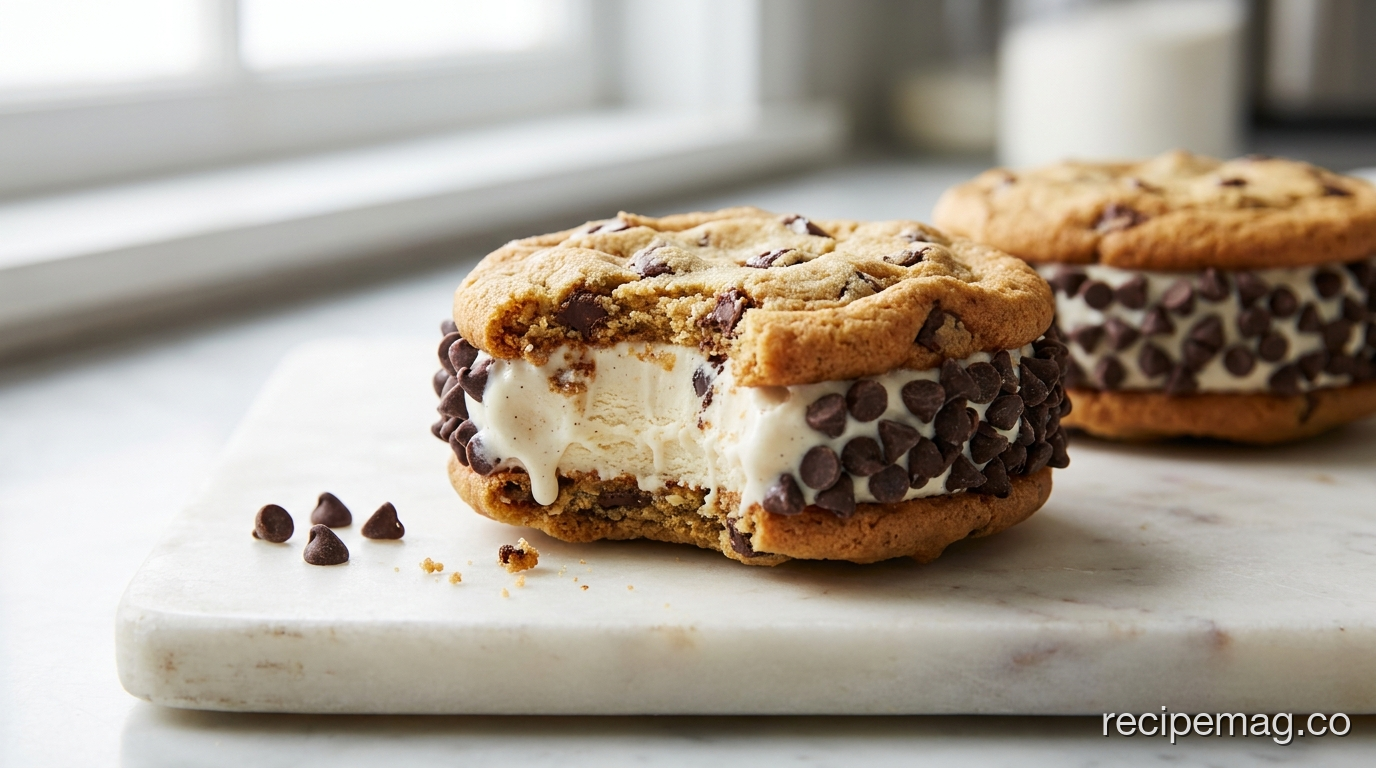
A Chipwich is a generous scoop of vanilla ice cream pressed between two chewy chocolate chip cookies, with the exposed edges rolled in mini chocolate chips. This homemade version needs about 30 minutes of hands-on work, then a short freeze to firm up. The treat first hit New York City sidewalks in 1981 and has been a summer staple ever since. Americans eat roughly 20 pounds of ice cream per person each year (International Dairy Foods Association, 2023), and this is one of the most satisfying ways to spend it.
Key Takeaways
- A chipwich recipe comes down to three parts: chewy cookies, softened ice cream, and mini chips for the edges.
- Chilling the dough at least 30 minutes limits spread and gives you a thicker, chewier cookie (America’s Test Kitchen, 2022).
- Use a higher ratio of brown to white sugar so the cookies stay soft even straight from the freezer.
- Assemble while the ice cream is soft but still cold, then freeze for at least two hours before serving.
- One batch makes about 12 sandwiches, and they keep in the freezer for up to a month.
What Is a Chipwich, and Where Did It Come From?
A Chipwich is an ice cream sandwich built from two soft chocolate chip cookies instead of the usual dark wafers, with the edges rolled in mini chocolate chips. Richard LaMotta introduced it on New York City streets in 1981, and vendors reportedly sold tens of thousands a day at the peak. Ice cream is woven into American summer: in 1984, a presidential proclamation named July National Ice Cream Month (International Dairy Foods Association, 2023). The chipwich sits right at the center of that tradition.
What sets it apart is texture. A standard ice cream sandwich uses a firm, cakey wafer that stays rigid when frozen. The chipwich swaps in a cookie engineered to bend, not snap, so you get a soft bite all the way through. That single change is why people remember it decades later.
The Cookie Is Everything: How to Get It Chewy
The cookie makes or breaks a chipwich, and chewiness is the goal. Brown sugar is the secret: it’s hygroscopic, so it pulls in and holds moisture, keeping cookies soft even after a night in the freezer (King Arthur Baking, 2023). A crisp cookie turns into a hard, shattering shell once it’s frozen. A chewy one stays yielding. That’s the difference you can feel.
Melted butter helps too. Melting it before mixing coats the flour differently than creaming, which encourages a denser, chewier crumb rather than a light, cakey one. Combine that with the brown sugar and you get a cookie that stays flexible at freezer temperature.
Chill the Dough
Don’t skip the rest in the fridge. Chilling the dough for at least 30 minutes firms the butter and limits how far the cookies spread, so they bake up thicker and hold their shape (America’s Test Kitchen, 2022). Thin, spread-out cookies tear the moment you press ice cream between them. A sturdier round handles the job.
Ingredients
Everything here is a supermarket basic, and most of it probably lives in your pantry already. A single homemade chocolate chip cookie averages around 150 calories (USDA FoodData Central, 2023), so treat a chipwich as the small indulgence it is. Quality vanilla ice cream is worth the splurge, since it’s the flavor doing most of the talking.
For the Cookies
- 2¼ cups all-purpose flour
- 1 teaspoon baking soda
- 1 teaspoon salt
- 1 cup (2 sticks) unsalted butter, melted and slightly cooled
- ¾ cup granulated sugar
- 1 cup packed light brown sugar
- 2 large eggs
- 2 teaspoons vanilla extract
- 2 cups semisweet chocolate chips
For Assembly
- 1½ quarts vanilla ice cream (a good-quality brand)
- 1½ cups mini semisweet chocolate chips, for rolling the edges
How to Make the Chocolate Chip Cookies
Good cookies come from a light hand and a hot oven. Overmixing the dough after the flour goes in develops gluten and toughens the crumb, so stop as soon as the streaks disappear. Bake at 375°F and pull the cookies while the centers still look slightly underdone; they finish setting on the hot pan and stay soft at the middle.
Step-by-Step
- Whisk the dry ingredients. In a bowl, combine the flour, baking soda, and salt. Set aside.
- Mix the wet ingredients. In a large bowl, whisk the melted butter with both sugars until smooth. Add the eggs and vanilla and whisk again until glossy.
- Combine. Add the dry mix to the wet and fold with a spatula just until no dry flour remains. Fold in the chocolate chips.
- Chill. Cover the dough and refrigerate for at least 30 minutes, or up to two days.
- Scoop and bake. Preheat the oven to 375°F (190°C). Scoop tablespoon-and-a-half portions onto lined sheet pans, spacing them two inches apart. Bake 9 to 11 minutes, until the edges are set and the centers still look soft.
- Flatten slightly. For flat sandwich-friendly cookies, press each one gently with the back of a spatula right out of the oven. Cool completely on a rack before assembly.
How to Assemble and Freeze Your Chipwiches
Assembly is where timing matters most. Let the ice cream soften on the counter for 10 to 15 minutes, just until it’s scoopable, then work fast. The USDA warns against refreezing ice cream that has melted completely, since thawing invites bacteria and wrecks the texture (USDA FSIS, 2023). You want it soft enough to spread but cold enough to hold its shape.
Assembly Steps
- Match your cookies. Sort the cooled cookies into pairs of similar size. Turn one of each pair flat-side up.
- Add the ice cream. Place a scoop, about ⅓ cup, on the flat side of the bottom cookie. Top with its partner, flat side down.
- Press gently. Push down until the ice cream reaches the edges in an even layer. Wipe away any big overflow.
- Roll the edges. Spread the mini chips on a plate. Roll the exposed ice cream rim through them so they stick all the way around.
- Freeze. Set each sandwich on a lined tray and freeze for at least two hours before serving.
Working in batches keeps things manageable. If the ice cream gets too soft, slide the tray back into the freezer for 10 minutes and pick up where you left off. Cold ice cream is far easier to roll in chips than a puddle.
Tips for the Best Homemade Chipwich
A few small habits separate a good chipwich from a great one. Ice cream scoops and spreads best when it’s soft but still firm, roughly between 6°F and 10°F (Serious Eats, 2022). Pull the tub out before you start rolling out cookies, and it’ll be ready right when you are. Patience with temperature pays off in a cleaner sandwich.
- Flatten the cookies. A gentle press out of the oven gives you flat faces that meet the ice cream evenly, so nothing squeezes out awkwardly.
- Freeze the cookies first. Chilled cookies handle warm hands better and won’t crumble under the pressure of assembly.
- Wrap for storage. Once firm, wrap each sandwich individually in parchment, then seal in a zip-top bag. They keep their flavor and texture in the freezer for up to a month.
- Switch up the ice cream. Coffee, mint chip, strawberry, and cookies-and-cream all work. Match the mini chips to the flavor for a nice touch.
- Add a pinch of flaky salt. A few flakes on the ice cream before you close the sandwich sharpens all that sweetness.
Classic Chipwich Ice Cream Sandwiches
Prep Time: 30 minutes | Cook Time: 10 minutes | Freeze Time: 2 hours | Makes: 12 sandwiches
Ingredients
Cookies
- 2¼ cups all-purpose flour
- 1 teaspoon baking soda
- 1 teaspoon salt
- 1 cup (2 sticks) unsalted butter, melted and slightly cooled
- ¾ cup granulated sugar
- 1 cup packed light brown sugar
- 2 large eggs
- 2 teaspoons vanilla extract
- 2 cups semisweet chocolate chips
Assembly
- 1½ quarts vanilla ice cream
- 1½ cups mini semisweet chocolate chips
Instructions
- Whisk flour, baking soda, and salt in a bowl.
- In a large bowl, whisk melted butter with both sugars, then whisk in eggs and vanilla.
- Fold in the dry ingredients just until combined, then fold in the chocolate chips.
- Cover and chill the dough for at least 30 minutes.
- Preheat oven to 375°F (190°C). Scoop 1½-tablespoon portions onto lined pans, 2 inches apart. Bake 9 to 11 minutes, until edges set and centers stay soft.
- Press each cookie flat with a spatula, then cool completely on a rack.
- Soften the ice cream 10 to 15 minutes. Scoop ⅓ cup onto a cookie, top with a second, and press to the edges.
- Roll the exposed ice cream in mini chips. Freeze sandwiches at least 2 hours before serving.
Notes
- Wrap each sandwich in parchment and freeze in a sealed bag for up to 1 month.
- If the ice cream softens too much during assembly, refreeze the tray for 10 minutes and continue.
- Swap in coffee, mint chip, or strawberry ice cream, and match the mini chips to the flavor.
- A pinch of flaky salt on the ice cream before closing balances the sweetness.
Frequently Asked Questions About Chipwich Ice Cream Sandwiches
Can I use store-bought cookies for a chipwich?
Yes, store-bought soft-baked chocolate chip cookies work in a pinch. Choose the chewy, bakery-style kind rather than crisp cookies, which shatter once frozen. Let them come to room temperature so they flex during assembly. Homemade cookies still give you the best texture and let you flatten each one for an even sandwich, but the shortcut version is genuinely good when time is short.
Why do my cookies get rock hard in the freezer?
Hard frozen cookies usually mean too little brown sugar or too much flour. Brown sugar holds moisture, which keeps cookies soft even when frozen (King Arthur Baking, 2023). Measure flour by spooning it into the cup and leveling off, rather than scooping, which packs in extra. Pulling the cookies from the oven while the centers still look underbaked also keeps them chewy.
How long do homemade chipwiches last in the freezer?
Wrapped individually in parchment and sealed in a zip-top bag, homemade chipwiches keep their texture and flavor for up to one month. Air is the enemy: unwrapped ice cream sandwiches pick up freezer odors and form ice crystals within days. For the best bite, let each sandwich sit at room temperature for two to three minutes before eating so the cookie softens slightly.
What ice cream works best for chipwiches?
A dense, higher-fat vanilla ice cream holds its shape best and won’t melt into a puddle during assembly. Softer, airier budget brands melt fast and squeeze out the sides. Beyond vanilla, coffee, mint chip, cookies-and-cream, and strawberry all pair well with chocolate chip cookies. Pick something with a firm texture straight from the tub for the cleanest results.
Can I make these ahead for a party?
Absolutely, and you should. Chipwiches are one of the few desserts that improve with make-ahead planning, since they need freezer time anyway. Assemble them a day or two in advance, wrap each one, and stash them flat in the freezer. Set them out just before serving, or pass a tray straight from the freezer so they stay firm in warm weather.
A homemade chipwich turns two everyday ingredients, cookies and ice cream, into something people talk about long after the plate is empty. The recipe is forgiving, the technique is simple, and the payoff on a hot August afternoon is hard to beat.
Make the cookies chewy, keep the ice cream cold, and don’t rush the freeze. Those three rules carry the whole recipe. Once you have the method down, the flavor combinations are yours to play with all summer long.
Roll a batch, wrap them up, and keep a stash in the freezer. You’ll be glad they’re there the next time the temperature climbs.
