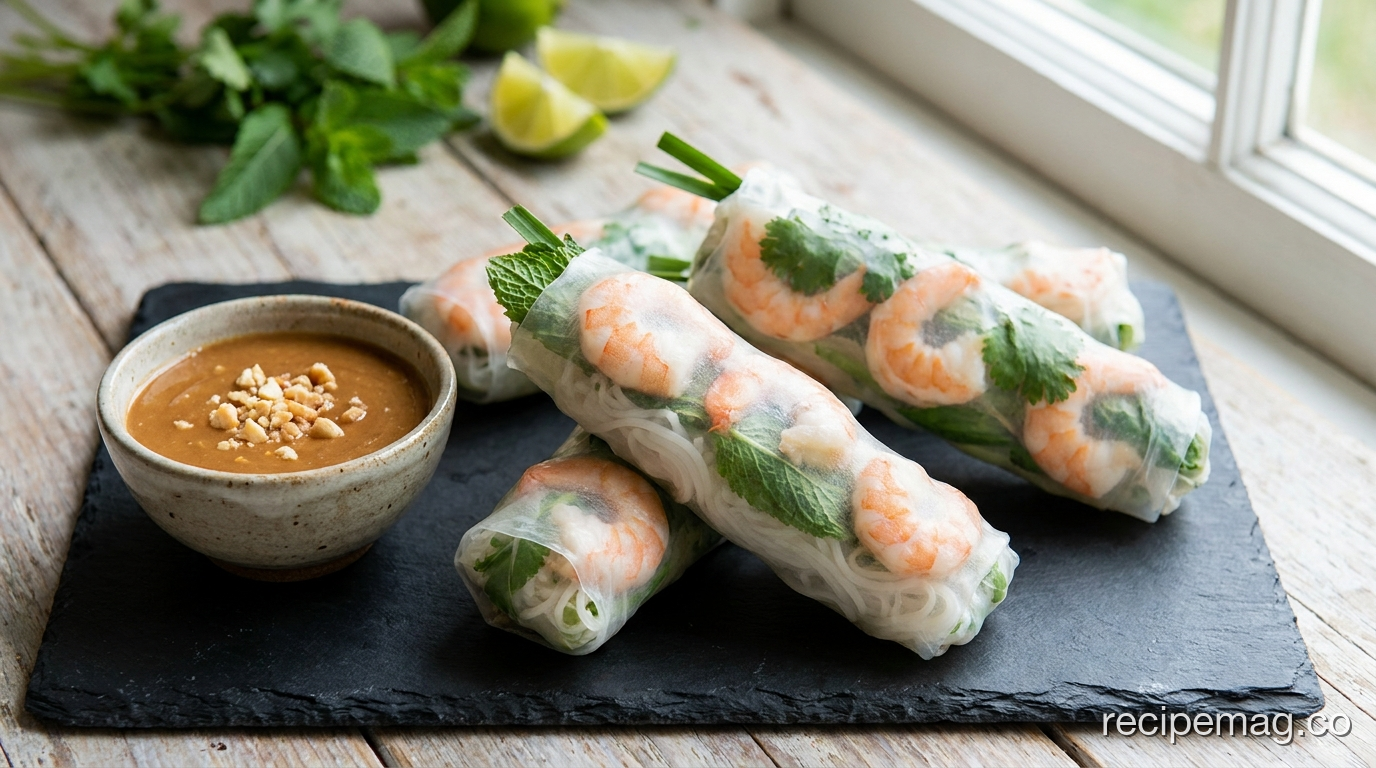
No-cook summer rolls with peanut sauce are the fix for a kitchen too hot to touch. Each roll wraps soft rice paper around rice noodles, fresh herbs, and crunchy vegetables, then meets a creamy peanut dipping sauce. Nothing gets turned on, and the whole thing takes about 30 minutes. Per USDA FoodData Central, two tablespoons of peanut butter deliver roughly 8 grams of protein, which turns a light bundle of vegetables into a meal that actually holds you (USDA FoodData Central, 2023).
Key Takeaways
- Zero heat and about 30 minutes of hands-on work, ideal for hot summer days.
- Two tablespoons of peanut butter add about 8 grams of protein to the peanut sauce. ([USDA FoodData Central](https://fdc.nal.usda.gov), 2023)
- Rice paper wrappers are naturally gluten-free, made from rice flour, tapioca, and water.
- A quick dip in warm water is all rice paper needs, over-soaking is the number one cause of tearing.
- Endlessly flexible: swap in shrimp, tofu, chicken, or whatever crunchy vegetables you have.
Why No-Cook Summer Rolls Belong in Your Rotation
Summer rolls solve two problems at once: they keep the kitchen cool and they load a plate with vegetables. That second point matters more than most people think. The CDC reports that only about 1 in 10 American adults eat the recommended amount of vegetables each day (CDC, 2022). Each roll packs shredded carrot, cucumber, lettuce, and a generous handful of herbs into one tidy package you eat with your hands.
They’re also fast and forgiving. There’s no pan to watch, no oil to splatter, no timing to juggle. You soak a wrapper, pile on your fillings, and roll. If the first one looks messy, nobody cares, you eat the practice rolls. By the third one your hands know what to do.
[PERSONAL EXPERIENCE] We’ve made these dozens of times for summer lunches, and the biggest surprise is how well they scale for a crowd. Set out a platter of prepped fillings, a stack of wrappers, and a bowl of warm water, then let everyone roll their own. It turns dinner into something people actually linger over.
Ingredients for Fresh Summer Rolls
Almost everything here is raw, so quality shows. Look for firm, bright vegetables and herbs with no wilting. Rice paper wrappers, sometimes labeled banh trang, live in the international aisle of most grocery stores and cost a few dollars for a stack of 30 or more. They keep in the pantry for months, so a single package covers many summers of rolls.
For the Rolls
- 10 to 12 round rice paper wrappers (8.5-inch)
- 4 ounces thin rice vermicelli noodles
- 1 cup shredded carrot
- 1 cucumber, seeded and cut into thin matchsticks
- 1 red bell pepper, thinly sliced
- 2 cups butter lettuce or green leaf lettuce, torn
- 1 cup fresh mint leaves
- 1 cup fresh cilantro leaves
- 1 cup fresh Thai basil (or regular basil)
- Optional protein: 12 cooked shrimp, halved lengthwise, or sliced baked tofu
For the Peanut Sauce
- ⅓ cup natural creamy peanut butter
- 2 tablespoons hoisin sauce
- 1 tablespoon soy sauce or tamari
- 1 tablespoon fresh lime juice
- 1 teaspoon grated fresh ginger
- 1 garlic clove, minced
- 3 to 4 tablespoons warm water, to thin
- 1 teaspoon honey or maple syrup (optional)
The herbs are not a garnish here, they’re a main ingredient. Mint brings the cooling snap, cilantro adds brightness, and Thai basil layers in a gentle licorice note. Use all three if you can find them. If you can only get one, make it mint. It carries the whole roll.
How Do You Roll Rice Paper Without Tearing It?
The single skill that makes or breaks this summer rolls recipe is the soak. Rice paper needs only a brief dip in warm water, about 10 to 15 seconds, then it keeps softening on the counter as you fill it. Serious Eats and other test kitchens stress the same point: pull the wrapper out while it still feels slightly stiff, because a fully soft wrapper tears the moment you touch it (Serious Eats, 2022). Patience during the soak saves the whole roll.
Step-by-Step Rolling
- Set up a station. Fill a wide, shallow bowl or pie plate with warm water. Keep a clean, damp kitchen towel or a large plate as your rolling surface.
- Dip one wrapper. Submerge a single sheet for 10 to 15 seconds, until it just turns pliable. It will feel a little firm still. That’s correct.
- Lay it flat. Place the wrapper on your damp surface. It keeps softening as you work, so move with purpose.
- Build a tidy pile. In the lower third of the wrapper, layer lettuce, a small nest of noodles, carrot, cucumber, pepper, and herbs. Keep the pile compact and leave a border on each side.
- Add protein up top. If using shrimp, lay the halves cut-side up above the vegetable pile so they show through the finished roll.
- Fold and roll. Fold the bottom edge up over the filling, fold in both sides, then roll away from you snugly, like a burrito. The wrapper seals itself.
[UNIQUE INSIGHT] Most people over-fill their first rolls and then fight a wrapper that won’t close. Less filling makes a tighter, prettier roll every time. Aim for a pile no thicker than your thumb. You can always eat two rolls instead of stuffing one until it splits.
How Do You Make the Peanut Sauce?
The peanut sauce is what people remember, and it comes together in one bowl with a whisk. Peanut butter carries real staying power: two tablespoons supply about 8 grams of protein and 190 calories, most of it from unsaturated fat, according to USDA FoodData Central (USDA FoodData Central, 2023). Hoisin brings sweetness, soy adds salt, and lime cuts the richness so the sauce never feels heavy.
How to Make It
- Add peanut butter, hoisin, soy sauce, lime juice, ginger, and garlic to a small bowl.
- Whisk hard. The mixture will look thick and clumpy at first. Keep going.
- Add warm water one tablespoon at a time, whisking after each, until the sauce pours off the spoon in a smooth ribbon.
- Taste. Add honey if you want it sweeter, more lime if it needs brightening, a splash of soy if it needs salt.
The sauce thickens as it sits, especially in the fridge. Just whisk in a little warm water before serving to loosen it back up. It keeps in a sealed jar for up to a week, and you’ll find yourself spooning it over rice bowls and grilled vegetables long after the rolls are gone.
Variations and Protein Add-Ins
This recipe is a template, not a rulebook. The wrapper and the peanut sauce stay constant, and everything inside is up for grabs. That flexibility is why summer rolls fit almost any diet at the table without a second recipe.
Protein Options
- Shrimp. Poached and halved lengthwise, the classic choice. Lay them cut-side up so they show through the wrapper.
- Baked tofu. Slice firm tofu into planks, bake or pan-crisp ahead, and cool. A fully plant-based roll with no compromise on texture.
- Poached or rotisserie chicken. Shredded chicken folds in easily and turns these into a heartier lunch.
- Cooked and cooled pork. Thin slices of leftover grilled pork are a natural match with the peanut sauce.
Vegetable Swaps
- Avocado. A few thin slices add richness and help the roll hold together.
- Mango. Ripe mango matchsticks bring a sweet, summery contrast against the herbs.
- Purple cabbage or radish. Both add crunch and color when the cucumber runs out.
How Long Do Summer Rolls Keep?
Summer rolls are best within a few hours of rolling, and food safety backs that up. The FDA warns that cut produce held above 40°F for more than two hours enters the danger zone for bacterial growth (FDA, 2023). Since these rolls are entirely raw, keep them chilled and eat them the same day for both texture and safety.
- Storing rolls: Wrap each roll individually in plastic wrap so they don’t stick or dry out, then refrigerate for up to one day.
- Keeping them soft: Line an airtight container with a lightly damp paper towel and cover the rolls with another. This stops the wrappers from turning tough and rubbery.
- Make-ahead strategy: Prep and store the fillings separately, then roll fresh right before serving. The wrappers are always best fresh.
- Sauce storage: The peanut sauce keeps for up to a week in a sealed jar. Thin with warm water before each use.
—
No-Cook Summer Rolls with Peanut Sauce
Prep Time: 30 minutes | Cook Time: 0 minutes | Makes: 10 to 12 rolls
Ingredients
Rolls
- 10 to 12 round rice paper wrappers (8.5-inch)
- 4 ounces thin rice vermicelli noodles
- 1 cup shredded carrot
- 1 cucumber, seeded, cut into matchsticks
- 1 red bell pepper, thinly sliced
- 2 cups butter or green leaf lettuce, torn
- 1 cup each fresh mint, cilantro, and Thai basil
- Optional: 12 cooked shrimp, halved, or sliced baked tofu
Peanut Sauce
- ⅓ cup natural creamy peanut butter
- 2 tablespoons hoisin sauce
- 1 tablespoon soy sauce or tamari
- 1 tablespoon fresh lime juice
- 1 teaspoon grated ginger
- 1 garlic clove, minced
- 3 to 4 tablespoons warm water
- 1 teaspoon honey or maple syrup (optional)
Instructions
- Cook the vermicelli per package directions, usually 3 to 5 minutes in boiling water. Drain, rinse under cold water, and set aside.
- Prep all vegetables and herbs and arrange them within reach.
- Make the sauce: whisk peanut butter, hoisin, soy sauce, lime juice, ginger, and garlic. Add warm water a tablespoon at a time until smooth and pourable. Adjust to taste.
- Fill a wide bowl with warm water. Dip one wrapper for 10 to 15 seconds until just pliable, then lay it flat.
- In the lower third, layer lettuce, noodles, carrot, cucumber, pepper, and herbs. Add shrimp or tofu above the pile.
- Fold the bottom over the filling, fold in the sides, and roll up snugly. Repeat with remaining wrappers.
- Serve immediately with the peanut sauce for dipping.
Notes
- Don’t over-soak the wrappers. Pull them out while still slightly firm, they keep softening as you fill.
- Keep fillings compact. Overstuffed rolls tear and won’t seal.
- Rolls keep one day wrapped individually in plastic. Sauce keeps one week refrigerated.
- For a nut-free version, swap the peanut butter for sunflower seed butter in the sauce.
—
Frequently Asked Questions About Summer Rolls
What’s the difference between summer rolls and spring rolls?
Summer rolls are fresh and uncooked, wrapped in soft rice paper and served cold or at room temperature. Spring rolls are typically wrapped in a thicker dough and deep-fried until crisp. The confusion is common because both use the word “rolls,” but the texture and temperature are opposites. Summer rolls stay raw, light, and cool, which is exactly why they shine in hot weather.
Are summer rolls gluten-free?
The rolls themselves are, as long as the wrappers are made from rice flour and tapioca, which most are. The sauce is where gluten sneaks in. Standard soy sauce and hoisin often contain wheat, so swap in tamari and a gluten-free hoisin to keep the whole dish gluten-free. Always check labels, since formulas vary by brand.
Why does my rice paper keep tearing?
Almost always, it’s over-soaking. Rice paper needs just 10 to 15 seconds in warm water, and it continues to soften on the counter. If you leave it in until it’s fully floppy, it turns fragile and sticky and tears the instant you fold it. Pull the wrapper out while it still feels slightly stiff, and work quickly. The problem usually disappears by your second or third roll.
Can I make summer rolls ahead of time?
You can prep the components a day ahead, but roll as close to serving as possible for the best texture. If you must roll ahead, wrap each one individually in plastic and refrigerate for up to a day. Store them in an airtight container between lightly damp paper towels so the wrappers stay soft instead of drying into a chewy shell.
How do I keep the rolls from sticking together?
Rice paper is naturally tacky, so rolls placed side by side will fuse. Keep them apart on the serving plate, or separate each one with a piece of lettuce or a strip of parchment. For storage, wrap each roll individually in plastic. A light brush of neutral oil on a finished roll also helps if you’re plating several together.
Roll Your First Batch Tonight
No-cook summer rolls prove that a satisfying dinner doesn’t need a single burner. Thirty minutes, a stack of wrappers, and a bowl of peanut sauce give you a light, crunchy, herb-packed meal that feels like a treat on the hottest days.
Start with the fillings you already have in the crisper drawer, and don’t stress the first few rolls. The technique clicks fast, and the peanut sauce forgives almost anything. Once you’ve got the soak dialed in, this becomes a summer default you reach for again and again.
Make the sauce first. You’ll be dipping vegetables in it while you wait for the noodles to cool.
