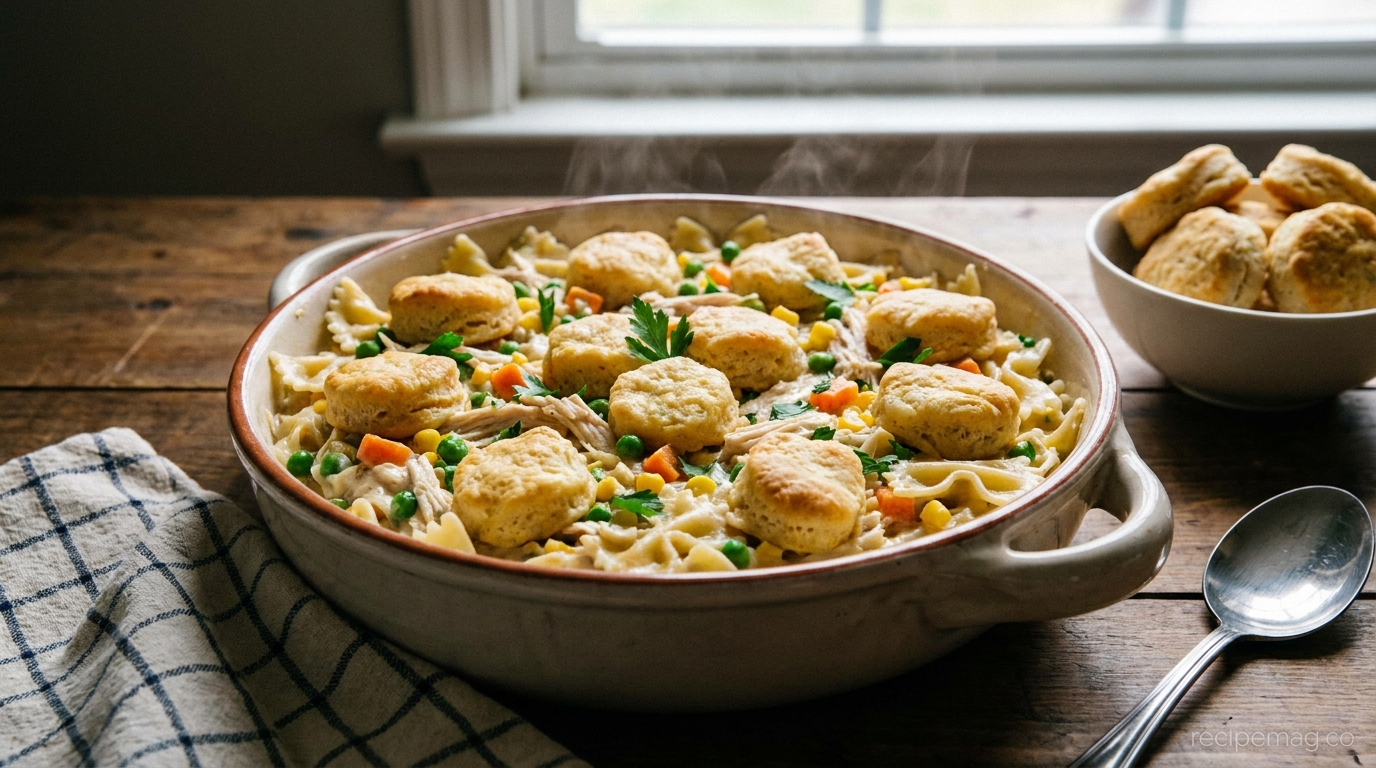
There is nothing quite like the heartwarming feeling of sitting down to a hot, creamy bowl of classic comfort food after a long day. Traditional recipes often require hours of labor, rolling out pastry dough, and waiting for the oven to do its magic. While that flaky crust is undeniably delicious, modern weeknights demand faster, more practical solutions for feeding a hungry family.
Enter the brilliant concept of chicken pot pie pasta, a dish that captures every single comforting note of the classic bakery-style pie without the headache of baking a crust. By swapping the pastry for perfectly cooked noodles, you get the same rich, savory sauce and tender vegetables in a fraction of the time. It is the ultimate culinary compromise that feels entirely like an upgrade.
If you are constantly hunting for meals that satisfy picky eaters while keeping your evening schedule intact, this is about to become a staple in your rotation. For even more inspiration on fast evening meals, check out our collection of 30+ Quick Weeknight Dinners Under 30 Minutes to keep your menu fresh. Let us dive into exactly how to master this incredible stovetop dinner.
Why This Creamy Chicken Pasta Recipe Works
The Magic of One-Pan Cooking
The beauty of this recipe lies in its incredibly streamlined cooking method. Instead of boiling noodles in one pot, making a roux in another, and roasting chicken on a separate pan, everything comes together in a single deep skillet. This method allows the starches from the pasta to release directly into the broth, which naturally helps thicken the sauce as it simmers.
Fewer pots and pans mean significantly less time spent standing over the sink scrubbing dishes when dinner is finished. According to recent surveys, Americans spend an average of only two hours daily on all household activities combined. If you want to reclaim your evening, mastering one pot pasta recipes for busy families is absolutely essential. This streamlined approach keeps weeknight cooking joyful rather than feeling like a chore.
Comforting Flavors Without the Hassle
When you crave comfort food, you are usually looking for specific flavor profiles and textures. This dish delivers a velvety, herb-infused cream sauce packed with aromatic garlic, earthy thyme, and savory chicken stock. It triggers the same nostalgic warmth as a Sunday dinner at your grandmother’s house.
Because the ingredients simmer together in one vessel, the flavors meld deeply and quickly. The pasta absorbs the seasoned chicken broth as it cooks, ensuring that every single bite is thoroughly infused with flavor. You never end up with bland noodles covered in an afterthought of a sauce.
Budget-Friendly Family Dinner
Grocery prices continue to rise, making it harder to serve hearty, meat-heavy meals every night of the week. This recipe is a fantastic way to stretch a smaller amount of poultry to feed an entire family. The pasta and mixed vegetables act as filling, inexpensive bulk that turns a basic protein into a massive, satisfying meal.
You can easily adapt this dish using whatever produce you have wilting in the crisper drawer. If you are following the ultimate $50 weekly meal prep shopping list, you will appreciate how beautifully these staple ingredients work together. It proves that eating luxuriously does not require a massive grocery budget.
Essential Ingredients for the Perfect Dish
Choosing the Best Pasta Shape
The shape of your noodle plays a critical role in the success of this meal. You want a short, sturdy pasta with plenty of nooks, crannies, or ridges to grab onto that thick, creamy sauce. Rotini, fusilli, campanelle, and medium shells are all excellent choices that perform beautifully under pressure.
Avoid long noodles like spaghetti or linguine, as they tend to clump together in a one-pot preparation and do not hold the chunky vegetables well. Bowtie pasta (farfalle) is another popular option that provides a wonderful, chewy texture. Whichever shape you choose, ensure it is a high-quality durum wheat semolina for the best structural integrity.
Selecting Your Chicken and Vegetables
Boneless, skinless chicken breasts are the standard choice for a lean, quick-cooking protein. However, chicken thighs offer slightly more flavor and are much more forgiving if accidentally overcooked. Cut your poultry into uniform, bite-sized pieces so they cook evenly and integrate perfectly with the pasta.
For the vegetables, a classic mirepoix of sweet onions, crisp celery, and vibrant carrots creates the aromatic base. We highly recommend using fresh aromatics for the base, but turning to frozen peas at the very end to preserve their bright green color and snappy texture. Frozen mixed vegetables can also be used in a pinch if you are terribly short on time.
Creating the Creamy Sauce Base
A robust, high-quality chicken broth is the liquid foundation that will cook the noodles and flavor the dish. Low-sodium varieties are best so you can completely control the saltiness of the final product. A splash of dry white wine can also be used to deglaze the pan and add a touch of elegant acidity.
To achieve that signature pie-filling richness, you will need a dairy component. Heavy whipping cream yields the most luxurious results, as it resists curdling when boiled alongside the acidic elements. For a lighter alternative, half-and-half or whole milk mixed with a tablespoon of cornstarch works wonderfully to create a thick, velvety finish.
Step-by-Step Cooking Instructions
Prepping Your Ingredients
Before turning on the stove, practice the French culinary concept of mise en place by gathering and chopping all your ingredients. Because this recipe moves swiftly once the heat is on, having everything pre-measured prevents frantic scrambling. Dice your onions, carrots, and celery into small, even pieces so they soften at the same rate.
Cube your raw chicken and season it generously with salt, freshly cracked black pepper, and a pinch of dried thyme. Measure out your pasta, liquids, and herbs into separate bowls. This upfront organization takes only five minutes but guarantees a stress-free cooking experience.
Building the Flavor Foundation
Heat a tablespoon of olive oil and a pat of butter in a large, deep skillet over medium-high heat. Add your seasoned chicken pieces in a single layer, letting them sear undisturbed for a few minutes to develop a beautiful golden-brown crust. This caramelization step is crucial for developing deep, complex flavors in your chicken pot pie pasta.
Once the chicken is browned but not fully cooked through, remove it to a plate and add your diced vegetables to the same skillet. Sauté the aromatics until the onions become translucent and sweet, scraping up any browned bits of chicken left on the bottom of the pan. Stir in minced garlic during the last thirty seconds so it becomes fragrant without burning.
Simmering to Perfection
Return the chicken to the skillet, then pour in the dry pasta and your chicken broth. Bring the entire mixture to a rolling boil, then immediately reduce the heat to a gentle simmer and cover the pan tightly with a lid. Let it cook for roughly twelve to fifteen minutes, stirring occasionally to ensure the noodles do not stick to the bottom.
When the pasta is tender and most of the liquid has been absorbed, it is time to finish the dish. Stir in your heavy cream and frozen peas, letting everything simmer uncovered for another two to three minutes until the sauce thickens and coats the back of a spoon. Taste carefully for seasoning, adding more salt, pepper, or fresh herbs as desired before serving.
Creative Variations and Substitutions
Making It Dairy-Free or Gluten-Free
Adapting this meal for specific dietary needs is surprisingly straightforward. To make it gluten-free, simply swap the standard wheat noodles for your favorite chickpea, lentil, or brown rice pasta. Keep a close eye on the liquid ratios, as gluten-free varieties sometimes absorb broth differently and may require a splash of extra water.
For a completely dairy-free version, replace the butter with olive oil and swap the heavy cream for full-fat canned coconut milk. If you dislike the subtle coconut flavor, unsweetened cashew cream or an oat milk-based culinary cream are fantastic neutral alternatives. These swaps ensure everyone at the table can enjoy the comfort food experience.
Adding Different Vegetables
While the classic carrot, celery, and pea combination is traditional, there are no hard rules when it comes to vegetable mix-ins. Fresh green beans, chopped asparagus, or sweet corn kernels add fantastic texture and vibrant color. You can also toss in a handful of fresh baby spinach at the very end for an extra boost of leafy greens.
Earthy mushrooms are another wonderful addition that deepens the savory umami notes of the sauce. Sauté sliced cremini or button mushrooms alongside your onions for a woodland twist on the original. This flexibility makes the dish a perfect vehicle for cleaning out whatever vegetables are lingering in your refrigerator.
Using Leftover Turkey or Rotisserie Chicken
If you want to shave even more time off your prep work, cooked poultry is your best friend. Skip the initial browning step entirely and simply start by sautéing your vegetables in butter. Add shredded rotisserie chicken or leftover Thanksgiving turkey during the final few minutes of simmering just to heat it through.
This shortcut makes the meal practically effortless and is ideal for busy holiday weekends. In fact, if you are looking for easy dishes to share, these sorts of hearty, easily transportable casseroles are perfect. They often rival the best make-ahead potluck dishes that travel well, as they hold their heat and texture beautifully.
Comparing Traditional Pot Pie vs. Pasta Alternatives
Understanding the differences between various comfort food formats can help you choose the right recipe for your schedule. Traditional pies are magnificent weekend projects, while pasta and soup variations are designed for fast weeknight execution. While all three share identical flavor profiles, their preparation methods and final textures vary wildly.
The table below breaks down the key differences between the three most popular variations of this classic meal. It highlights exactly why the stovetop noodle version has become such a beloved modern staple. Use this guide to decide which cooking method fits your current energy levels and time constraints.
| Dish Variation | Average Prep Time | Average Cook Time | Required Skill Level | Primary Carb Source |
|---|---|---|---|---|
| Traditional Baked Pie | 30 – 45 minutes | 45 – 60 minutes | Intermediate (Pastry skills) | Flaky Pie Crust / Puff Pastry |
| Chicken Pot Pie Pasta | 10 minutes | 20 minutes | Beginner (One-pot stovetop) | Short Pasta (Rotini, Bowties) |
| Chicken Pot Pie Soup | 15 minutes | 30 minutes | Beginner (Simmering) | Potatoes or Biscuits on side |
Expert Tips for the Best Results
Achieving a restaurant-quality meal at home often comes down to a few small, easily overlooked details. While this chicken pot pie pasta is designed to be foolproof, applying a few chef-approved techniques will elevate the final dish. Follow these simple guidelines to ensure your pasta turns out perfectly creamy and flavorful every single time.
- Do not rinse your pasta: If you choose to boil your noodles separately instead of using the one-pot method, never rinse them. Rinsing washes away the surface starches that help the rich cream sauce cling tightly to the pasta.
- Temper your dairy: If you are using lower-fat milk instead of heavy cream, temper it first by whisking a spoonful of hot broth into the milk before adding it to the skillet. This prevents the dairy from curdling when it hits the hot pan.
- Use freshly grated cheese: If you decide to add parmesan or cheddar for extra richness, grate it yourself from a block. Pre-shredded bagged cheeses contain anti-caking agents that can make your sauce grainy.
- Season in layers: Add a small pinch of salt when cooking the chicken, another when sautéing the vegetables, and a final taste test at the end. Layering your seasoning creates a much more complex and even flavor profile.
- Let it rest: Remove the skillet from the heat and let it sit for three to five minutes before serving. The sauce will continue to thicken as it cools slightly, creating a luxurious coating on the noodles.
Frequently Asked Questions about chicken pot pie pasta
Can I freeze this pasta dish?
We do not recommend freezing this specific meal. Pasta tends to become mushy when frozen and thawed, and cream-based sauces have a high tendency to separate and become grainy. It is best enjoyed fresh or kept in the refrigerator for a few days.
What is the best way to reheat leftovers?
Reheat leftovers gently on the stovetop over low heat. Add a splash of milk or chicken broth to help loosen the sauce, which will have thickened significantly in the fridge. Stir frequently until heated through to prevent the dairy from breaking.
Can I use canned biscuits on top?
Absolutely! If you miss the bread element of a traditional pie, bake some canned biscuits separately while the stovetop meal cooks. Serve the creamy noodles in a bowl and top each portion with a warm, buttery biscuit.
How do I thicken the sauce if it is too runny?
If your sauce is too thin, let it simmer uncovered for a few extra minutes to allow evaporation. Alternatively, mix one tablespoon of cornstarch with one tablespoon of cold water, stir it into the boiling sauce, and let it cook for one minute.
Does rotisserie chicken work for this recipe?
Yes, using shredded rotisserie meat is an excellent time-saving hack. Simply skip the raw meat browning step, make the vegetable and noodle base, and fold the cooked poultry in during the final three minutes.
What kind of pasta is traditionally used?
There is no strict tradition, but short, sturdy shapes are universally preferred. Fusilli, rotini, farfalle (bowties), and penne are the best choices because they hold up well in a thick sauce without falling apart.
Is this meal healthy for kids?
This meal is incredibly kid-friendly and a great way to sneak vegetables into their diet. The sweet carrots and peas are masked by the familiar, comforting flavor of a creamy, savory sauce.
Can I make this in a slow cooker?
While possible, the one-pot stovetop method is actually faster and yields better pasta texture. If you prefer slow cooking, make the chicken and vegetable stew in the crockpot, then stir in pre-cooked noodles at the very end.
Do I need to boil the pasta beforehand?
Not if you follow the one-pot method outlined in our recipe! The raw noodles cook directly in the savory chicken broth, absorbing flavor and releasing starches that naturally thicken your dinner.
What side dishes pair well with this meal?
Because this dish is quite heavy and rich, light sides work best. A simple crisp green salad with a tart vinaigrette or some lightly roasted green beans provides a wonderful, acidic contrast.
Conclusion
Mastering chicken pot pie pasta is a surefire way to upgrade your weeknight dinner routine without sacrificing your precious free time. It delivers all the nostalgic, savory, and rich flavors of a classic baked pie while utilizing the brilliant efficiency of one-pan cooking. By relying on simple ingredients like hearty noodles, crisp vegetables, and tender poultry, you can create a culinary masterpiece that will have your family asking for seconds.
Do not be afraid to experiment with the recipe by tossing in your favorite seasonal vegetables or swapping out the protein based on what you have in the fridge. Cooking should be an enjoyable, stress-free experience that yields delicious results. If you try this recipe, be sure to leave a comment below and share your favorite variations with our community!
