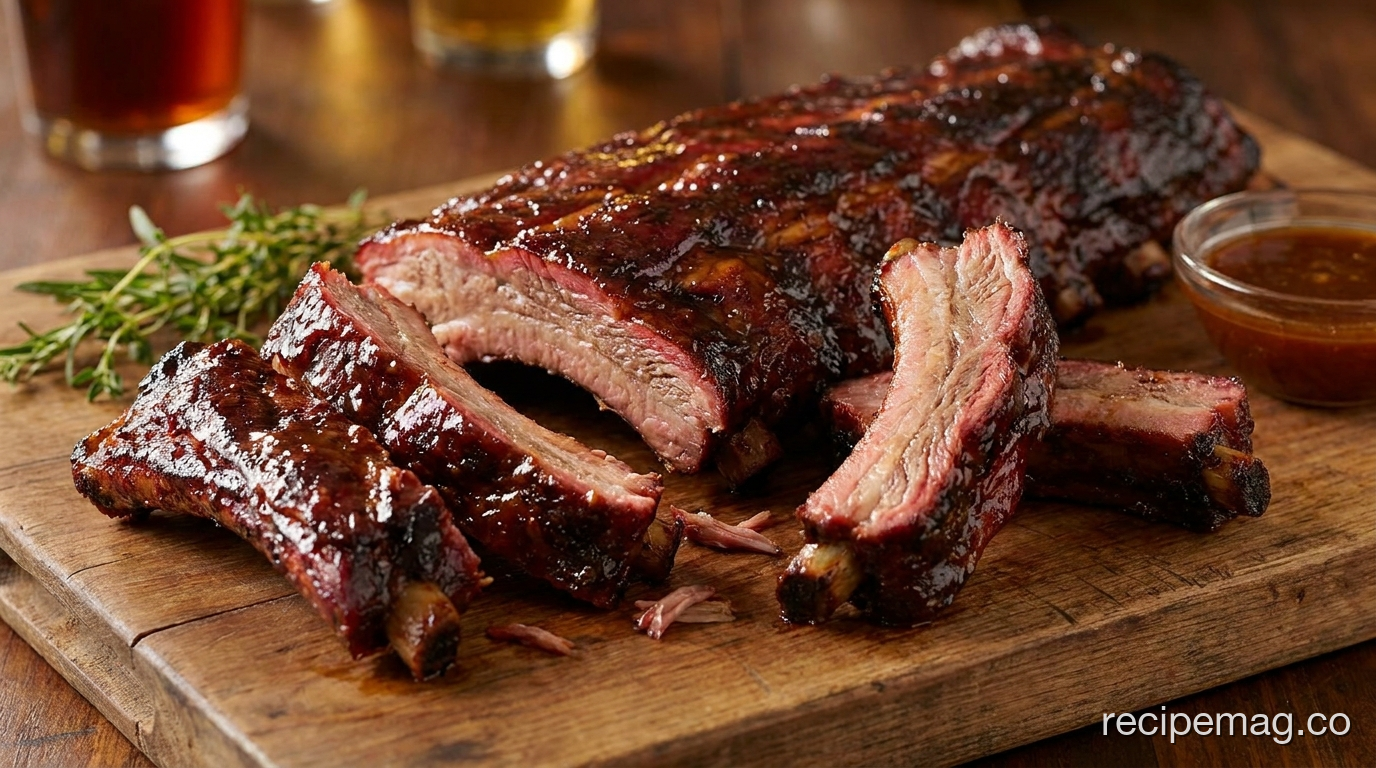
Great smoked baby back ribs come down to low heat, patience, and the right method. This recipe uses the classic 3-2-1 technique at 225°F to produce ribs that pull cleanly off the bone, finished with a sticky apple cider glaze. The whole cook runs about six hours, and most of that is hands-off. According to the USDA, pork ribs are safe to eat at 145°F, but ribs reach that fall-apart texture much higher, around 195°F to 203°F. ([USDA Food Safety and Inspection Service](https://www.fsis.usda.gov), 2023) Get the temperature right and the rest is easy.
Key Takeaways
- The 3-2-1 method breaks a 6-hour cook into three clear stages: 3 hours of smoke, 2 hours wrapped, 1 hour glazed.
- Smoke at a steady 225°F for tender, evenly cooked ribs without drying them out.
- Ribs are done at 195°F to 203°F internal, well above the USDA safe minimum of 145°F. ([USDA FSIS](https://www.fsis.usda.gov), 2023)
- Removing the membrane from the bone side is the single biggest texture upgrade you can make.
- One rack of baby backs serves 2 to 3 people; plan a full rack per two hungry eaters.
What Is the 3-2-1 Method for Smoked Ribs?
The 3-2-1 method is a foolproof timing formula for spare and baby back ribs smoked at 225°F. The numbers stand for three hours of open smoke, two hours wrapped in foil, and one hour unwrapped with glaze. It works because the collagen in pork ribs converts to soft gelatin slowly, beginning around 160°F and finishing near 200°F. ([America’s Test Kitchen](https://www.americastestkitchen.com), 2022) Each stage handles a different part of that process.
The first three hours build flavor. Open smoke lets the rub set into a bark and lets wood smoke penetrate the surface of the meat. This is when the ribs take on their color and that deep, savory crust.
The middle two hours are about tenderness. Wrapping the ribs in foil with a splash of apple cider traps steam, which speeds up the breakdown of connective tissue. This stage does the heavy lifting on texture. The final hour is for the glaze. You unwrap, brush on the apple cider glaze, and let it tighten into a sticky lacquer.
One note for baby backs specifically: they’re smaller and leaner than spare ribs, so many cooks shorten the formula slightly to 2-2-1 or 3-1.5-1. We’ll cover that timing adjustment below.
Why Should You Remove the Membrane First?
The membrane on the bone side of the ribs has to come off before anything else. This thin, papery layer (called the silverskin or peritoneum) never softens during cooking. It stays tough and rubbery, and it blocks both smoke and seasoning from reaching the meat. According to North Carolina State University’s meat science program, this connective tissue membrane is largely impermeable and does not render down at smoking temperatures. ([NC State Extension](https://meatscience.ces.ncsu.edu), 2021) Pulling it off is non-negotiable for good ribs.
How to Remove the Membrane
- Find the edge. Flip the rack bone-side up. Slide a butter knife under the membrane at one end, near the second or third bone.
- Lift and loosen. Work the knife under the membrane until you can lift a flap free from the bone.
- Grip with a paper towel. The membrane is slippery. A dry paper towel gives you the grip to hold it firmly.
- Pull it off in one motion. Peel it back slowly across the whole rack. Ideally it comes off in a single sheet. If it tears, find a new edge and start again.
Some grocery-store racks come with the membrane already removed. Run your finger across the bone side to check. If it feels smooth and slightly tacky, it’s gone. If it feels like a tight, shiny film, it’s still there.
How Do You Make the Dry Rub?
A good rib rub balances salt, sweetness, and warmth. The salt and sugar do the most work: salt seasons the meat deeply and helps form bark, while brown sugar caramelizes into that signature crust during the long smoke. The Maillard reaction and sugar caramelization that create bark begin developing meaningfully above 285°F at the surface, even when the smoker sits at 225°F, because the exterior runs hotter than the interior. ([Serious Eats](https://www.seriouseats.com), 2022) This blend hits all the right notes.
For the Dry Rub
- 3 tablespoons brown sugar
- 1 tablespoon kosher salt
- 1 tablespoon smoked paprika
- 2 teaspoons black pepper
- 2 teaspoons garlic powder
- 1 teaspoon onion powder
- 1 teaspoon chili powder
- ½ teaspoon cayenne (optional, for heat)
- ½ teaspoon ground mustard
Apply the rub generously to both sides at least 30 minutes before smoking, or up to overnight in the fridge. A light coat of yellow mustard or olive oil first helps the rub stick, though it isn’t strictly necessary. The mustard flavor cooks off completely and leaves no trace.
How to Make the Apple Cider Glaze
The apple cider glaze is what turns good ribs into memorable ones. Reducing apple cider concentrates its natural sugars into a glossy, tangy syrup that clings to the bark. Apple cider contains roughly 24 grams of natural sugar per cup, which caramelizes beautifully when simmered down. ([USDA FoodData Central](https://fdc.nal.usda.gov), 2023) Combined with a little brown sugar and a splash of vinegar for brightness, it builds a sticky finish without store-bought sauce.
For the Apple Cider Glaze
- 1 cup apple cider (not vinegar, the actual juice)
- ⅓ cup ketchup
- 2 tablespoons brown sugar
- 2 tablespoons apple cider vinegar
- 1 tablespoon Dijon mustard
- 1 tablespoon Worcestershire sauce
- 1 teaspoon smoked paprika
- Pinch of salt
How to Make It
- Combine all ingredients in a small saucepan over medium heat.
- Bring to a gentle simmer, whisking to dissolve the sugar.
- Reduce heat to low and simmer for 12 to 15 minutes, stirring occasionally, until the glaze coats the back of a spoon.
- Remove from heat. It will thicken further as it cools. Reserve a few tablespoons of plain reduced cider to add into the foil wrap.
The glaze keeps in the fridge for up to two weeks in a sealed jar. Reheat gently before using so it brushes on smoothly.
What Smoker Temperature and Time Should You Use?
Set your smoker to a steady 225°F and hold it there for the entire cook. This low temperature is the heart of the method: it renders fat and collagen slowly so the meat turns tender instead of tough. The USDA confirms pork is safe at 145°F, but ribs only reach that fall-off-the-bone texture between 195°F and 203°F internal. ([USDA FSIS](https://www.fsis.usda.gov), 2023) Trust the texture, not just the clock.
Timing by Rib Type
- Baby back ribs: Use a 2-2-1 or 3-1.5-1 schedule. They’re leaner and smaller than spare ribs, so the full 3-2-1 can overcook them. Total time is roughly 5 to 5.5 hours.
- Spare ribs / St. Louis cut: Use the full 3-2-1. They’re meatier and more forgiving. Total time is about 6 hours.
Wood Choices
- Apple: Mild and sweet, the natural match for an apple cider glaze.
- Cherry: Adds a deep mahogany color and a gentle fruit note.
- Hickory: Stronger and more classic. Use it in moderation so it doesn’t overpower the pork.
Keep a water pan in the smoker to stabilize temperature and add humidity. Spritz the ribs with apple cider or water every 45 minutes during the first open-smoke stage to keep the surface from drying out.
How Do You Know When the Ribs Are Done?
Ribs are done by feel and temperature, not the clock alone. The most reliable home test is the bend test: lift the rack with tongs from one end, and if the surface cracks and the meat starts to split, they’re ready. Internally, you’re looking for 195°F to 203°F, the range where collagen has fully converted to gelatin. ([America’s Test Kitchen](https://www.americastestkitchen.com), 2022) An instant-read thermometer slipped between two bones confirms it.
Two more signs tell you the ribs have finished. The meat pulls back from the ends of the bones by about a quarter to half an inch, exposing the tips. And the toothpick test: a toothpick or thermometer probe should slide into the meat between the bones with almost no resistance, like going into softened butter.
Avoid the temptation to push past “fall off the bone.” Competition judges actually penalize ribs that fall apart, since the ideal bite leaves a clean mark on the bone while still pulling away easily. For home cooking, aim for a tender bite that releases with a gentle tug, not a rack that collapses when you pick it up.
Tips for the Best Smoked Baby Back Ribs
Small habits separate good ribs from great ones. The biggest variable in any smoke is temperature control: keeping the smoker within a tight band around 225°F matters more than any single ingredient. Studies on barbecue cooking consistently show that stable low temperatures produce more even collagen breakdown than fluctuating heat. ([Serious Eats](https://www.seriouseats.com), 2022) These tips help you hold that line.
- Don’t peek too often. Every time you open the lid, you lose heat and add 15 minutes to the cook. Spritz quickly and close it.
- Wrap with liquid. During the 2-hour foil stage, add a splash of apple cider and a pat of butter inside the wrap. This steams the ribs tender and adds flavor.
- Glaze in thin layers. Brush the apple cider glaze on in two or three light coats during the final hour, letting each set. One thick coat slides off and stays gummy.
- Rest before slicing. Let the ribs rest 10 to 15 minutes after the cook. This lets juices redistribute so they don’t run out when you cut.
- Slice bone-side up. Flip the rack and cut between the bones from the bone side, where the gaps are easy to see.
Smoked Baby Back Ribs with Apple Cider Glaze
Prep Time: 30 minutes | Cook Time: 5.5 hours | Serves: 4 (2 racks)
Ingredients
Ribs
- 2 racks baby back ribs (about 2 to 2.5 lbs each)
- 2 tablespoons yellow mustard (binder, optional)
- ½ cup apple cider, plus more for spritzing
- 2 tablespoons unsalted butter
Dry Rub
- 3 tablespoons brown sugar
- 1 tablespoon kosher salt
- 1 tablespoon smoked paprika
- 2 teaspoons black pepper
- 2 teaspoons garlic powder
- 1 teaspoon onion powder
- 1 teaspoon chili powder
- ½ teaspoon cayenne (optional)
- ½ teaspoon ground mustard
Apple Cider Glaze
- 1 cup apple cider
- ⅓ cup ketchup
- 2 tablespoons brown sugar
- 2 tablespoons apple cider vinegar
- 1 tablespoon Dijon mustard
- 1 tablespoon Worcestershire sauce
- 1 teaspoon smoked paprika
- Pinch of salt
Instructions
- Remove the membrane from the bone side of each rack: loosen an edge with a butter knife, grip with a paper towel, and pull it off in one sheet.
- Mix the dry rub. Coat both sides of the ribs with mustard (if using), then apply the rub generously. Rest 30 minutes at room temperature, or refrigerate up to overnight.
- Preheat the smoker to 225°F with apple or cherry wood and a water pan. (Stage 1 – Smoke) Place ribs bone-side down and smoke uncovered for 2 hours, spritzing with apple cider every 45 minutes.
- Make the glaze: simmer all glaze ingredients in a saucepan over medium heat for 12 to 15 minutes until it coats a spoon. Set aside.
- (Stage 2 – Wrap) Lay each rack on heavy foil. Add ¼ cup apple cider and 1 tablespoon butter per rack. Wrap tightly and return to the smoker for 2 hours.
- (Stage 3 – Glaze) Unwrap the ribs and return them to the smoker. Brush with apple cider glaze in 2 to 3 thin coats over 1 hour, letting each coat set.
- Check doneness: internal temp of 195°F to 203°F, the bend test cracks the surface, and a probe slides in easily. Rest 10 to 15 minutes.
- Slice between the bones from the bone side. Serve with extra glaze on the side.
Notes
- Baby backs are lean. Use a 2-2-1 schedule (5 hours total). For meatier spare ribs, use the full 3-2-1 (6 hours).
- No smoker? Bake at 275°F in the oven using the same wrap-and-glaze stages, then finish under the broiler for 3 to 5 minutes to set the glaze.
- Hold finished ribs wrapped in foil inside a cooler for up to 2 hours before serving without losing tenderness.
- Make the rub and glaze ahead: both keep for up to 2 weeks stored airtight.
Frequently Asked Questions About Smoked Baby Back Ribs
Should I use the full 3-2-1 method for baby back ribs?
Not quite. The 3-2-1 method was designed for larger spare ribs. Baby backs are smaller and leaner, so a full six hours can overcook them into mush. Shorten the schedule to 2-2-1 or 3-1.5-1 at 225°F, totaling about five hours. Always check doneness by feel and temperature (195°F to 203°F) rather than trusting the clock alone, since rack size varies.
Can I make smoked ribs without a smoker?
Yes. Use your oven at 275°F and follow the same three stages. Smoke flavor is the main thing you’ll miss, so add a teaspoon of liquid smoke to the foil wrap or the glaze. Run the open-bake and wrapped stages in the oven, then finish under the broiler for three to five minutes to set the apple cider glaze into a sticky crust.
What internal temperature means the ribs are done?
Aim for 195°F to 203°F internal for pull-tender ribs. The USDA’s safe minimum for pork is 145°F, but ribs need to go higher so their collagen melts into gelatin. ([USDA FSIS](https://www.fsis.usda.gov), 2023) Slide a thermometer between two bones to read it. Pair the temperature check with the bend test and the toothpick test for the most reliable result.
Why are my smoked ribs tough or dry?
Tough ribs usually mean they were pulled too early, before the collagen finished breaking down around 195°F. Dry ribs often come from a smoker running too hot or too little moisture. Keep the temperature steady at 225°F, use a water pan, and don’t skip the foil-wrap stage with apple cider. Wrapping is what locks in moisture and guarantees tenderness.
How many ribs should I make per person?
Plan on half a rack per person as a main course, so one rack of baby backs serves two. For big eaters or a rib-focused meal, count a full rack per two people. Baby back racks usually hold 10 to 13 bones. If you’re serving sides like coleslaw, cornbread, and beans, you can stretch one rack to three lighter servings.
Smoked baby back ribs reward patience more than skill. Hold your smoker at 225°F, work through the three stages, and let the temperature, not the clock, tell you when they’re done. The apple cider glaze ties the whole rack together with a sweet, tangy finish that beats anything from a bottle.
Start your first rack on a relaxed afternoon when you’ve got six hours to spare. Once you’ve felt the bend test crack and tasted that glaze set into the bark, the rhythm of 3-2-1 becomes second nature. After that, you’ll be smoking ribs for every backyard gathering of the summer.
Fire up the smoker, peel that membrane, and give it a try this weekend. Good ribs are closer than you think.
