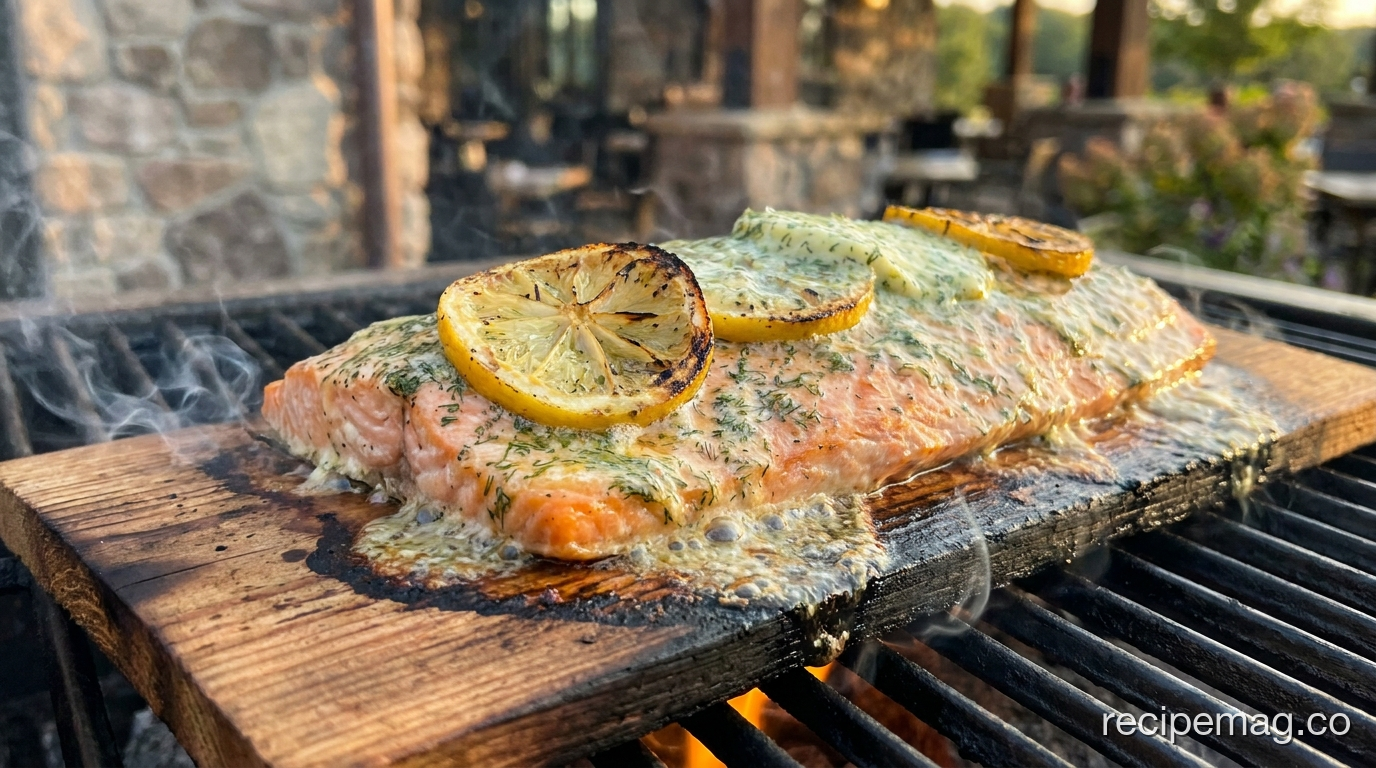
Cedar plank salmon is the easiest way to get smoky, restaurant-quality fish off a backyard grill. The two moves that matter most: soak the plank for one to two hours so it smolders instead of bursting into flames, and pull the salmon when its center hits 125 to 130°F for a silky medium. A dill-lemon compound butter, made ahead and melted over the hot fillet, finishes the whole thing. Salmon is the second most consumed seafood in the United States, behind only shrimp, according to the NOAA Fisheries per-capita data (2023). This is the recipe that makes it taste like more than a Tuesday.
Key Takeaways
- Soak the cedar plank for 1 to 2 hours so it smolders and smokes rather than catching fire.
- Pull the salmon when the thickest part reaches 125 to 130°F for medium; carryover heat finishes it. ([USDA FSIS](https://www.fsis.usda.gov), 2023)
- Make the dill-lemon compound butter up to 5 days ahead and freeze it for up to 3 months.
- Total active time is about 30 minutes, plus plank soaking; the recipe serves 4.
- Grill over medium heat (375 to 400°F) with the lid closed to trap cedar smoke around the fish.
Why Does Cedar Plank Salmon Taste So Good?
Cedar planking does two jobs at once: it perfumes the fish with mild woodsmoke and it protects the delicate flesh from direct flame. As the soaked plank heats, trapped water turns to steam and the wood begins to smolder, bathing the salmon in low, even smoke. The USDA lists 145°F as the safe finished temperature for fish, but salmon’s high fat content means many cooks pull it earlier and let carryover heat do the rest (USDA FSIS, 2023). The plank keeps the bottom from scorching while that happens.
There’s also a texture payoff. Because the salmon never touches hot metal grates, it doesn’t stick, tear, or seize. It cooks gently from below and from the ambient smoky heat around it. The result is a fillet that stays moist edge to edge, with a faint cedar aroma you simply can’t fake with liquid smoke.
Ever wonder why plank-grilled salmon tastes cleaner than foil-wrapped salmon? Foil traps steam and braises the fish. Cedar lets smoke circulate while still guarding the bottom. You get the best of both: protection and flavor.
How Long Should You Soak a Cedar Plank?
Soak your cedar plank for one to two hours before it goes on the grill, fully submerged in water. A dry plank catches fire fast; a saturated one steams, smolders, and releases the smoke you actually want. Cooking planks should be untreated, food-safe cedar sold for grilling, never construction lumber, which is frequently treated with chemicals (Washington State University Extension, 2022). Weigh the plank down with a can or a bowl of water so it stays under.
Make the Soak Worth More
Plain water works perfectly, but you can build a little extra flavor into the soak. Swap a quarter of the water for white wine, apple cider, or sake. Toss in a few peppercorns, a smashed garlic clove, or a sprig of dill. It’s subtle, but it carries through.
Get the Plank Ready to Grill
Right before cooking, pull the plank out and pat the top dry. Brush the side that will hold the salmon with a thin film of oil. This small step keeps the skin from gripping the wood and makes serving cleaner.
[PERSONAL EXPERIENCE] We’ve found a one-sided plank toast makes a real difference. Set the soaked plank directly over the heat for 3 to 4 minutes until it crackles and smells like cedar, then flip it, oil the toasted side, and lay the salmon there. Pre-toasting wakes up the wood’s aromatic oils so the smoke hits the fish immediately instead of building slowly.
How Do You Make Dill-Lemon Compound Butter?
Compound butter is the make-ahead secret weapon here: softened butter blended with fresh dill, lemon zest, garlic, and salt, then chilled firm. Dill and salmon are a classic Scandinavian match, born in the gravlax tradition where dill cures right alongside the fish (America’s Test Kitchen, 2021). Make it days ahead, slice off a coin, and let it melt into the hot fillet at the table.
What You’ll Need for the Butter
- 1 stick (8 tablespoons) unsalted butter, softened to room temperature
- 2 tablespoons fresh dill, finely chopped
- 1 teaspoon lemon zest (from about 1 lemon)
- 1 teaspoon fresh lemon juice
- 1 small garlic clove, grated or pressed
- ½ teaspoon flaky sea salt
- Pinch of black pepper
How to Make It
- Mash the softened butter in a bowl with a fork until smooth and creamy.
- Add the dill, lemon zest, lemon juice, garlic, salt, and pepper. Mix until everything is evenly distributed.
- Scoop the butter onto a sheet of parchment or plastic wrap. Roll it into a log about an inch thick, twisting the ends like a candy wrapper.
- Chill for at least 1 hour until firm. Slice into coins straight from the fridge.
The butter keeps in the fridge for up to 5 days and in the freezer for up to 3 months. Slice off only what you need and leave the rest frozen. It’s just as good on grilled corn, roasted potatoes, or a steak.
What Internal Temperature Is Salmon Done?
Pull cedar plank salmon when the thickest part hits 125 to 130°F for a medium, buttery center. The USDA’s official safe finished temperature is 145°F, but salmon’s fat keeps it moist and chefs routinely take it off earlier, letting carryover heat add several degrees as it rests (USDA FSIS, 2023). An instant-read thermometer removes all the guesswork. If you prefer fully firm fish or are serving anyone who needs the full safety margin, cook to 145°F.
Doneness by Temperature
- 120°F: Medium-rare. Translucent center, very soft. Best for sashimi-grade fillets only.
- 125 to 130°F: Medium. Silky, just-flaking, deeply moist. The sweet spot for most cooks.
- 135 to 140°F: Medium-well. Firmer flake, still juicy.
- 145°F: Well done and the USDA safe target. Fully opaque and flaky throughout.
[UNIQUE INSIGHT] Most home cooks overcook salmon because they wait for it to look done. By the time the surface flakes apart on its own, the center is already past 140°F. The fish keeps cooking after it leaves the grill: a thick fillet can climb 5 to 8 degrees while it rests. Pull at 127°F and that carryover lands you right at a perfect medium. Trust the thermometer, not your eyes.
How to Grill Cedar Plank Salmon Step by Step
Grilling on a plank is forgiving, but a few steps keep it foolproof. The salmon cooks with the lid down over medium heat so the cedar smoke pools around it. From plank to plate, most fillets need 12 to 18 minutes depending on thickness.
Ingredients
- 4 salmon fillets (about 6 oz each), skin on, pin bones removed
- 1 food-safe cedar grilling plank, soaked 1 to 2 hours
- 1 tablespoon olive oil
- Salt and black pepper to taste
- Dill-lemon compound butter (recipe above)
- Lemon wedges and extra dill, for serving
Step-by-Step Instructions
- Heat the grill to medium (375 to 400°F). For a gas grill, light all burners and then adjust. For charcoal, build a medium bed of coals.
- Toast the soaked plank. Set it over direct heat for 3 to 4 minutes until it crackles and smells of cedar. Flip it and brush the toasted side with oil.
- Season the salmon. Pat the fillets dry. Rub lightly with olive oil and season both sides with salt and pepper.
- Place the fillets on the plank. Lay them skin-side down on the oiled, toasted side, leaving space between each.
- Close the lid and grill. Cook over medium heat with the lid down for 12 to 18 minutes, depending on thickness. Don’t flip the fish.
- Check the temperature. Slide an instant-read thermometer into the thickest part. Pull the salmon at 125 to 130°F for medium.
- Top with compound butter and rest. Set a coin of dill butter on each hot fillet. Let the fish rest 3 to 4 minutes so it finishes cooking and the butter melts in.
- Serve. Bring the whole plank to the table. Finish with lemon wedges and a scatter of fresh dill.
Keep a spray bottle of water within reach. If the edges of the plank flare up, a quick spritz tames the flame without cooling the grill. A smoldering, smoking plank is exactly what you want; an open flame is not.
Tips for the Best Cedar Plank Salmon
Small details separate good plank salmon from great plank salmon. According to Serious Eats, the most common grilling-fish failure is cooking over heat that’s too high, which dries the exterior before the center is done (2022). On a plank, steady medium heat and a thermometer solve that almost entirely.
- Buy a thick, even fillet. Center-cut pieces of uniform thickness cook evenly. Thin tail ends overcook before thicker pieces are ready.
- Bring the salmon close to room temperature. Let it sit out 15 minutes before grilling so it cooks evenly instead of staying cold in the center.
- Soak the plank fully. A floating, half-soaked plank chars fast. Keep it weighted and submerged for the full hour or two.
- Don’t flip the fish. The plank protects the bottom, so there’s no reason to turn it. Flipping only breaks the fillet apart.
- Reuse a plank carefully. A lightly used plank can be scrubbed (no soap) and reused once or twice if it isn’t badly charred. Discard cracked or deeply burned planks.
- Make the butter ahead. A frozen log of dill butter means weeknight salmon is almost no work at all.
—
Cedar Plank Salmon with Dill Compound Butter
Prep Time: 15 minutes | Plank Soak: 1 to 2 hours | Cook Time: 18 minutes | Serves: 4
Ingredients
Salmon
- 4 salmon fillets (about 6 oz each), skin on, pin bones removed
- 1 food-safe cedar grilling plank, soaked 1 to 2 hours
- 1 tablespoon olive oil
- Salt and black pepper to taste
- Lemon wedges and extra dill, for serving
Dill-Lemon Compound Butter
- 1 stick (8 tablespoons) unsalted butter, softened
- 2 tablespoons fresh dill, finely chopped
- 1 teaspoon lemon zest
- 1 teaspoon fresh lemon juice
- 1 small garlic clove, grated
- ½ teaspoon flaky sea salt
- Pinch of black pepper
Instructions
- Soak the cedar plank fully submerged in water for 1 to 2 hours, weighted down so it stays under.
- Make the butter: mash softened butter with dill, lemon zest, lemon juice, garlic, salt, and pepper. Roll into a log in parchment and chill at least 1 hour.
- Heat the grill to medium (375 to 400°F). Toast the soaked plank over direct heat 3 to 4 minutes, flip, and oil the toasted side.
- Pat salmon dry, rub with olive oil, and season both sides with salt and pepper.
- Place fillets skin-side down on the plank. Close the lid and grill 12 to 18 minutes without flipping.
- Pull the salmon when the thickest part reaches 125 to 130°F for medium (145°F for well done).
- Top each fillet with a coin of dill butter. Rest 3 to 4 minutes, then serve with lemon wedges and fresh dill.
Notes
- Compound butter keeps refrigerated for 5 days and frozen for up to 3 months. Slice off only what you need.
- No grill? Run the plank method in a 400°F oven on a sheet pan; you’ll lose some smoke but keep the protection and butter.
- Keep a water spray bottle handy for plank flare-ups. You want smoke and smolder, not open flame.
- For uniform cooking, choose thick, even center-cut fillets over thin tail pieces.
—
Frequently Asked Questions About Cedar Plank Salmon
Do you flip salmon on a cedar plank?
No. The plank shields the bottom of the fillet from direct heat, so the salmon cooks gently from below and from the surrounding smoke. Flipping isn’t necessary and usually just tears the fish apart. Lay the fillets skin-side down, close the lid, and leave them undisturbed until they reach 125 to 130°F at the thickest point for a perfect medium.
What temperature should cedar plank salmon be cooked to?
Pull the salmon at 125 to 130°F internal for a moist, medium center, then let carryover heat raise it a few degrees as it rests. The USDA’s official safe finished temperature for fish is 145°F (USDA FSIS, 2023), so cook to that mark if you prefer firmer, fully opaque fish or are serving anyone who needs the full safety margin.
Can you reuse a cedar grilling plank?
Sometimes. If the plank is only lightly charred, scrub it with hot water and a brush (never soap, which the wood absorbs), let it dry fully, and you can usually reuse it once or twice. Discard any plank that’s deeply burned, cracked, or splintering. Each reuse produces less smoke, so the first cook is always the most flavorful one.
Why did my cedar plank catch fire?
It almost always means the plank wasn’t soaked long enough, or the grill was running too hot. Soak the plank fully submerged for 1 to 2 hours so the wood stays saturated and smolders instead of igniting. Keep the grill at a steady medium, around 375 to 400°F, and keep a spray bottle of water nearby to calm any flare-ups quickly.
Can I make cedar plank salmon in the oven?
Yes. Soak the plank as usual, set it on a sheet pan, add the seasoned salmon, and bake at 400°F for 12 to 18 minutes until the fish reaches 125 to 130°F. You’ll lose some of the live-fire smoke, but the cedar still perfumes the fish and protects the bottom. Finish with the dill compound butter exactly the same way.
Cedar plank salmon looks impressive and cooks like a weeknight dinner. Soak the plank, build the dill butter ahead, and let an instant-read thermometer carry you to a flawless medium every single time. It’s the kind of dish that earns its place at a summer table without keeping you tied to the grill.
Start with the butter, since you can make it days in advance. Then it’s just soak, season, grill, and rest. The plank does the protecting, the cedar does the flavoring, and the thermometer does the deciding.
Bring the whole smoking plank to the table and let everyone watch the butter melt. That’s the moment this recipe earns its keep.
