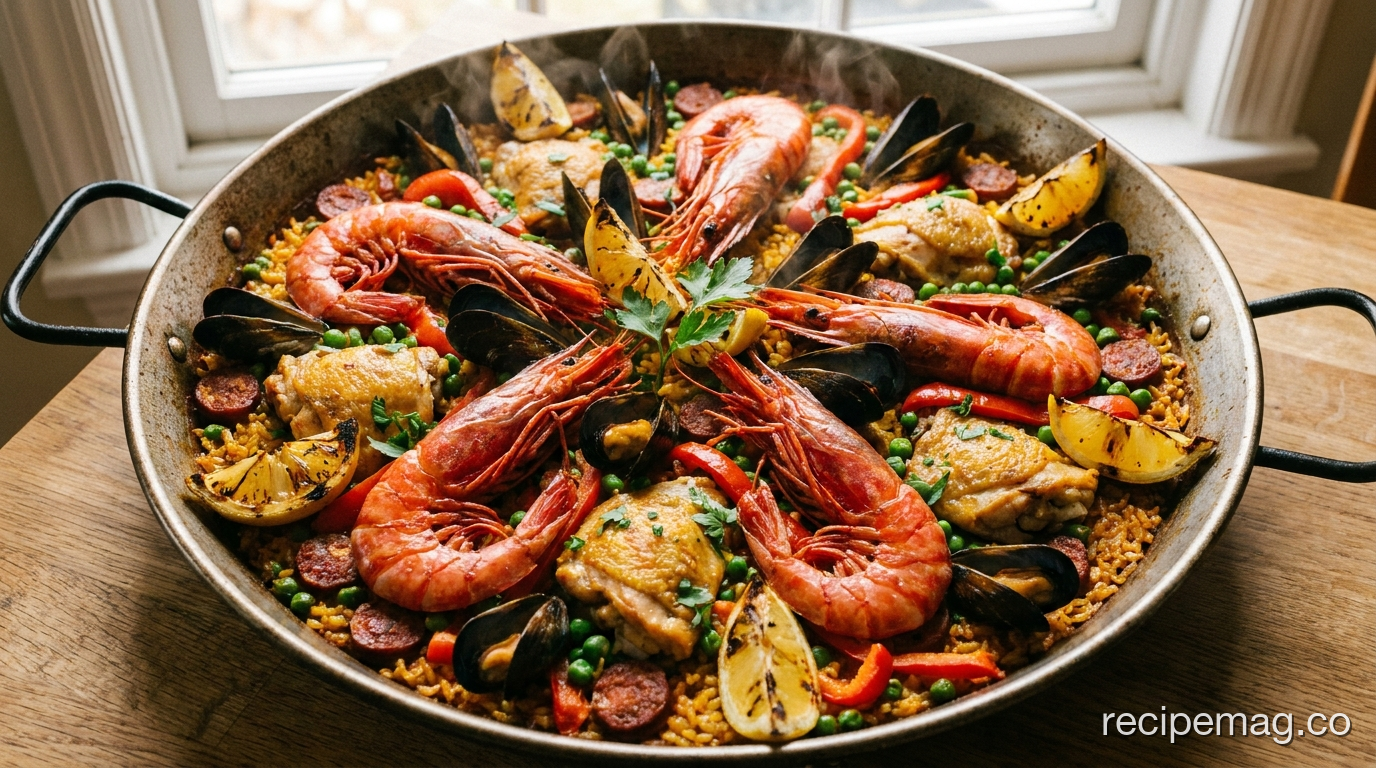
Backyard paella is the easiest way to feed a crowd from a single pan, and the secret is the fire. Cooking paella outdoors over a live flame builds the deep, smoky flavor and the crispy bottom layer called socarrat that defines a great one. Paella traces back to the rice fields around Valencia in the mid-1800s, where laborers cooked it over open wood fires ([Smithsonian Magazine](https://www.smithsonianmag.com), 2021). This version layers saffron rice, chorizo, chicken, and shrimp, and it serves eight from one wide pan.
Key Takeaways
- One 15-inch pan feeds 8 people, making paella one of the most efficient party dishes you can cook.
- Cooking over live fire builds the prized crispy socarrat at the bottom of the pan.
- Use a short-grain rice like Bomba, which absorbs up to 3 times its volume in liquid without turning mushy ([The Culinary Institute of America](https://www.ciachef.edu), 2022).
- Never stir the rice once the stock goes in. Stirring releases starch and ruins the texture.
- Total active time runs about 75 minutes, most of it hands-off once the rice simmers.
Why Cook Paella in the Backyard?
Backyard paella works because the dish was built for open flame, not a stovetop. Outdoor burners and wood fires spread heat across a wide pan more evenly than a single home burner ever can, and that even heat is what produces an unbroken layer of crispy rice. Live-fire cooking has surged in popularity: a 2023 report from the Hearth, Patio and Barbecue Association found that 70% of U.S. households now own a grill or smoker ([Hearth, Patio and Barbecue Association](https://www.hpba.org), 2023). A paella pan is a natural next step for that crowd.
There’s a social reason too. Paella is a spectacle. People gather around the pan, watch the rice toast, and smell the saffron and smoke before they taste a thing. It turns dinner into an event without turning the cook into a stressed-out short-order line.
[PERSONAL EXPERIENCE] We’ve cooked this over a propane paella burner, a charcoal grill, and an open wood fire. The wood fire tastes best, but the propane burner is the most forgiving for beginners because you control the heat with a dial. Start there if it’s your first paella.
What Equipment Do You Need?
A wide, shallow pan and an even heat source are the only non-negotiable tools. The classic carbon-steel paella pan is shallow by design, usually under two inches deep, so a thin layer of rice cooks in direct contact with the heat. According to America’s Test Kitchen, the ideal paella forms a single rice layer no more than half an inch thick, which is why pan width matters far more than depth ([America’s Test Kitchen](https://www.americastestkitchen.com), 2022).
The Pan
A 15-inch carbon-steel paella pan serves 6 to 8 people. If you don’t own one, a wide cast-iron skillet or a large stainless sauté pan works for smaller batches. Avoid deep pots. Depth is the enemy of socarrat.
The Heat Source
A propane paella burner gives the most control and the widest flame. A charcoal or gas grill with the lid open works well if you rotate the pan. An open wood fire delivers the best flavor but demands attention. Whatever you use, the flame needs to reach the pan’s outer edges, not just the center.
Which Ingredients Make the Best Backyard Paella?
Great paella starts with two ingredients you should not substitute: short-grain rice and real saffron. Saffron gives the dish its color, aroma, and faint honeyed bitterness, and it’s worth the cost. Saffron is the most expensive spice on earth, priced higher than gold per gram because each crocus flower produces just three stigmas that must be hand-harvested ([University of Vermont Extension](https://www.uvm.edu/extension), 2021). A small pinch is all you need for the whole pan.
For the Rice and Stock
- 3 cups Bomba or Calasparra rice (short-grain Spanish rice)
- 6 cups warm chicken stock
- 1 generous pinch saffron threads (about ½ teaspoon)
- 1 teaspoon smoked paprika (pimentón)
For the Proteins and Vegetables
- 1 pound bone-in chicken thighs, cut into pieces
- 8 ounces Spanish chorizo, sliced into half-inch coins
- 1 pound large shrimp, shell-on, deveined
- 1 cup green beans, trimmed
- 1 red bell pepper, sliced into strips
- 1 medium onion, finely diced
- 4 garlic cloves, minced
- 1 cup grated fresh tomato (or canned crushed)
- ¼ cup olive oil
- Salt to taste
- Lemon wedges and fresh parsley, to serve
Use Spanish chorizo, not the fresh Mexican kind. Spanish chorizo is cured and firm, and it releases smoky, paprika-rich oil that flavors the whole pan. Mexican chorizo is raw and crumbly, and it will turn the rice greasy and muddy.
How Do You Cook Paella Step by Step?
Paella follows a clear order: build the base, add the rice, pour the stock, then leave it alone. That last part is the rule beginners break most. Once the stock goes in, you do not stir. Stirring releases starch and turns the dish into risotto, says the Culinary Institute of America, which notes that the unstirred grains are exactly what allows the bottom layer to caramelize into socarrat ([The Culinary Institute of America](https://www.ciachef.edu), 2022).
Step-by-Step Instructions
- Bloom the saffron. Warm the chicken stock and crumble the saffron threads into it. Let it steep for 10 minutes while you prep. The stock will turn golden.
- Brown the proteins. Heat the olive oil across the pan. Brown the chicken pieces until golden on all sides, then set aside. Add the chorizo and cook until its red oil renders, then set aside with the chicken.
- Build the sofrito. Add the onion, bell pepper, and garlic to the rendered oil. Cook until soft, about 6 minutes. Stir in the grated tomato and smoked paprika and cook until the mixture darkens and thickens, about 5 minutes.
- Toast the rice. Pour in the rice and stir it through the sofrito for 2 minutes until each grain glistens. This is the last time you stir.
- Add stock and proteins. Pour in the warm saffron stock. Return the chicken and chorizo to the pan. Add the green beans. Spread everything into an even layer.
- Simmer undisturbed. Cook at a steady bubble for about 18 minutes. Do not stir. Rotate the pan over the flame so it cooks evenly across the surface.
- Add the shrimp. Nestle the shrimp into the rice in the last 6 minutes so they steam and turn pink without overcooking.
- Build the socarrat. When the liquid is nearly gone, raise the heat for 1 to 2 minutes. Listen for a gentle crackle and smell for toasted rice. Pull it off before it burns.
- Rest and serve. Cover the pan loosely with foil or a towel and rest for 5 minutes. Garnish with parsley and lemon wedges.
What Is Socarrat and How Do You Get It?
Socarrat is the caramelized, crispy crust of rice that forms on the bottom of the pan, and it’s the most prized part of any paella. You build it in the final minutes by raising the heat once the liquid has evaporated. The toasting comes from the Maillard reaction, the same chemical browning that gives seared meat and toasted bread their deep flavor, which accelerates sharply once surface moisture is gone and temperatures climb past 300°F ([Serious Eats](https://www.seriouseats.com), 2021).
[UNIQUE INSIGHT] The hardest part of socarrat isn’t the heat. It’s the nerve. Most home cooks pull the pan too early because they smell toasting and panic. A little toasted aroma is the goal, not a warning. Wait for the gentle crackle, give it another 30 seconds, then trust it. The line between perfect socarrat and burnt rice is real but wider than beginners fear.
To check it without stirring, press a spoon gently against the rice and feel for resistance, or lift one edge with a spatula. A golden-brown crust means you nailed it.
Tips for Paella Success
Small choices separate good backyard paella from great backyard paella. Most failures trace to one of three mistakes: stirring the rice, crowding the pan, or using the wrong rice. Get those three right and the rest is forgiving.
- Warm your stock first. Cold stock drops the pan temperature and cooks the rice unevenly. Always add it hot.
- Don’t stir after the stock. Rotate the pan over the heat instead to even out hot spots.
- Match pan size to your crowd. The rice should sit in a thin layer. A pan that’s too small piles the rice too deep and kills the socarrat.
- Have everything prepped. Paella moves fast once it starts. Cut, measure, and arrange all ingredients before you light the burner.
- Let it rest. Five minutes under foil lets the grains settle and finish absorbing the last of the liquid.
—
Backyard Paella
Prep Time: 25 minutes | Cook Time: 50 minutes | Serves: 8
Ingredients
- 3 cups Bomba or Calasparra rice
- 6 cups warm chicken stock
- 1 generous pinch saffron threads (about ½ teaspoon)
- 1 teaspoon smoked paprika (pimentón)
- 1 pound bone-in chicken thighs, cut into pieces
- 8 ounces Spanish chorizo, sliced into coins
- 1 pound large shrimp, shell-on, deveined
- 1 cup green beans, trimmed
- 1 red bell pepper, sliced
- 1 medium onion, diced
- 4 garlic cloves, minced
- 1 cup grated fresh tomato
- ¼ cup olive oil
- Salt to taste
- Lemon wedges and fresh parsley, to serve
Instructions
- Warm the stock and steep the saffron threads in it for 10 minutes.
- Heat olive oil across the pan. Brown the chicken, then set aside. Render the chorizo, then set aside.
- Cook the onion, bell pepper, and garlic in the oil until soft. Add grated tomato and smoked paprika; cook until thickened.
- Stir in the rice for 2 minutes to toast. This is the last stir.
- Pour in the saffron stock. Return the chicken and chorizo. Add green beans. Spread into an even layer.
- Simmer undisturbed for 18 minutes, rotating the pan over the flame.
- Nestle the shrimp into the rice for the last 6 minutes.
- Raise the heat 1 to 2 minutes to form the socarrat. Listen for the crackle.
- Rest covered for 5 minutes. Garnish with parsley and lemon. Serve from the pan.
Notes
- Use Spanish (cured) chorizo, not fresh Mexican chorizo.
- No paella pan? Use the widest, shallowest pan you own.
- Vegetarian version: skip the meat and seafood, double the vegetables, and use vegetable stock.
- Add mussels or clams with the shrimp for a seafood-forward pan.
—
Frequently Asked Questions About Backyard Paella
Can I make paella without a special paella pan?
Yes. The goal is a wide, shallow surface so the rice cooks in a thin layer. A large cast-iron skillet or a wide stainless sauté pan works well for 4 to 6 servings. Avoid deep pots, which pile the rice too high and prevent the crispy socarrat from forming. Pan width matters more than the brand or material.
What rice should I use for paella?
Use a Spanish short-grain rice like Bomba or Calasparra. These varieties absorb liquid while staying separate and firm, absorbing up to three times their volume without turning sticky ([The Culinary Institute of America](https://www.ciachef.edu), 2022). Arborio works in a pinch but turns creamier. Avoid long-grain rice, which won’t deliver the right texture or hold the saffron stock the same way.
Why does my rice come out mushy?
Mushy paella almost always comes from stirring or using too much liquid. Once you add the stock, stop stirring completely. Stirring releases starch and creates a risotto texture instead of distinct grains. Also measure your stock carefully, roughly two parts liquid to one part rice, and let the pan finish uncovered so excess moisture evaporates.
Can I make paella vegetarian?
Absolutely. Skip the chicken, chorizo, and shrimp, and build the dish on vegetables: artichokes, green beans, butter beans, bell peppers, and mushrooms all work beautifully. Use vegetable stock and add an extra pinch of smoked paprika for depth. The saffron rice and socarrat carry the dish, so a meatless version loses none of the drama or flavor.
How far ahead can I prep paella?
Prep all components up to a day ahead: cut the proteins, dice the vegetables, grate the tomato, and measure the rice. Store everything covered in the fridge. The cooking itself should happen right before serving, since paella is best fresh from the pan. Bloom the saffron in warm stock about 10 minutes before you start cooking.
Backyard paella looks far harder than it is. Once you understand the order of operations, build the base, add the rice, pour the stock, then leave it alone, the dish nearly cooks itself while you pour drinks and greet your guests.
Start with the recipe as written, then make it yours. Swap in mussels, clams, or rabbit. Go fully vegetarian. Cook it over propane the first time and graduate to a wood fire once you trust your instincts. The saffron rice and that crackling socarrat stay constant no matter what you build on top.
Light the burner this weekend. There’s no better way to turn a backyard into the best table in the neighborhood.
